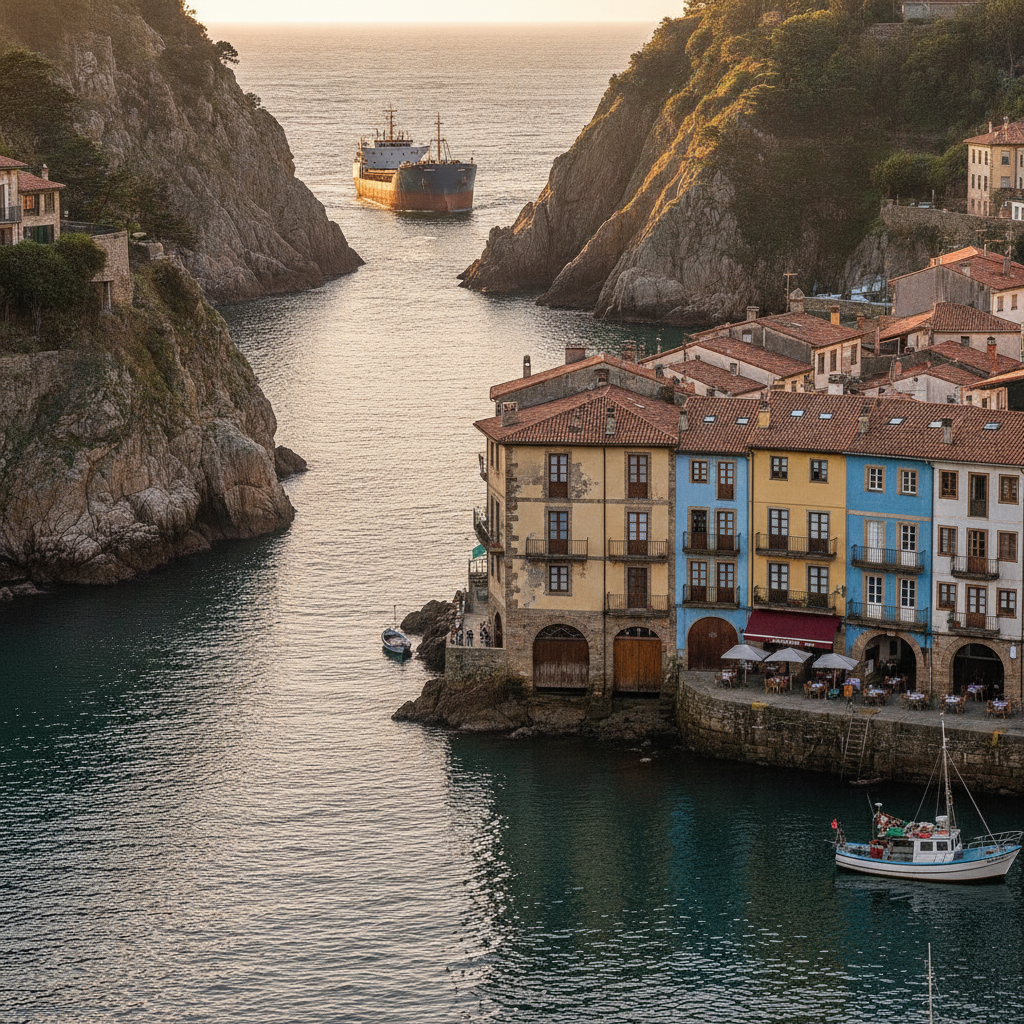
Porto di Pasajes, Hondarribia e la Costa di Confine Basca
Pasajes (the 'Puerto de Pasajes' — the working harbour town 6 km east of San Sebastián, the harbour with the most beautiful natural setting of any port on the Basque coast) and Hondarribia (the medieval fortified town at the mouth of the Bidasoa River, 22 km east of San Sebastián on the French border, the town with the best-preserved medieval walls in the Basque Country) are the essential day trips from San Sebastián for experiencing the authentic maritime and historic culture of the Gipuzkoa coast.
- 1
Hondarribia — The Fortified Town Above the Bidasoa
Hondarribia (18km east of San Sebastián, accessed by bus every 15 minutes from Amara bus station, 25 minutes, or by water taxi from the town itself across the Bidasoa river from Hendaye, France) is the finest medieval fortified town in the Basque Country — the walled upper town (Carlos V Walls, 16th century, the most complete surviving military walls in the Basque Country) surrounds the castle (Parador Nacional, a luxury hotel in the original 10th-century castle, with a restaurant serving the best traditional Basque lunch in the region, €40–60) and the Cathedral-Basilica of Santa María.
- 2
Pasaia — The Port Village That Victor Hugo Described
Pasaia (Pasajes, 8km east of San Sebastián, accessed by boat from the Pasaia town dock or by bus) is a fishing village where the harbour is a narrow channel between two cliff faces — Victor Hugo lived in Pasai Donibane for 3 months in 1843 and described it as 'more Spanish than anything I've seen in Spain'; his house (the Casa de Victor Hugo, free, open Tuesday–Sunday) has been preserved; the fishing industry (the largest trawler fleet remaining in the Bay of Biscay) and the dock-side seafood restaurants (Txulotxo, the most celebrated) are the principal attractions.
- 3
Getaria — Juan Sebastián Elcano's Town
Getaria (25km west of San Sebastián, accessible by bus from the Amara bus station, 45 minutes) is the birthplace of Juan Sebastián Elcano (1486–1526, the first person to circumnavigate the Earth — Magellan died in the Philippines and Elcano completed the voyage, 1519–1522) — the Elkano monument (harbour front) and the Gothic church where Elcano was baptized (San Salvador, 15th century, the nave on stilts above the main road — vehicles drive under the church) are the main sights; Getaria produces the best Txakoli wine (the slightly effervescent Basque white wine, DO Getariako Txakolina) in the Basque Country.
- 4
Txakoli Wine — The Fizzy Basque White
Txakoli (pronounced 'chah-koh-LEE', the slightly sparkling light white wine of the Basque Country, 10–11% ABV, from the Hondarribi Zuri grape grown on coastal hillside vineyards) is produced in three appellations — Getariako Txakolina (Getaria, the most classic, with the highest iodine and marine mineral character from the Bay of Biscay proximity), Bizkaiko Txakolina (Bizkaia/Bilbao area), and Arabako Txakolina (Álava, the rarest); the traditional pouring (from height into the glass to maximize the CO2 release and the apple/lemon aroma) is a ritual performed tableside in Basque restaurants.
- 5
La Bretxa Market — San Sebastián's Daily Food Market
La Bretxa Market (Plaza de la Bretxa, Old Town, the central covered market of San Sebastián, restored 2001 to incorporate both an above-ground glass pavilion and the original underground food market) is where San Sebastián residents buy their daily food — the fishmongers (the Bay of Biscay catch: hake, red bream, anchovies, txangurro/spider crab), the pintxos ingredient vendors (canned goods, guindilla peppers, anchovies in oil), and the cheese stalls (Idiazabal at 3 different ages) are the primary market shopping; the market is closed on Sunday and Monday morning.
- 6
GR-121 Coastal Path — The Basque Country Walking Route
The GR-121 (the Basque Country coastal walking route from Irun at the French border to Hondarribia, Pasaia, San Sebastián, and west along the Bay of Biscay) provides the most scenic approach to and departure from San Sebastián on foot — the section from Pasaia to San Sebastián (7km, 2.5 hours, moderate difficulty) passes through cliff-top Atlantic shrubland above the open Bay of Biscay before descending to Zurriola beach; the section from San Sebastián to Zarautz (23km, 6 hours, the longest single-day coastal walk) passes Getaria.