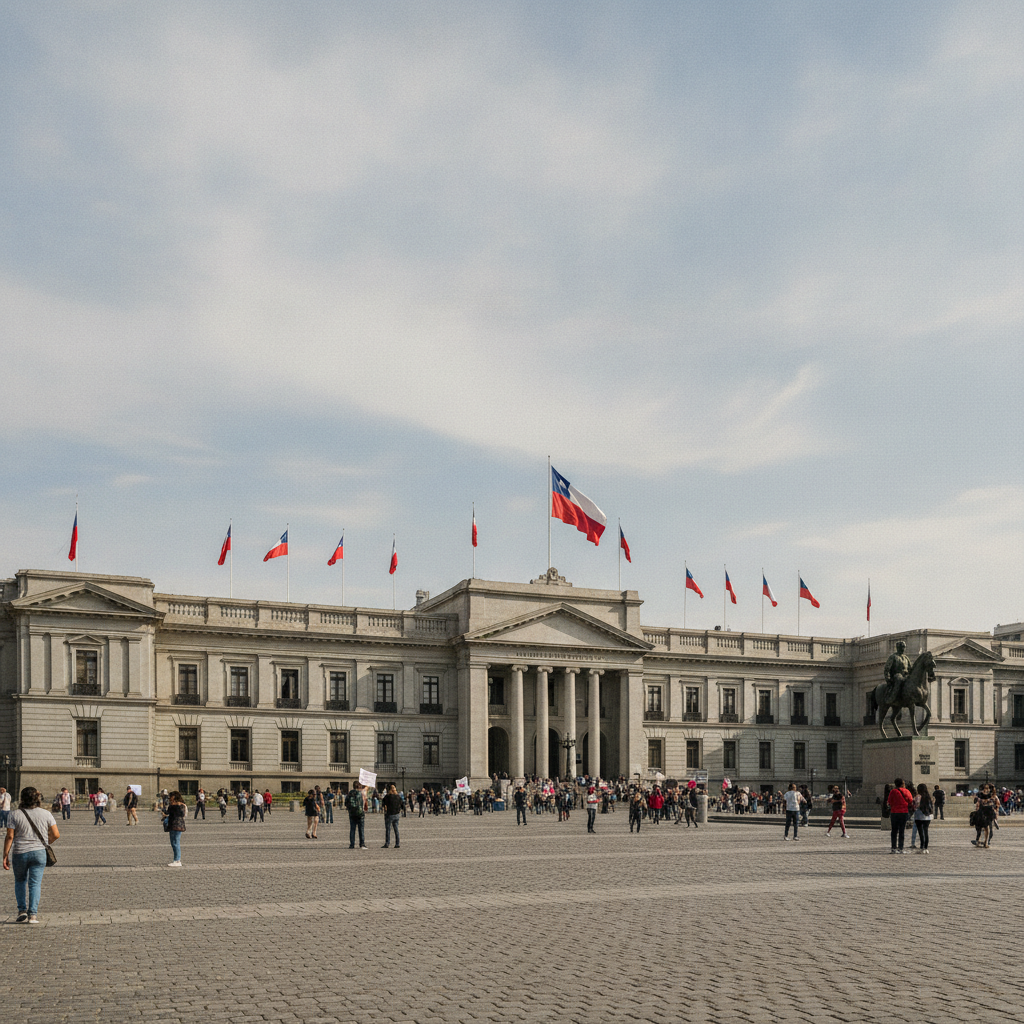
Plaza de Armas, Palazzo La Moneda e il Nucleo Storico di Santiago
Santiago's Plaza de Armas (the main square of the colonial city of Santiago, laid out by Pedro de Valdivia in 1541 as the centre of the new colonial settlement) and the Palacio de La Moneda (the Presidential Palace of Chile — the most important building in Chilean political history, the palace that was bombed by the Chilean Air Force during the military coup of September 11, 1973 that overthrew President Salvador Allende) are the historic and political heart of Chile.
- 1
Plaza de Armas — The Foundation Square of Chilean Democracy
Plaza de Armas (Santiago Centro, the central square founded in 1541 by Pedro de Valdivia as the administrative and ceremonial centre of colonial Santiago) is surrounded by the principal institutions of Chilean civic life — the Catedral Metropolitana (1748–1800, the 7th iteration of the cathedral on this site), the Palacio de la Real Audiencia (1808, now the Museo Histórico Nacional), the Casa Colorada (1769, the oldest colonial house in Santiago), and the Central Post Office (1882) form the square's four faces; the central fountain (1857) and chess tables make it an active public space.
- 2
Palacio La Moneda — The Site of the 1973 Coup
La Moneda Palace (Plaza de la Constitución, 1805, Joaquín Toesca architect, the former Royal Mint and since 1846 the seat of the Chilean presidency) was bombed on September 11, 1973 when General Augusto Pinochet's military coup overthrew President Salvador Allende — Allende died inside the building (the official finding is suicide, disputed); the building was restored to its 1805 appearance and reopened in 1981; guided tours (free, Tuesday and Thursday 10am, reservations required at minrel.gob.cl) include the Sala de las Esculturas and the original treasury rooms.
- 3
Barrio París-Londres — Art Nouveau in the Historic Centre
Barrio París-Londres (the small neighbourhood of Art Nouveau residential buildings 2 blocks south of the Alameda, between Calle París and Calle Londres, built 1923–1929) is the finest concentration of Spanish Colonial Revival and Art Nouveau architecture in Santiago — the neighbourhood (a single city block developed by the Archdiocese of Santiago to house middle-class families) was used during the Pinochet dictatorship as a secret detention centre; the Londres 38 (the house at Calle Londres 38, now a human rights memorial and museum, free, Tuesday–Sunday 10am–6pm) preserves the detention centre.
- 4
Museo Chileno de Arte Precolombino — The Finest Pre-Columbian Collection in South America
The Museo Chileno de Arte Precolombino (Bandera 361, Santiago Centro, in the 1807 Real Aduana building, $6 adults, Tuesday–Sunday 10am–6pm) is the most important Pre-Columbian art museum in South America — the collection covers 5,000+ years of Andean, Mesoamerican, and South American cultures with the finest textile collection in existence (including Wari and Tiwanaku fabrics from 800–1000 CE), the Andean gold collection (nose rings, ear ornaments, and ceremonial objects from 300 BCE), and the Atacama ceramic tradition; the museum was founded by art collector and politician Sergio Larraín García-Moreno.
- 5
Cerro Santa Lucía — The Hill Where Santiago Was Founded
Cerro Santa Lucía (the 70m rocky hill in Santiago Centro, the site where Pedro de Valdivia planted the first flag of colonial Santiago in 1541, converted to a public park in 1874 by Mayor Benjamín Vicuña Mackenna — one of the first major public parks in South America) has free access from the Columbus staircase or the main east entrance on Calle Santa Lucía — the hilltop castle ruins (Castillo Hidalgo), the Moorish esplanade (Terraza Vicuña Mackenna, with views of the Andes), and the water cascade make it the most romantic park in downtown Santiago; the evening view of the Andes is the finest from central Santiago.
- 6
Mercado Central — The Iron Cathedral of Chilean Seafood
Mercado Central (Isidora Goyenechea 3456 at the Mapocho River, 1872, Eduardo Tayleur architect, the iron-and-glass market building modelled on the Les Halles design in Paris, built in the UK and assembled in Santiago) is Santiago's most celebrated food destination — the central restaurant zone (dominated by several competing marisquerias serving Chilean seafood — caldillo de congrio/conger eel soup — which Pablo Neruda immortalized in a poem — pastel de jaiba/crab pasty, and chupe de locos/abalone chowder) has tourist prices but is the only place to eat all the Chilean seafood specialties simultaneously.