Pinheiros, Vila Madalena e la Leggendaria Vita Notturna di São Paulo
São Paulo's nightlife (the nightlife of the city that never sleeps — the city that is the undisputed entertainment capital of Brazil and one of the most vibrant nightlife destinations in the world): the Pinheiros and Vila Madalena neighbourhoods (the two adjacent bohemian neighbourhoods west of Avenida Paulista that are the centre of São Paulo's cultural and nightlife scene) host the greatest concentration of bars, nightclubs, live music venues, and independent restaurants in the city.
- 1
Vila Madalena — Brazil's Bohemian Art Neighbourhood
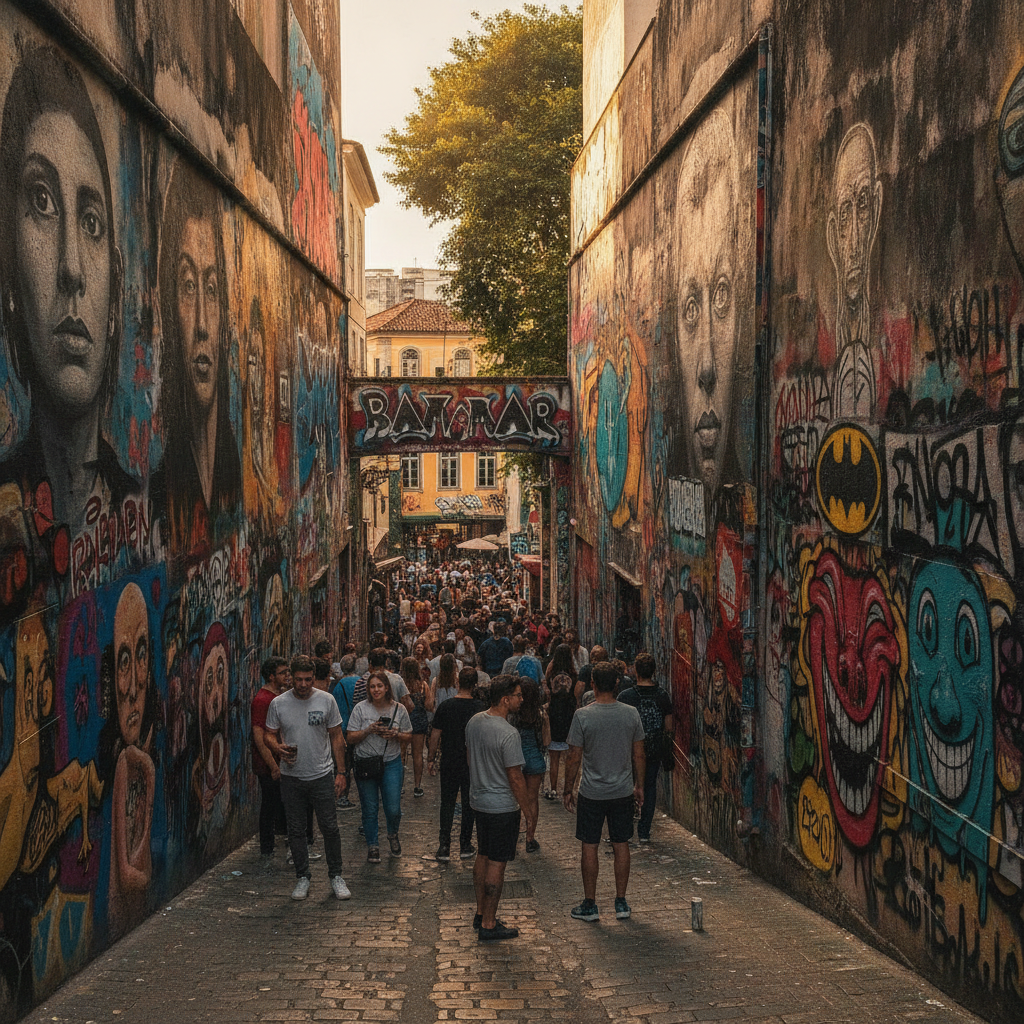
Vila Madalena (the neighbourhood surrounding Rua Aspicuelta, western Pinheiros, the residential area developed in the 1970s as an artists' and students' community around USP — the University of São Paulo) is São Paulo's most culturally active neighbourhood — the Beco do Batman (Batman Alley, the 100m alley at Rua Gonçalves Osório, the densest concentration of street art in South America, repainted every 6–12 months by invited artists) is the visual centrepiece; the neighbourhood's bars (Astor, 1950s Art Deco bar; Rock Kitchen, live music; Original; the botequim tradition) fill Thursday–Sunday.
- 2
Pinheiros Nightlife — Bar Rua Augusta and Beyond
Rua Augusta (the axis of São Paulo's nightlife from Avenida Paulista south to Rua Oscar Freire, historically the city's most animated street) and the Pinheiros neighbourhood (Rua dos Pinheiros, Rua Wisard, Rua Harmonia) contain the largest concentration of bars, clubs, and restaurants per capita in Brazil — D.Edge (the most internationally regarded electronic music club in South America, consistently in DJ Mag's top 100 clubs) and the intimate vinyl bars (A Livraria, the bookshop that converts to a bar after 7pm) represent the spectrum; São Paulo's nightlife begins at midnight and runs until 8am.
- 3
MASP — The Suspended Museum on Avenida Paulista
MASP (Museu de Arte de São Paulo Assis Chateaubriand, Avenida Paulista 1578, 1968, Lina Bo Bardi architect, free Tuesday, R$50 other days) is the most important art museum in the Southern Hemisphere — the building (suspended 8m above the ground on 4 red concrete pilasters, the 70m span over the free public space, the most radical structural expression in Brazilian Modernist architecture) houses 11,000 works; the collection includes El Greco, Velázquez, Rembrandt, Monet, Degas, and the finest collection of Portinari and Brazilian modern art; the Sunday antique market beneath the suspended building is free.
- 4
Avenida Paulista — The São Paulo That Never Sleeps
Avenida Paulista (the 2.8km main boulevard of São Paulo, from MASP to Consolação, Sunday: fully closed to cars and converted to a pedestrian park and cycling route with 1.5 million people) contains the headquarters of Brazil's largest banks, the British Consulate, and the FIESP (Federation of Industries of the State of São Paulo, the building that projects the Brazilian flag during national events) — the Sunday closures (since 2015, 7am–9pm) are São Paulo's most successful public space activation; the Ciclofaixa (cycling lanes) on Paulista extend to Parque Ibirapuera.
- 5
Parque Ibirapuera — Oscar Niemeyer's Urban Park
Parque Ibirapuera (Av. Pedro Álvares Cabral, Ibirapuera, 1954, the park designed for the 400th anniversary of São Paulo, Oscar Niemeyer's Oca and Bienal pavilions, 158 hectares, free, daily 5am–midnight) contains 5 museums — MAM (Museu de Arte Moderna, free Tuesday), MAC (Museu de Arte Contemporânea), the Afro Brasil Museum, the Pavilhão Japonês — within a continuous landscape of lakes, forest, and cycling paths; the São Paulo Bienal de Arte (October–December, biennial, one of the three most important contemporary art exhibitions in the world) is held in the Niemeyer Ciccillo Matarazzo Pavilion.
- 6
Mercado Municipal — The Iron Market and the Mortadela Sandwich
Mercado Municipal de São Paulo (Rua da Cantareira 306, Centro, 1933, Ramos de Azevedo and Francisco de Paula Ramos de Azevedo architects, 228 stalls, daily 6am–6pm) is the largest urban food market in Latin America — the stained glass windows (9 windows depicting Brazilian agriculture and commerce, the most significant stained glass in São Paulo) and the 200g mortadela sandwich (R$18, from the Hocca Bar stall inside the market — the most photographed food in São Paulo) are the market's cultural signatures; the bacalhau, nuts, exotic fruits, and artisan cheese sections serve São Paulo's professional restaurants.