Samba, Carnevale e il Patrimonio Culturale Afro-Brasiliano di São Paulo
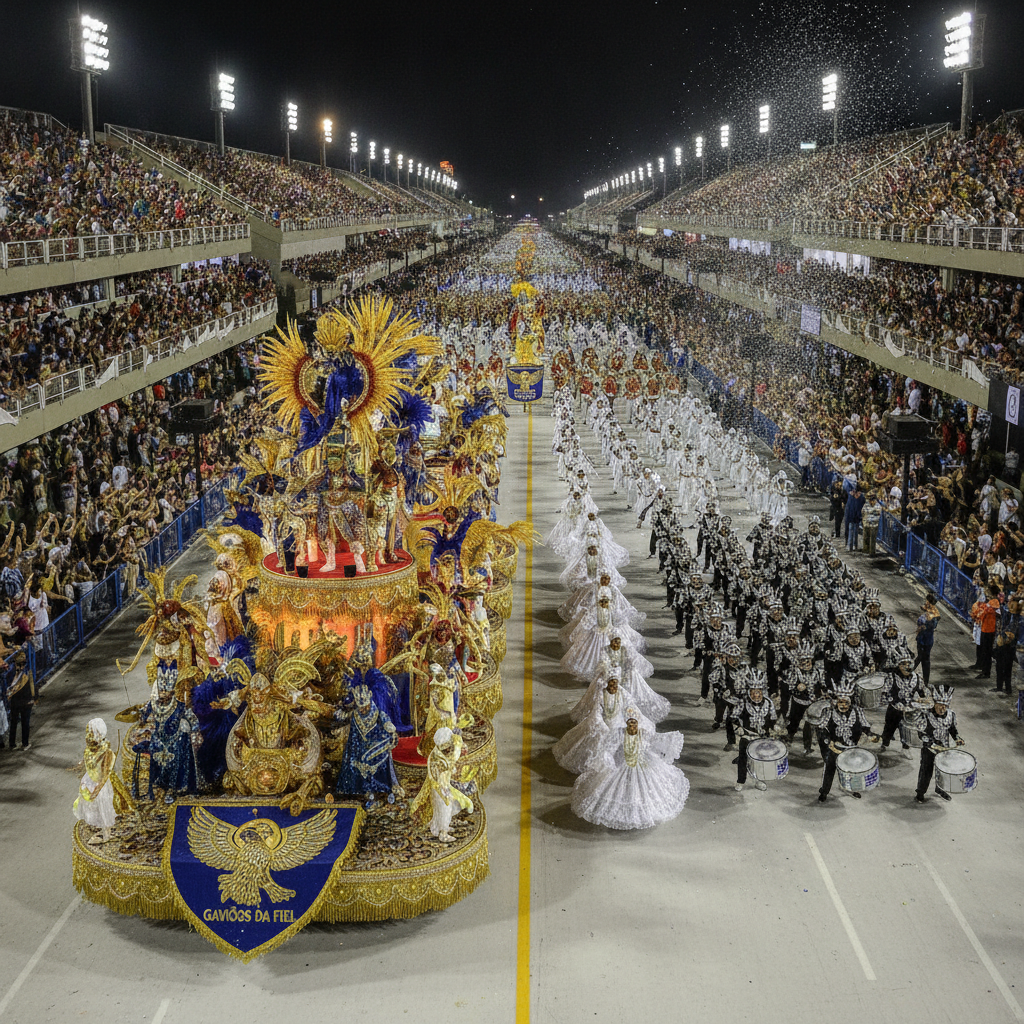
São Paulo's Carnaval (the São Paulo Carnival — the second largest Carnival in Brazil after Rio de Janeiro, held in the Sambódromo do Anhembi in the Santana neighbourhood every February — a spectacle of Brazilian popular culture, music, and dance that is as much a product of São Paulo's African-Brazilian community as of the Carioca culture of Rio) and the samba tradition (the music and dance form that originated in the African-Brazilian community of Rio de Janeiro and Salvador da Bahia and became the national music of Brazil) are at the core of São Paulo's cultural identity.
- 1
São Paulo Carnival — The Underrated Giant
São Paulo Carnival (Sambódromo do Anhembi, February, 2 competition nights, the second-largest carnival parade in Brazil after Rio) involves 14 samba schools from the São Paulo Grupo Especial competing over 2 nights — the São Paulo schools (Vai-Vai, the oldest samba school in Brazil, founded 1930; Rosas de Ouro; Pérola Negra; Mocidade Alegre) each have 3,000–5,000 paraders; tickets (R$100–400) are far more available than Rio; the São Paulo parade is frequently cited by carnival judges as technically superior to Rio while receiving less international attention.
- 2
Vai-Vai — The Oldest Samba School in Brazil (1930)
Vai-Vai (Bixiga neighbourhood, Rua São Vicente 276, founded 1930, the oldest samba school in Brazil, traditional colours black and white, the 'Vai-Vai Invicta' — the school's nickname during its 1970s championship dynasty) was founded by Afro-Brazilian workers in the Bixiga neighbourhood (São Paulo's Italian neighbourhood, creating an unusual cultural layering) — Vai-Vai's quadra (practice venue) is open for rehearsals (October–January, Friday–Saturday, R$20 entry) and is the most authentic samba school visit in São Paulo.
- 3
Bixiga — The Italian Neighbourhood's Brazilian Soul
Bixiga (the neighbourhood around Rua 13 de Maio, Bela Vista, São Paulo's historic Italian immigrant district, developed 1890–1930) combines Italian immigrant heritage (the cantinas of Rua 13 de Maio — Cantina do Samba, Cantina Rodeio, serving Italian-Brazilian food: the São Paulo caprese with mozzarella de búfala from the Mantiqueira farms; the pizza à brasileira with catupiry cream cheese, the São Paulo innovation that conquered Brazil) with the Afro-Brazilian samba tradition of Vai-Vai; the neighbourhood is the best example of São Paulo's layered immigrant history.
- 4
Mercado Municipal and São Paulo's Food Diversity
São Paulo is the most diverse food city in the world by number of nationalities represented — the city has the largest Japanese, Italian, Lebanese, and Korean communities in South America; the largest Syrian, Bolivian, and Haitian communities in Brazil; and the most diverse indigenous population (50,000 from 55 different ethnic groups) of any Brazilian city; the food consequence is: 15,000 Japanese restaurants (more than Tokyo per capita), the finest pizza outside Italy (São Paulo bakers are Italian descendants, the crust and sauce techniques are authentic, and the production scale is enormous), and the most comprehensive Korean BBQ street in the Western Hemisphere (Liberdade's Korean enclave).
- 5
Sesc Pompeia — Lina Bo Bardi's Industrial Leisure Centre
Sesc Pompeia (Rua Clélia 93, Pompeia, 1977–1982, Lina Bo Bardi architect, free entry, Monday–Saturday 8am–10pm) is the most important cultural centre in São Paulo — the complex (a former barrel factory converted by Bo Bardi into a cultural and sports facility using the original brick industrial sheds alongside two brutalist concrete towers connected by concrete aerial walkways) has been called the finest example of adaptive reuse in the world; the free exhibitions, concerts, cinema, and the swimming pool (R$8 fee) attract 7,000 visitors per day.
- 6
São Paulo Funk and Baile Funk Culture
Baile Funk (Rio de Janeiro funk carioca adapted in São Paulo as São Paulo funk or funk ostentação — ostentation funk, celebrating material wealth in contrast to Rio's favela social themes) has been the dominant popular music in São Paulo's periphery (the outer ring of working-class neighbourhoods) since 2010 — MCs Guimê, Menor do Chapa, and Hungria Hip Hop are the genre's São Paulo stars; the baile funk parties (outdoor sound-system events in the periferias, 10pm–8am, free or R$5 entry) are the largest organized cultural events in the city by attendance, with individual parties drawing 10,000–50,000.