La DMZ, Panmunjom e la Zona di Sicurezza Congiunta — Il Confine Diviso della Corea
The Korean Demilitarized Zone (DMZ) — the 4-kilometre-wide, 248-kilometre-long buffer zone separating North and South Korea, established by the Korean Armistice Agreement of July 27, 1953, which ended the active fighting of the Korean War (1950-1953) without a formal peace treaty — is one of the most heavily militarised borders in the world and one of the most historically significant sites in the Asia-Pacific region, accessible on organized tours from Seoul (approximately 55 kilometres to the south).
- 1
DMZ — The World's Most Heavily Fortified Border
The Korean Demilitarized Zone (DMZ, 250km long, 4km wide, the buffer zone established by the 1953 Korean Armistice Agreement running across the peninsula from west to east) separates North and South Korea — the DMZ has been uninhabited by civilians since 1953, creating an accidental wildlife sanctuary (Amur leopards, Asiatic black bears, white-naped cranes, and red-crowned cranes inhabit the zone); the DMZ tour from Seoul (Imjingak, the northernmost point accessible without special permit, 1 hour by train from Seoul Station) is the most visited single excursion from Seoul.
- 2
Panmunjom Joint Security Area — Standing on the Line
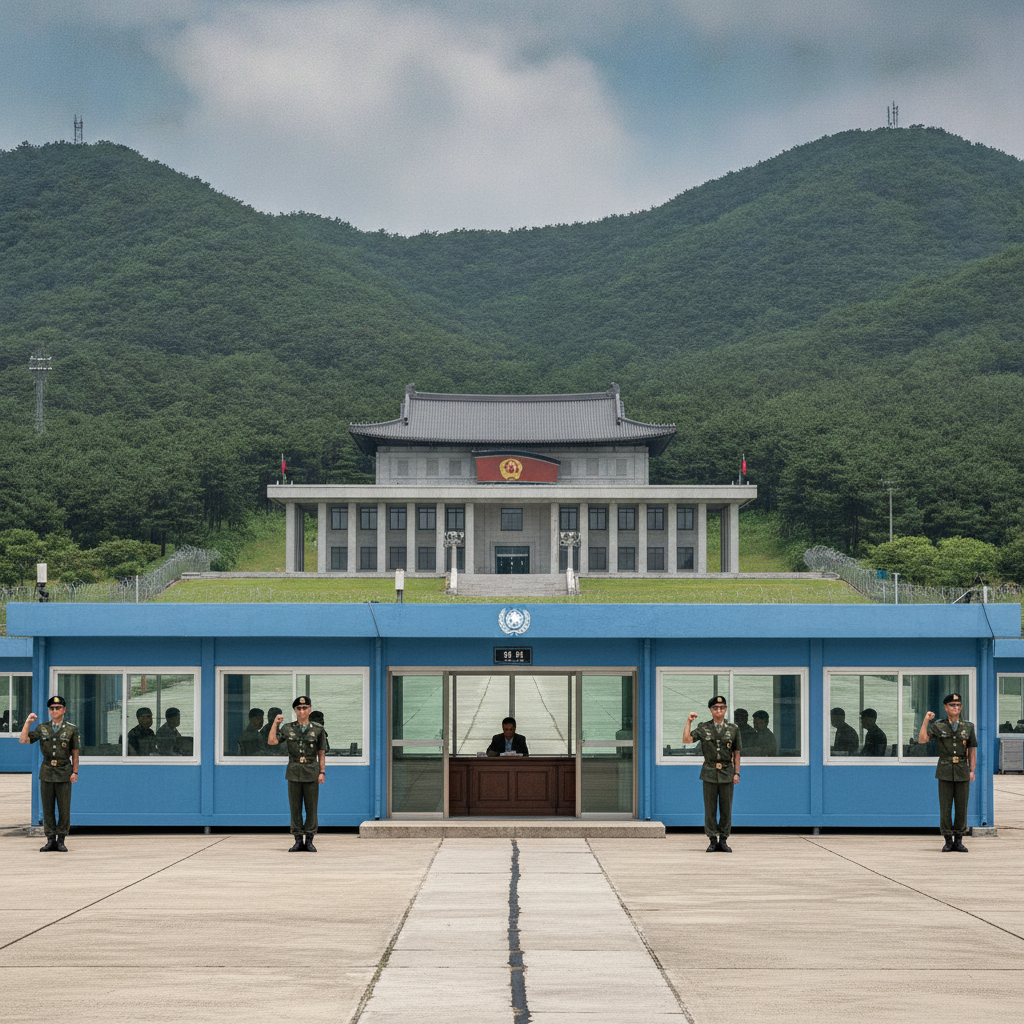
The JSA (Joint Security Area, Panmunjom, the 800m × 400m jointly administered military enclave in the DMZ, the only point where North and South Korean soldiers face each other directly) is accessible by organized tours only (from Seoul's Lotte Hotel or War Memorial, ₩100,000–130,000, daily except Sundays and North Korean national holidays) — the blue UNC conference rooms (the Joint Security Buildings where the 1953 Armistice was signed and military talks continue) straddle the Military Demarcation Line; visitors can cross into the North Korean side of the blue buildings; photography is controlled.
- 3
Korean War Memorial — The 36,574 American Dead
The War Memorial of Korea (29 Itaewon-ro, Yongsan-gu, free entry, Tuesday–Sunday 9:30am–6pm) is the primary military memorial in South Korea — the Hall of War History (the museum) and the outdoor sculpture garden document the Korean War (1950–1953, 5 million total casualties including 36,574 American dead, 217,000 South Korean military dead, 1 million estimated North Korean military and civilian dead) and Korea's military history from the Three Kingdoms period; the Wall of Remembrance (the names of US service members who died, adjacent to the main building) is the most emotionally resonant element.
- 4
Third Infiltration Tunnel — North Korea's Invasion Route
The Third Tunnel of Aggression (Dorasan, the DMZ, 52km north of Seoul, accessible only on DMZ tour packages) was discovered in 1978 by South Korean military engineers who noticed ground vibrations — the tunnel (73m below ground, 2m wide × 2m high, capable of moving 30,000 soldiers per hour) is one of 4 confirmed North Korean infiltration tunnels built beneath the DMZ for a surprise invasion; visitors descend in electric railway cars to 700m from the Military Demarcation Line; photography is not permitted inside the tunnel; the tunnel walls still show evidence of North Korean drilling and the black paint applied to disguise blasting marks as coal seams.
- 5
Dora Observatory — Seeing North Korea
Dora Observatory (the elevated observation deck at Dorasan Station, the southernmost point of South Korean rail, the DMZ area tour's northern terminus) is the closest legal viewpoint of North Korea from the South — with binoculars (₩500 coin-operated), visitors can see Gaeseong City (North Korea's special economic zone adjacent to the DMZ), the Propaganda Village (Kijongdong, the fake village the North built to display prosperity — no actual residents, the lights turn on at set times), and the flagpole (160m, the world's tallest flagpole, built in a height competition with the South's Daesong-dong village flagpole).
- 6
Dorasan Station — The Last Train to Nowhere
Dorasan Station (the terminal station of the Gyeongui Line, the railway line that once connected Seoul to Pyongyang and Manchuria before the division, built 2002 as an infrastructure investment in the expectation of reunification) was the departure point for the Kaesong Industrial Complex passenger train (the joint North-South economic zone train, operational 2007–2016, suspended when the industrial complex was closed following North Korea's nuclear test) — the station (architecturally indistinguishable from a normal Korean railway station, fully operational, no passengers to North Korea since 2016) is open to tourists; the last departures board shows 'Pyongyang' as a destination.