Hongdae, Sinchon e i Quartieri Universitari — Street Art, Club e Cultura Giovanile
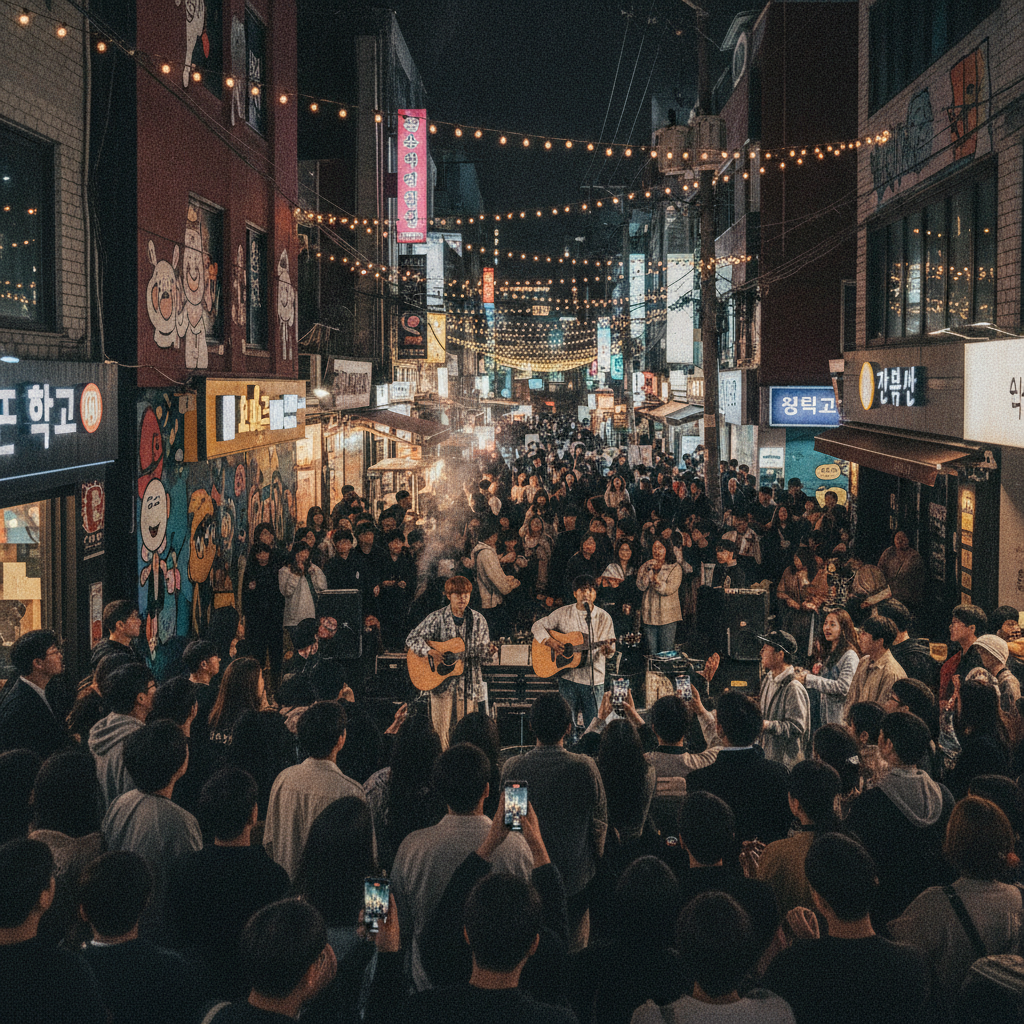
Hongdae (홍대, short for Hongik University — the area surrounding Hongik University in Mapo-gu, approximately 6 kilometres west of central Seoul) is Seoul's premier youth culture and nightlife district, combining independent music venues, street performance culture, underground clubs, independent cafés, vintage fashion, and some of the most concentrated street art in Korea in a compact and highly walkable neighbourhood that never really sleeps.
- 1
Hongdae — Korea's Independent Music and Art Scene
Hongdae (the neighbourhood surrounding Hongik University, Mapo-gu, the university district that became Seoul's independent music, art, and youth culture centre from the 1990s) is the origin of Korean indie music — the Free Market (Hongdae Free Market, the Sunday afternoon outdoor craft market, March–November, established 2002, the first craft market in Korea) and the live club district (Club FF, V-Hall, the mud, the small clubs where Korean indie bands perform for 50–200 person audiences on weekends) represent the district's two faces; the influx of Airbnb tourists (2015+) has changed the neighbourhood significantly.
- 2
Sinchon — The University Discount District
Sinchon (immediately east of Hongdae, around Yonsei University, Sogang University, and Ewha Womans University — 3 of Seoul's most prestigious institutions within 500m) is the most concentrated university commercial district in Korea — the pojangmacha (street food tents, distinctive orange or yellow vinyl covers, serving tteokbokki, odeng, soondaeguk, and soju in the alley behind Sinchon station) operate from 6pm–3am; the Sinchon Watergun Festival (the 'Watergun' festival, Summer, the largest water fight event in Asia, 30,000+ participants in the Sinchon commercial district) is held in July.
- 3
K-Pop Industry — SM Entertainment Town
SM Entertainment, YG Entertainment, JYP Entertainment (the three largest K-Pop agencies, all headquartered in the Gangnam-Seodaemun corridor) are accessible as tourist destinations — the SM Entertainment Experience (Coex Mall, Gangnam, the SMTOWN entertainment and museum complex), the Cube Entertainment cafe (Gangnam), and the Starfield HYBE Insight (Yongsan, the BTS and HYBE label museum, ₩22,000, daily 11am–8pm, the most detailed behind-the-scenes access to the K-Pop production process) allow fans to see the industry from a physical museum perspective.
- 4
Hongdae Street Performance — The Busking Capital
Hongdae's Walkway (the pedestrianized zone around the Hongdae Park and the club area, the most active busking location in South Korea) has produced the largest number of successful Korean musicians who began as street performers — the Friday and Saturday evening busking crowds (6pm–midnight, the city officially allocates performance slots by permit; unofficial performers occupy the adjacent streets) draw the largest audiences of any street performance location in Asia; the Busking Association (official permit-holders) runs an online schedule accessible at visitseoul.net.
- 5
Ewha Womans University Campus — Fashion Architecture
Ewha Womans University (52 Ewhayeodae-gil, Seodaemun-gu, founded 1886, the largest women's university in the world by enrollment, 18,000 students) has the most dramatic campus architecture in Seoul — the ECC (Ewha Campus Complex, 2008, Dominique Perrault, the glass-and-steel campus centre cutting 6 floors underground into the hillside, the world's largest underground university facility) creates a canyon-like open-air atrium bisecting the campus; the adjacent fashion street (Ewha Women's University Gate street, from the north gate to Sinchon Metro) is Seoul's women's fashion district.
- 6
Club Culture — Itaewon and Hongdae Electronic Scene
Seoul's electronic music club scene operates in two distinct circuits: Itaewon (Club Soap — Seoul's techno institution, Club Cakeshop — hip-hop/R&B) and Hongdae (Club FF — Korea's electronic music shrine since 2001, the mu — techno, the Venue — commercial EDM); the clubs run Friday and Saturday 10pm–7am; South Korea has no last call (alcohol can be served 24 hours); the cover charge (₩20,000–30,000 for domestic DJs, ₩50,000+ for international) includes a welcome drink; the Itaewon club area was the site of the tragic crowd crush of October 29, 2022 (159 deaths), leading to new crowd management regulations.