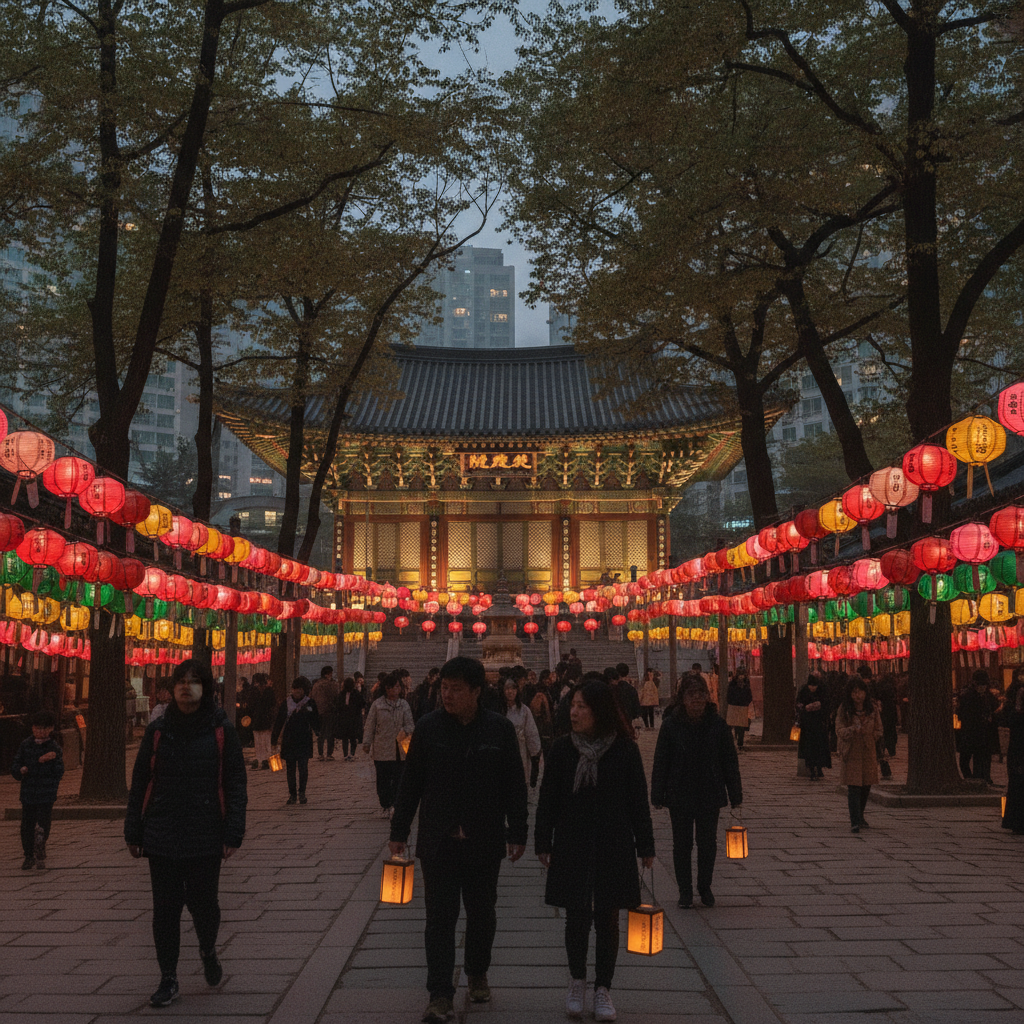
Jongno, Insadong, Parco Tapgol e Tempio Jogye — Il Cuore della Vecchia Seoul
Jongno ('Bell Street') — the east-west artery that was the main commercial street of the Joseon capital Hanyang — runs through the historic heart of Seoul, connecting Gyeongbokgung Palace to the west with the Dongdaemun Gate to the east; the streets surrounding Jongno contain the most significant concentration of Buddhist temples, traditional markets, crafts districts, and historic sites within walking distance of each other in Seoul.
- 1
Jogyesa Temple — The Buddhist Heart of Seoul
Jogyesa Temple (55 Ujeongguk-ro, Jongno-gu, the headquarters of the Jogye Order — the largest Buddhist order in Korea, 1395, rebuilt 1910 and expanded) is the primary Buddhist temple in Seoul — the Daeungjeon main hall (1938, the largest wooden Buddhist structure in Seoul) houses a golden Buddha triad; the 500-year-old white pine and zelkova trees in the courtyard pre-date the current building; the templestay program (₩60,000/night, includes meals, meditation, morning ceremony participation) is Seoul's most distinctive cultural immersion; Jogyesa is accessible from Anguk Metro Station.
- 2
Insadong — The Antique and Culture Street
Insadong (the 700m pedestrian street from Anguk to Tapgol Park, Jongno-gu, the antique and traditional craft market district of Seoul) is Seoul's primary traditional goods street — the galleries (70+ traditional Korean art and craft galleries displaying celadon ceramics, minhwa folk painting, and Korean contemporary art), the traditional tea houses (Dawon — a Korean traditional tea house inside a preserved hanok, serving 20+ types of Korean herbal tea), and the Ssamziegil (the open-air mall with a spiral ramp and traditional craft stalls) form the Insadong experience; the Sunday pedestrian market is the most lively.
- 3
Tapgol Park — Where Independence Was Declared (1919)
Tapgol Park (Pagoda Park, 99 Jongno, Jongno-gu, 1897, Seoul's first modern public park, where Korea's March 1st Independence Movement began on March 1, 1919) is the most politically significant small park in Korea — the Declaration of Independence was read here by 33 Korean representatives at 2pm on March 1, 1919, beginning the non-violent resistance to Japanese colonial rule that inspired Gandhi's independence movement; the 10-panel marble bas-relief murals around the park wall document the March 1st Movement; the 13th-century Wongaksa pagoda (inside the park, National Treasure No. 2) is the oldest stone pagoda in Seoul.
- 4
Bukchon Hanok Village — 900 Traditional Houses on a Hill
Bukchon Hanok Village (the residential district between Gyeongbokgung Palace and Changdeokgung Palace, Jongno-gu, approximately 900 surviving traditional Korean houses — hanok — built during the Joseon Dynasty and the Japanese colonial period) is the most intact traditional urban neighbourhood in Seoul — the narrow alley system (particularly Gyedong-gil and the 5 numbered alleys of Gahoe-dong) preserves the original stone paving, wooden lattice gates, and clay tile roofs of Seoul's traditional architecture; the most photographed location is the alley beside Namsangol 31-1 with the N Seoul Tower visible in the distance.
- 5
Cheonggyecheon Stream — Urban Ecology Restoration
Cheonggyecheon (the 5.8km urban stream restoration project, 2005, running through the heart of Seoul from Cheonggye Plaza at Gwanghwamun to the Hangang River) replaced a decaying 1960s elevated highway with an open waterway and linear park — the restoration (22,000 tons of concrete removed, the stream's natural water level supplemented by 120,000 tonnes/day of Han River water) is cited as the global model for urban stream daylighting; the 22 pedestrian bridges crossing the stream, the traditional royal washing stone (Supyo Bridge restoration), and the night illumination make it Seoul's most popular evening walk.
- 6
Gwanghwamun Plaza — Admiral Yi and King Sejong
Gwanghwamun Plaza (Sejongdaero, the central axis plaza connecting Gyeongbokgung Palace to Seoul City Hall, 550m × 34m, 2009) is anchored by two statues: King Sejong the Great (the Joseon king who invented Hangeul, the Korean alphabet, in 1443 — the statue's underground exhibition, free, shows the scientific principles of the phonetic script) and Admiral Yi Sun-sin (the turtle ship admiral who defeated Japan's 1592 invasion using the world's first ironclad warships — the world's first combat ironclad, 60 years before the USS Monitor); the plaza hosts major national events and protests.