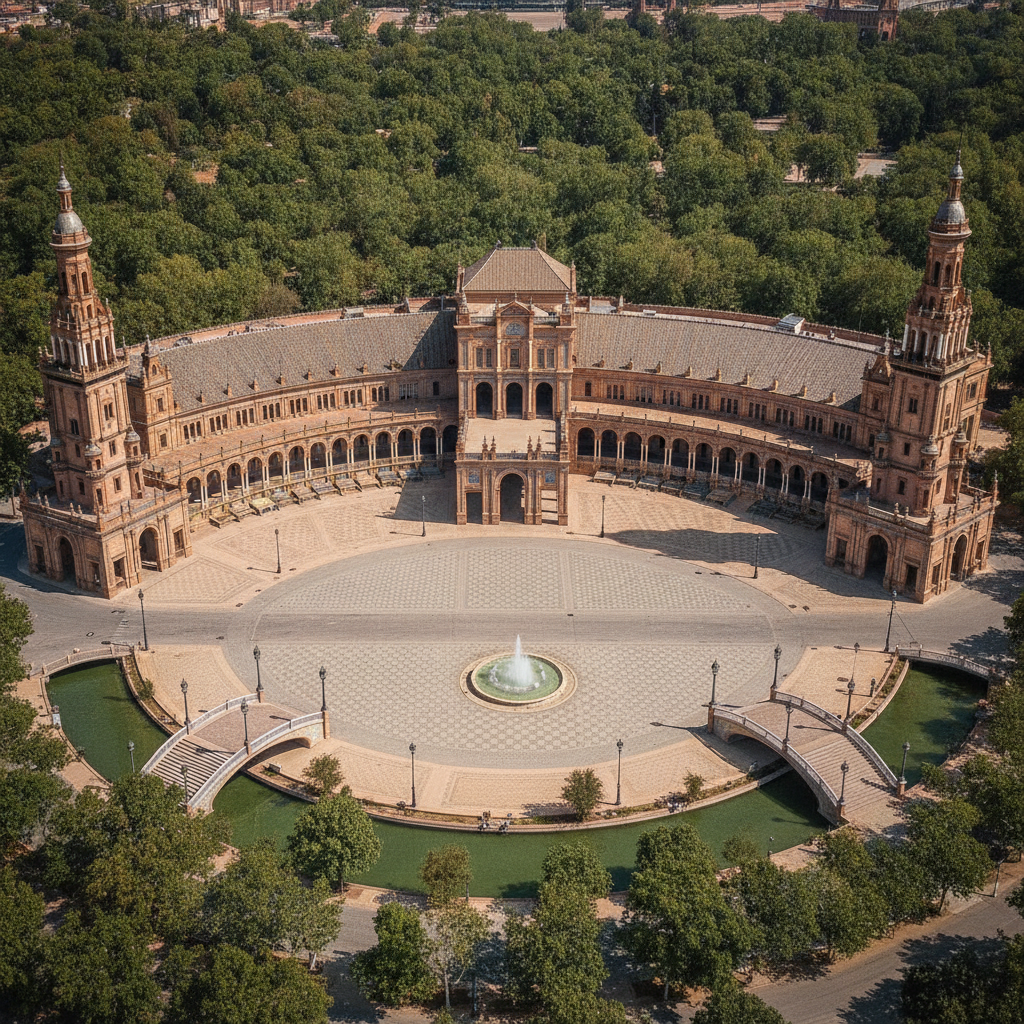
Esposizione del 1929, Architettura del Parco e l'Eredità Modernista di Siviglia
The 1929 Ibero-American Exposition (the 'Exposición Iberoamericana de Sevilla 1929' — the world exposition held in Seville from May to December 1929) left a permanent legacy of monumental buildings (the Plaza de España, the national pavilions of the Latin American countries, and the María Luisa Park redesign) that constitute the most impressive ensemble of early 20th-century civic architecture in Spain.
- 1
Parque de María Luisa — The 1929 Ibero-American Exhibition Park
Parque de María Luisa (the 34-hectare park donated to the city by the Infanta María Luisa in 1893, developed for the Ibero-American Exhibition of 1929, accessible from the Prado de San Sebastián) is the finest park in Seville — the botanical collection (250+ plant species, the most diverse in Andalusia), the fountains and pools, and the exhibition pavilions converted to museums (Museo de Artes y Costumbres Populares, Museo Arqueológico de Sevilla) make it the city's multi-use cultural park; the duck ponds and the peacocks (20+ resident in the park) are the most photographed elements.
- 2
Plaza de España — The Crescent Palace and the Regional Tiles
Plaza de España (the centrepiece of the 1929 Ibero-American Exhibition, Aníbal González architect, a 170m-radius semicircular building with twin towers, 48 ceramic tile alcoves — one per Spanish province — and a canal with rental boats) is the most grandiose exhibition building in Spain — the tile alcoves (each depicting the history and geography of a Spanish province, the most popular being the Sevilla, Granada, and Cataluña alcoves — photographed by visitors recreating the Star Wars scene filmed here: Naboo in Attack of the Clones, 2002) and the bridge balustrades (each a different design of traditional Spanish tile) make it one of the most ornate civic spaces in Europe.
- 3
Museo Arqueológico de Sevilla — The Carambolo Treasure
Museo Arqueológico de Sevilla (Plaza de América, Parque de María Luisa, in the Renaissance Pavilion from the 1929 Exhibition, €1.50 non-EU adults, free EU, Tuesday–Saturday 9am–3pm) houses the Carambolo Treasure (the 1958 discovery near Camas — 21 gold ornamental pieces from the 9th century BCE, the finest pre-Roman gold treasure in Spain, the definitive evidence of the Tartessian civilization — the 'Atlantis' civilization of the Guadalquivir valley documented only in Greek texts until this discovery) — the treasure is the single most important archaeological find in Seville's history.
- 4
Hotel Alfonso XIII — Where the 1929 Exhibition's Guests Stayed
Hotel Alfonso XIII (San Fernando 2, adjacent to the Real Alcázar, opened 1929 specifically for the Ibero-American Exhibition, the most architecturally significant hotel in Seville, Neo-Mudejar style by José Espiau y Muñoz) is Seville's most celebrated hotel — the central patio (a Sevillano courtyard with a central fountain, marble columns, and azulejo tile walls — a direct recreation of an Alcázar interior) is the hotel's social centre; the hotel's Alfonso Bar (the most elegant bar in Seville) is open to non-guests; the American film crew of 'Lawrence of Arabia' (1962) stayed here during the Seville location filming.
- 5
Museo de Artes y Costumbres Populares — The Flamenco Dress Collection
Museo de Artes y Costumbres Populares de Sevilla (Pabellón Mudéjar, Parque de María Luisa, the 1929 Mudejar Pavilion, free EU, €1.50 others, Tuesday–Saturday 9am–3pm) documents Andalusian folk culture — the collection includes: the most complete archive of traditional Sevillano trajes de gitana (flamenco dresses, the polka-dot ruffled dresses worn during the April Fair), the history of the Semana Santa cofradías (with original nazareno costumes and float decorations), and the agricultural implements of Andalusia's olive and cork industries; the museum is the complement to the Flamenco Dance Museum (Betis neighbourhood) for understanding the cultural ecosystem.
- 6
Pabellones de 1929 — The International Pavilions Still Standing
The 1929 Ibero-American Exhibition left an extraordinary architectural legacy in Seville — beyond the Plaza de España, the individual national pavilions (the Argentina Pavilion, now a cultural centre; the USA Pavilion, now a consulate; the Colombia Pavilion, now the Consulate of Colombia; the Chile and Peru Pavilions, now private residences) are distributed throughout the Parque de María Luisa and the surrounding streets; the consistency of the Neo-Baroque style (harmonized across all national pavilions by exhibition rules) creates a coherent architectural ensemble that is unique in the world as a surviving exhibition district.