Shanghai Maglev, Metro e il Trasporto Urbano più Veloce del Mondo
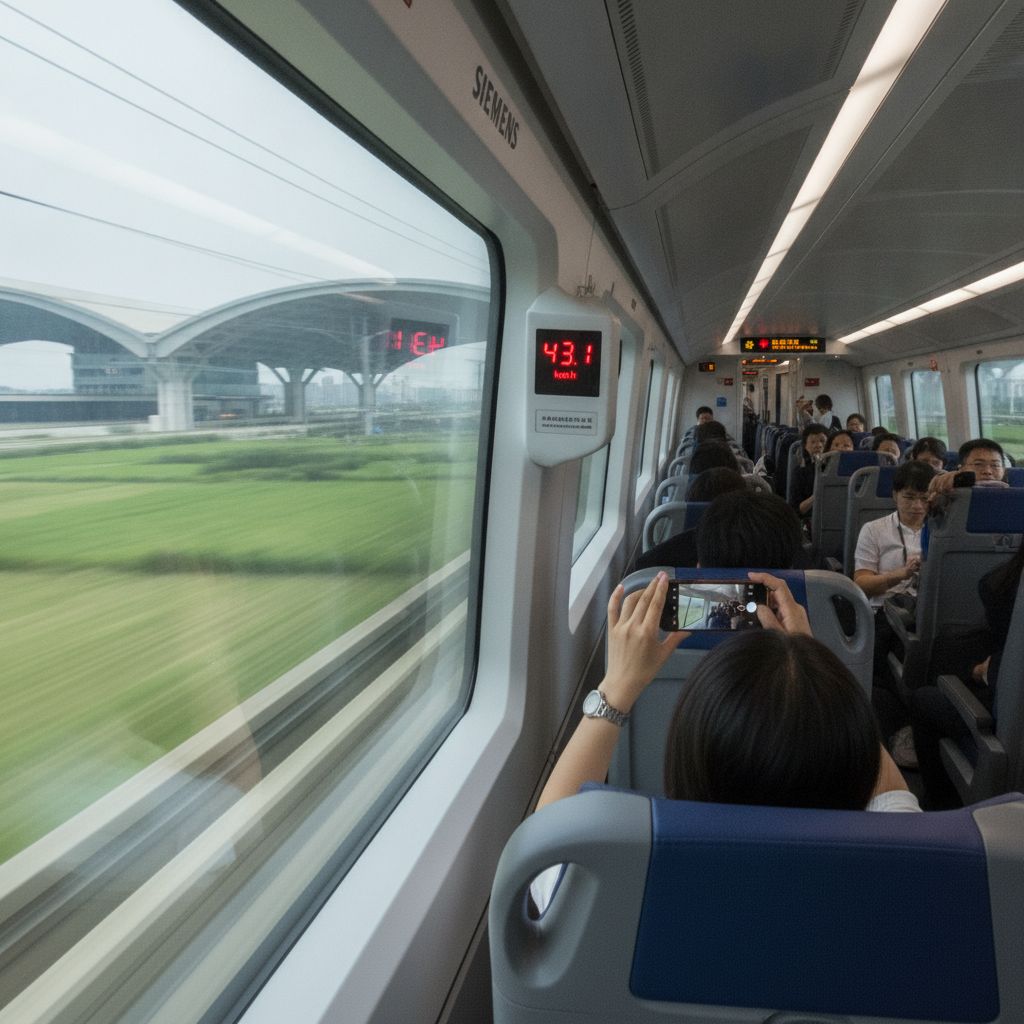
The Shanghai Maglev (上海磁浮示范运营线 — the magnetic levitation train line connecting Pudong International Airport to Longyang Road metro station in Pudong, operated since 2004 — the world's first commercially operated high-speed maglev train, reaching a maximum operating speed of 431 km/h (the highest regular commercial operating speed of any ground transportation vehicle in the world)): the 30 km journey from Pudong Airport to Longyang Road takes 7 minutes and 20 seconds, passing through the flat Yangtze delta landscape at a speed at which the details of the landscape become a blur.
- 1
Shanghai Maglev — The Fastest Commercial Train in the World (431 km/h)
The Shanghai Maglev (Transrapid TR08, Pudong International Airport to Longyang Road Metro Station, 30km, 7 minutes 20 seconds, ¥55 one-way, ¥40 with a same-day flight ticket) reaches 431 km/h in regular commercial service — the highest regular service speed of any train in operation; the acceleration (0–430 in 4 minutes) is perceptible as steady horizontal pressure; the return ticket (¥80) and the seat position (right side when going from the airport — the outer rail allows closer approach of northbound trains at full speed) maximize the experience; trains run 6:45am–9:40pm every 15–20 minutes.
- 2
High-Speed Rail Network — Shanghai Hongqiao as the Hub
Shanghai Hongqiao Station (the largest railway station in Asia by floor area, 1.1 million m², opened 2010) is the hub of China's high-speed rail network — from Hongqiao, the Fuxing CR400 trains (350 km/h service speed) reach Beijing in 4.5 hours (1,318km), Guangzhou in 5 hours (1,470km), and Chengdu in 11 hours (1,960km); the Fuxing (CR400BF) is the world's only commercial train operating at 350 km/h sustained service speed; the station's passenger volume (100+ million per year) exceeds the combined passenger volume of Beijing Capital and Shanghai Pudong airports.
- 3
Pudong Airport — The 1999 Terminal That Defined the Decade
Pudong International Airport (Pudong New Area, 40km east of central Shanghai, IATA: PVG, opened 1999, the primary international airport serving the Yangtze River Delta) is connected to the city by the Maglev (7 minutes), Metro Lines 2 and 7 (40–60 minutes), and express bus — the Terminal 1 (Paul Andreu architect, the same designer as Charles de Gaulle Terminal 2E in Paris) uses a curved white roof extending 386m over the ticketing and check-in hall; Terminal 2 (2008, TFP Farrells architects) is twice the size; a fourth runway opened 2019.
- 4
Jing-Hu High Speed Railway — The Fastest Long-Distance Train Route
The Beijing–Shanghai High Speed Railway (1,318km, opened 2011, the single busiest and most profitable railway line in the world) uses the G-class 'Gaotie' (High Iron) trains at 350 km/h peak speed — the 4h28min Beijing to Shanghai express (G1, the fastest, the morning departure) is faster than any flight when airport time is included; the line carries 200 million passengers per year; the 244 bridges comprising 80.5% of the line's total length (built on elevated viaducts through the flat North China Plain) required 450,000 construction workers over 4 years.
- 5
Transport Museum — China's Railway and Automotive History
The Shanghai Auto Museum (Anting, Jiading District, 40km west of central Shanghai via Metro Line 11, ¥60 adults, Tuesday–Sunday 9am–5pm) and the China Railway Museum (Beijing, the most complete in China, but Shanghai has a Railway History Museum at the old station) document China's 140-year motorized transport history — the National-V emissions standard (equivalent to Euro 5) implementation across China's vehicle fleet (450 million motor vehicles, the world's largest) has reduced PM2.5 significantly since 2019; the annual Shanghai International Automobile Show (April, even years, National Exhibition and Convention Center) is the world's largest motor show by exhibited vehicles.
- 6
Xintiandi and the Former French Concession Architecture
Xintiandi (the 'New Heaven and Earth' development, blocks around Taicang Road and Madang Road, Huangpu District, 2001, Benjamin Wood architect for Shui On Land) is Shanghai's first large-scale lilong (lane-house) preservation and adaptive reuse project — the 1920s–1930s shikumen (stone-gate houses, the hybrid Chinese-Western courtyard rowhouse typology unique to Shanghai) were renovated to house restaurants, bars, and the Site of the First National Congress of the Chinese Communist Party (Xingye Road 76, ¥3 adults) where the CCP was founded on July 23, 1921.