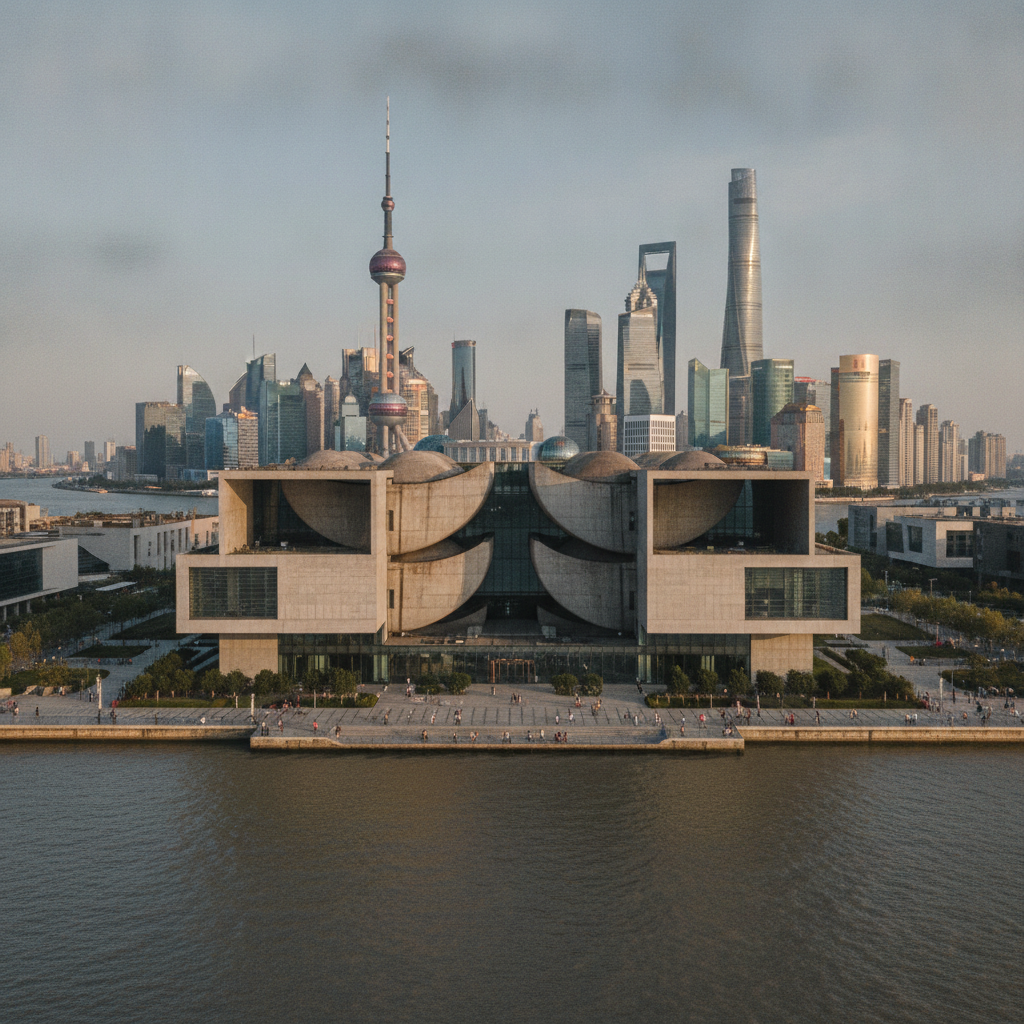
West Bund, M50 e la Scena Artistica di Livello Mondiale di Shanghai
Shanghai's contemporary art scene (one of the most dynamic in Asia, centred on two main districts: M50 Creative Park (M50创意园 — the converted textile mill complex on Moganshan Road (莫干山路) in the Putuo district, the oldest and most established contemporary art district in Shanghai, founded in 2000-2002 by artists renting cheap industrial studio space) and the West Bund cultural corridor (西岸 — the redeveloped former industrial waterfront south of the French Concession along the Huangpu River, now home to multiple world-class museums and galleries)): the West Bund has become the most ambitious art district development in China, with the Long Museum West Bund (龙美术馆(西岸馆)), the Yuz Museum (余德耀美术馆), and the West Bund Art & Design Fair (西岸艺术与设计博览会 — now one of the world's top contemporary art fairs) as its anchors.
- 1
West Bund Art District — Longhua Airport Becomes a Cultural Corridor
West Bund Art District (西岸艺术中心区, Xuhui Riverside, 11km of former industrial and aviation infrastructure from the 1950s Longhua Airport on the Huangpu River's west bank, converted to galleries and arts venues since 2012) is the most rapidly developing art district in the world by investment — the West Bund Museum (2019, David Chipperfield, ¥100 adults, a Pompidou Centre partnership hosting major international temporary exhibitions), the Long Museum West Bund (Liu Yiqian and Wang Wei collection, the largest private museum in China, ¥100), and the Shanghai Gallery of Art are all within 1km.
- 2
M50 — The Creative Park of Suzhou Creek
M50 Creative Park (莫干山路50号, Moganshan Road 50, Putuo District, the former Chunming Silk Mill and Shanghai No.2 National Cotton Mill converted to galleries and studios, 2002) is Shanghai's original contemporary art district — the 41 galleries (including ShanghART — the gallery that first represented Chinese contemporary artists internationally in 1996 — and Leo Gallery) and the 100+ studios represent the first wave of Shanghai's art market; the M50 is less polished than the West Bund (the studios are genuinely working studios, not showrooms) and more interesting for that reason; entry free, galleries open Tuesday–Sunday.
- 3
Yuz Museum — Indonesian Collector's Global Ambition
Yuz Museum (岳麓地产艺术基地, 35 Fenggu Road, Xuhui, in the former 1950s airplane hangar of Longhua Airport, 9,000m² single-volume exhibition space, ¥100 adults, Wednesday–Sunday 10am–5:30pm) is the private collection museum of Budi Tek — the 2,000+ works are primarily from the postwar and contemporary art movements (Ed Ruscha, Ai Weiwei, Jean-Michel Basquiat, Jeff Koons); the hangar building itself (the largest single-volume gallery space in Shanghai) and the permanent installation by Maurizio Cattelan (a 4-tonne meteorite, the world's largest displayed in an art context) are the visual anchors.
- 4
Power Station of Art — China's National Contemporary Art Museum
Power Station of Art (当代艺术博物馆, PSA, 200 Huayuangang Road, Huangpu, the former Nanshi Power Plant converted for Expo 2010 and opened as a contemporary art museum 2012, ¥0 Tuesday free, ¥50 other days) is the first public contemporary art museum in mainland China — the building (the original power plant's generating hall, 110m chimney retained, 41,000m² floor area) hosts the Shanghai Biennale (biennial, September–November of even years, the most important contemporary art exhibition in Asia) and temporary exhibitions of international scale; the chimney's LED installation (visible across the river from the Bund at night) is the building's public face.
- 5
Rockbund Art Museum — The 1920s Heritage Gallery
Rockbund Art Museum (外滩·美术馆, 20 Huqiu Road, Huangpu, in the former Royal Asiatic Society Building, 1933, David Chipperfield restoration 2010, ¥80 adults, Tuesday–Sunday 10am–6pm) is the most elegant gallery space in Shanghai — the 1933 Streamline Moderne building (the facade retained while the interior was completely reconstructed) hosts 4–5 major temporary exhibitions per year of international contemporary art; the location (1 block from the Bund) and the building quality make it the gallery destination for first-time visitors with limited time; the rooftop terrace (free access from the gallery) overlooks the Bund and Lujiazui.
- 6
Shanghai Biennale — The Asia Platform for Contemporary Art
The Shanghai Biennale (上海双年展, Power Station of Art, September–November of even years, established 1996, the oldest contemporary art biennale in China) is Asia's most significant recurring contemporary art event — the 2021–2022 Biennale ('Bodies of Water') drew 320,000 visitors over 6 months; the biennale commissions new large-scale works rather than relying on existing gallery loans; the associated Curator Lab (inviting 16 emerging curators from across Asia to develop a parallel exhibition) makes it genuinely different from Western biennales in its curatorial approach.