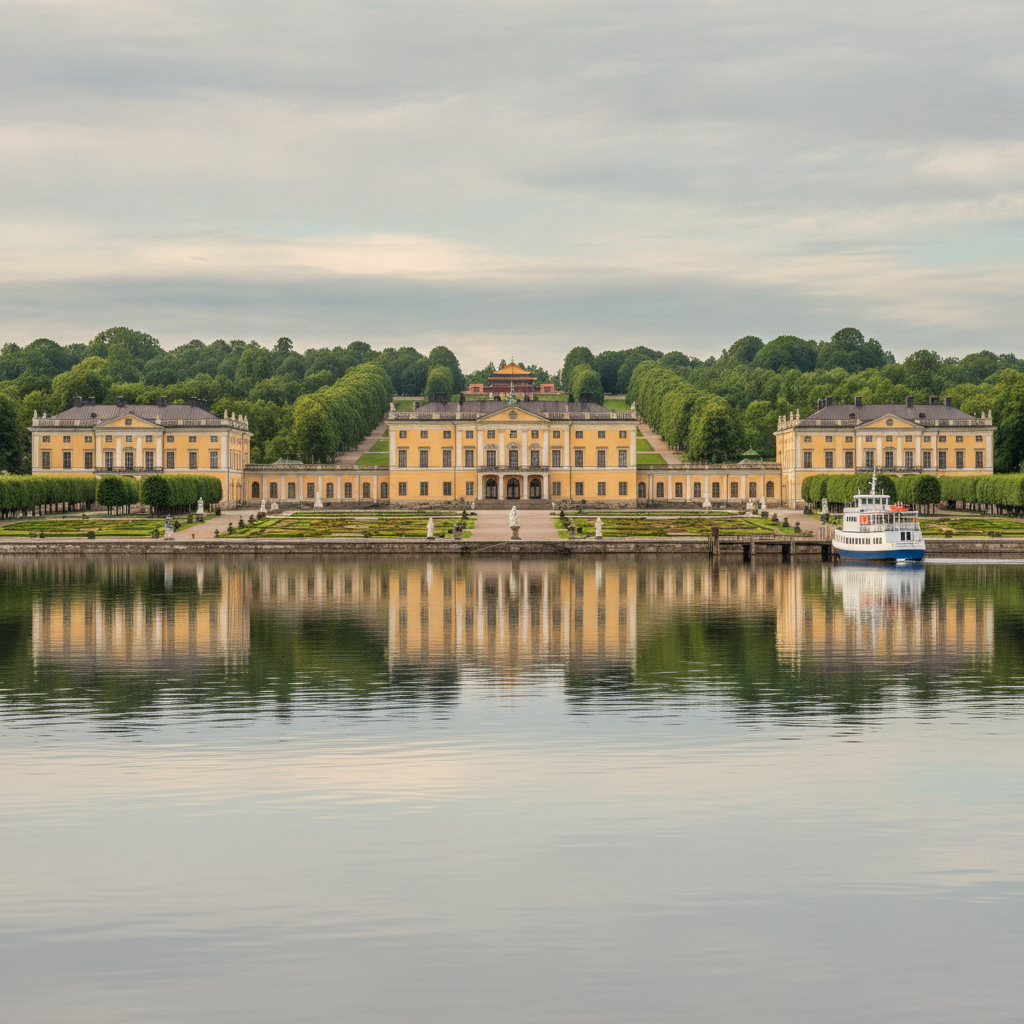
Palazzo Drottningholm — Patrimonio Mondiale UNESCO e Residenza Reale Estiva
Drottningholm Palace (Drottningholms slott — on the island of Lovön in Lake Mälaren, 11 km west of central Stockholm, accessible by boat from Stadshuskajen (50 minutes) or by subway and bus — the UNESCO World Heritage Site (inscribed 1991) and the primary residence of the Swedish Royal Family (King Carl XVI Gustaf and Queen Silvia have lived here year-round since 1981)): Drottningholm is sometimes called 'the Versailles of Sweden' — not because it rivals Versailles in scale, but because it was directly inspired by the French royal palace and represents the most complete Baroque palace complex in Scandinavia.
- 1
Drottningholm Palace — The Living UNESCO World Heritage Site
Drottningholm Palace (Drottningholm, Lovön island, Lake Mälaren, 10km west of Stockholm, accessible by Strömma boat from City Hall in 50 minutes or by Metro+bus in 35 minutes, UNESCO, ¥130 adults interior, park free) is the permanent residence of the Swedish Royal Family — the only UNESCO World Heritage Site in the world that is simultaneously the principal residence of a reigning monarch; the palace (1662, Nicodemus Tessin the Elder, the Versailles of the North) is partially open while the Royal Family occupies the south wing; the palace church (consecrated 1736), the Chinese Pavilion (1769, a royal birthday surprise), and the Baroque Garden complete the complex.
- 2
Drottningholm Court Theatre — The Intact 18th-Century Opera House
Drottningholms Slottsteater (the palace theatre, 1766, replaced the original 1754 theatre destroyed by fire, the most perfectly preserved 18th-century theatre interior in the world, open May–September by guided tour ¥90) operates with original 18th-century stage machinery — the 30 original painted canvas backdrops, the stage machinery (wind machine, thunder drum, wave maker — all mechanical, hand-operated), and the original orchestra pit still work as built; summer opera and chamber concerts (July–August, using period instruments and 18th-century performance practice) are performed on the original stage; the experience is irreplaceable.
- 3
Royal Palace Stockholm — The Ceremonial Palace in the City
Kungliga Slottet (The Royal Palace, Gamla Stan, the official residence of the Swedish Royal Family although the family lives at Drottningholm, opened to visitors 1754, ¥180 adults, daily May–September 10am–5pm) is the largest palace in the world by number of rooms still used by a royal family (1,430 rooms) — the State Apartments (the Bernadotte Apartments, the Museum of Antiquities, the Treasury housing the royal regalia) and the Changing of the Guard (daily at 12:15pm, the most watched ceremony in Stockholm, with the Royal Guard Cavalry on horseback and the Military Band) are the principal visitor experiences.
- 4
Skokloster Castle — The 1620s Baroque Time Capsule
Skokloster Castle (Skokloster, 70km northwest of Stockholm, bus from Stockholm Central, Skokloster lake, 1668, Carl Gustaf Wrangel field marshal's commission) is the most perfectly preserved Baroque castle interior in the world — the castle was under construction when Wrangel died in 1676, meaning the top floor is still unfinished (unused rooms contain 17th-century raw building materials exactly as left) and the furnished rooms were never updated or renovated; the result is the most authentic surviving 1670s aristocratic interior in Europe; the collection (20,000+ objects including the world's largest private collection of 17th-century European arms and armour) has never been auctioned.
- 5
Kungliga Djurgården — The Royal Park and Museum Island
Djurgården (the Royal Djurgård, the island east of central Stockholm, a royal hunting ground since the 16th century, now a park and museum district, accessible by tram 7 or Djurgårdslinjen boat from Nybroplan) concentrates 5 world-class museums within 3km of each other — Vasamuseet (the Vasa warship, 1628, the most complete 17th-century warship in existence, ¥190 adults), ABBA The Museum (¥250), Nordiska museet (Nordic folk culture, ¥130), Skansen (the world's first open-air folk museum, 1891, ¥190), and Thielska Galleriet (Zorn and Munch collection, ¥120) make Djurgården the most concentrated cultural afternoon in Scandinavia.
- 6
Vasa Museum — The Ship That Sank 20 Minutes After Launch
Vasamuseet (Djurgårdsvägen 14, Djurgårdsön, ¥190 adults, daily 8:30am–6pm June–August, 10am–5pm September–May) houses the Vasa (the 1628 Swedish warship that capsized and sank in Stockholm harbour 20 minutes after launch on its maiden voyage) — the ship (69m long, 1,200 tonnes, 64 bronze cannons) was raised in 1961 after 333 years on the harbour floor in a nearly perfect state of preservation (the cold, low-salinity Baltic water prevented the wood-boring Teredo worm from establishing); the 95% original material (the highest of any historical ship in the world) makes the Vasa the most complete 17th-century artifact on Earth.