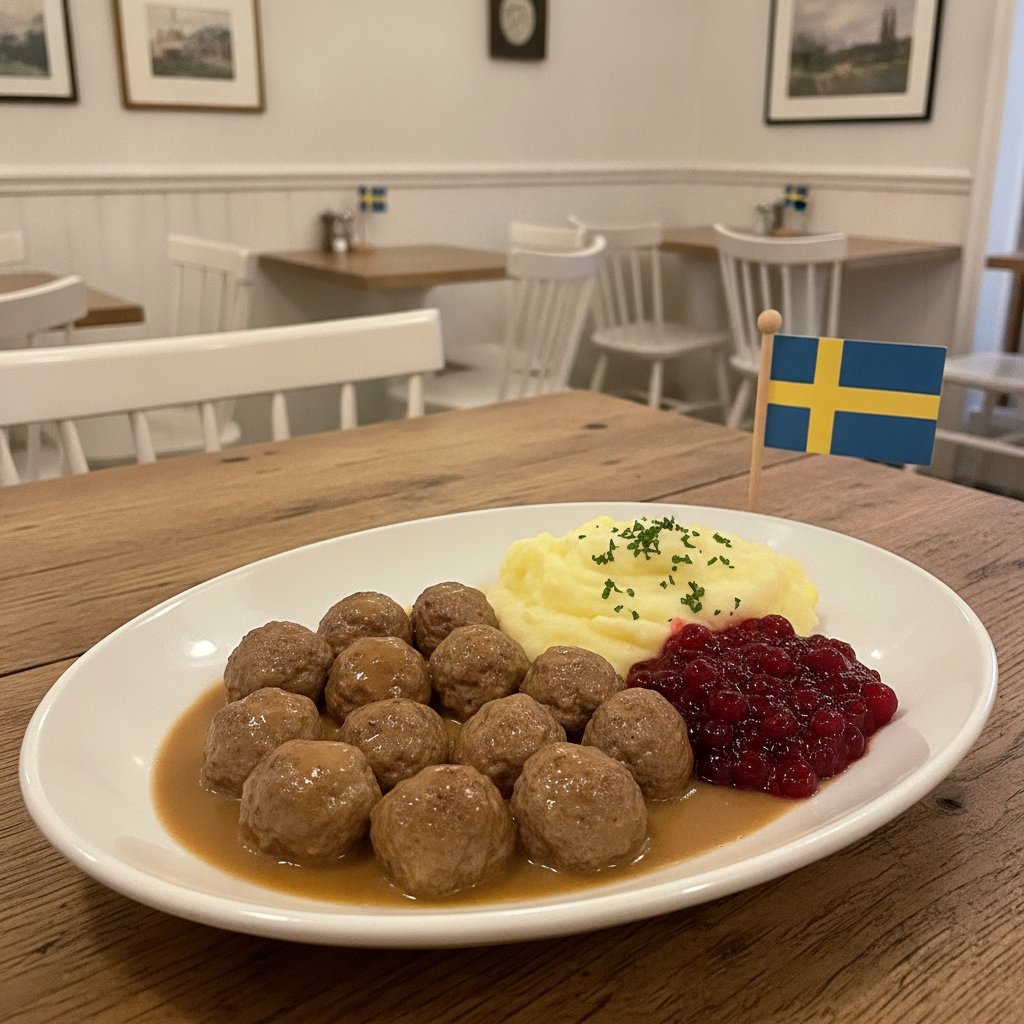
Cucina Svedese a Stoccolma — Polpette, Husmanskost e Nuova Cucina Nordica
Swedish food culture in Stockholm encompasses three distinct traditions: husmanskost (the traditional Swedish home cooking — the meatballs (köttbullar) with lingonberry jam, Janssons frestelse (the anchovy and potato gratin), gravlax, and the Thursday yellow pea soup), the fika culture (the Swedish coffee-and-pastry break that is a national institution), and the New Nordic cuisine (the movement centered on Copenhagen but with important Stockholm outposts including Mathias Dahlgren (2 Michelin stars, at the Grand Hôtel) and Oaxen Krog (2 Michelin stars, on Djurgården)).
- 1
Husmanskost — Swedish Home Cooking's Philosophy
Husmanskost (Swedish home cooking, literally 'house-master's food') is the Swedish culinary tradition of using local seasonal ingredients simply but precisely — the classics: köttbullar (meatballs, the Swedish version, beef-pork mix with allspice and nutmeg, not to be confused with the IKEA version, served with lingonberries and cream sauce and pickled cucumber at every husmanskost restaurant); kålpudding (cabbage roll filled with rice and pork, baked in cream sauce); ärtsoppa och pannkakor (Thursday tradition, pea soup with pancakes — a Swedish national eating ritual on Thursdays since the medieval period).
- 2
Aquavit and the Snaps Tradition
Aquavit (akvavit, the Scandinavian caraway-flavoured spirit, served ice-cold as a small shot/snaps during festive meals) is the defining ceremonial drink of Swedish food culture — the Swedish tradition (snapsvisa, drinking songs sung before each glass of snaps) and the seasonal aquavit cycle (the spring aquavit for Valborg/Walpurgis Night, the Midsommar snaps for the herring feast, the Christmas aquavit for julbord) integrate the spirit into the calendar; the Mackmyra Swedish Whisky distillery (Gävle, 100km north of Stockholm, tours available) and OP Anderson (the standard Swedish aquavit brand, available in every systembolag) are the two reference producers.
- 3
New Nordic Cuisine — Stockholm's Gastronomic Revolution
The New Nordic cuisine movement (defined by the New Nordic Food Manifesto of 2004, drafted by Danish chefs Claus Meyer and René Redzepi before the opening of Noma) has its Swedish counterpart in Stockholm — Mathias Dahlgren (Matsalen, Grand Hôtel Stockholm, 2 Michelin stars, ¥1,800 tasting menu) and the original practitioners (Operakällaren, Stockholm's oldest restaurant, 1787, the most formal dining experience in Sweden) defined Stockholm's version: Swedish ingredients (Arctic char, cloudberries, lingonberries, black trumpet mushrooms, fresh herring) in refined contemporary preparations.
- 4
Östermalm Food Hall — The Temple of Swedish Gastronomy
Saluhallen Östermalm (Östermalmstorg, the 1888 red-brick market hall, renovated 2018, the finest food market in Scandinavia) is Stockholm's premium food market — the stalls (the most important: Melanders Fish, the finest fish counter in Stockholm, and Lisa Elmqvist, the seafood restaurant inside the market serving the classic Swedish Skagenröra/shrimp salad on toast since 1945) serve both retail customers and the neighbourhood's residents; the herring counter (15+ varieties of pickled sill, the backbone of the Swedish smörgåsbord) and the cheese stall (Melloths ost, aging Swedish and imported cheeses) are the essential stops.
- 5
Swedish Fika — The Coffee Break as Cultural Institution
Fika (the Swedish concept of the coffee break as a social ritual and moment of pause — the word is from 'kaffi', 18th-century slang for coffee, inverted — is practiced 1–3 times daily by most Swedes, with kanelbulle/cinnamon buns or kardemummabullar/cardamom buns as the default accompaniment) — the Stockholm fika culture is centered on the konditori (traditional pastry café) format; Vete-Katten (Kungsgatan 55, 1928, the most traditional konditori in Stockholm, the kanelbulle recipe unchanged since 1928) and Fabrique (the chain that standardized the artisanal Swedish bun format nationwide from 2008) represent old and new.
- 6
Julbord — The Swedish Christmas Table
Julbord (the Swedish Christmas smörgåsbord, served in restaurants throughout December, the most elaborate buffet meal in the Swedish culinary tradition) includes: gravlax (cured salmon), several varieties of pickled sill (herring), meatballs, prinskorv (Christmas sausage), rice pudding (risgrynsgröt — the portion with an almond hidden inside predicts next year's luck), and Janssons frestelse (Jansson's Temptation — a potato and anchovy gratin that is the non-negotiable Christmas dish); the Grand Hôtel Stockholm's julbord (¥1,200 adults, the most elaborate in Stockholm) and the city's traditional restaurants all offer seasonal versions.