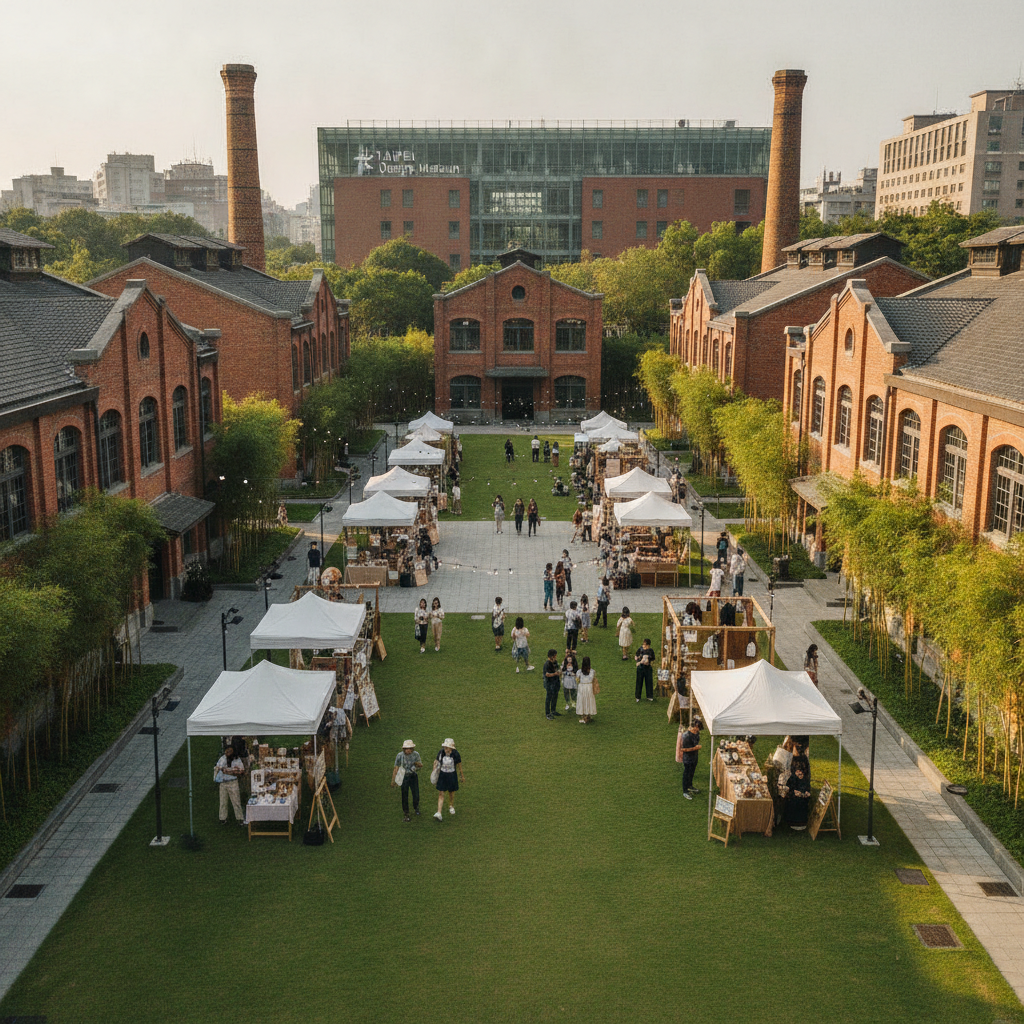
Zhongshan e Songshan — I Quartieri Creativi e del Design di Taipei
Zhongshan District (中山區 — the commercial and cultural district of central Taipei, centred on Zhongshan North Road (中山北路)) and the adjacent Songshan District (松山區 — particularly the Songshan Cultural and Creative Park (松山文創園區 — the former tobacco factory (1937-1998) converted into a creative industry hub and cultural events space)): together, these two districts constitute the creative and arts centre of modern Taipei, with the highest concentration of design studios, concept stores, art galleries, and independently operated cafes in the city.
- 1
Zhongshan — The Department Store and Gallery Avenue
Zhongshan (中山, the central district running north from Taipei Main Station along Zhongshan North Road) is Taipei's gallery and design culture corridor — the Eslite Spectrum Zhongshan (誠品生活中山, 6 floors of bookshop, gallery, and curated lifestyle retail in the 1930s colonial period Telephone Company building) and the Zhongshan Metro Mall (the underground shopping arcade connecting MRT Zhongshan to Shuanglian Station) define the district's character; the Red House Theatre (the 1908 octagonal colonial market, Ximending, adjacent to Zhongshan) is used as a LGBTQ+ bar and performance venue.
- 2
Songshan Cultural and Creative Park — The Tobacco Factory Reborn
Songshan Cultural and Creative Park (松山文創園區, 133 Guangfu South Road, Xinyi, the former Songshan Tobacco Factory 1937–1998, reopened 2011, free entry, daily 8am–10pm) is the best example of Taiwan's industrial heritage adaptive reuse — the 6.6-hectare compound (the factory buildings in Japanese colonial Art Deco/Modernist style, with a botanical garden in the former production courtyards) hosts the Taiwan Design Museum (¥100), the Taipei Design Award exhibition, and 30+ design studios, makers, and galleries; the Songshan Park (the green space surrounding the compound) and the pond garden are free and open year-round.
- 3
Ximending — Taipei's Harajuku
Ximending (西門町, the pedestrianized commercial district west of Taipei Main Station, MRT Ximen, developed as the entertainment district for Japanese colonial Taipei in the 1920s–30s, now Taipei's youth fashion and subculture centre) is the most concentrated youth commercial environment in Taipei — the Red House (the 1908 octagonal market, the LGBT district anchor), the movie theater cluster (the historic cinemas preserved from the 1960s), and the street food (Ah Chung Flour Rice Noodle, the oyster vermicelli vendor operating from the same corner since 1975, TWD 60/bowl) define the district; Ximending is the origin of Taiwan's tatami/sneaker-culture youth street fashion.
- 4
Xinyi Special District — Taipei 101 and the Corporate Capital
Xinyi Special District (the planned business and commercial district east of Hsinyi Road, MRT City Hall station) is Taipei's international business face — Taipei 101 (the 508m tower, 2004, C.Y. Lee architect, the world's tallest building 2004–2010, the 5-ton tuned mass damper on floors 87–92 — visible from inside — the largest pendulum TMD in the world for a building) and the Xinyi shopping corridor (the highest concentration of luxury retail and department stores in East Asia outside Tokyo: Bellavita, ATT4Fun, Breeze, Shin Kong Mitsukoshi) make it the city's most globally familiar streetscape.
- 5
Huashan 1914 Creative Park — The Sake Winery Turned Art Space
Huashan 1914 Creative Park (華山1914文化創意產業園區, 1 Bade Road Section 1, Zhongzheng District, the former Sake Winery of Taiwan (1914–1987), now the premier creative arts park in Taipei, free entry to grounds, individual venues have fees, daily 10am–10pm) is the most centrally located and most popular creative arts park in Taiwan — the brick factory buildings (Japanese colonial industrial architecture, preserved) house independent cinemas (Spot Huashan, the art cinema), galleries, music venues, craft beer bars (Taiwan Craft Taipei), and the Taipei Comic Exhibition (annual July event, 400,000 attendees); Huashan is the origin of Taipei's craft beer and indie music convergence.
- 6
Dihua Street — Taipei's Most Historic Commercial Street
Dihua Street (迪化街, Datong District, the commercial street running from Taipei Bridge to Minsheng West Road, 600m, the oldest surviving commercial streetscape in Taipei) is famous for two things: traditional Chinese medicine and Lunar New Year wholesale goods — the street (operating as an apothecary and wholesale goods market continuously since 1873) is lined with Minnan-style baroque shophouses (the 2-3 story combination of Fujian architectural tradition and Japanese colonial baroque facades) selling dried seafood, traditional Chinese medicines, snacks, and New Year provisions; the Yongle Fabric Market (Dihua Street Section 2) is the garment district.