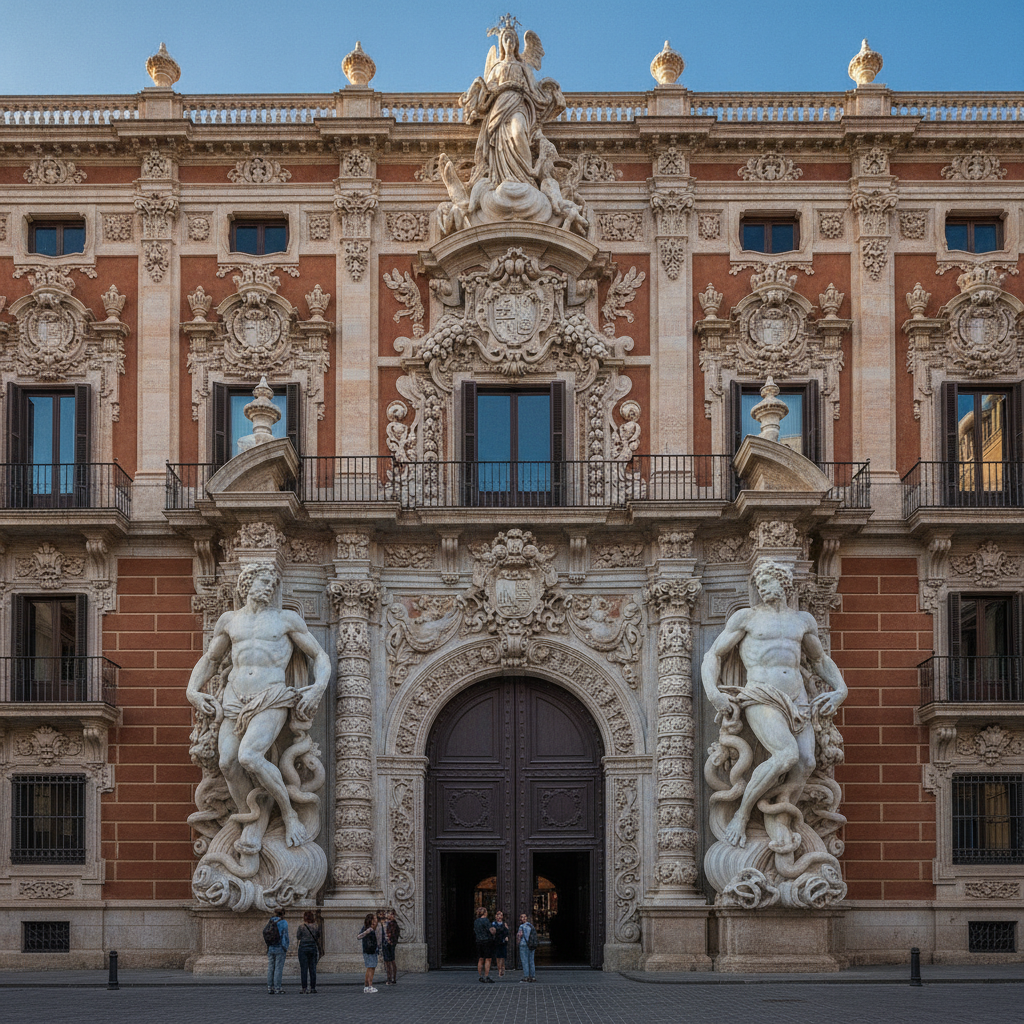
Museo Nazionale della Ceramica, Piastrelle Valenziane e Artigianato
The Museo Nacional de Cerámica y Artes Suntuarias González Martí (the National Museum of Ceramics in the Palacio del Marqués de Dos Aguas — the 18th-century palace with the most extraordinarily ornate Baroque alabaster entrance portal in Spain) is the pre-eminent museum of Spanish ceramics, housing the finest collection of Valencian ceramic tiles ('azulejos'), the historic pottery of Manises and Paterna, and the collection that traces the 2,000-year history of ceramics in the Iberian Peninsula.
- 1
National Ceramics Museum — The Palace of Marble and Tile
Museu Nacional de Ceràmica i de les Arts Sumptuàries González Martí (the National Ceramics Museum, Palacio del Marqués de Dos Aguas, Poeta Querol 2, the 1765 Baroque palace with the alabaster doorway, ¥3 adults, Tuesday–Saturday 10am–2pm and 4–8pm, Sunday 10am–2pm) is the most important collection of Spanish ceramics in the world — the ground floor (15th–18th century Valencian faience in green-on-white, the Paterna and Manises production centers), the Picasso room (the 1957 Picasso ceramic donation, 56 pieces), and the 1749 Rococo palace doorway (the alabaster sculptural composition by Ignacio Vergara, the finest Baroque stone carving in Valencia) are the principal highlights.
- 2
Manises — The Town of Ceramics (13km from Valencia)
Manises (the ceramic-producing town 13km west of Valencia, Metro line 3 or 5, 20 minutes, the home of the Valencian Luster ceramics tradition that has been produced continuously since the 14th century) supplies the majority of Spain's architectural and decorative ceramics — the Museu de Ceràmica de Manises (Plaza de la Constitución 1, ¥3 adults, Tuesday–Friday 10am–2pm and 4–8pm, Saturday 10am–2pm, Sunday 11am–2pm) houses the most comprehensive collection of Manises luster ware (the metallic gold/copper glaze technique learned from Moorish potters in the 10th century); the active workshop visits (Ceramica Cortina, the largest studio that accepts visitors, Avenida País Valenciano, free to enter shop, workshops by appointment) connect the museum to living production.
- 3
Valencian Azulejo Tile Tradition — The City's Decorative Language
Azulejo (the painted tin-glazed ceramic tile, the decorative medium that defines Valencia's architectural character — every historic church, market hall, and civic building uses azulejo facing for floors, dados, and facades) is produced in Valencia using techniques inherited from Moorish artisans — the tile street signs (the hand-painted azulejo street markers installed throughout the old city from the 18th century, identifying each street in blue-on-white tile set into the building corners) are the most accessible examples of the tradition; the Parroquia de Santos Juanes (the church on Plaza del Mercado whose tile program required 3 generations of tile painters) and the Basilica de los Desamparados (the sanctuary of Valencia's patron saint, the domed interior entirely covered in 18th-century azulejo tiles) are the most complete ecclesiastical examples.
- 4
L'Horta de València — The Irrigated Market Garden
L'Horta de València (the irrigated agricultural plain surrounding Valencia, 23,000 hectares of market gardens sustained by the Arab-designed irrigation network of 8 acequias — irrigation canals — built in the 9th–11th century during the Moorish occupation and still in operation under the governance of the Tribunal de les Aigues, the oldest court in the world still functioning) is the agricultural foundation of Valencian cuisine — the produce: Valencia oranges (the Navel Orange, the Valencia orange variety that accounts for 80% of global orange production; the original Navel Orange tree, planted 1820 in Bahia, Brazil, via Portuguese missionaries from Valencia, is the ancestor of all navel oranges in California), tiger nuts (chufa, ground to produce horchata), and the 20+ varieties of artichoke that appear on Valencian menus February–April.
- 5
Horchata and Fartons — The Valencian Afternoon Ritual
Horchata de chufa (the Valencian tiger nut milk — not to be confused with the Mexican rice drink of the same name — made from fresh or dried chufa/tiger nuts soaked, ground, and pressed, then sweetened and served icy cold, ¥1.50–3.00/glass) is Valencia's most distinctive food product and the defining afternoon drink — the Horchatería de Santa Catalina (Plaça de Santa Caterina, the 18th-century orxateria with marble tables and painted tiles, the most historic horchata establishment in Valencia) and the suburb of Alboraia (the village 5km north of Valencia where chufa is grown and the highest-concentration of horchaterias in the world — Horchatería Daniel, the benchmark) represent old and new; fartons (the long, sweet glazed bread sticks for dipping into horchata) are the required accompaniment.
- 6
Paella Valenciana — The Origin and the Recipe
Paella Valenciana (the original paella: short-grain Valencian rice cooked with chicken, rabbit, ferraura green beans, garrofó white beans, tomato, saffron, rosemary, and olive oil in a wide flat carbon steel pan over orange-wood fire) was invented in the rice-farming communities around L'Albufera lagoon in the 18th century — El Palmar village (10km south of Valencia, the original paella destination), La Pepica (Paseo de la Neptuno, Malvarrosa beach, where Hemingway ate paella in the 1920s), and the Barraca de la Mar (the only restaurant on the lagoon itself) are the three essential paella destinations.