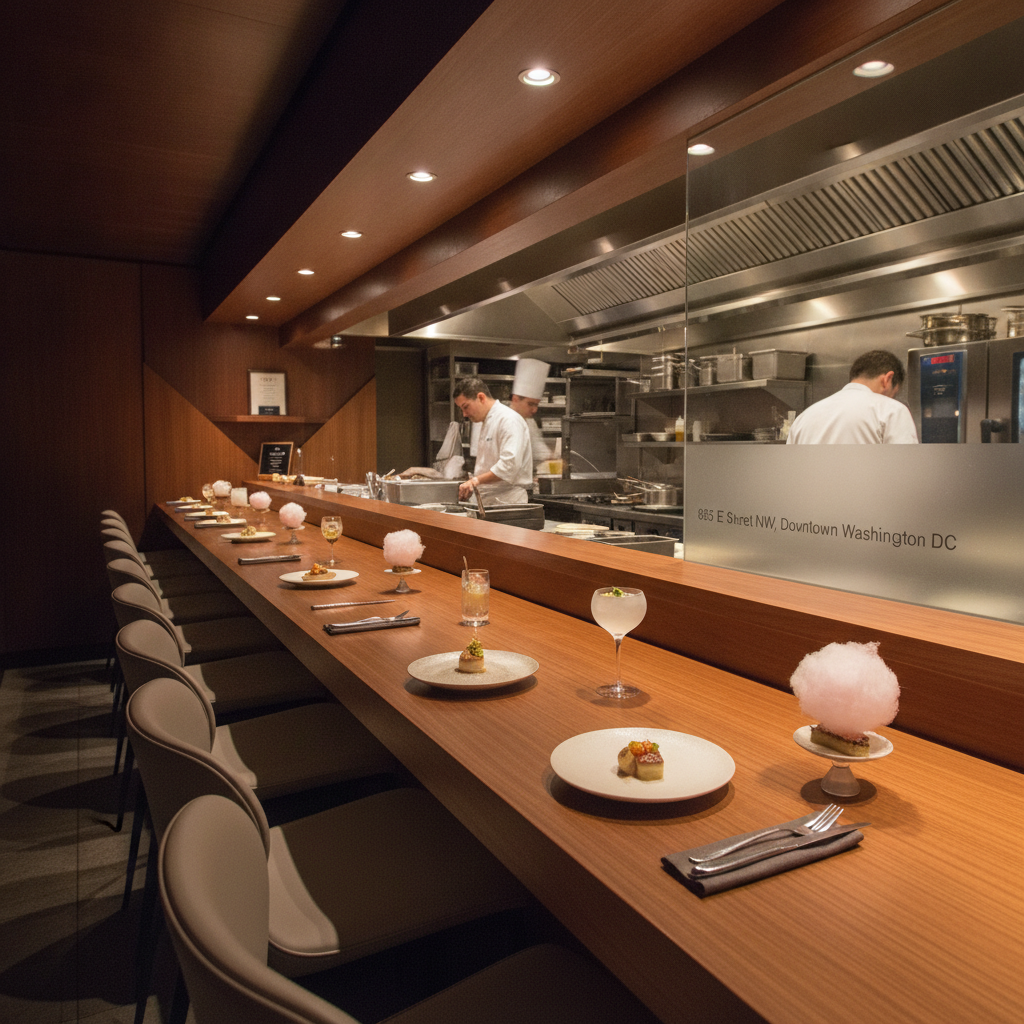
La Scena Gastronomica di Washington DC — Dalla Cucina Etiope all'Alta Cucina
Washington DC's restaurant scene (the most diverse food culture of any American city after New York, driven by the extraordinary ethnic and diplomatic diversity of the DC metropolitan area — the DC-Maryland-Virginia metro area has the highest concentration of Ethiopian, Salvadoran, Vietnamese, and Korean immigrants of any major American metropolitan area east of Los Angeles).
- 1
DC's Ethiopian Cuisine — Little Ethiopia on U Street
Washington DC has the largest Ethiopian diaspora community in the United States (estimated 250,000 Ethiopian-Americans in the DC metropolitan area, the largest Ethiopian community outside Addis Ababa) concentrated in the U Street/Shaw neighbourhood — Dukem Ethiopian Restaurant (1114 U Street NW, the oldest Ethiopian restaurant in DC, the benchmark for injera-based communal dining), Zenebech Injera (601 T Street NW, the home-style trays made by the same family since 1985, the most authentic experience), and the Ethiopian Coffee Company (the full Ethiopian coffee ceremony, the 45-minute roasting-to-cup ritual, ¥15) define the neighbourhood; injera (the sourdough flatbread made from teff flour, the communal eating surface) is the definitive Washington DC food experience.
- 2
Georgetown Cupcake and the Cupcake Economy
Georgetown (the historic neighbourhood west of the White House, predating Washington DC as a colonial tobacco port, now the most expensive residential neighbourhood in DC and the primary upscale shopping destination) is the origin of the American cupcake economy — Georgetown Cupcake (3301 M Street NW, founded 2008 by sisters Sophie and Katherine Kallinis, the shop that triggered the US cupcake trend via Food Network television coverage, weekday queues 30–60 minutes on M Street) and the broader Georgetown commercial strip (the Apple Store, Nike, J.Crew, and luxury boutiques from Key Bridge to Wisconsin Avenue) define the neighbourhood's present character; the C&O Canal towpath (the historic canal running from Georgetown to Cumberland Maryland, the towpath walk west along the Potomac, free) is the outdoor alternative.
- 3
Ben's Chili Bowl — The U Street Institution Since 1958
Ben's Chili Bowl (1213 U Street NW, the restaurant founded by Ben Ali and Virginia Ali in 1958, the only business on U Street that remained open through the 1968 riots that followed Martin Luther King Jr's assassination and burned most of the corridor) has served the Half-Smoke (the DC specialty — a smoked sausage of beef-and-pork, grilled, served on a steamed bun with yellow mustard, onions, and Ben's signature chili sauce, ¥8) to every President since Barack Obama and every significant African American cultural figure in Washington — the diner interior (the original Formica counter, the signed photographs of Bill Cosby, Donnie Simpson, and Duke Ellington, the Snoop Dogg and Obama murals) is an unchanged U Street landmark.
- 4
DC's International Dining Corridor — H Street NE
H Street NE (the corridor from 2nd Street to 15th Street NE, the neighbourhood gentrified from 2008 to 2018 from an abandoned post-riot commercial strip to DC's most restaurant-dense neighbourhood) concentrated the city's best new restaurant openings for a decade — Maketto (1351 H Street NE, the Cambodian-Taiwanese restaurant and retail hybrid by Erik Bruner-Yang, the chef who defined DC's Pan-Asian fine casual movement), Toki Underground (1234 H Street NE, the Taiwanese ramen shop with standard 1-hour queues that anchored the corridor's early reputation), and The Pug (1234 H Street NE, the dive bar that serves $2 Pabst Blue Ribbon tall cans and the best jukebox in DC) represent the H Street spectrum.
- 5
Wharf DC — The New Southwest Waterfront
The Wharf (Southwest DC waterfront, ¥0 access, Maine Avenue SW, the 3.2km of Potomac riverside from the Jefferson Memorial to the Bolling Air Force Base boundary, developed 2017–2022, the largest waterfront development project in DC history) transformed the previously underutilized fish market district into DC's most active waterfront — the Maine Avenue Fish Market (the oldest operating fish market in the United States, established 1805, maintained as a working wharf within the new development, the blue crabs from the Chesapeake Bay — steamed with Old Bay seasoning — are the correct purchase, ¥20–35/dozen depending on season and size) is the historic anchor within the modern development; the outdoor concert venue (the Anthem, 6,000 capacity) is the neighbourhood's music anchor.
- 6
Old Ebbitt Grill — Washington's Power Lunch Institution
Old Ebbitt Grill (675 15th Street NW, 1 block from the White House, established 1856, the current location since 1983, the most historic bar interior in Washington DC) is the restaurant where Washington's political and media class has conducted informal power exchanges for 150 years — the oyster bar (the Chesapeake Bay oysters from the shell-off from the Rappahannock River and the oyster beds of the lower Potomac, ¥3–3.50/oyster on the half shell) and the signature Grill burger (¥22) are the two honest menu items; the 1am closing time, the unchanged wood-paneled interior (the walrus heads, the antique gas lamps, the original mahogany bar), and the White House proximity make it the default post-hearing dinner for Congressional staffers.