Andijan Kokand Khanate Eastern Frontier Heritage
Explore Andijan as the eastern capital of the Kokand Khanate — the 19th-century Central Asian state that controlled the Fergana Valley and beyond, the city that served as the administrative center of the khanate's eastern territory, the fortifications and mosques built during the khanate period, and the Russian military conquest that ended the khanate in 1876.
- 1
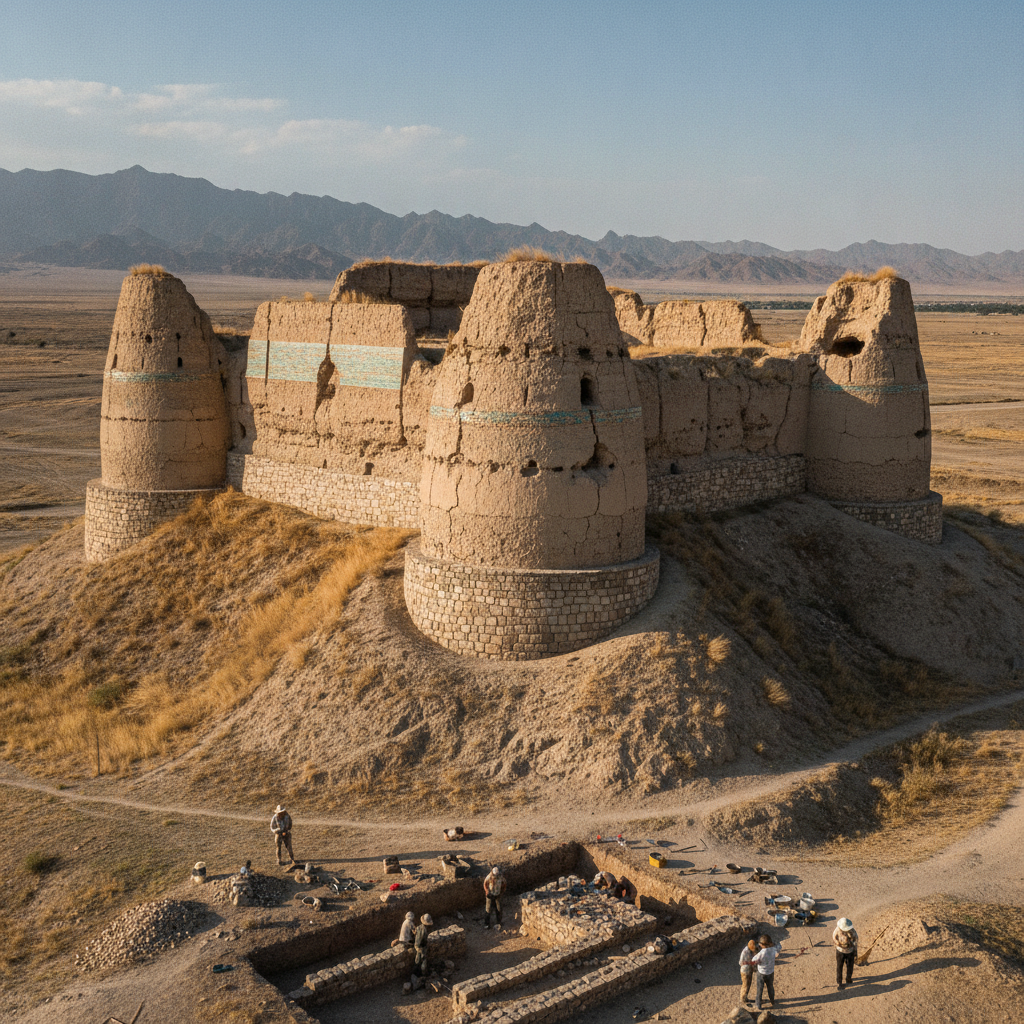
Kokand Khanate Fortress Site
The site of the Kokand Khanate fortress in Andijan — the citadel that served as the military and administrative center of the eastern portion of the khanate's territory, the fortifications that were the focus of the Russian military campaign of 1875-1876 that ended the independent khanate and incorporated its territory into Russian Turkestan.
- 2
Khanate Period Mosque Architecture
The khanate period mosque architecture surviving in Andijan — the 19th-century religious buildings constructed under the patronage of the Kokand khans representing the architectural ambitions of the Central Asian state at its cultural height, the buildings showing the developed Fergana architectural style with its carved terracotta and painted tilework.
- 3
Russian Conquest Military History
The Russian conquest military history of the Andijan area — the campaign of General Skobelev in 1875-1876 that pacified the Kokand Khanate following the Andijan uprising, the military engagements in the eastern valley that completed the Russian annexation of the Fergana region, the garrison established in Andijan becoming the foundation of the Russian colonial city.
- 4
Andijan Uprising 1898
The Andijan Uprising of 1898 — the armed resistance to Russian rule led by the Islamic leader Dukchi Ishan that was centered in Andijan, the attack on the Russian garrison that was quickly suppressed with severe reprisals, the uprising representing the persistence of resistance to colonial rule in the Fergana Valley more than twenty years after the Russian conquest.
- 5
Traditional Islamic Education
The traditional Islamic education institutions of Andijan — the maktab elementary schools and madrasa higher education centers that functioned under both the Kokand Khanate and the early Russian period, the religious education system that maintained Islamic scholarship in the valley through the colonial and Soviet periods, the partial revival of Islamic education since independence.
- 6
Cross-Cultural Trade History
The cross-cultural trade history of Andijan as an eastern Silk Road city — the position at the convergence of routes from Kashgar in Chinese Turkestan, from the Fergana Valley's interior, and from the mountain passes leading to Kyrgyzstan, the merchant community that made Andijan a commercial node where Chinese, Russian, Indian, and Central Asian goods were exchanged.
Walk this route with audio
Stories play automatically as you reach each stop — no tapping needed.