Cameron Highlands Tea Plantation Walk
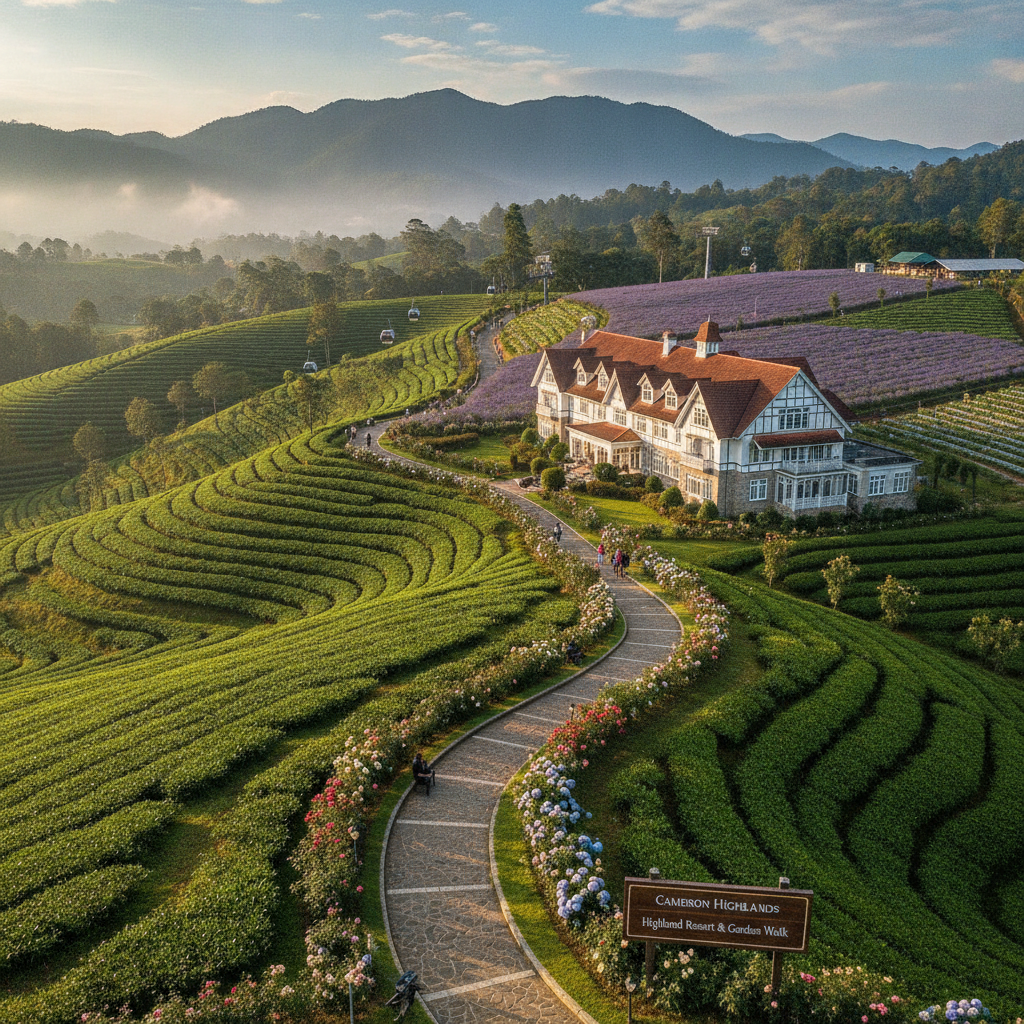
Walk through the tea plantations that made Cameron Highlands famous — the cool-climate hill station established by the British in the 1920s at 1,500 metres above sea level produces the distinctive Cameron Highlands tea (Boh brand, the largest tea producer in Southeast Asia) in plantations that cover the hillsides with their geometric rows of pruned tea bushes.
- 1
BOH Tea Centre Sungai Palas
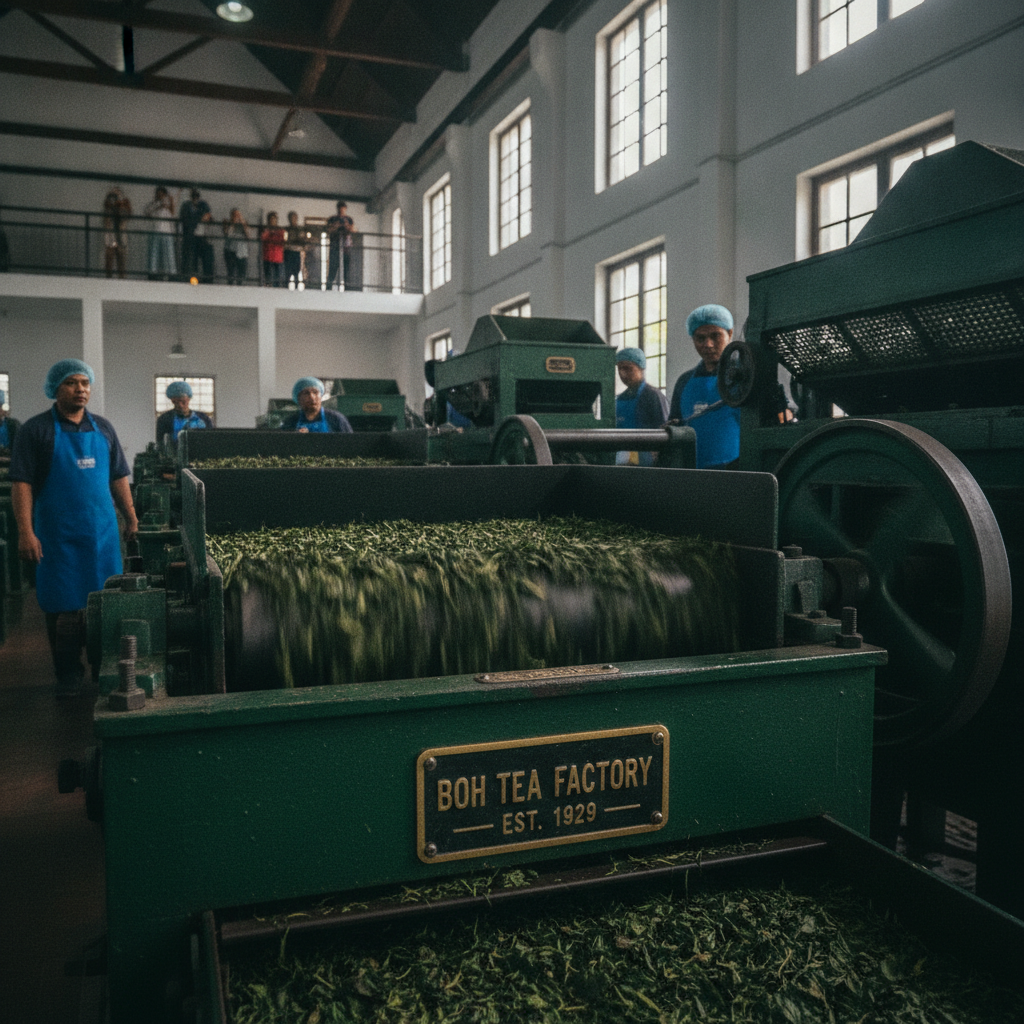
The BOH Tea Centre at Sungai Palas plantation is the most visited tea estate in Cameron Highlands — the visitor centre perched on the hillside with panoramic views of the surrounding tea plantation offers guided tours of the tea processing factory (withering, rolling, fermentation, drying, and sorting), a tea tasting room serving freshly brewed BOH teas with scones and cakes, and the viewing platform looking out over one of the most visually striking agricultural landscapes in Malaysia, where the uniform dark green carpet of the tea bushes covers the steep hillsides in every direction. BOH (Bharat Orange Highlands) was established in 1929 by a British planter and remains the most recognised Malaysian tea brand.
- 2
Tea Plantation Trail Walk
The walking trails through the BOH plantation's managed tea fields allow visitors to walk between the rows of meticulously pruned tea plants at close quarters — the Camellia sinensis var. sinensis bushes that are the standard Cameron Highlands tea cultivar are kept at waist height through regular pruning (plucking table maintenance) to allow the tea pluckers to harvest the terminal two leaves and a bud that make the best-quality flush. Walking among the tea bushes in the cool morning air, with the mist rising from the valleys below and the plantation workers visible on the hillsides, is the most directly sensory experience of Cameron Highlands' colonial-era agricultural heritage.
- 3
Bharat Tea Estate
Bharat Tea Estate near Ringlet is one of the oldest tea plantations in Cameron Highlands, established in the 1930s — the estate with its colonial-era planting bungalow, the Tamil Hindu estate workers' quarters, and the maintained tea factory processing the estate's own crop represents the complete social and economic system of the British-era tea estate that has been maintained relatively intact in Cameron Highlands. The Bharat estate's remoter location compared to Sungai Palas means it receives fewer visitors and provides a more authentic encounter with the working plantation environment.
- 4
Orang Asli Handicraft Village
The Orang Asli (indigenous people) of the Cameron Highlands interior — primarily the Semai people, who are the original inhabitants of the highland forests — maintain stalls selling traditional crafts, blowpipes, woven baskets, and forest produce at roadside markets along the highlands route. The Semai and other Orang Asli communities of the Cameron Highlands were present in the forest for thousands of years before the British hill station was established, and their traditional knowledge of the highland forest — its plants, animals, and forest paths — was essential to the early British administrators and planters who mapped and developed the highland area.
- 5
Cameron Highlands Strawberry Farms
Cameron Highlands' cool temperature (average 18-25°C year-round) allows strawberry cultivation that would be impossible in the lowland tropics — the strawberry farms that have multiplied in the highlands since the 1990s offer pick-your-own strawberry experiences alongside the sale of strawberry jam, strawberry ice cream, and other strawberry products that have become the secondary tourist draw of the highlands after the tea plantations. The strawberry farms, while commercially oriented tourist attractions rather than serious agricultural operations, reflect the diverse cool-climate agriculture (vegetables, cut flowers, tea) that makes the Cameron Highlands the most productive agricultural region per hectare in Peninsular Malaysia.
- 6
Mossy Forest Summit Walk
The mossy forest on the summit ridge of Gunung Brinchang (2,032m) in Cameron Highlands is one of the most remarkable cloud forest ecosystems accessible by paved road in Malaysia — the upper montane forest where constant cloud cover keeps the vegetation permanently moist is draped with mosses, liverworts, ferns, and orchids in every shade of green, creating a hyper-green forest environment completely different from the lowland tropical rainforest. The boardwalk through the mossy forest on the Brinchang summit allows visitors to walk through this ecosystem without causing erosion, and the mist and cool air (temperatures can drop below 15°C) at the summit create a dramatically different experience from the tea plantation walks on the slopes below.
Walk this route with audio
Stories play automatically as you reach each stop — no tapping needed.
More in Cameron Highlands
Cameron Highlands Waterfall & Stream Walk
Cameron Highlands Jungle Trek & Nature Walk
Cameron Highlands British Colonial History Walk
Cameron Highlands Cactus & Flower Garden Walk
Cameron Highlands Orang Asli Cultural Heritage Walk