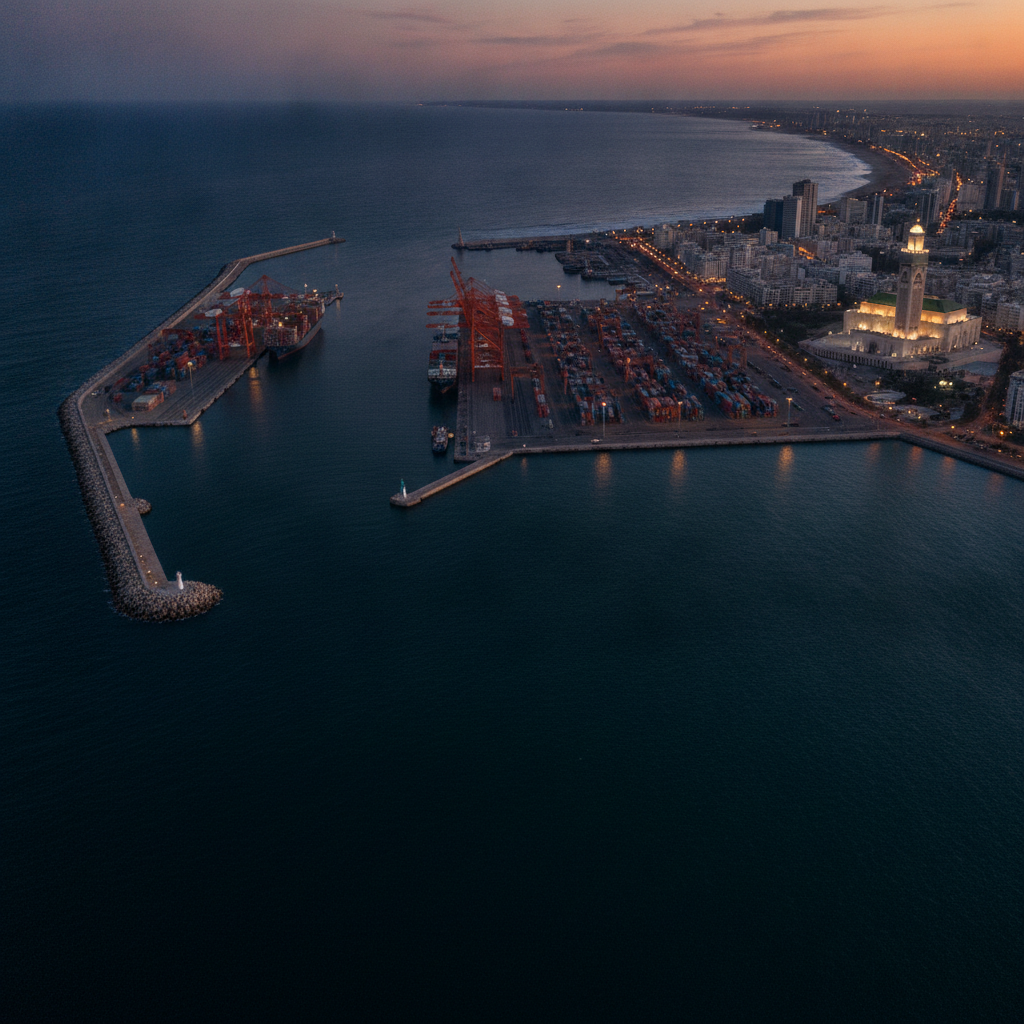
The 1942 Casablanca Film Was Shot Entirely in Hollywood by Filmmakers Who Had Never Visited Morocco Yet Accidentally Captured a Real Wartime Dynamic; The Bou Craa Phosphate Mine in Moroccan-Administered Western Sahara Is One of the World's Largest Phosphate Deposits; Moroccan Argan Oil Has Grown From a Cottage Industry to an Approximately USD 10 Billion Annual Global Market
The 1942 Casablanca film shot in Hollywood accidentally capturing a real wartime dynamic; Bou Craa phosphate mine as Morocco's primary economic interest in Western Sahara; argan oil growing to approximately USD 10 billion annually; Mohamed Choukri's For Bread Alone as the most internationally translated Moroccan Arabic-language work; Morocco's 3,000 km Atlantic coastline from Tangier to Dakhla; and Rick's Cafe as a Hollywood fantasy that became a real piece of Casablanca's cultural identity.
- 1
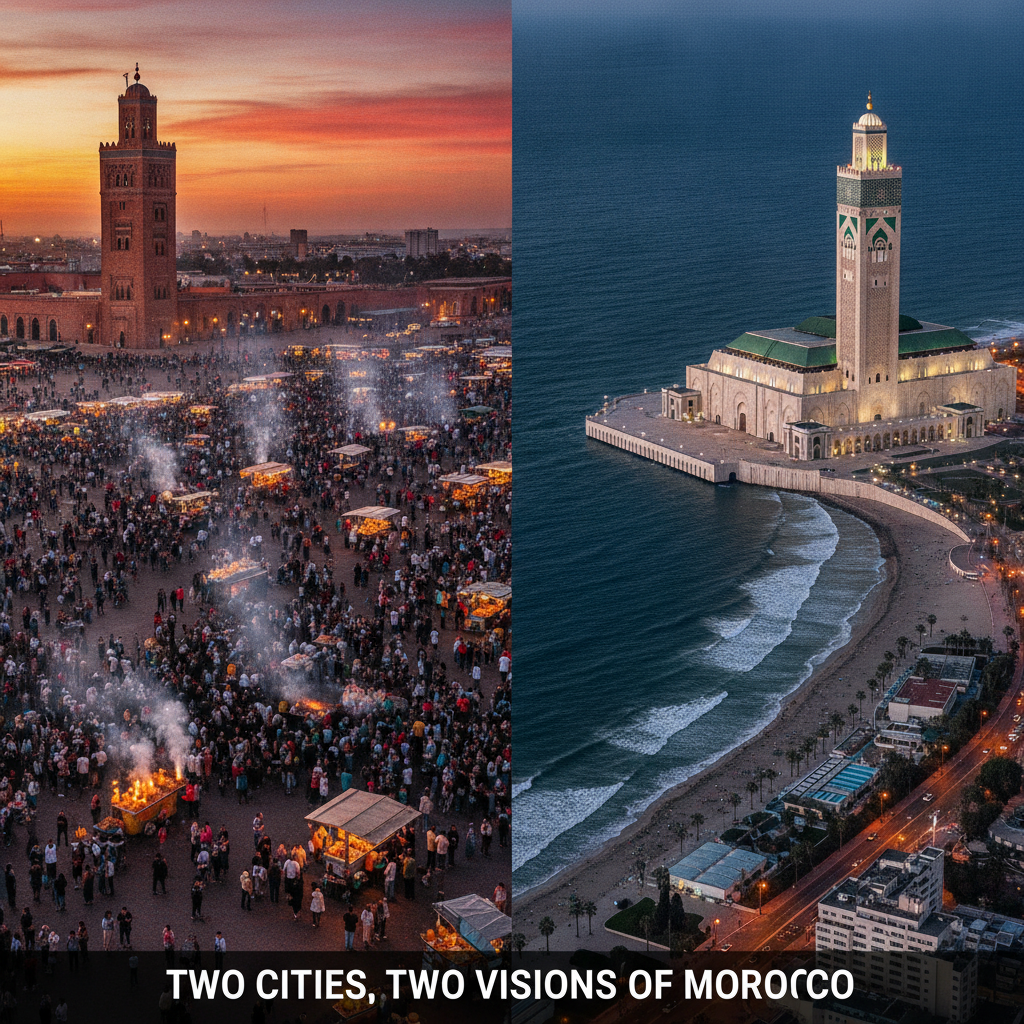
Casablanca vs Marrakech - Morocco's Two Global Cities Compared
Casablanca and Marrakech are the two Moroccan cities most foreigners know: separated by 240 km and 3 hours by train but representing radically different visions of Morocco: Casablanca character - a working commercial city of approximately 4.7 million: Art Deco architecture, the Hassan II Mosque, the port, business hotels, predominantly Darija Arabic-speaking residents who are not organized around tourism: Marrakech character - a historic imperial city of approximately 1 million: the Djemaa el-Fna square, the vast UNESCO-listed medina, riads, Atlas Mountains backdrop, strongly organized around international tourism with a significant European expatriate community: the Casablanca medina is the smallest of Morocco's major cities (approximately 2 km2) - was a fishing village before the French Protectorate: the Marrakech medina (UNESCO 1985) is one of the largest surviving medieval medinas in the world with approximately 25,000 inhabitants: the Djemaa el-Fna square (50,000-100,000 people per evening with food stalls, storytellers, musicians, snake charmers - UNESCO Intangible Cultural Heritage): the Koutoubia Mosque (12th century Almohad minaret - the model for the Giralda in Seville and Hassan Tower in Rabat): which to visit - Casablanca for contemporary Morocco, business, Art Deco architecture, and authentic urban life; Marrakech for the medieval medina experience, riads, and classic Morocco tourism.
- 2
Morocco's Atlantic Coastline - From Tangier to Dakhla, 3,000 km of Atlantic Shore
Morocco has the longest Atlantic coastline of any Mediterranean-adjacent country: approximately 3,000 km from Tangier in the north to Dakhla in the Western Sahara: the Canary Current flows southward along the Moroccan Atlantic coast bringing cold upwelling water rich in nutrients supporting some of the world's richest fishing grounds: the northern coast (Tangier - the entrance to the Mediterranean where the Atlantic meets the Mediterranean at the Strait of Gibraltar: Asilah - a small coastal town with Portuguese ramparts and an annual arts festival): the central Atlantic coast (Kenitra, Mohammedia, Casablanca, El Jadida/Portuguese Mazagan (UNESCO), Oualidia lagoon oysters, Safi the sardine capital of Morocco): the southern coast (Agadir - the primary beach resort rebuilt after the 1960 earthquake magnitude 5.9 that killed approximately 15,000 people - the deadliest earthquake in Moroccan history: Essaouira - the former Portuguese Mogador with blue-and-white medina walls): Tarfaya - the southern departure point of the Aeropostale mail service where Antoine de Saint-Exupery flew in the 1920s-1930s: the Western Sahara (Laayoune and Dakhla - the disputed territory: Dakhla's lagoon with world-class windsurfing conditions: the Bou Craa phosphate mine).
- 3
The Moroccan Hammam Tradition - Purification, Community, and the Kessa Ritual
The hammam (the traditional public bath) is one of the most distinctive social institutions of Moroccan urban life: the tradition combines Roman thermae and Islamic ghusl (ritual purification bathing): before piped water the hammam was the primary bathing facility in Moroccan medinas: most traditional neighborhoods have at least one local hammam: the traditional hammam sequence - the cold room (changing room), the warm room, the hot room (the steam room where primary bathing occurs): the kessa (the rough abrasive mitt used to scrub dead skin cells) applied with beldi black soap (Moroccan olive oil and argan oil soap fermented with lye): the kessa exfoliation is the primary treatment: the rhassoul clay (a natural volcanic clay from the Middle Atlas mountains used as a hair and skin treatment): the traditional neighborhood hammam is a single-sex social space with alternating women's and men's hours: the hammam as a social gathering point for gossip, mutual assistance, and community bonding: the upscale hammam-spa experience has been developed for tourists and upscale Moroccans in major tourist destinations: the Hassan II Mosque's subterranean level has traditional hammam facilities accessible as part of the mosque tour: visiting a local neighborhood hammam for approximately 15-30 MAD is among the most authentic and affordable experiences available to visitors in any Moroccan city.
- 4
Moroccan Argan Oil - The Liquid Gold of the Souss Valley
Argania spinosa (the argan tree) is endemic to southwestern Morocco primarily in the Souss-Massa region between Agadir, Taroudant, and Essaouira: the UNESCO Arganeraie Biosphere Reserve (1998) covers approximately 800,000 hectares of argan forest: the argan fruit contains a hard nut with 2-3 kernels inside: the oil is extracted from the kernels by cracking nuts by hand between two stones then grinding on a stone rotary mill (assay): for culinary argan oil the kernels are lightly toasted before grinding: for cosmetic argan oil the kernels are untoasted: the famous goat climbing - Souss argan trees are uniquely browsed by goats who climb into the branches to eat the fruits: some argan oil is traditionally produced from nuts collected from goat droppings where digestive passage softens the nut: women's argan cooperatives are the primary production model supported by NGOs and the Moroccan government providing employment and income for rural Berber women in the Souss region: the global argan oil market has grown from a cottage industry to approximately USD 10 billion annually (cosmetic and culinary combined): Casablanca is the primary wholesale market for Moroccan argan oil before export: uses include finishing oil for couscous and salads, hair treatments, and skin moisturizers.
- 5
Western Sahara Conflict - Morocco's Most Contested Territory
Western Sahara (266,000 km2) on the Atlantic coast bordered by Morocco to the north, Algeria to the northeast, and Mauritania to the east and south: the Moroccan sand wall (the berm - approximately 2,700 km long) divides the territory between Moroccan-administered west (approximately 80%) and POLISARIO-controlled east: Spain colonized the territory (1884-1976) as Spanish Sahara: Hassan II's Green March (November 6 1975) organized 350,000 Moroccan civilians to march across the border forcing the Madrid Accords (November 14 1975) transferring the territory: the Sahrawi POLISARIO Front (backed by Algeria) fought Morocco from 1976-1991 until a UN-supervised ceasefire: approximately 165,000-200,000 Sahrawi refugees have lived in the Tindouf camps in Algeria since 1976: the Sahrawi Arab Democratic Republic (SADR) government-in-exile is recognized by approximately 40 countries: the Bou Craa phosphate mine - one of the world's largest phosphate deposits - is operated by OCP Group and is central to Morocco's economic interest in the territory: the US recognized Moroccan sovereignty over Western Sahara in December 2020 as part of the Abraham Accords normalization: the UN considers Western Sahara a non-self-governing territory and the promised 1991 self-determination referendum remains unresolved.
- 6
Casablanca in Literature, Art, and World Culture - The City Beyond the Film
The 1942 Casablanca film was shot entirely in Hollywood by filmmakers who had never visited Morocco yet accidentally captured a real wartime dynamic - Casablanca in 1942 was a tense city under Vichy French occupation where European refugees from Nazi-occupied Europe did gather: the Moroccan literary tradition: Mohamed Choukri (1935-2003) - the most internationally translated Moroccan Arabic-language writer whose autobiography For Bread Alone (Al-Khubz al-Hafi 1973) depicts a destitute childhood in Tangier: Driss Chraibi (1926-2007) - Moroccan French-language novelist whose Le Passe Simple (1954) is a landmark of decolonization literature: the Ecole des Beaux-Arts de Casablanca (founded 1919 - the primary fine arts institution in Morocco): the Villa des Arts (a 1934 Art Deco villa now a contemporary art center run by the ONA Foundation): the French photographer Jean Besancenot (1902-1992) documented traditional Moroccan life in the 1930s-1940s producing photographs that remain primary references for Moroccan traditional dress and crafts: the Moroccan Jewish cultural contribution - Samy El Maghribi (the beloved Moroccan Jewish singer) and the Moroccan Jewish literary tradition in French: Rick's Cafe opened 2004 by American businesswoman Kathy Kriger recreating the fictional bar from the 1942 film - now one of Casablanca's primary tourist attractions demonstrating how a Hollywood fantasy became a real piece of the city's cultural identity.
Walk this route with audio
Stories play automatically as you reach each stop — no tapping needed.
More in Casablanca
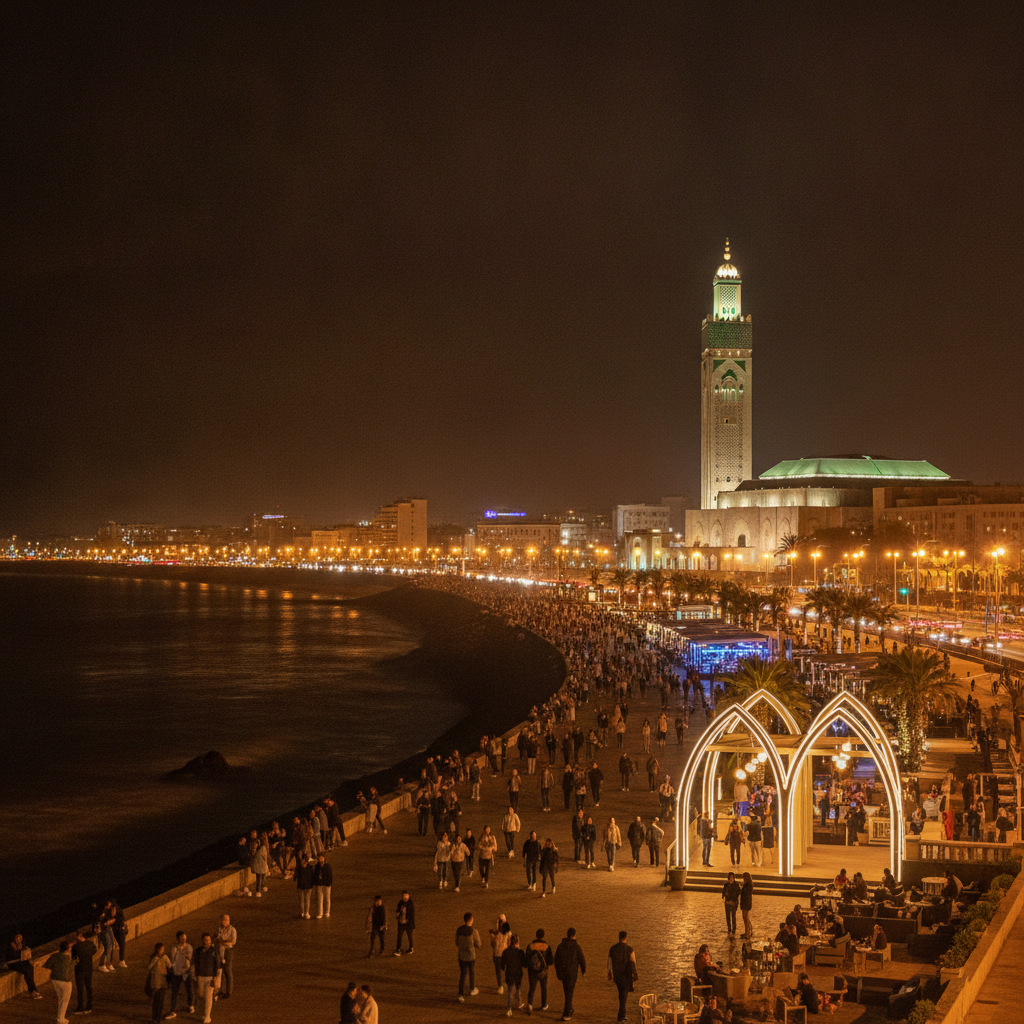
Casablanca Lifestyle: Ain Diab Beach, the Corniche Restaurant Scene, the Morocco Nightlife Capital, the Luxury Hotel Strip, and the Casablanca Urban Middle Class Culture
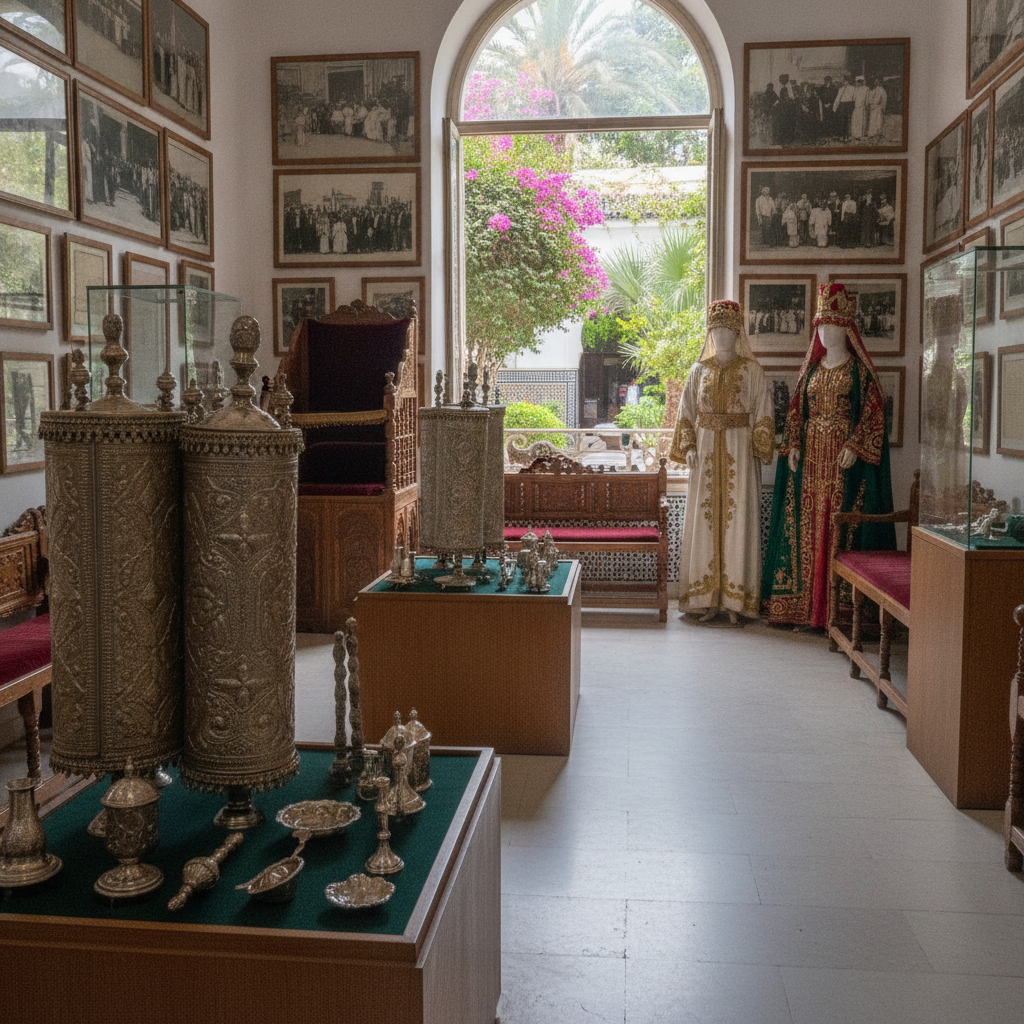
Casablanca Jewish Heritage: The Mellah District, the Miara Cemetery, the Museum of Moroccan Judaism, the Sephardic Cultural Legacy, and the Moroccan Jewish Community Today
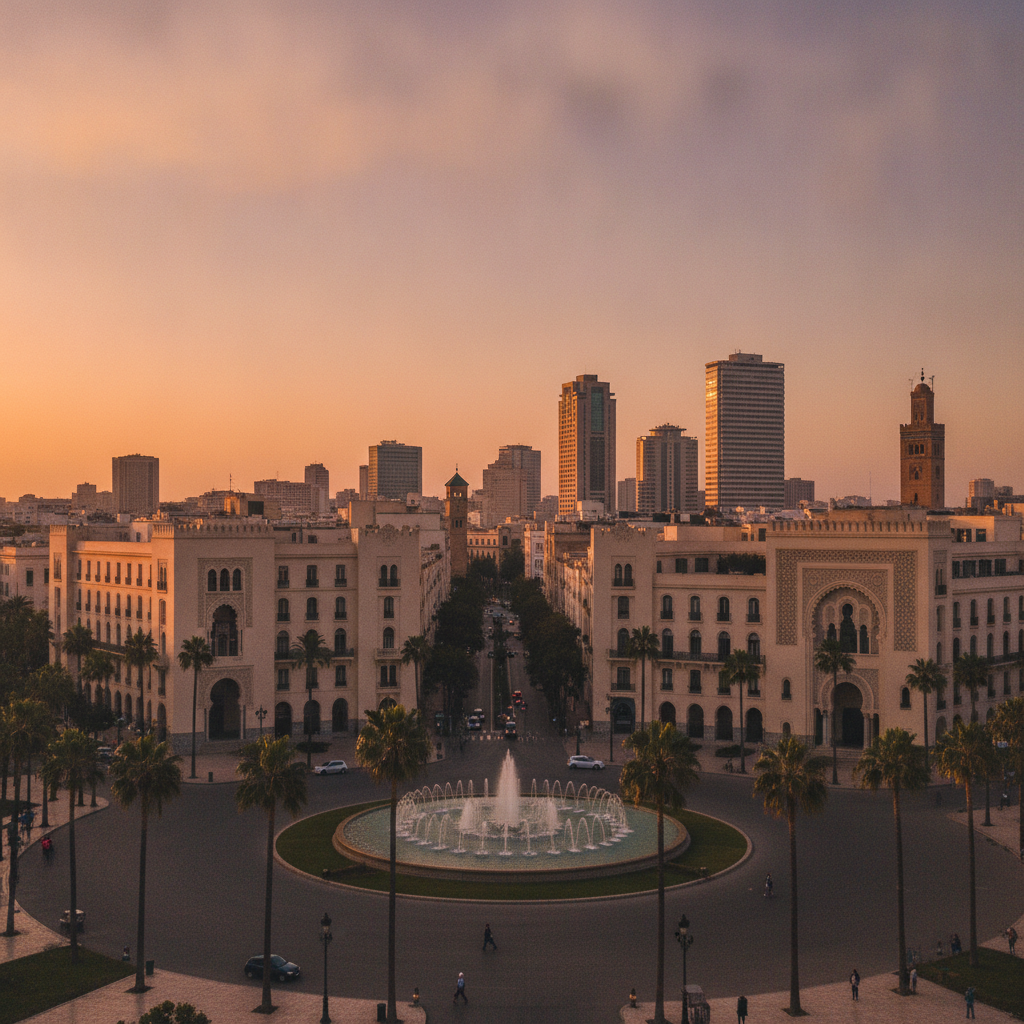
Casablanca Modern City: Mohammed V Square, the Habous New Medina, the Villa des Arts, the Casablanca Financial Centre, and the Contemporary Moroccan Art Scene
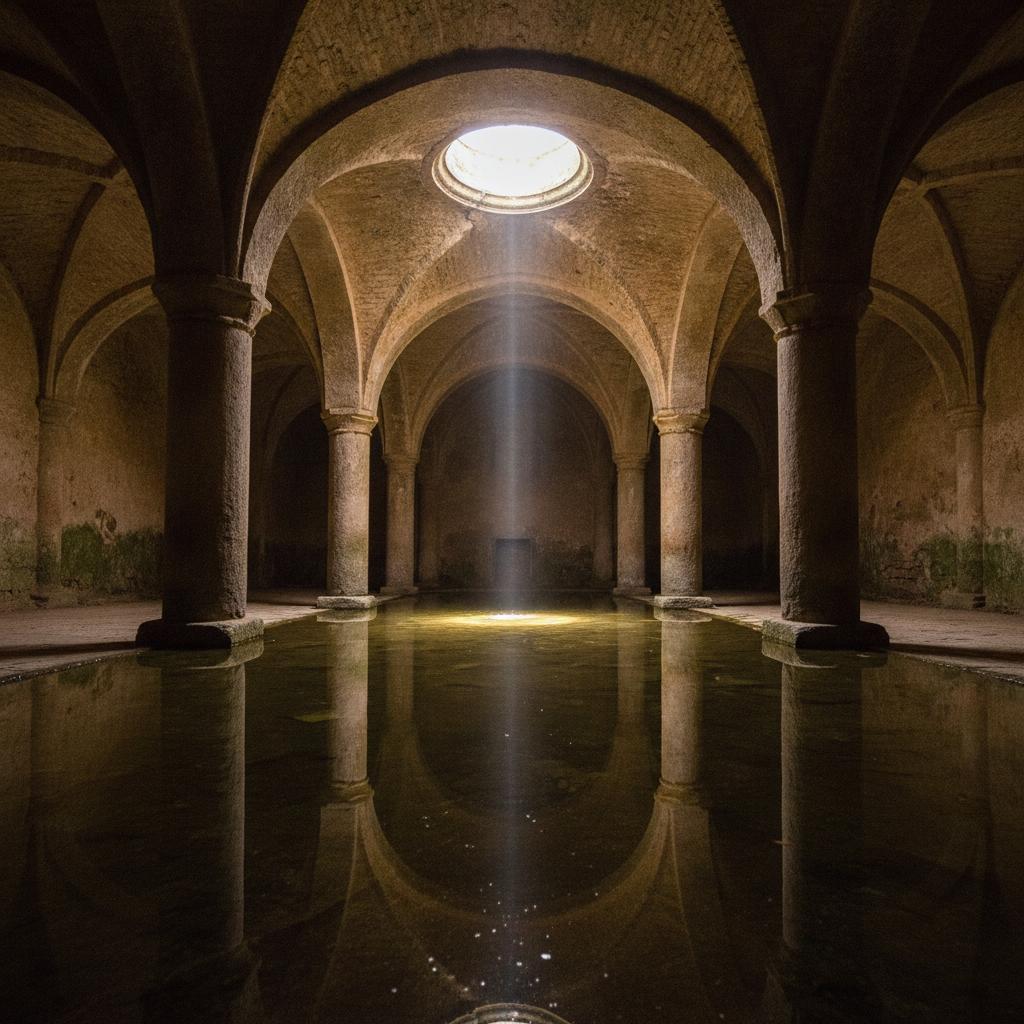
Casablanca Region: El Jadida and the Portuguese Cistern, the Mazagan Coastal Drive, the Oualidia Oyster Lagoon, and the Atlantic Coast South of Casablanca
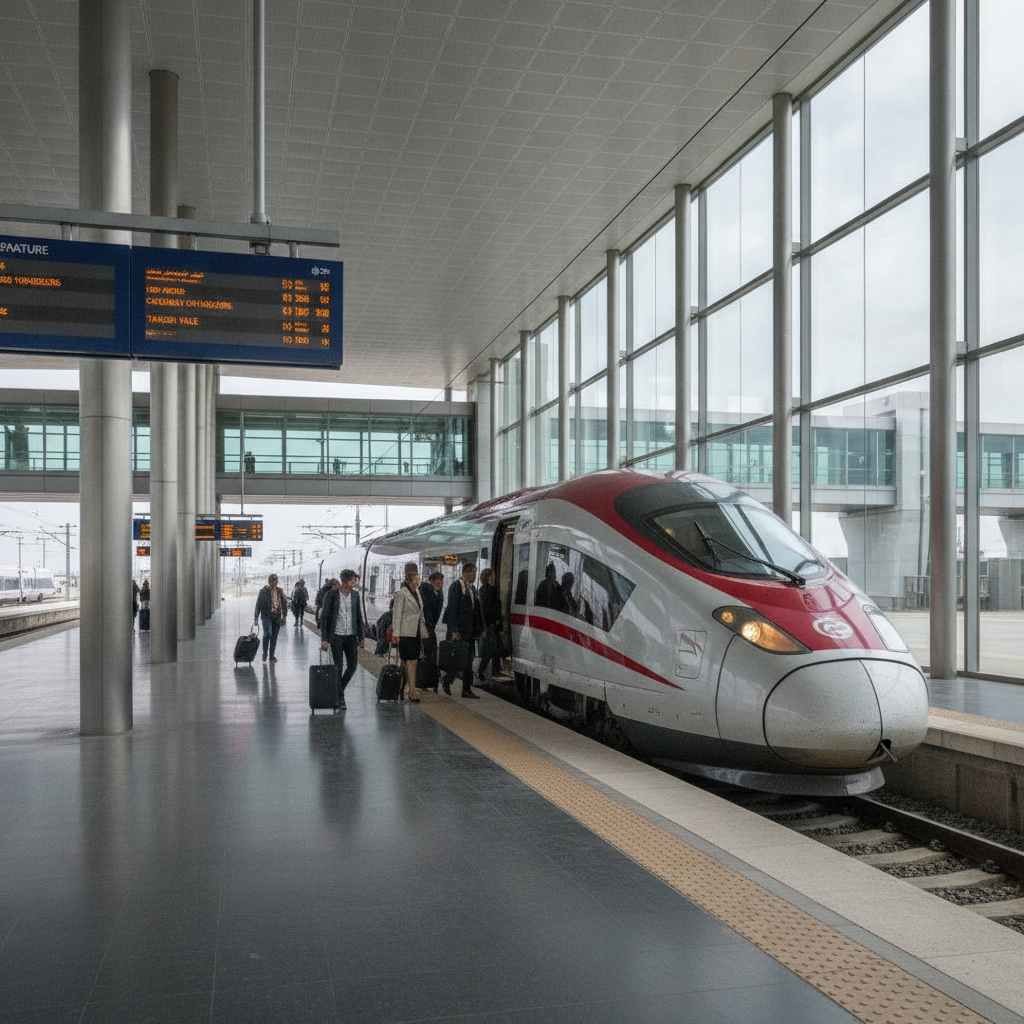
Casablanca Practical: Airport Connections, the Train to Marrakech and Fes, Hotel District Guide, the Morocco Circuit Starting Point, and the Departure Summary