Cape Range National Park Gorge Walk
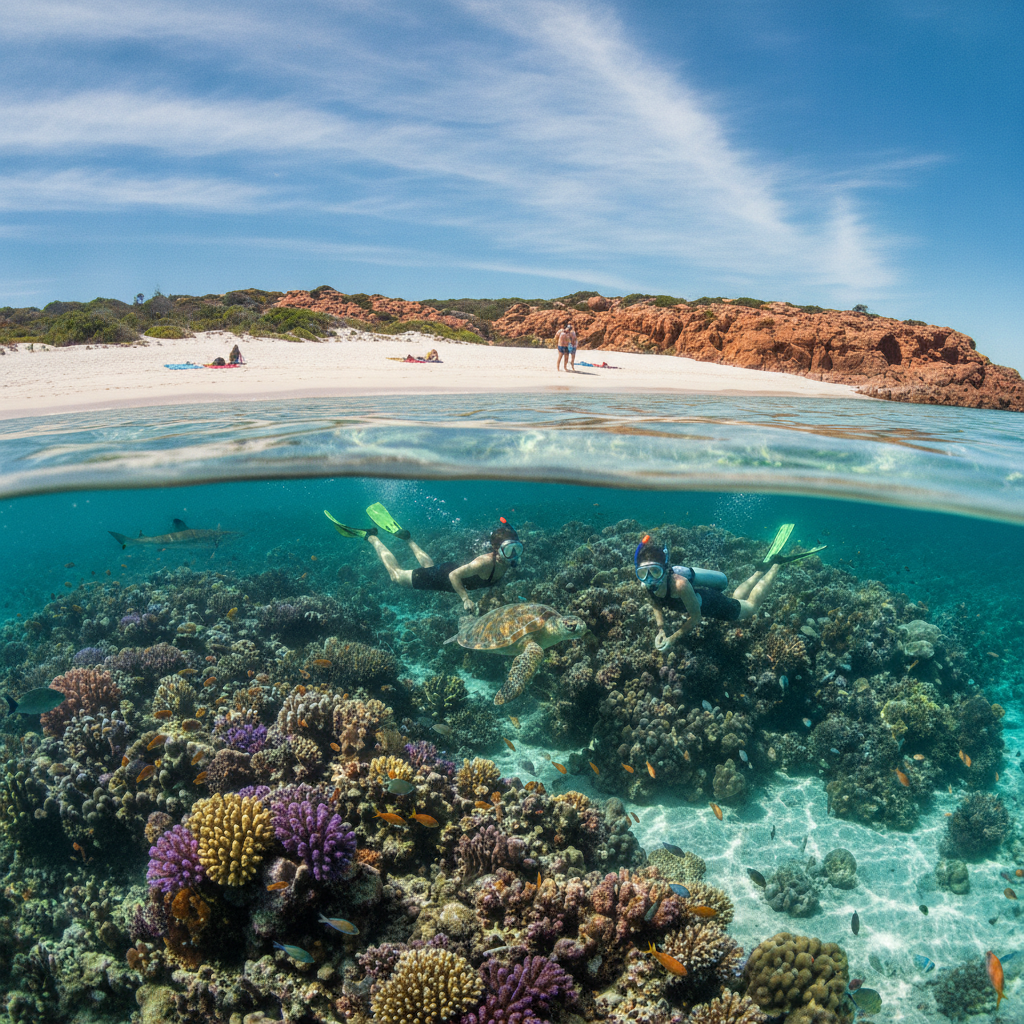
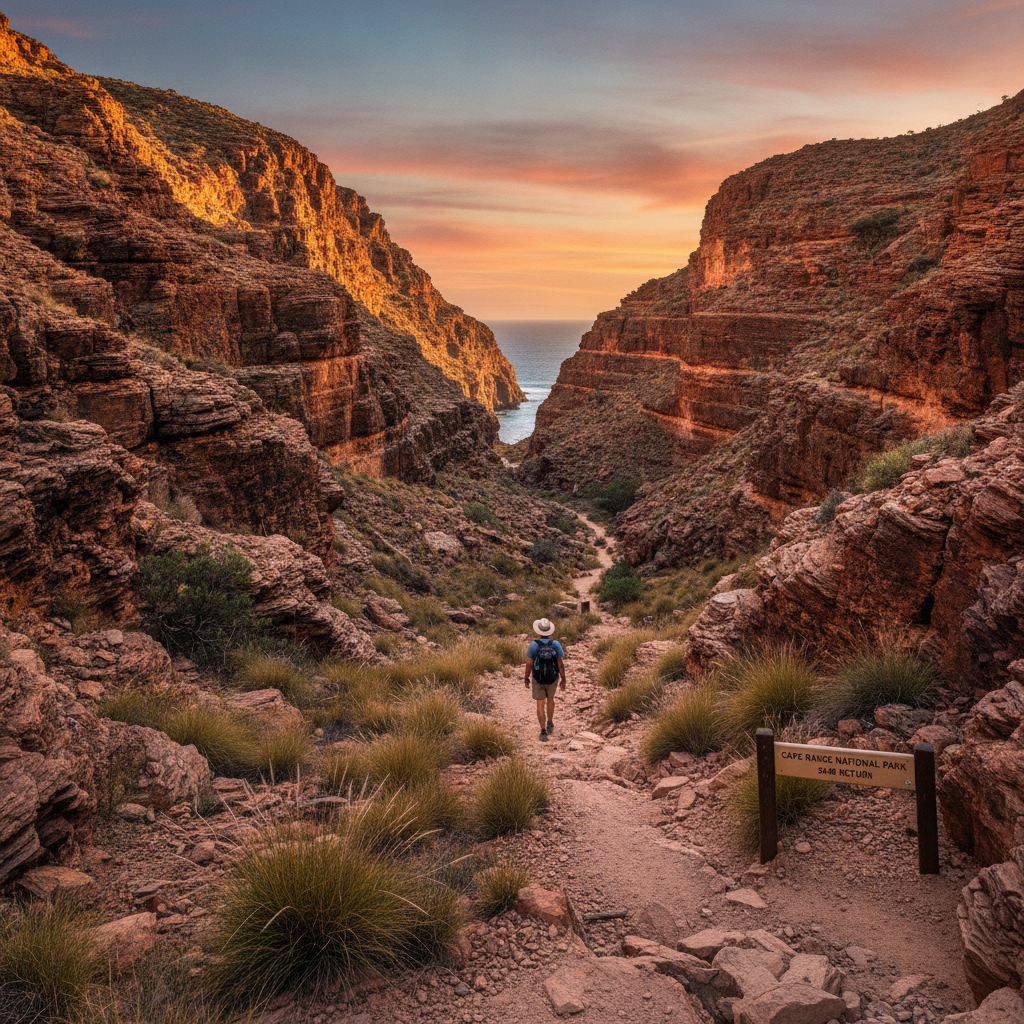
Walk the gorges of Cape Range National Park — the limestone range rising from the coast with deep gorges, rock wallabies, and the transition from desert to reef in a landscape where the Indian Ocean meets the Pilbara.
- 1
Mandu Mandu Gorge
Mandu Mandu Gorge cuts through the Cape Range limestone revealing 30-metre walls of ancient coral reef uplifted by geological forces — the 3-km walk through the gorge shows the fossils embedded in the walls of what was once a shallow sea floor millions of years ago.
- 2
Yardie Creek Gorge
Yardie Creek Gorge at the southern end of Cape Range is the deepest in the park — the boat tour or kayak up the creek into the gorge passes under black-footed rock wallaby colonies on the cliffs and finishes where the tidal creek meets the sea.
- 3
Black-Footed Rock Wallaby
The Yardie Creek gorge walls have one of the most accessible colonies of black-footed rock wallabies in Australia — the agile wallabies move on near-vertical cliff faces with apparent ease, visible from the boat tour or from the gorge rim walk above.
- 4
Charles Knife Canyon
Charles Knife Road cuts to the top of the Cape Range through Charles Knife Canyon — the narrow road along the canyon rim provides the highest accessible views over the peninsula, showing the reef, the lagoon, and the desert plateau simultaneously.
- 5
Shothole Canyon
Shothole Canyon is a narrow slot in the Cape Range accessible by a walking track — the 4-km return walk into the canyon floor shows the geological complexity of the limestone range and provides shade in the heat of the Exmouth summer.
- 6
Cape Range Station Walk
The walks along the Cape Range western coastal strip pass through spinifex and mulga scrub where euros, red kangaroos, and emus are common at dawn and dusk — the wildlife density in this remote national park is extraordinary for such a dry environment.
Walk this route with audio
Stories play automatically as you reach each stop — no tapping needed.