Heidelberg — Castle, Altstadt, Old Bridge, Germany's Oldest University & the Neckar Valley
Heidelberg is Germany's most romantically beautiful city — the Renaissance castle ruin, the intact Baroque Altstadt, the oldest university in Germany, and the Neckar Valley create the most complete German Romantic experience.
- 1
Heidelberg Castle — the Romantic Ruin
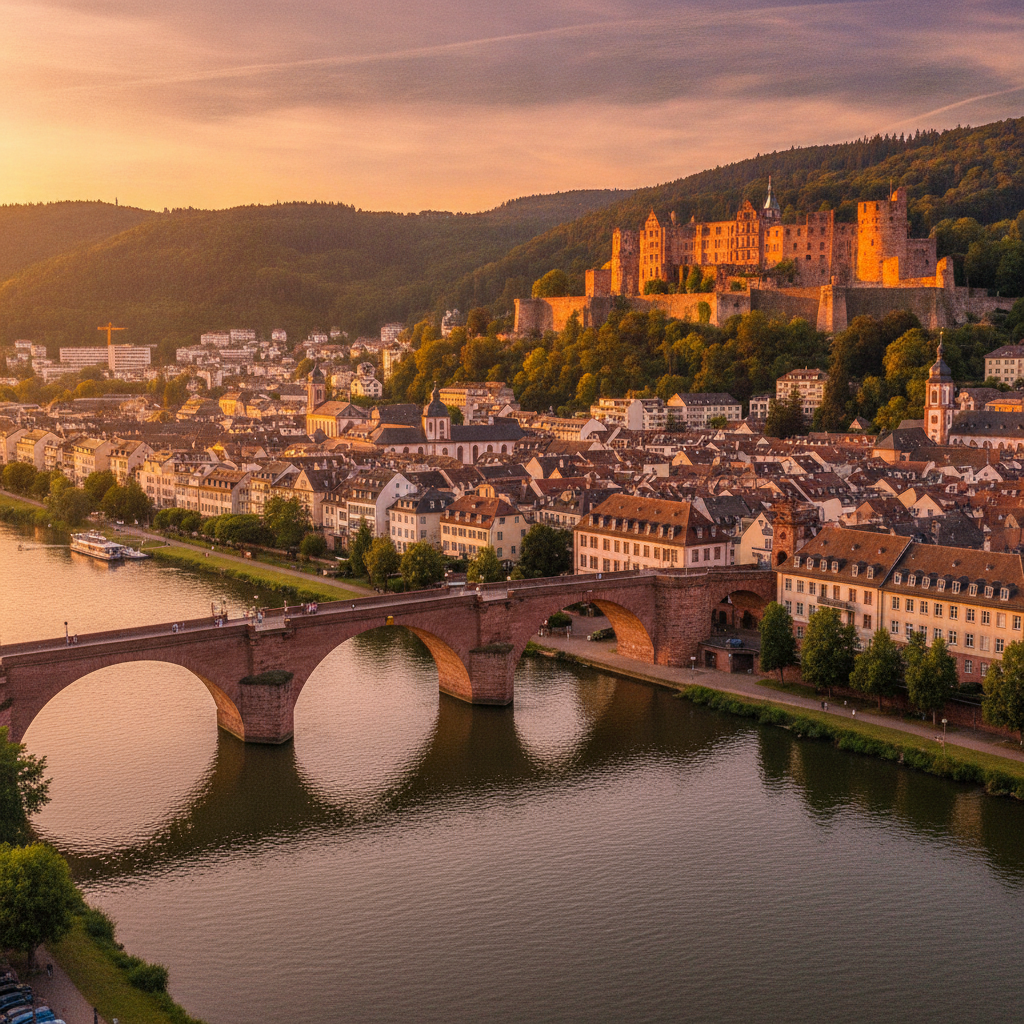
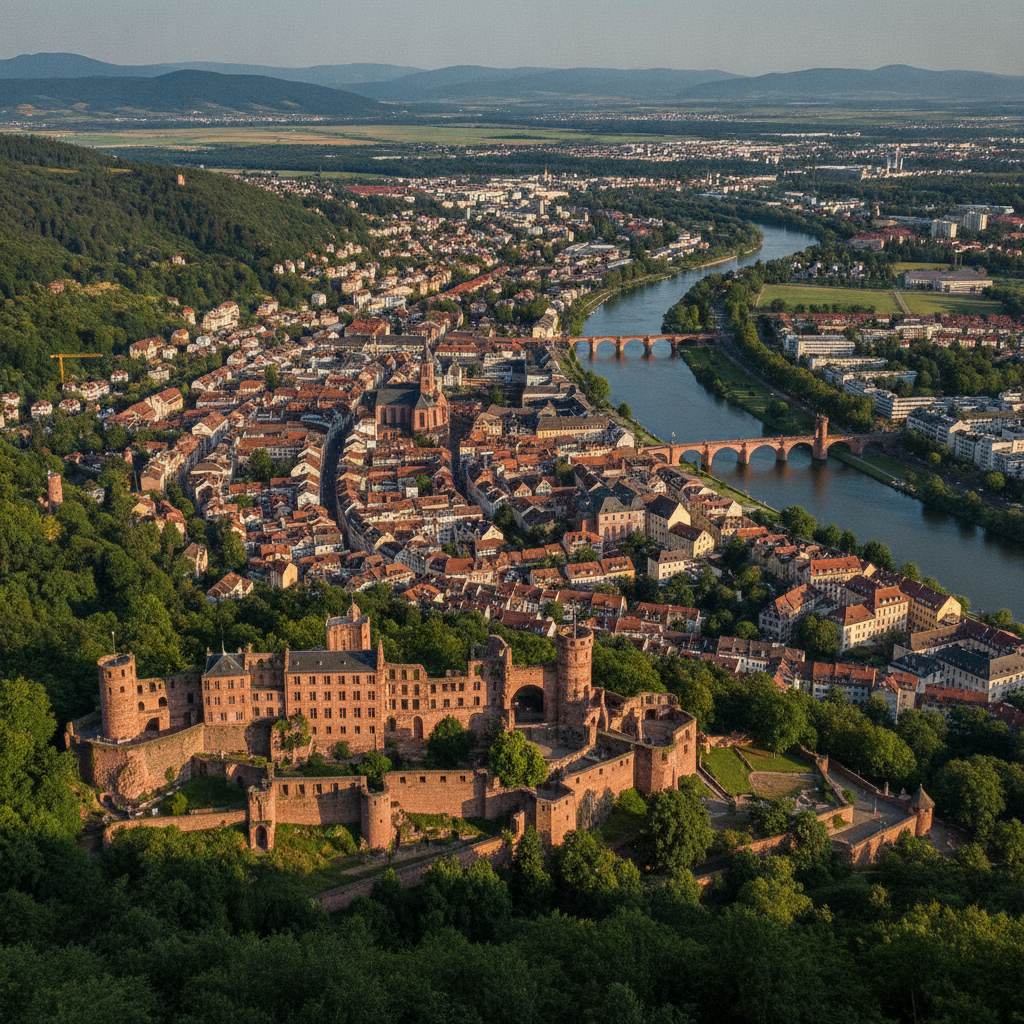
Heidelberger Schloss (Heidelberg Castle — the most visited castle ruin in Germany at 1 million visitors per year, the red-sandstone castle above the Neckar River the defining image of German Romanticism): the castle complex (the Heidelberg Castle dating from the 12th to the 17th century — the most architecturally diverse single castle complex in Germany, the complex comprising the Gothic east wing, the Renaissance Ottheinrichsbau of 1556 (the most accomplished single Renaissance palace facade in Germany north of the Alps, the 4-storey articulated facade with the allegorical figures the most completely carved secular Renaissance exterior in Germany), and the Baroque west wing of 1601, the combination of the 3 architectural styles in a single ruin the most visually instructive single site for German architectural history), the Heidelberg Tun (the Großes Fass — the world's largest wine barrel still in existence, installed in the castle cellar in 1751 with a capacity of 219,000 litres, the most visited single object in the castle, the dwarf Perkeo — the court jester who reportedly consumed the entire barrel's contents daily before dying after accidentally drinking a glass of water — the most beloved comic legend of the castle), the castle approach (the Burgweg footpath from the Kornmarkt square to the castle gate — the most historically used pedestrian approach, 20 minutes uphill through the forest, the Schlossbahn funicular from the Kornmarkt the most visited mechanical approach at €4 return, the most panoramic view of the Neckar and the Altstadt from the castle terrace the defining Heidelberg panorama, open daily 8am-6pm), the German Pharmacy Museum (the Deutsches Apothekenmuseum in the Ottheinrichsbau basement — the most completely preserved historic pharmacy collection in the world, the 18th-century laboratory reconstructions and the 5,000-object collection the most specifically pharmacy-history focused museum in any European castle, CHF 7 adults included in the castle entry) and the castle gardens (the Hortus Palatinus — the terraced Renaissance garden above the castle, the planned 'wonder of the world' garden (1614-1620) interrupted by the Thirty Years War with only 2 of the planned 9 terraces completed, the most historically significant incomplete garden in Germany, the completed terraces with the topiary and the panoramic Neckar view the most romantic single garden experience in Heidelberg).
- 2
The Heidelberg Altstadt — Hauptstrasse and the Marktplatz
Heidelberger Altstadt (the Old Town of Heidelberg — the most completely intact German Baroque and Renaissance city centre, the Altstadt the only major German city centre to have survived WWII without significant bomb damage, the most authentically historical Altstadt of any German university city): the Hauptstrasse (the Hauptstrasse — the most historically and architecturally complete 1.6km pedestrian street in Germany, the unbroken row of Baroque facades of 1690-1730 (reconstructed after the French destruction of 1693) the most complete single Baroque street in Germany, the Universitätsplatz at the midpoint the primary social hub of the Heidelberg Altstadt), the Universitätsplatz (the University Square with the 1712 Old University (Alte Universität) — the most atmospheric single university square in Germany, the New University opposite the most recognisable 1930s university building in Germany, the Löwenbrunnen (Lion Fountain) the primary outdoor meeting point, the Universitätsbibliothek (University Library) at Plöck 107 the most comprehensively medieval-manuscript-stocked library open to the public in Germany, the Codex Manesse manuscript the most important single medieval illuminated manuscript in the German language — the most visited single display item in the library), the Marktplatz (the Marktplatz with the Hercules Fountain and the Heiliggeistkirche (Church of the Holy Spirit) — the most photogenic single square in the Heidelberg Altstadt, the Church of the Holy Spirit the largest church in the Altstadt and the most architecturally distinctive Gothic building in the city, the market stalls on the Marktplatz Saturday mornings the most traditional weekly market in central Heidelberg), the Scheffelterrasse (the Scheffelterrasse terrace at the south bank of the Neckar — the most popular single beer garden viewpoint in Heidelberg with the castle visible above and the Old Bridge below, the most panoramically positioned outdoor café terrace in the Altstadt) and the Heidelberg baroque houses (the baroque Baroque merchants' houses on the Hauptstrasse between the Bismarckplatz and the Marktplatz — the most continuously intact sequence of urban Baroque domestic architecture in Germany, the Baroque stone facades with the carved sandstone details the most photographically instructive single street-level Baroque experience in the German-speaking world).
- 3
The Karl-Theodor-Brücke — Heidelberg's Old Bridge
Alte Brücke (the Karl-Theodor-Brücke — the 9th bridge on this site, the 1788 sandstone arch bridge the most photographed single bridge in Germany after the Dresden Zwinger, the most completely framed view of the Heidelberg Castle being from the bridge midpoint): the bridge (the 200m long Karl-Theodor-Brücke spanning the Neckar — the most elegantly proportioned pre-industrial stone bridge in Germany, the 9 arches the most structurally complete surviving example of the late-18th century German river bridge architecture, the bridge the primary pedestrian crossing between the Altstadt and the Neuenheim district), the Bridge Gate (the Brückentor — the 2-tower gateway at the Altstadt end of the Old Bridge, the most completely preserved single medieval-style gate structure in Heidelberg, the gate the most photographed element of the bridge from the Neckar bank), the bridge monkey (the Heidelberger Brückenäffchen — the bronze monkey statue at the Altstadt end of the bridge, the figure pointing at a mirror and holding a purse, the legend stating that the monkey was placed to mock both the city residents and the country folk — 'you need not mock me, look in the mirror yourself', the most visited single decorative object on any German bridge, the polished nose and hand the most touched bronze surfaces in Heidelberg), the Stadthalle view (the view from the Old Bridge west toward the Heidelberg Stadthalle (congress centre) on the Neckar bank — the most classically framed view of the Heidelberg riverside with the sandstone quay buildings and the castle above, the most used single postcard viewpoint in Heidelberg) and the Neuenheimer Landstrasse (the promenade along the Neckar north bank opposite the Altstadt — the most relaxed riverside walk in Heidelberg with the castle directly above on the south bank, the cycle path and the pedestrian path the most pleasant combined walking-and-cycling route in Heidelberg, the ice cream kiosks on the Neuenheimer Landstrasse in summer the most consistently excellent artisanal ice cream accessible from the city centre).
- 4
The Heidelberg University — Germany's Oldest
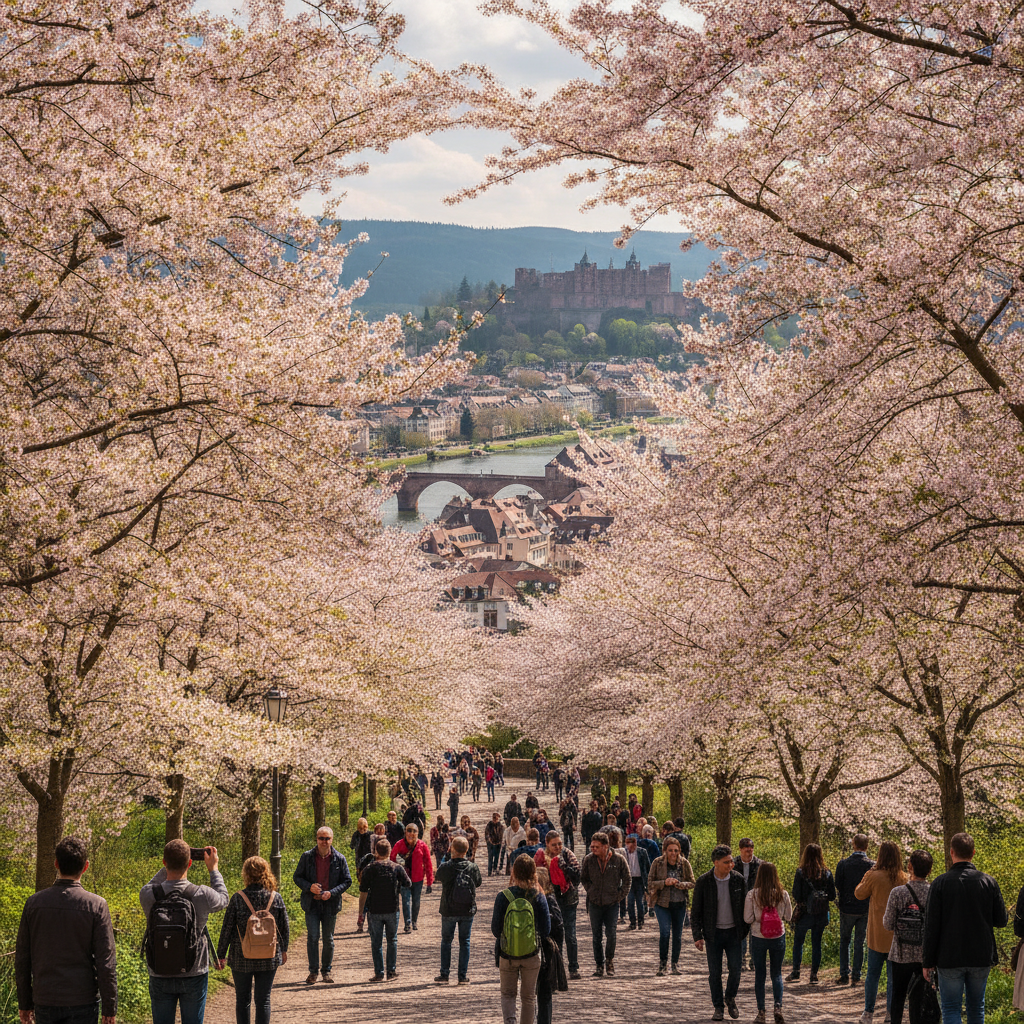
Universität Heidelberg (the Ruprecht-Karls-Universität Heidelberg — the oldest university in Germany, founded 1386, the most internationally ranked German university in the humanities and the natural sciences, the most symbolically important single institution in the Heidelberg urban identity): the Alte Universität (the Old University at Grabengasse 1 — the 1712 Baroque university building the most architecturally distinguished university building in Heidelberg, the Aula (Great Hall) with the allegorical ceiling painting the most formally ceremonial academic interior in Germany outside the Berlin Humboldt-Universität), the Student Prison (the Studentenkarzer at Augustinergasse 2 — the university prison used from 1778 to 1914 to confine student miscreants for offences like duelling and public disorder, the walls covered with the prisoners' graffiti, drawings, and mottoes the most unique single form of academic historical graffiti preservation in any university building in the world, the prison the most specifically Heidelberg heritage site, CHF 3 adults), the University Library (the Universitätsbibliothek at Plöck 107 — the Codex Manesse of 1300-1340 the most important surviving medieval German-language manuscript, the most completely illuminated secular love poetry manuscript in medieval German art, 137 miniatures of the Minnesang poets in court settings, free viewing in the permanent exhibition Tuesday-Saturday 10am-6pm), the New University (the Neue Universität at Universitätsplatz — the 1930 building with the 'Witch's Tower' (Hexenturm) incorporated into the facade — the most incongruously named single university building element in Germany, the tower a surviving section of the medieval city wall re-clad and renamed by the students) and the Philosophenweg (the Philosophers' Walk — the Philosophenweg on the Heiligenberg hillside opposite the castle, the 2km path at 200m above the Neckar the most contemplative single academic walking route in Germany, the path named for the Heidelberg professors who walked there during intellectual discussions, the spring view of the cherry blossoms on the hill the most photographed seasonal change in Heidelberg).
- 5
The Neckar Valley — Rowing, Cycling and the Riverside
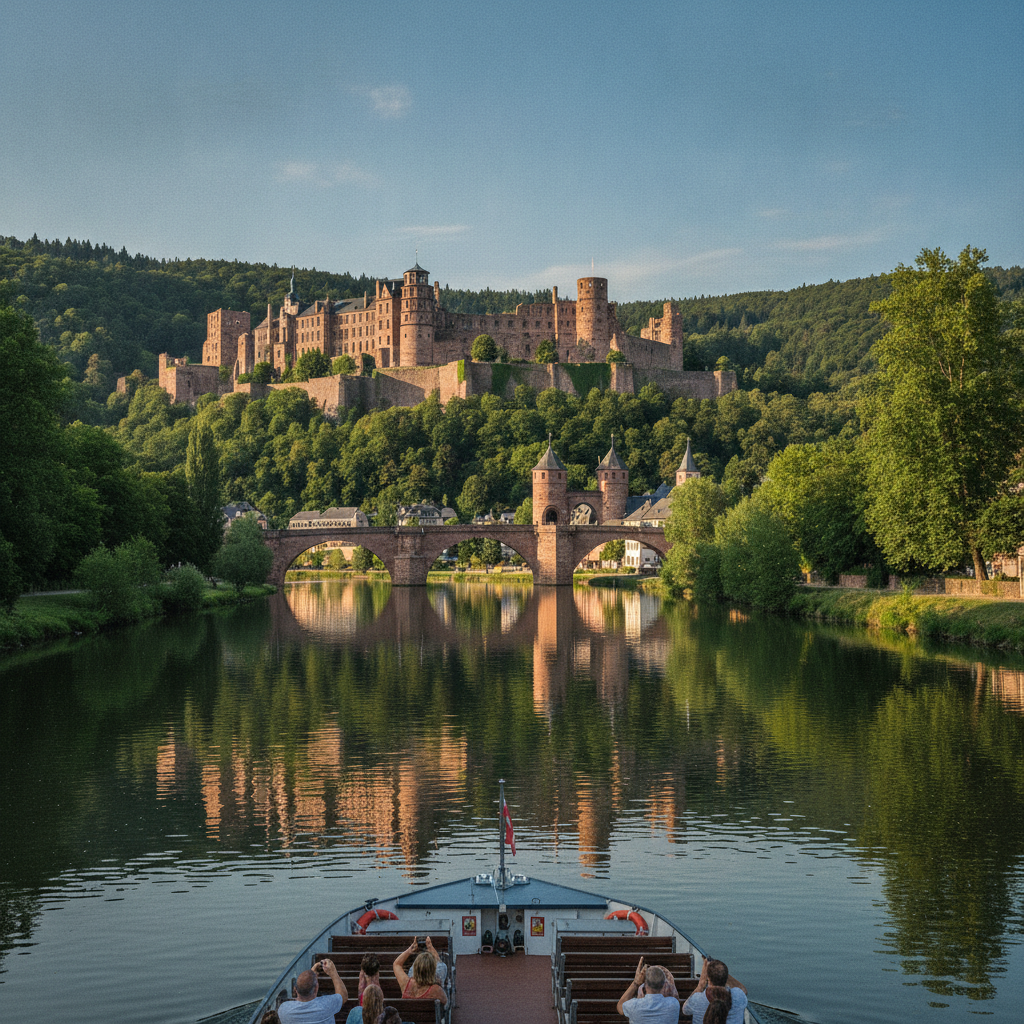
Neckar Valley Heidelberg (the Neckar River through Heidelberg — the most completely recreational river valley of any German university city, the river the primary physical feature defining the Heidelberg urban landscape): the Neckar rowing (the Neckar rowing clubs at the Heidelberg rowing pier — the most historically established rowing club district of any German river city, the Heidelberger Rudergesellschaft of 1882 the oldest club, the coloured boathouses at the Neckar bank the most photogenic single boat house assembly in Germany, the rowing boat rental at the Bootsverleih Heidelberg at Neckarstaden 2 at €10 per hour the most traditional Heidelberg water activity), the Neckar cycling (the Neckartalradweg — the dedicated cycle path from Heidelberg downstream to Mannheim 20km and upstream to Neckargemünd 15km, the most completely traffic-free riverside cycle path in the northern Baden-Württemberg, the route passing the Schlierbach medieval monastery and the Ziegelhausen sandstone quarry the most geologically instructive cycling in the Neckar valley), the Neckar islands (the Neckarwiesen (Neckar Meadows) — the most used single river-bank recreation area in Heidelberg, the grass meadows on the south Neckar bank between the Old Bridge and the Theodor-Heuss-Brücke the most populated single outdoor sitting area in Heidelberg on summer afternoons, the river swimming from the grass bank the most exhilarating urban swimming in the Neckar), the Neckar cruises (the Heidelberger Personenschifffahrt river cruises from the Heidelberg pier at Steingasse 4 — the 50-minute Heidelberg round trip the most complete water-level view of the castle and the Altstadt from the Neckar, the 2-hour trip to Neckargemünd and back the most completely Neckar-valley-immersive boat excursion from Heidelberg, CHF 13 adults for the round trip, April-October) and the Heidelberg weir (the Heidelberger Wehr — the navigable weir on the Neckar downstream of the Old Bridge, the most visually active single hydraulic structure on the Neckar in the Heidelberg city stretch, the fish ladder adjacent to the weir the most ecologically consequential single river infrastructure modification in Heidelberg, the weir the primary visual reference for the Neckar current speed visible from the Hauptbrücke promenade).
- 6
Heidelberg Practical — Seasons, Card and Day Trips
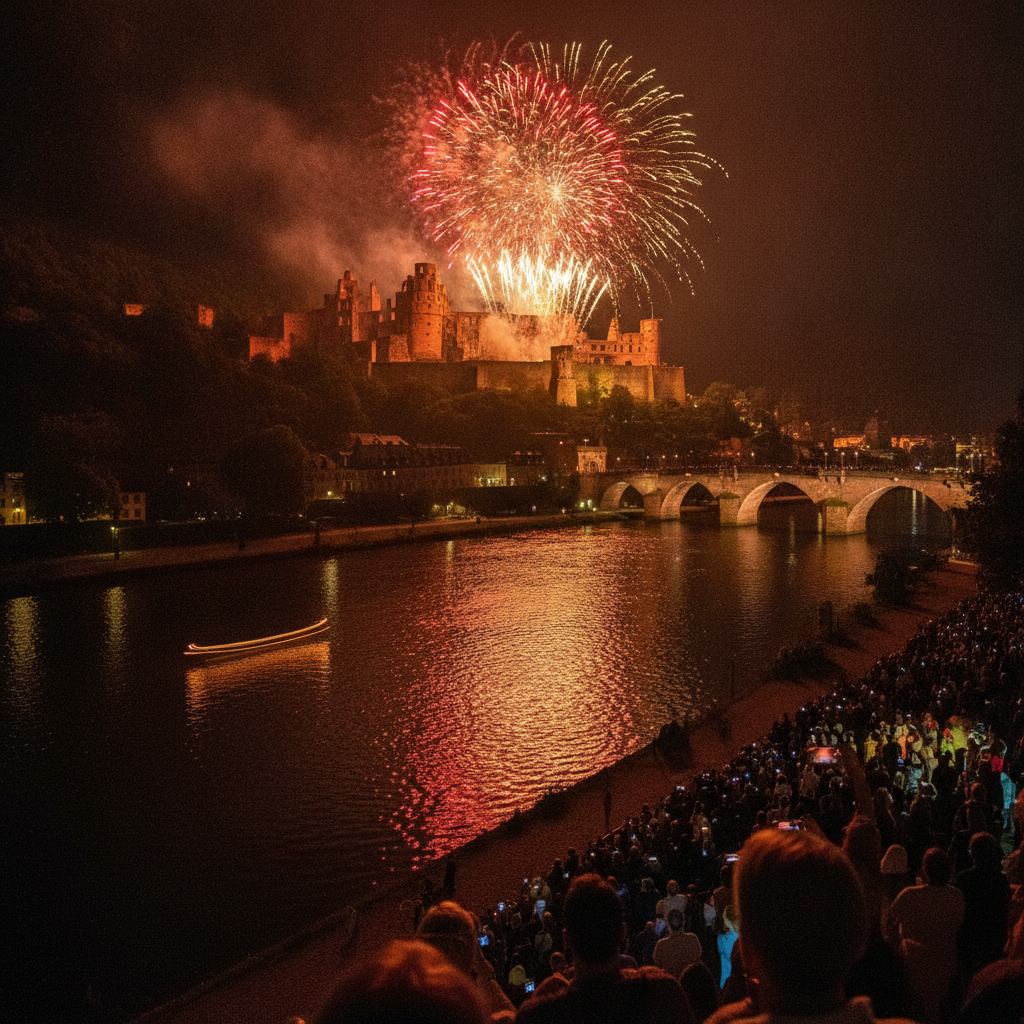
Heidelberg practical guide (the essential logistics for the Heidelberg visit): the HeidelbergCard (the HeidelbergCard at €16 for 2 days — the public transport pass covering the VRN tram and bus within the Heidelberg city zone, plus the free entry to the Heidelberg Castle including the funicular, the German Pharmacy Museum, the Kurpfälzisches Museum, and the Student Prison, the most cost-efficient single visitor card in any German university city, available at the Tourist Office at Willy-Brandt-Platz 1 opposite the Hauptbahnhof), the transport (the Heidelberg S-Bahn from Mannheim Hauptbahnhof in 15 minutes at €3.90, the Frankfurt ICE to Mannheim in 40 minutes then the S-Bahn the most efficient international connection, the Heidelberg tram lines 21, 22, and 23 the primary public transport within the city, the tram to the Bismarckplatz the primary arrival point for the Altstadt, the Altstadt itself car-free in the core pedestrian zone), the seasons (the best time to visit Heidelberg: April-May for the cherry blossoms on the Philosophenweg and the first warm terrace weather, June-September for the fully animated Altstadt with the Heidelberg Castle Illumination (Schlossbeleuchtung) fireworks 3 times per year the most theatrically spectacular single event in the Heidelberg calendar, the most visited event with the castle illuminated by the fireworks simulation of the 1693 French destruction, the October atmosphere the most romantically autumnal of any German university city), the Schlossbeleuchtung (the 3 annual castle illumination events in May, June, and September — the fireworks display simulating the French destruction of the castle in 1693, the most specifically historically referenced fireworks event in Germany, the Neckar bank south the best viewing position, free from the riverbank), the day trips (the Mannheim Baroque Palace 20km north — the largest Baroque palace in Germany by floor plan at 480m facade length, the most overlooked single Baroque royal palace in Germany, the S-Bahn in 15 minutes; the Königstuhl summit at 568m above Heidelberg — the most panoramic single viewpoint over the Neckar valley accessible by rack railway from the Marktplatz in 30 minutes at €12 return; and the Schwetzingen Palace 20km west — the most completely preserved Baroque palace garden in Baden-Württemberg) and the Heidelberg Romanticism (the Heidelberg Romanticism (Heidelberger Romantik) — the intellectual and artistic movement centred on Heidelberg 1803-1808, the Brentano-von Arnim 'Des Knaben Wunderhorn' folk song collection published in Heidelberg 1806 the most influential single German Romantic compilation, the university circle the most internationally discussed Romantic literary group in German literature, the Heidelberg Romantic heritage the most specifically literary tourism reason for visiting Heidelberg among the international literary scholar community).
Walk this route with audio
Stories play automatically as you reach each stop — no tapping needed.
More in heidelberg
Heidelberg — Castle Illumination, Roman Ladenburg, Baroque Architecture, Odenwald Hiking & Bergstrasse Wine
Heidelberg — Neckar Cruise, Mannheim Baroque Palace, Worms Cathedral & Speyer's Romanesque Kaiserdom
Heidelberg — Philosophenweg, Wine Country, Museums, Student Culture & Nightlife
Heidelberg — Königstuhl Summit, Handschuhsheim Village, the Electoral Palatinate & Heidelberg in Literature