Kampot Bokor Mountain & Ghost Town Walk
Ascend Bokor Mountain — the Bokor Hill Station above Kampot is one of the most atmospheric abandoned colonial sites in Asia, a French resort community from the 1920s built on a 1,000-metre plateau above the Gulf of Thailand and abandoned twice due to war and then left as a ghost town before partial redevelopment.
- 1
Bokor National Park Gate
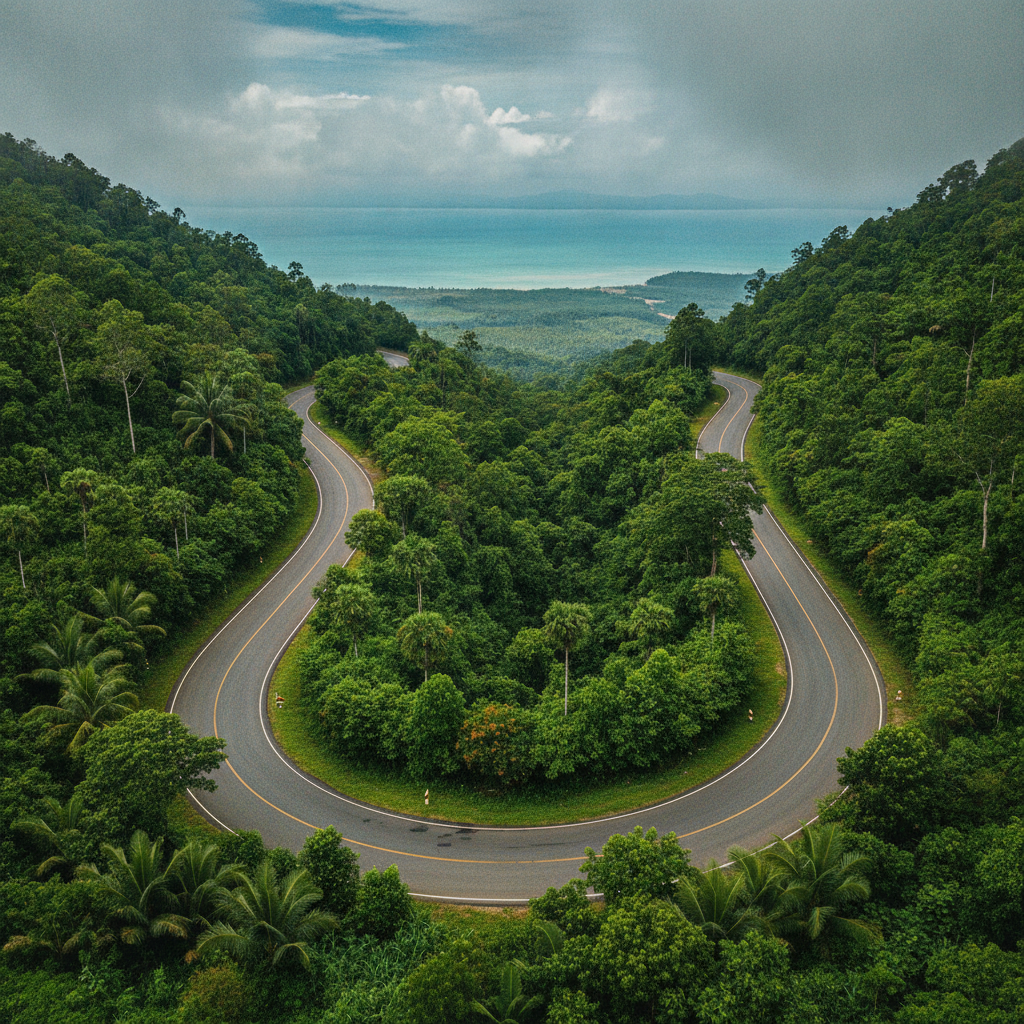
The Bokor National Park entrance gate on the mountain road from Kampot is the start of the 32km ascent to the plateau — the road built by the French in the 1920s for the construction of the hill station (originally built using Cambodian forced labour in conditions that killed an estimated 900 workers during the road construction) winds through the forest of the Elephant Mountains (Chuor Phnom Damrei), ascending from the coastal plain through the cloud forest that characterises the upper reaches of the mountain. The national park's protected forest (the primary forest of the upper mountain, one of the most intact remaining forest areas in southern Cambodia) provides the most direct encounter with the Cardamom-Elephant Mountain ecosystem accessible from the Kampot province.
- 2
Old Bokor Palace Hotel
The Old Bokor Palace Hotel (Le Bokor Palace, built in 1925 as the centrepiece of the French colonial hill station and now partially restored as a functioning hotel after decades of abandonment) is the most dramatic single colonial ruin in Cambodia — the massive white palace (the six-storey Art Deco colonial structure designed for the French administrators, planters, and wealthy Cambodian families who came to escape the lowland heat in the cool mountain air) stands in its hilltop position above the cloud forest with the Gulf of Thailand visible beyond the coastal plain below. The palace's history of abandonment (evacuated during the Khmer Rouge advance in 1972, used as a Khmer Rouge command post from 1975-1979, left abandoned for decades before the current partial restoration) is documented in the physical fabric of the building (the bullet holes in the walls, the stripped interior spaces, and the grafiti of the Khmer Rouge period still visible in some sections).
- 3
Black Palace Kampot
The 'Black Palace' (the former Cambodian royal retreat on the Bokor plateau, built in the 1960s for King Sihanouk as a cool-season residence) is the most evocative of the abandoned buildings in the Bokor ghost town complex — the modernist concrete villa (Sihanouk-era architecture, completely different in style from the French colonial Bokor Palace Hotel) was abandoned in 1970 when Sihanouk was deposed and has remained empty since. The Black Palace's abandonment (the emptied interiors, the overgrown access road, and the structural deterioration of the unoccupied modernist villa) provides the most direct visual encounter with the political discontinuity of the Cambodian royal tradition across the successive regimes of the past half-century.
- 4
Bokor Ghost Town Walk
The ghost town ruins of the original French hill station (the casino, the post office, the Catholic church, the hotel staff quarters, and the various administrative buildings of the original resort community) are scattered across the plateau in various states of ruin and partial restoration — the walk through the ghost town (the mist frequently obscuring the buildings and the dense undergrowth reclaiming the spaces between the structures) creates the most cinematically atmospheric environment accessible at any Cambodian tourist site. The site's use as a filming location (including Diep Thi Vung Dat and The Killing Fields's Khmer Rouge sequences) reflects its extraordinary visual quality as a landscape of historical haunting.
- 5
Cloud Forest Summit View
The summit viewpoint at Bokor Mountain (the cliff edge of the plateau at 1,080 metres elevation looking south over the Gulf of Thailand) provides the most dramatic coastal panorama accessible in Cambodia — the view on clear days (the Cambodian coastline visible in both directions, the islands of Koh Kong province visible to the west and the Vietnamese islands of Phu Quoc visible to the east, and the Gulf of Thailand extending to the horizon) is the most extensive single-vista coastal view available in the country. The cloud forest vegetation at the cliff edge (the stunted, wind-shaped trees draped in moss and epiphytes, the pitcher plants growing in the cliff face seeps, and the orchids visible in the cloud forest canopy) creates the most botanically distinctive environment accessible in the Kampot province.
- 6
Bokor Waterfall
The Popokvil Waterfall on the Bokor plateau (the two-tiered waterfall on the upper plateau accessible by a short trail from the main road) is the most accessible natural feature of the Bokor Mountain visit — the waterfall (at its most dramatic during the wet season when the full volume of the mountain's rainfall feeds the stream) cascades from the upper plateau into the forest canyon below, with the mist from the falls visible from the road above. The waterfall's cloud forest setting (the damp forest environment of the upper mountain, with the tree ferns, the hanging mosses, and the mountain stream vegetation creating a completely different ecosystem from the lowland Kampot rice field landscape) provides the most complete environmental contrast accessible in a single day's visit to the Bokor Mountain.
Walk this route with audio
Stories play automatically as you reach each stop — no tapping needed.