Kampot Music, Arts & Expat Culture Walk
Experience Kampot's creative scene — the town has developed one of the most distinctive arts and music cultures in Southeast Asia, with its unusual mix of long-term foreign residents, Cambodian artists, and the town's own relaxed rhythm creating a cultural environment unlike any other small town in the region.
- 1
Kampot Music Venues
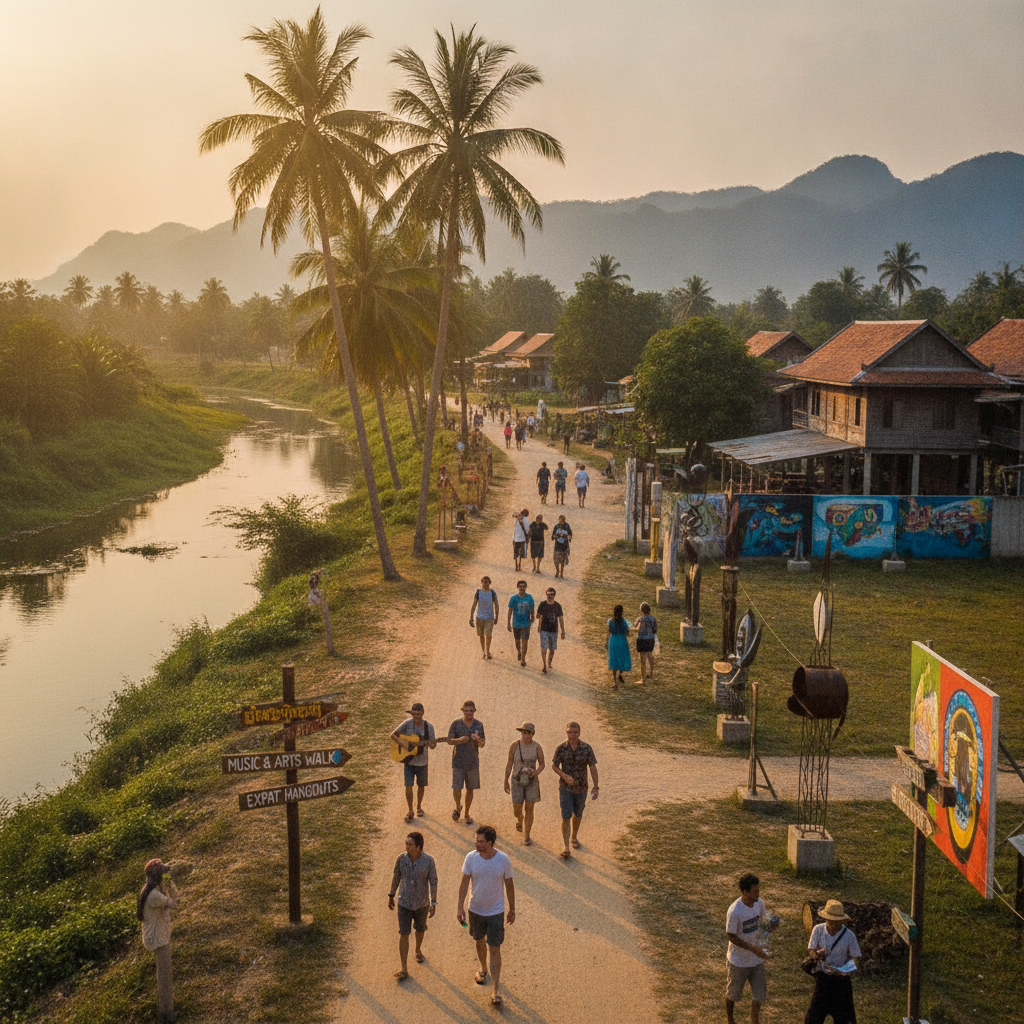
The live music venues in the Kampot colonial district (the bars and restaurants in the colonial shophouses that have regular live music performances by both the expat musician community and the Cambodian artists who have made Kampot their base) create the most consistent live music scene accessible in any Cambodian provincial town — the Thursday night open-mic at the riverside bar, the weekend performances at the colonial shophouse music venues, and the occasional larger performances at the outdoor stages in the town's open spaces provide a continuous live music programme that is the primary evening entertainment of the Kampot expat and tourist community. The music scene's eclecticism (the folk, the blues, the reggae, and the traditional Cambodian music all represented in the regular programme) reflects the diverse community that has created the Kampot arts culture.
- 2
Kampot Art Collective
The gallery and studio spaces in the Kampot colonial shophouse district (the art collective exhibitions, the individual artist studios open to visitors, and the regular group shows displaying the work of both the expat and the Cambodian Kampot arts community) create the most accessible provincial arts scene in Cambodia — the Kampot arts community's characteristic style (the work ranging from the documentary photography of the Cambodian landscape and social conditions to the abstract painting informed by the Buddhist visual tradition to the sculpture using the materials of the local environment) is the most distinctive body of provincial Cambodian art accessible outside the capital's gallery system. The collective's regular exhibitions (held in the colonial shophouse spaces adapted as gallery rooms) provide the most consistent opportunity to encounter the living Kampot arts community.
- 3
Kampot Coffee Culture
The café culture of Kampot (the independently owned coffee shops in the colonial shophouses of the riverside district, many serving the single-origin Cambodian coffee from the Mondulkiri or Ratanakiri highland plantations alongside the French-influenced pastry tradition of the Cambodian bakery) is the most developed single-origin coffee culture accessible in any Cambodian provincial town — the Kampot cafes' combination of the colonial physical setting (the high ceilings, the French tiled floors, and the louvred shutters of the colonial shophouse interior), the locally produced specialty coffee, and the WiFi-enabled work environment that has attracted the remote-working community create the most atmospheric café working environment accessible outside Phnom Penh. The morning café culture (the mix of Khmer families, long-term foreign residents, and transient backpackers sharing the colonial café space) is the most socially diverse public space in Kampot.
- 4
Local Cambodian Food
The Cambodian restaurant culture in Kampot (the local Khmer restaurants and street food stalls that serve the resident Cambodian community alongside the tourist market) provides the most authentic access to the provincial Cambodian food culture in the southern Cambodia area — the morning noodle soup vendors (the bai sach chrouk pork-on-rice breakfast visible at the market stalls from 5am), the midday Khmer curry restaurants, and the evening fish preparations using the fresh catch from the Kampot River and the coastal fishing community create a continuous food culture that is more genuinely Cambodian in character than the tourist-oriented restaurant scene of Siem Reap. The Kampot pepper's use in the local Cambodian cooking (the fresh green pepper in the crab preparation, the black pepper in the beef lok lak, and the white pepper in the fish soup) is the most directly observable expression of the pepper's culinary centrality in the local food culture.
- 5
Kampot Workshop Community
The workshop community in Kampot (the artisan producers of the chocolate, the natural cosmetics from the Cambodian botanical ingredients, the ceramics using the local clay, and the woven textile products from the surrounding community weaving traditions) has made the town the most productive small-scale artisan production centre in Cambodia outside the established craft centres of Siem Reap — the workshop tours and the maker market events that occur regularly in the Kampot colonial district provide the most direct encounter with the artisan production process accessible in the province. The community's use of local Cambodian ingredients (the Kampot pepper, the coconut, the palm sugar, and the botanical plants of the Cardamom Mountain watershed) in the artisan production creates the most geographically specific artisan product range accessible in the southern Cambodia tourist circuit.
- 6
Kampot Slow Life Evening
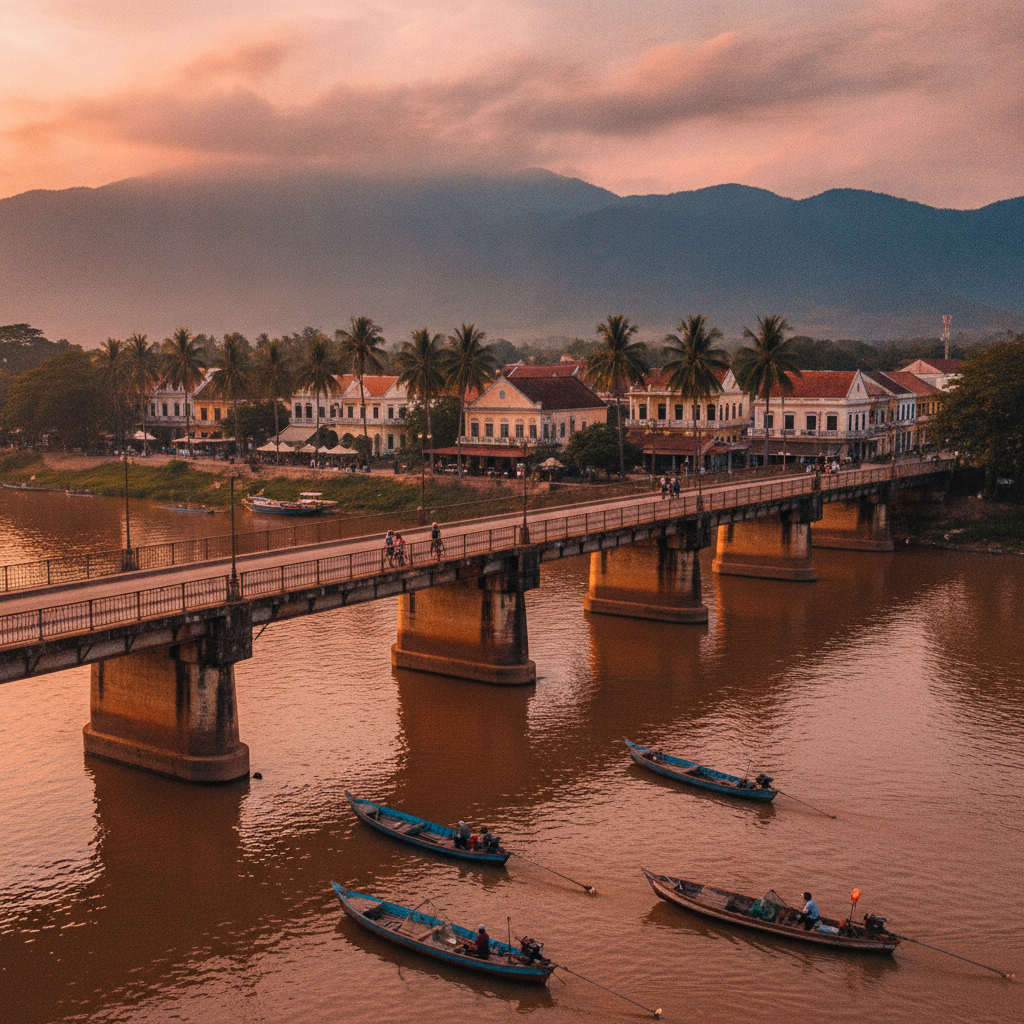
The Kampot evening riverside culture (the slow gathering of the town's community at the riverside bars and restaurants as the day cools, the hammock culture of the riverside guesthouses where the long-term residents spend the afternoon, and the river itself visible in its tidal rhythm of advancing and retreating current throughout the day) is the most distinct social environment in Cambodia — the 'Kampot time' that the resident expat community uses to describe the town's attitude to time and productivity (the general slowing of pace, the priority of conversation over efficiency, and the acceptance of the afternoon's rain and the morning's gentle pace as the appropriate rhythm of the day) creates a social atmosphere that is completely unlike the tourist-oriented hustle of Siem Reap or the urban energy of Phnom Penh. The evening riverside gathering is the most characteristic expression of the Kampot life that draws both the long-term residents and the passing visitors.
Walk this route with audio
Stories play automatically as you reach each stop — no tapping needed.