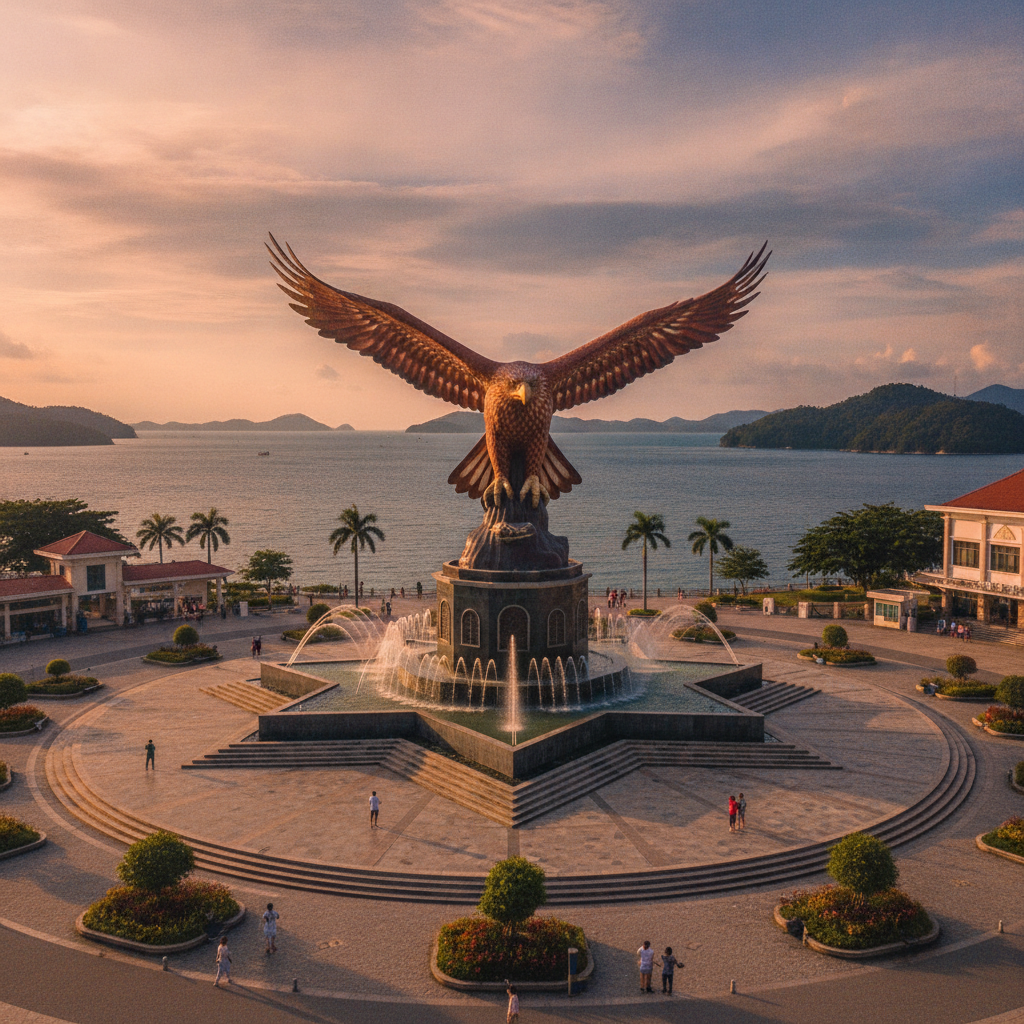
Langkawi Kuah Town & Eagle Square Walk
Explore Langkawi's main town — Kuah is the island's administrative and commercial centre with the ferry terminal connecting to the mainland, the duty-free shopping malls, the Eagle Square landmark, and the mosques and temples that document the multicultural character of a Malaysian island town.
- 1
Dataran Lang Eagle Square
Dataran Lang (Eagle Square) is Langkawi's most iconic landmark — the 12-metre bronze statue of a white-bellied sea eagle (helang) with wings spread, positioned on a promontory above the Kuah jetty waterfront, represents both the island's name (derived from the Malay word for eagle) and the wildlife emblem that the Geopark designation has promoted as a conservation symbol. The waterfront promenade around the eagle statue provides views of the Andaman Sea and the ferry traffic that brings visitors from Penang and the mainland to the island.
- 2
Kuah Jetty Ferry Terminal
The Kuah ferry terminal is the arrival point for visitors coming from Penang, Butterworth, and Kuala Perlis on the mainland — the busy jetty where ferries, speedboats, and the island hopping tours operate simultaneously is the most commercially active point in Langkawi and the first experience of the island for most visitors who arrive by sea. The duty-free shops immediately adjacent to the ferry terminal target arriving visitors with the chocolate, liquor, and tobacco that constitute the island's primary duty-free shopping attraction.
- 3
Masjid Al-Hana Kuah Mosque
The Kuah mosque with its distinctive blue dome is the visual centre of the Malay Muslim community's religious life in Langkawi's main town — the mosque serving the predominantly Malay Muslim population of the island provides the religious infrastructure for a community whose identity is shaped by Islam and whose cultural practices (the Friday prayers, the Ramadan fasting, the Eid celebrations) create the rhythm of social life in the town areas away from the beach resort culture of the tourist strip.
- 4
Langkawi Craft Cultural Complex
The Langkawi Craft Cultural Complex provides a showcase for Malaysian traditional crafts — the demonstrations of batik printing, pottery, wood carving, and the traditional Malay performing arts (dikir barat group singing, silat martial arts) create an organised introduction to Malay cultural heritage for the mass tourism market. While the cultural complex format has limitations in authenticity compared to community cultural engagement, it provides accessible exposure to craft traditions that are not otherwise visible in Langkawi's beach resort tourism landscape.
- 5
Kuah Heritage Kampung
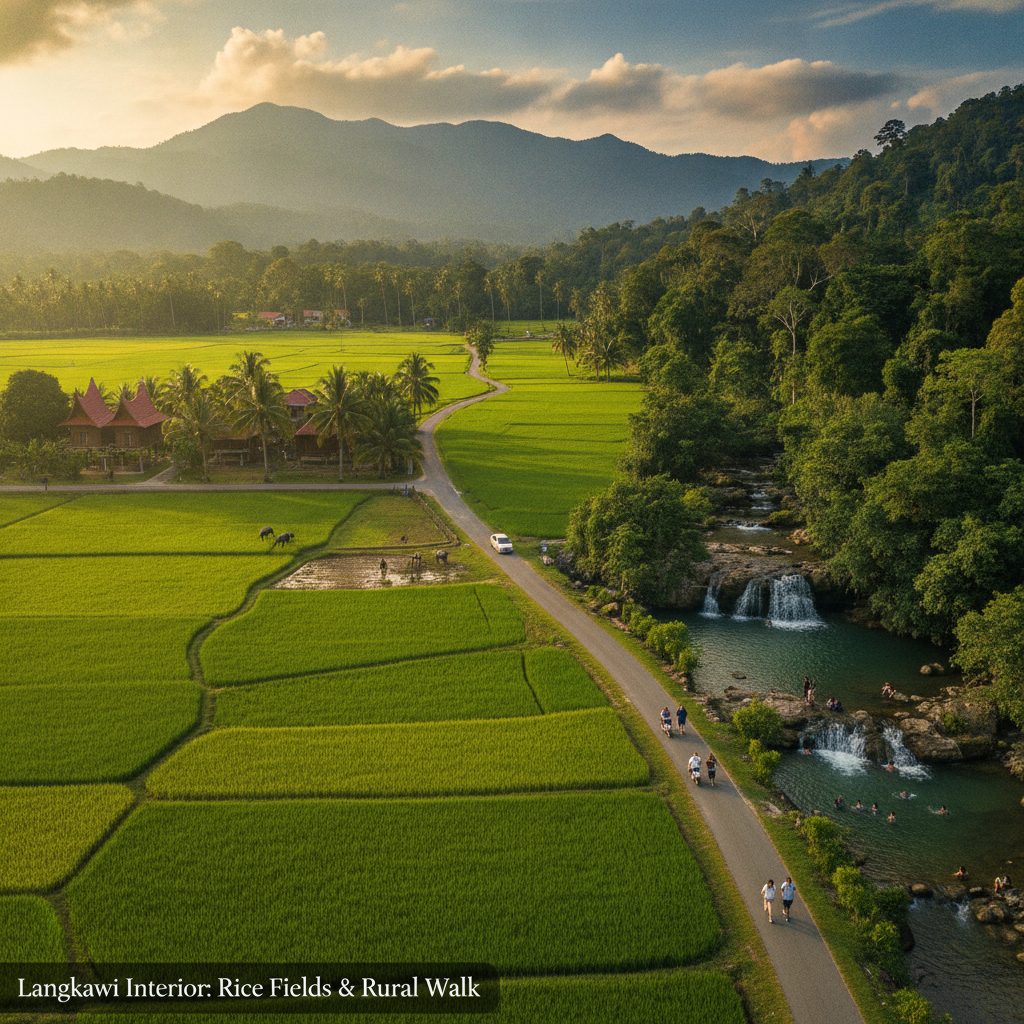
The traditional kampung (village) areas of Kuah and the surrounding areas of Langkawi's rural interior preserve the village structure and way of life that predates the island's tourist development — the wooden houses on stilts, the surrounding coconut palms and orchards, the mosque at the village centre, and the rice fields in the lowland areas that still exist between the developed resort zones represent the Malay rural landscape that has been maintained alongside the island's transformation into Malaysia's premier beach resort destination.
- 6
Langkawi History Museum
The Langkawi history museum documents the island's mythology, its role in the Kedah Sultanate's history, and its transformation from a fishing community to a major tourism destination — the legend of Mahsuri (a beautiful woman unjustly executed whose dying curse prevented the island from prospering for seven generations) is the central story in Langkawi's mythological history and the starting point for understanding the island's cultural identity. The museum traces the island's history from prehistoric settlement through the Siamese and British colonial periods to the development of tourism that has transformed its economy since the 1970s.
Walk this route with audio
Stories play automatically as you reach each stop — no tapping needed.