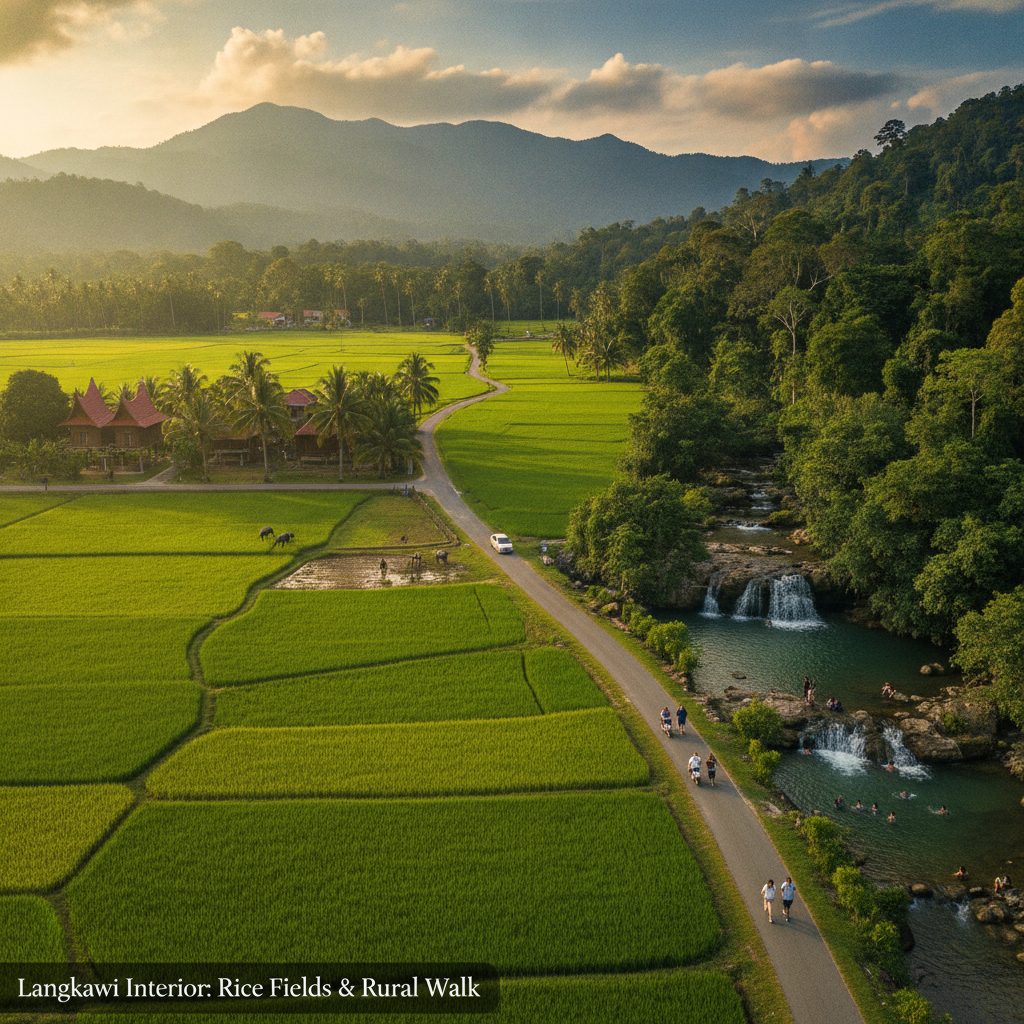
Langkawi Interior Rice Fields & Rural Walk
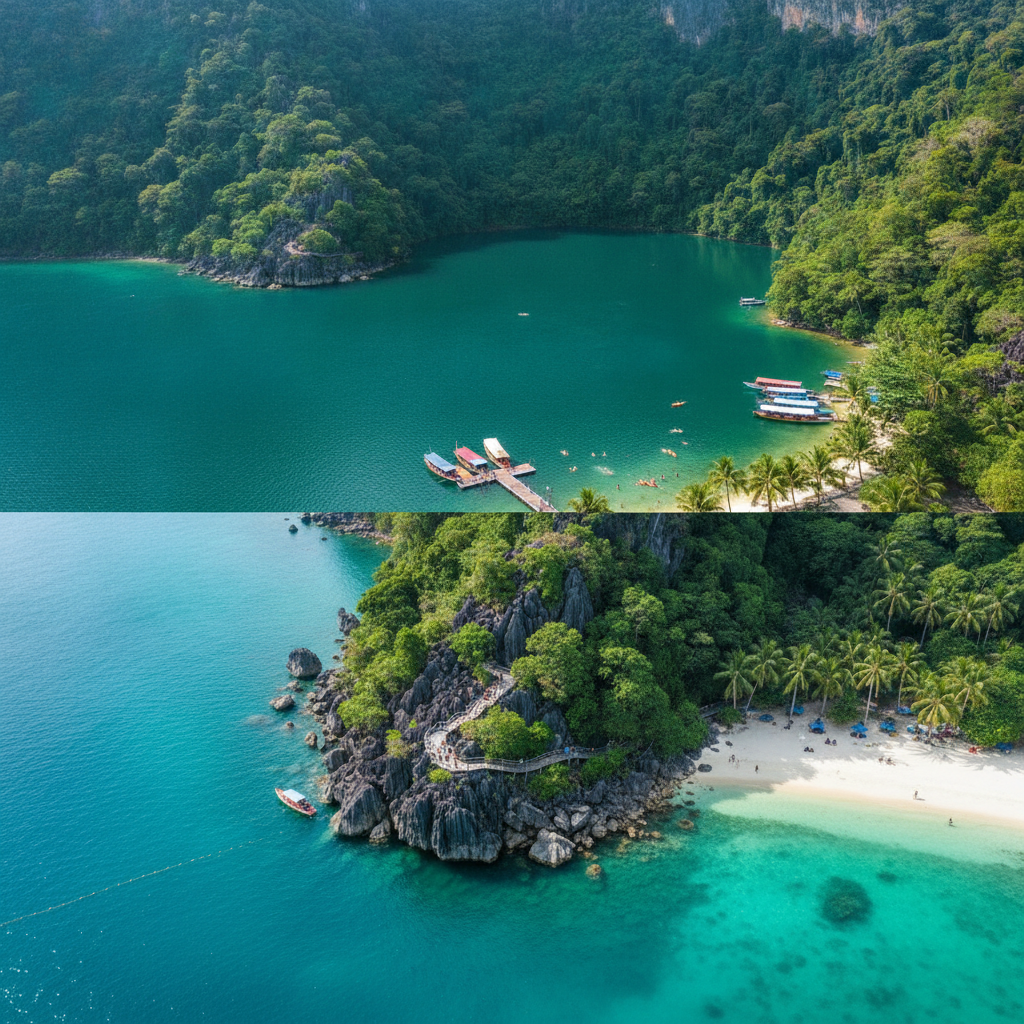
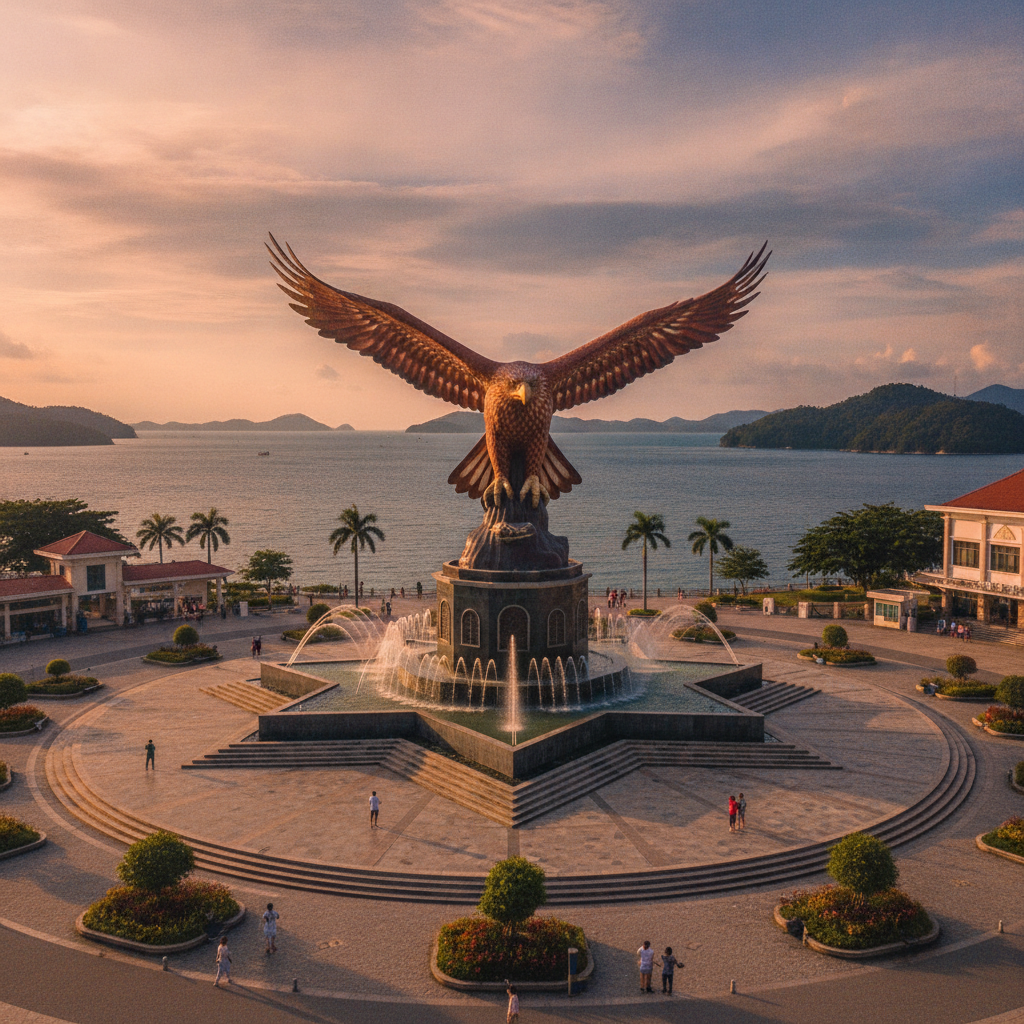
Discover Langkawi's rural interior — beyond the beach resorts and duty-free shops, the island's interior has traditional Malay kampung villages, rice paddies, and the agricultural landscape that preceded tourism, providing a perspective on Langkawi's cultural identity beyond its resort economy.
- 1
Padang Matsirat Rice Fields
Padang Matsirat in the interior of Langkawi is the island's main rice-growing area — the paddy fields that spread across the low-lying central area of the island between the mountain ranges are most visually striking during the growing season when the bright green of the young rice plants covers the landscape, and during harvest when the golden rice is cut and the fields are prepared for the next planting. The rice cultivation in Langkawi connects the island to the agricultural tradition of the Kedah mainland, which is Malaysia's rice bowl and the centre of rice farming culture in the peninsula.
- 2
Mahsuri Tomb Cultural Site
The tomb of Mahsuri near Padang Matsirat is Langkawi's most important cultural heritage site — the legendary figure of Mahsuri, a beautiful Malay woman accused of adultery and stabbed to death in the early 19th century, whose flowing white blood proved her innocence, and whose dying curse prevented Langkawi from prospering for seven generations (107 years), is the central story of Langkawi cultural identity. The tomb site with its museum, the reconstructed traditional house, and the peaceful garden setting provides the historical and mythological context for understanding the cultural identity of an island that was remote and underdeveloped before its tourist transformation.
- 3
Field of Burnt Rice
The 'Field of Burnt Rice' (Beras Terbakar) near Padang Matsirat is a site connected to the Siamese invasion of Langkawi in the early 19th century — the story of Langkawi's inhabitants burning their own rice stores to prevent the invading Siamese from seizing the food supply is commemorated at this site where the blackened earth is explained as the remnant of the burnt rice. The story connects to the period of Siamese political influence over Kedah (and by extension Langkawi) before British colonisation, and provides historical context for the political geography of the Thai-Malaysia borderland.
- 4
Langkawi Crocodile Farm
The Langkawi Crocodile Farm on the road between Kuah and the interior is one of Malaysia's oldest crocodile farms — the facility breeding estuarine crocodiles (Crocodylus porosus), the world's largest living reptile species, serves as both a tourist attraction and a commercial crocodile leather production operation. The estuarine crocodile that was historically present in Langkawi's mangrove systems has been extirpated from the wild on the island, and the farm's captive population provides the only crocodile encounter available on the island.
- 5
Langkawi Rural Village Circuit
The rural villages of Langkawi's interior accessible by bicycle or scooter from the beach resort areas provide the most authentic encounter with the island's Malay community — the kampung houses with their elevated wooden construction, the small mosques that mark each village centre, the vegetable and fruit gardens surrounding the houses, and the coconut palms that shade the village lanes create a rural landscape that has maintained its character despite the transformation of the coast. The village community's daily life organised around prayer times, the school day, and the agricultural and fishing rhythms represents a cultural continuum with the Malay rural society of the peninsula.
- 6
Gunung Raya Summit Drive
Gunung Raya (881m) is Langkawi's highest peak, accessible by a winding road that climbs through the forest to a summit telecommunications tower and viewpoint — the drive through the montane forest provides views progressively more panoramic as the road climbs, culminating at the summit with the most complete view of the entire Langkawi archipelago, the Andaman Sea, and on clear days the mountains of Thailand to the north. The summit area's temperature is noticeably cooler than the coast and supports a highland forest community with different plant and bird species from the lowland coastal vegetation.
Walk this route with audio
Stories play automatically as you reach each stop — no tapping needed.