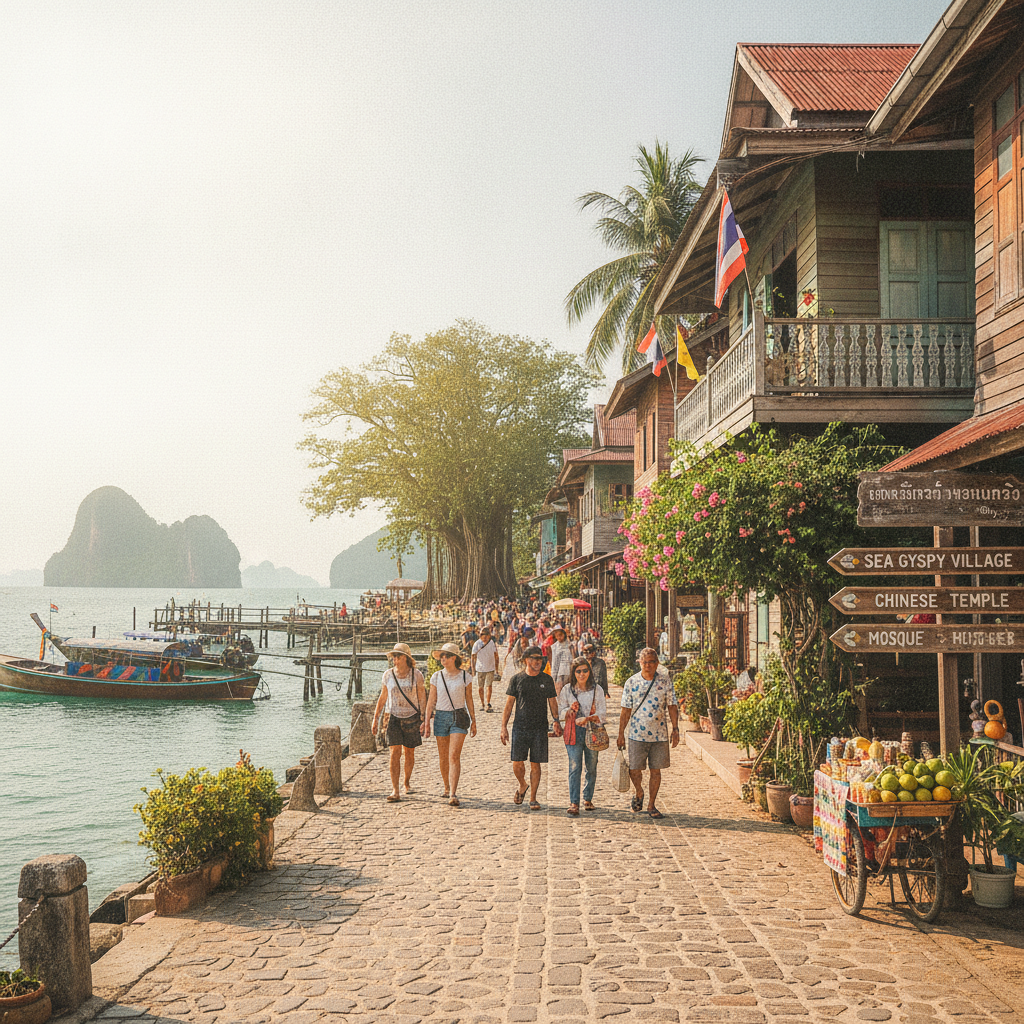
Koh Lanta Old Town Heritage Walk
Explore Lanta Old Town — the original settlement of Koh Lanta (Ban Ko Lanta) on the island's eastern coast is a 200-year-old Chinese-Malay fishing village built on stilts over the water, with heritage shophouses, traditional boat-building yards, and a multi-ethnic community of Thai, Chinese, and Malay Sea Gypsies.
- 1
Lanta Old Town Pier
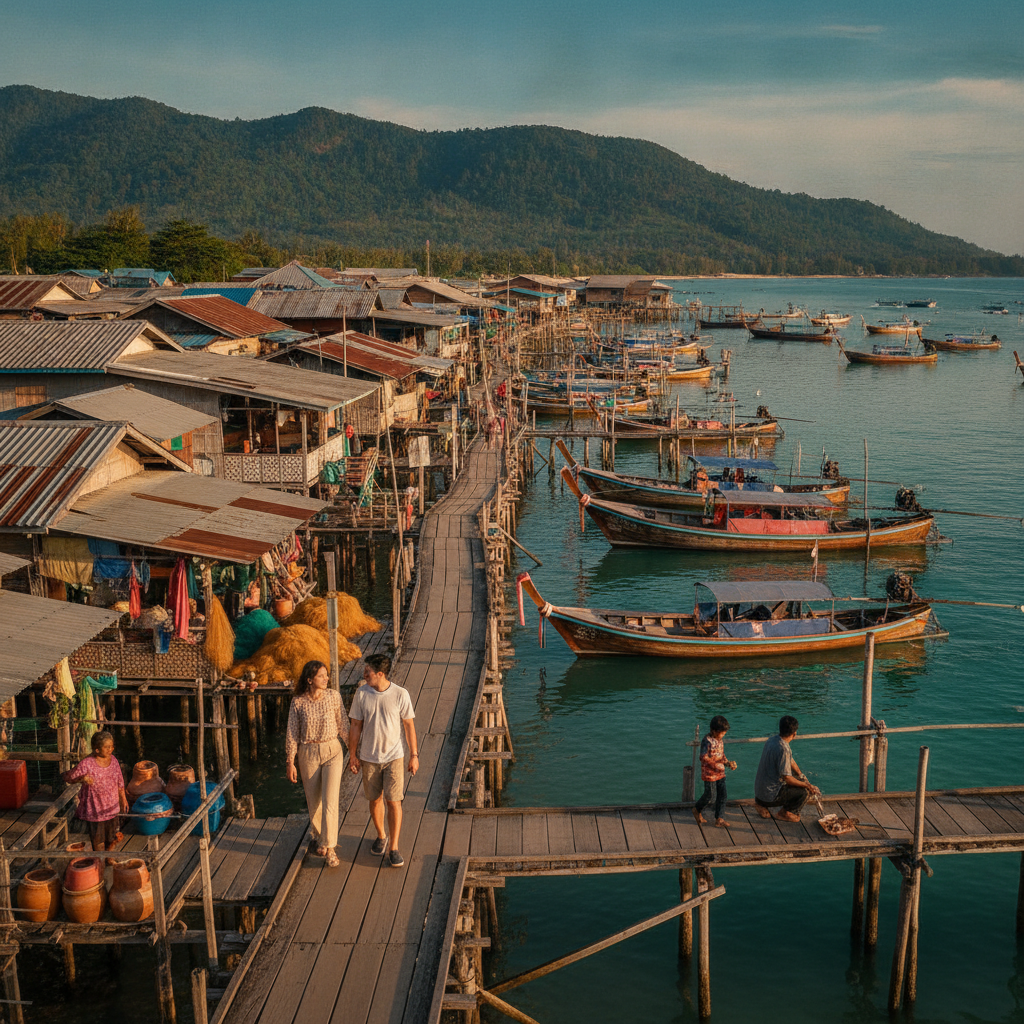
The wooden pier at Lanta Old Town (Ban Ko Lanta) extends into the sheltered eastern strait between Koh Lanta Yai and the mainland, and the pier's orientation provides views of the mangrove-fringed shore of the opposite mainland and the fishing boat traffic of the strait. The pier has been the arrival point for Koh Lanta for generations — the ferry crossing from the mainland that was the island's only connection to the outside world before the road-bridge construction of the 1990s still operates at this pier, and the traditional wooden longtail boats moored at the pier represent the continuity of the fishing economy that predates the resort development by centuries.
- 2
Chinese Shophouse Heritage Street
The main street of Lanta Old Town is the best-preserved Chinese shophouse streetscape in the Andaman coastal region — the two-storey Sino-Portuguese commercial buildings (with their covered arcade walkways, the shuttered upper-floor windows, and the faded painted facades in the ochre, cream, and green palette of the pre-war shophouse tradition) line the street for 200 metres, housing a mixture of family-run general stores, traditional coffee shops, and the café-restaurant operations that have established themselves in the heritage buildings since the Old Town was 'discovered' by tourists in the 2000s. The buildings' age (the oldest dating to the early 20th century), the visible signs of the original family commercial operations, and the stilt construction extending over the water behind the street create a genuinely historical urban environment that is exceptional in a region where most historic structures have been replaced.
- 3
Stilt Houses Over Water
The stilt house community extending from the back of the Old Town shophouses over the water of the eastern strait is the most distinctive architectural feature of Lanta Old Town — the wooden walkways connecting the stilt houses, the visible domestic life conducted on the walkway platforms and in the open-sided pavilions above the water, and the fishing equipment visible under and around the houses document the maritime identity of the community. The tidal water under the stilt houses (filled twice daily by the tidal cycle of the strait) provides the natural waste disposal and fish attractor that has supported the settlement's position over the water for generations — the concept of building over the tidal water that manages both hygiene and the community's primary food source simultaneously.
- 4
Mosque and Multi-Faith Community
Lanta Old Town's community encompasses Thai Buddhist families, Chinese Buddhist and Taoist families, and the Malay Muslim community whose mosque is visible at the southern end of the main street — the co-existence of the three faith communities within the small town (the mosque's call to prayer, the Chinese temple's incense smoke, and the Buddhist spirit houses outside the Thai family homes all present within a few hundred metres) demonstrates the multi-ethnic character of the southern Thai coast. The Lanta Old Town community's history reflects the broader pattern of the Andaman coast's settlement by the Sea Gypsy (Chao Ley or Moken) communities, the Malay fishing families, and the Chinese traders who arrived during the tin mining era.
- 5
Traditional Boat Building
The traditional boat-building workshops visible at the northern end of Lanta Old Town represent one of the last operating traditional wooden boat construction operations accessible to visitors in the Andaman region — the skilled boat builders who shape the hull planks by eye, steam-bend the timber over fires, and caulk the seams with natural tree resin (using techniques unchanged for generations) create the longtail boats that continue to serve the island's fishing and tour boat economy. The sight of a longtail boat under construction in the dry dock — the ribs visible before the planking, the hull shape emerging from the keel up — provides a direct encounter with the traditional craft knowledge that built the boats that sustained the island community before fibreglass and imported motors displaced the traditional designs.
- 6
Old Town Café Culture
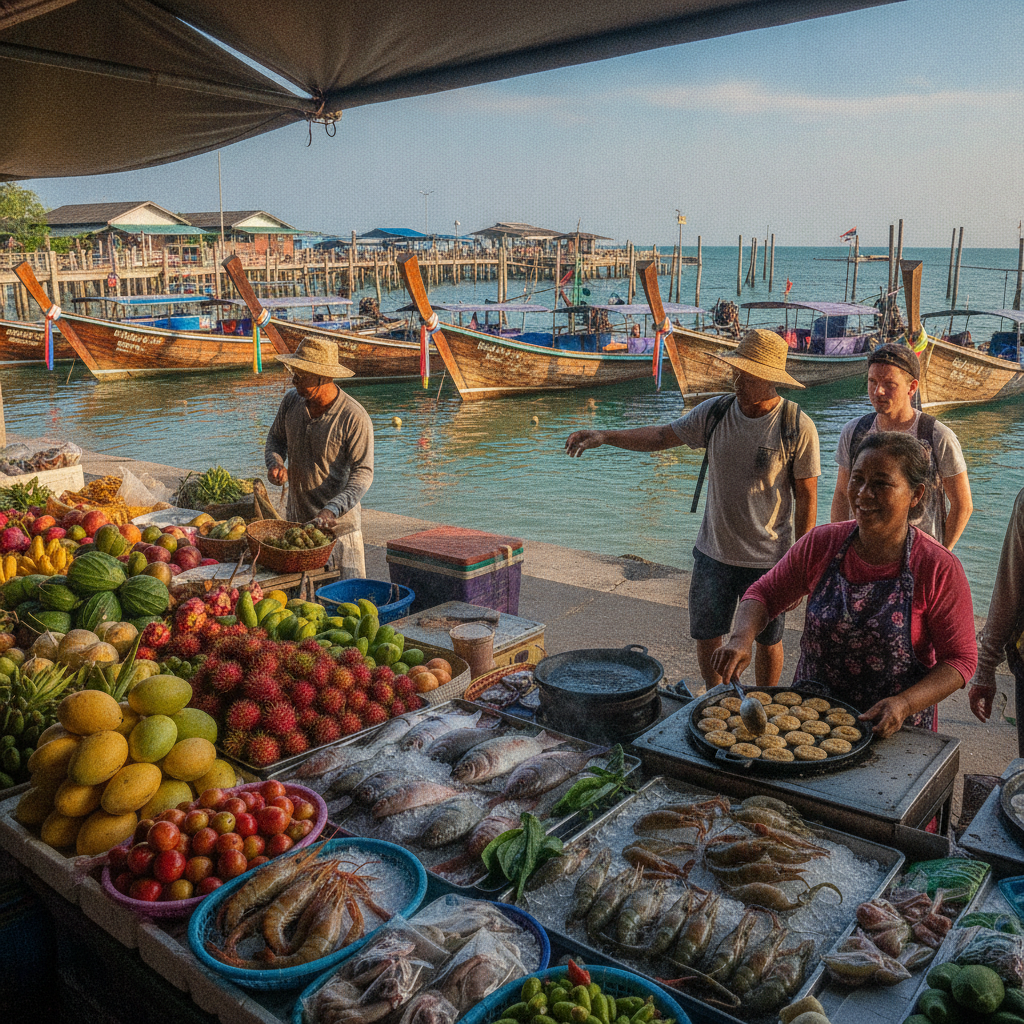
The café and restaurant operations that have established themselves in the Lanta Old Town heritage buildings represent the most careful integration of tourism and heritage in the Koh Lanta area — the operators who have chosen to open in the Old Town (rather than on the western beach resort strip) have generally invested in maintaining the architectural character of the shophouse buildings and in creating an atmosphere that acknowledges the historical setting. The Old Town café scene (with its sea view terraces over the water, its simple menus of coffee, fresh fruit, and Thai food, and its atmosphere of quiet appreciation for the heritage surroundings) is the most atmospherically distinct experience on Koh Lanta and attracts a different demographic from the Long Beach backpacker and resort market.
Walk this route with audio
Stories play automatically as you reach each stop — no tapping needed.