
Luxor by River: The Nile Cruise to Aswan, the Dahabiyya Sailing Experience, the Temple of Edfu, and the Kom Ombo Temple
The Luxor by river route covers the Nile cruise to Aswan as the most classically Egyptian single travel experience, the dahabiyya traditional sailing, the Temple of Edfu, and Kom Ombo as the most uniquely dual-deity single Egyptian temple.
- 1
Nile Cruise Luxor to Aswan: The Classic Egyptian Journey
The Nile cruise from Luxor to Aswan (the most classically Egyptian single travel experience with the 4-night traditional cruise ship or the most atmospheric single dahabiyya sailing journey along the 220-kilometer most historically significant single river route between the most ancient single Theban capital and the most dramatic single Nubian gateway), passing the most magnificent single Nile riverbank palm groves, the most dramatically silhouetted single ancient temple at sunset, and the most completely traditional single Egyptian village riverbank life, is the most romantically Egyptian single travel tradition.
- 2
Dahabiyya: The Traditional Egyptian Sailing Vessel
The dahabiyya (the most historically traditional single Egyptian sailing vessel, the flat-bottomed Nile wooden sailing boat that most directly descends from the most ancient single Nile transport tradition, now operated as the most luxuriously intimate single Nile cruise alternative with 6-12 guests maximum and the most personally attended single Egyptian Nile hospitality), is the most atmospherically authentic single Nile sailing experience and the river travel most directly evocative of the most classic single Victorian-era Egypt Nile travel romantic tradition.
- 3
Edfu Temple: The Most Complete Egyptian Temple
The Temple of Edfu (the most completely preserved single Egyptian temple from the Ptolemaic period, built between 237 and 57 BC as the most fully intact single ancient Egyptian temple with the most completely intact single roof, the most completely intact single pylon entrance gate, and the most completely hieroglyphic-covered single temple exterior surface), is the most architecturally complete single ancient Egyptian temple available for the most thoroughly explorable single interior temple circuit.
- 4
Kom Ombo: The Dual Temple on the Nile Bend
The Kom Ombo Temple (the most uniquely designed single ancient Egyptian temple dedicated simultaneously to the most paired single deity combination of the crocodile god Sobek and the falcon god Horus the Elder, built on the most dramatically Nile-bend single hilltop position with the most completely symmetrically doubled single temple plan mirroring identical chapels, courts, and halls for each deity), is the most architecturally distinctive single Nile cruise stop and the most conceptually unusual single ancient Egyptian religious monument.
- 5
Esna Temple: The Ptolemaic Hypostyle Hall
The Esna Temple (the most practically in-town single Nile cruise stop, the Ptolemaic-Roman temple of Khnum accessible through the most dramatically below-street-level single archaeological excavation in the most actively market-street single Egyptian town center, with the most recently cleaned single Ptolemaic painted column capital in the most vividly restored single ancient Egyptian temple interior color), is the most surprisingly well-preserved single ancient Egyptian Nile town temple and the stop that most directly juxtaposes the most ancient single temple with the most contemporary single Egyptian market street.
- 6
Nile Locks: The Engineering of the Modern River
The Esna Lock system (the most practically fascinating single modern Nile infrastructure where the cruise ships queue and pass through the most entertainingly observed single hydraulic lock system while the most tenacious single Egyptian souvenir merchants conduct the most theatrically rope-thrown single galabiya and papyrus trade from the most acrobatically positioned single lock-side market boats), is the most unexpectedly amusing single Nile cruise logistical experience and the most socially entertaining single Egyptian river journey interlude.
Walk this route with audio
Stories play automatically as you reach each stop — no tapping needed.
More in Luxor
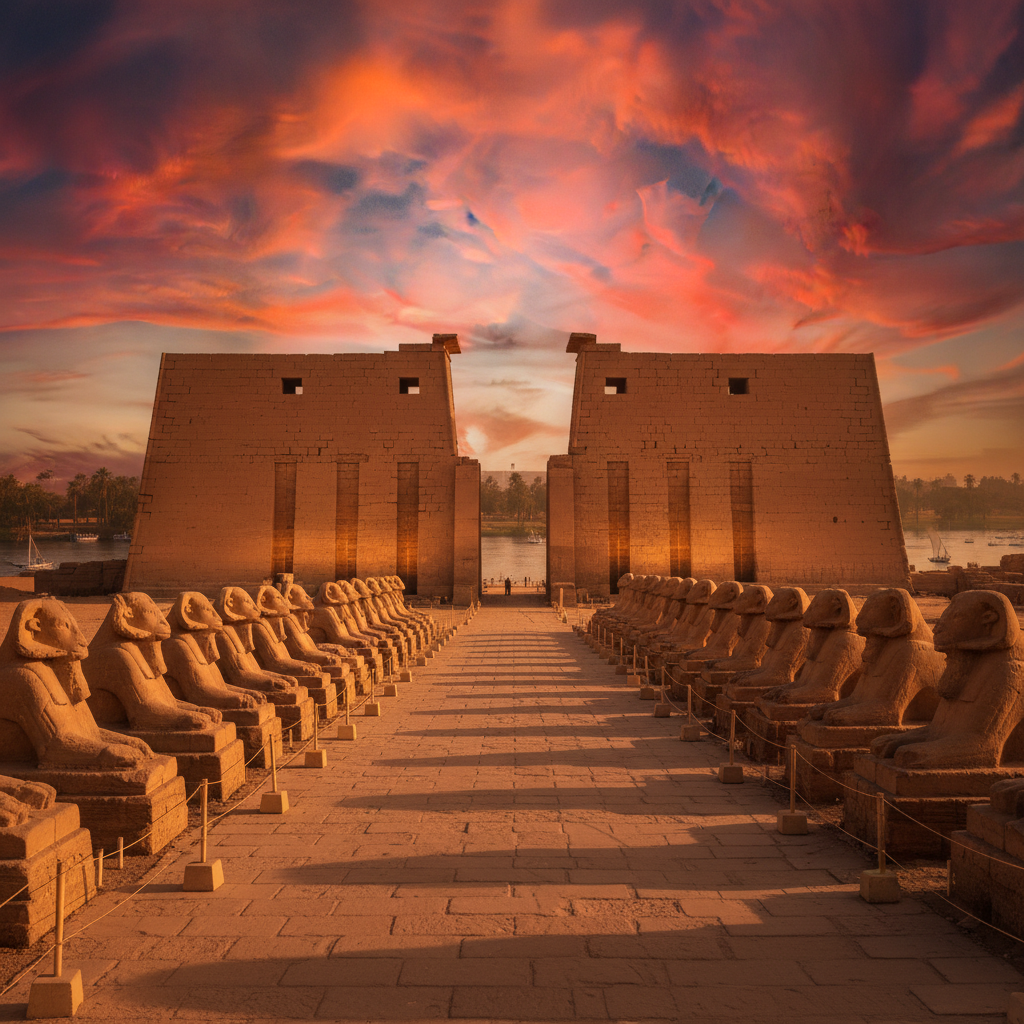
Luxor: Akhenaten, Nefertiti, Tutankhamun, and the Amarna Revolution
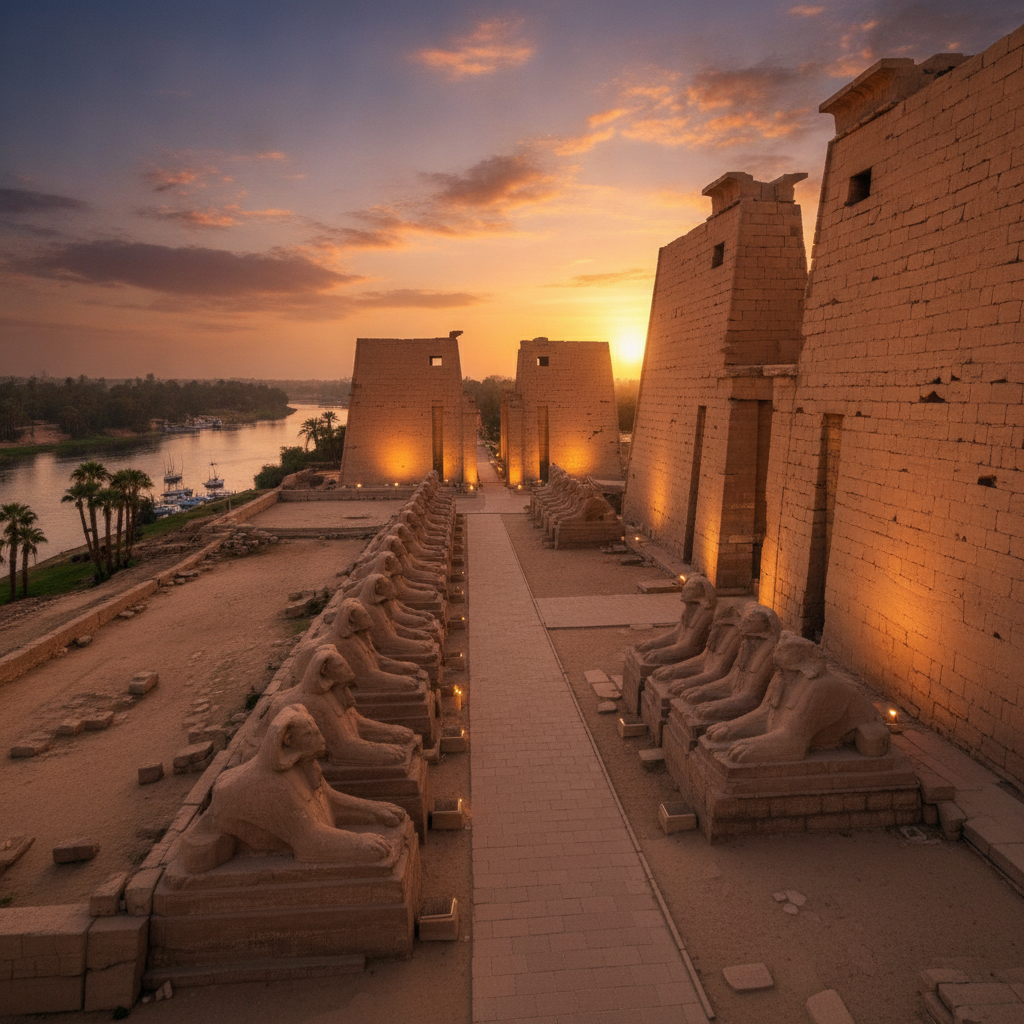
Luxor: The Nile Flood, Egyptian Afterlife, Coptic Christianity, and the Nile Cruise Guide
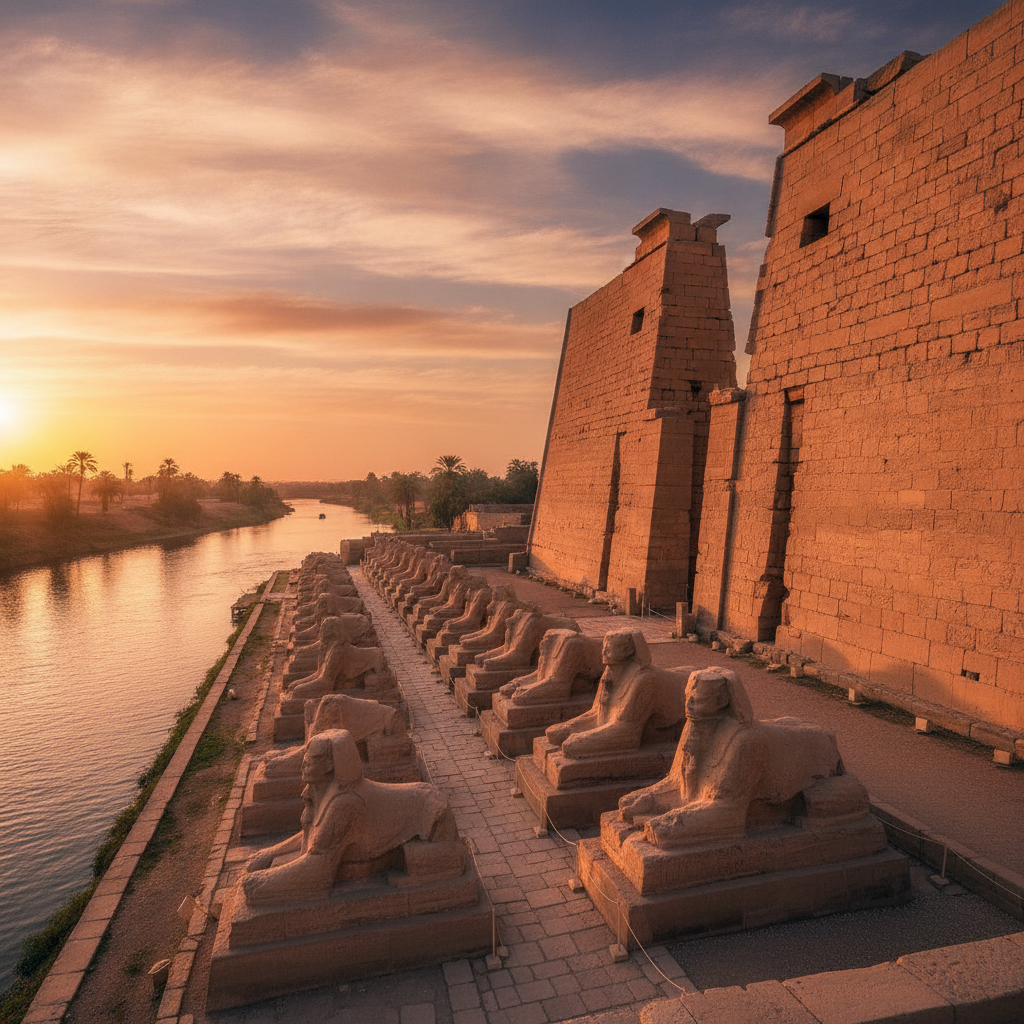
Luxor: Karnak, Luxor Temple, Valley of the Kings, and the World Greatest Open-Air Museum

Luxor Local Life: The East Bank Souq, the Alabaster Workshops, the Papyrus Art, and the Most Practically Lived-In Ancient City

Luxor Excursions: The Abydos Temple of Osiris, the Dendera Hathor Temple, and the Most Dramatically Colored Single Ancient Egyptian Sites
