Pamukkale Essential: Cotton Castle Travertine Terraces, Hierapolis Roman Spa City, Cleopatra Sacred Pool, Geological Wonder, Thermal Spring Culture, and the Denizli Gateway
The Pamukkale essential circuit covers the UNESCO travertine terraces built by mineral-rich thermal springs, the Hierapolis Roman spa city above the cliff, the Sacred Pool where ancient marble columns lie submerged in thermal water, the geological formation story, the thermal bathing culture, and the Denizli gateway context.
- 1
Cotton Castle Terraces: The White Calcium Cliff
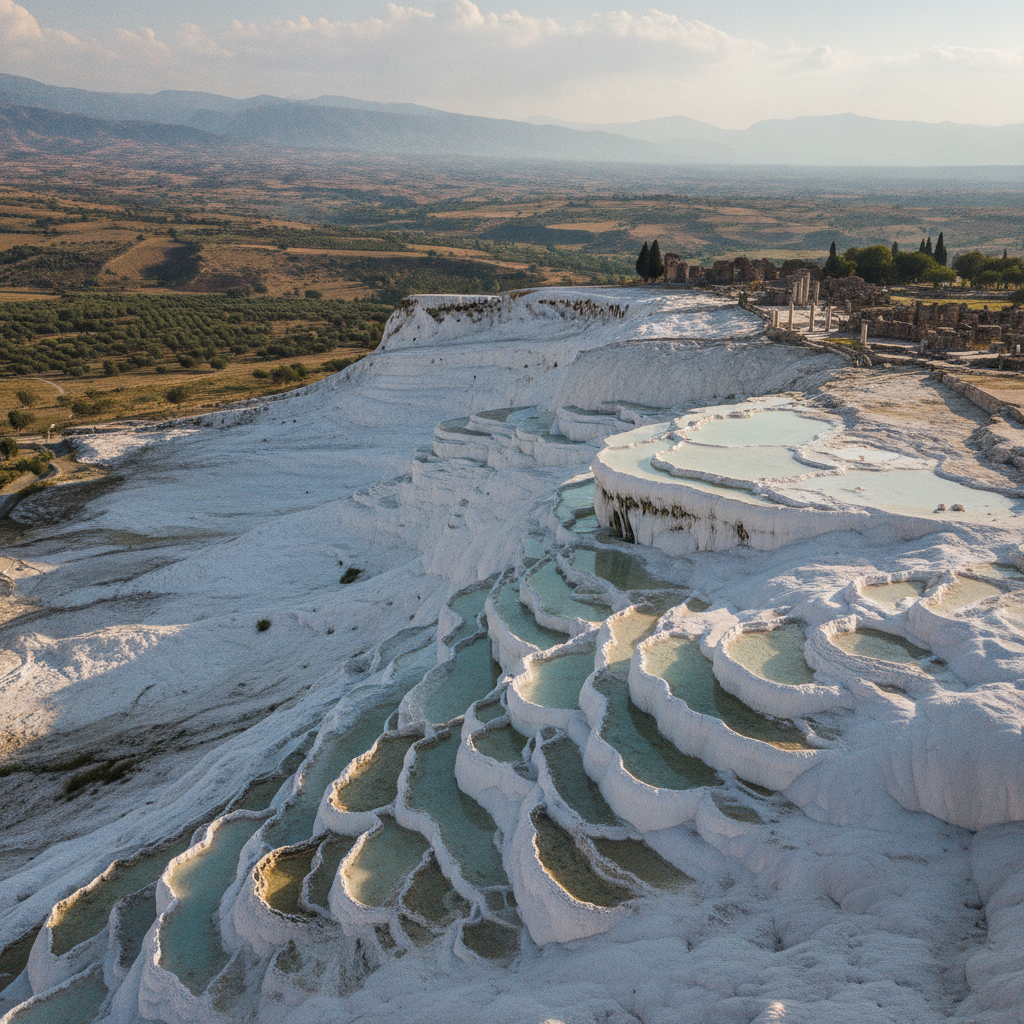
Pamukkale, meaning Cotton Castle in Turkish, is the UNESCO World Heritage Site in Denizli province where thermal spring water at 35 degrees Celsius flows over a 160-meter cliff edge and deposits calcium carbonate to build the white stepped terraces and natural pools that make this the most dramatically distinctive natural formation in Turkey. The 17 springs emerge from the plateau and the calcium deposit accumulates at approximately 1 centimeter per decade, meaning the visible terraces represent hundreds of thousands of years of geological time. UNESCO protection since 1988 requires visitors to walk barefoot on the wet surface to limit damage.
- 2
Hierapolis: The Roman Thermal Resort City
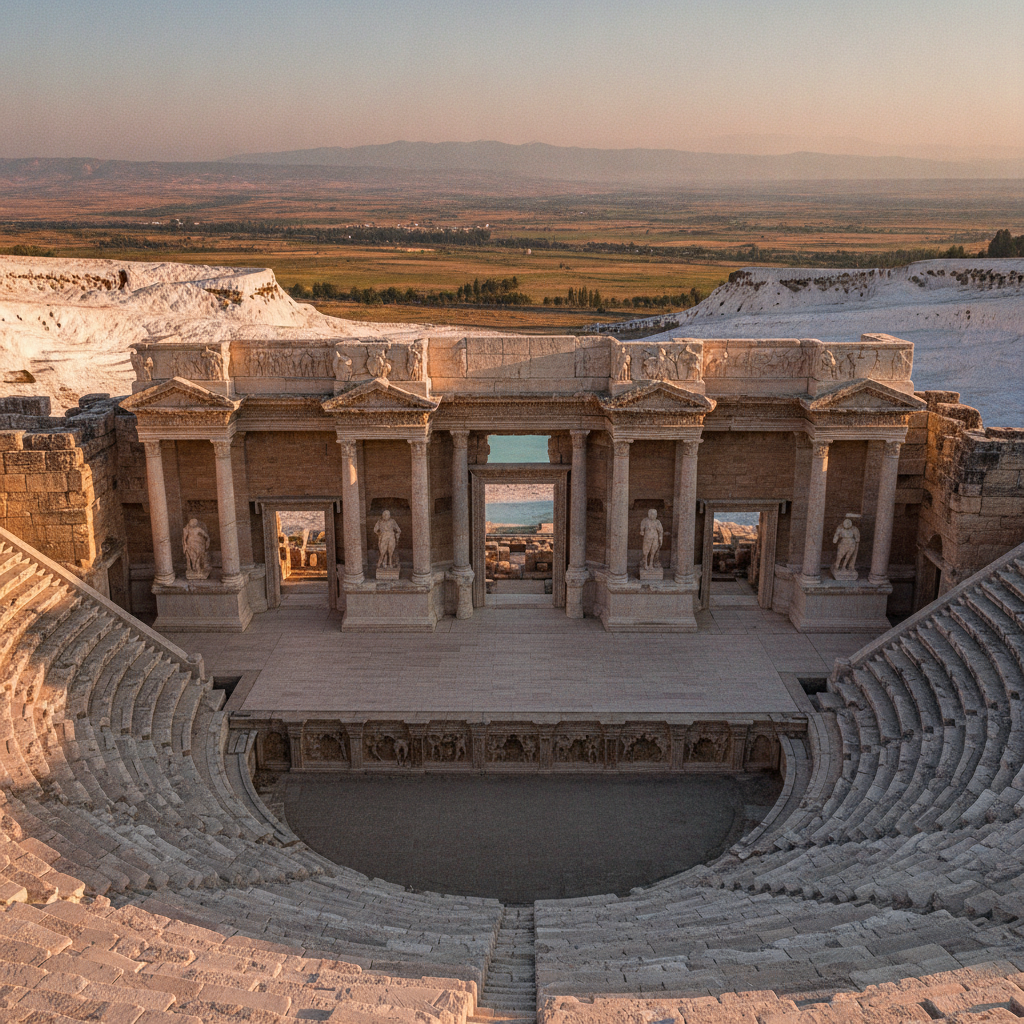
Hierapolis was founded as a thermal spa city in the 2nd century BC by the Seleucid king Eumenes II of Pergamon and developed into the most complete Roman thermal resort in Anatolia under the Flavian and Antonine emperors. The preserved ruins include the main bath building now housing the museum, the colonnaded street, the Apollo Temple, the theatre, and the largest ancient necropolis in Turkey with over 1,200 tombs. The sick came from across the Roman empire to bathe in the thermal water for the treatment of rheumatism, arthritis, and skin diseases, making Hierapolis the most medically celebrated single spa destination in the ancient eastern Mediterranean.
- 3
Cleopatra Sacred Pool: Swimming Among Roman Columns
The Cleopatra Sacred Pool at Pamukkale is the 35-degree thermal pool fed by the ancient spring in which the marble columns of the Roman colonnade lie submerged after a 7th century earthquake toppled the Hierapolis portico into the natural spring. Visitors swim in the thermal water among the ancient architectural fragments in the most historically atmospheric single bathing experience in Turkey. The legend that Cleopatra bathed here during her visit to Antony in the eastern provinces gives the pool its evocative name though historical documentation of the specific visit is absent.
- 4
Pamukkale Geology: The Travertine Formation
The Pamukkale travertines form when calcium bicarbonate dissolved in the deep thermal water under pressure emerges at the surface where the reduced pressure allows carbon dioxide to escape, causing calcium carbonate to precipitate and build the layered terrace formation. The spring chemistry includes 2,430 milligrams per liter of dissolved calcium carbonate and the system has operated continuously for over 400,000 years to build the 160-meter cliff visible today. The UNESCO management program diverts the spring water systematically across the terraces to maintain the white calcium color that visitor traffic has historically degraded.
- 5
Hierapolis Museum: Provincial Roman Sculpture
The Hierapolis Archaeological Museum in the restored Roman bath building is one of the finest single-site museums in Turkey with the collection of Hierapolis sculpture, sarcophagi, glass, terracotta, and architectural fragments from the Italian Archaeological Mission excavation since 1957. The gallery of 2nd century AD portrait sculpture represents the most complete provincial Roman portrait collection in southwestern Turkey. The museum also displays the theatrical stage building relief panels from the Hierapolis theatre depicting the myth of Artemis and Apollo in the most elaborately carved theatrical stage decoration in the Asian provinces.
- 6
Karahayit: The Red Thermal Terraces
Karahayit, 5 kilometers from Pamukkale, is the complementary red-terrace thermal site where iron-rich spring water stains the calcium deposit red, orange, and yellow instead of the white of the Pamukkale calcium terraces. The Karahayit thermal hotels draw from the iron-rich springs for their therapeutic pools and the Karahayit red travertines provide the most visually striking color contrast to the white Pamukkale terraces. The combined Pamukkale and Karahayit visit is the most complete single thermal geology experience in the Denizli province.
Walk this route with audio
Stories play automatically as you reach each stop — no tapping needed.
More in Pamukkale

Pamukkale Practical: Transport from Istanbul and Izmir, the Ephesus Circuit, Accommodation Strategy, Optimal Visit Timing, the Day Trip Options, and the Departure Summary
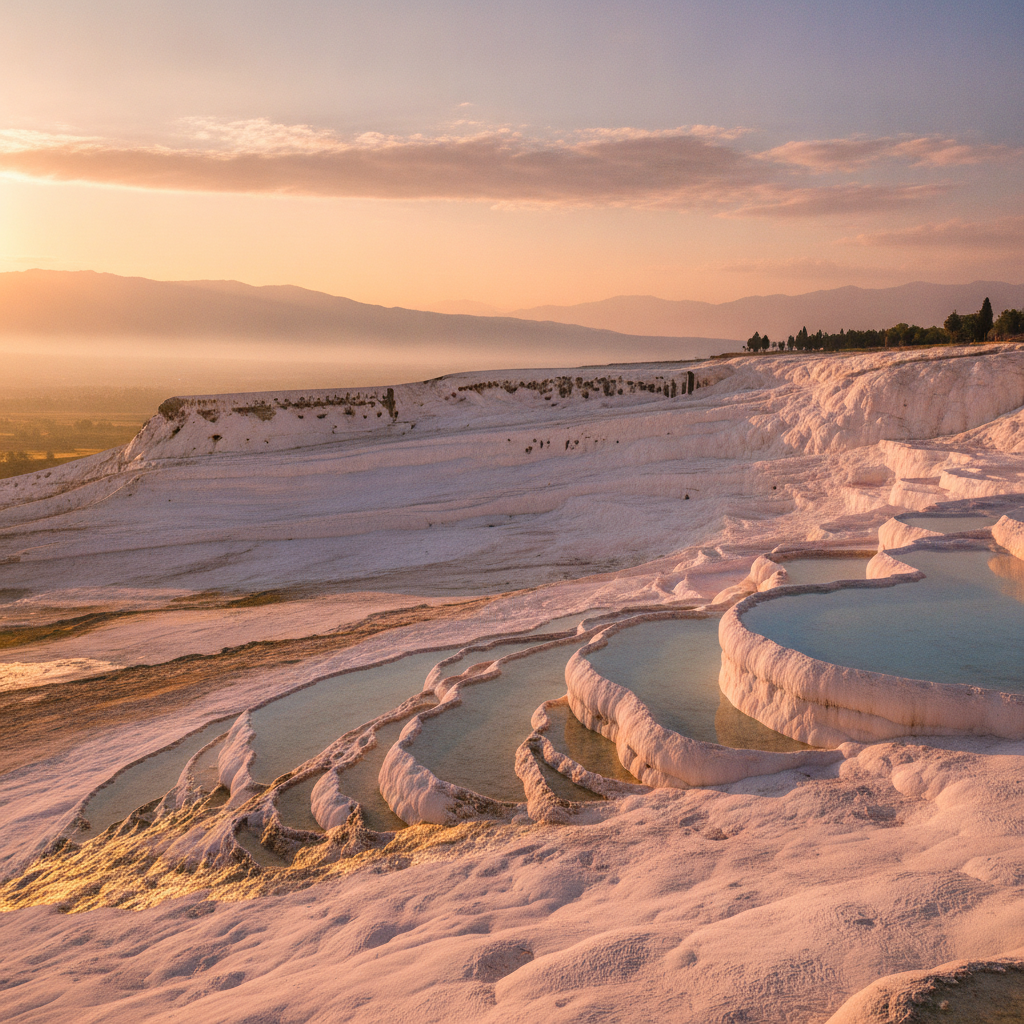
Pamukkale Photography: Sunrise Terrace Walk, Blue Pool Reflections, Hierapolis Theatre Compositions, Aerial Perspectives, Seasonal Changes, and the Ethics of UNESCO Site Photography
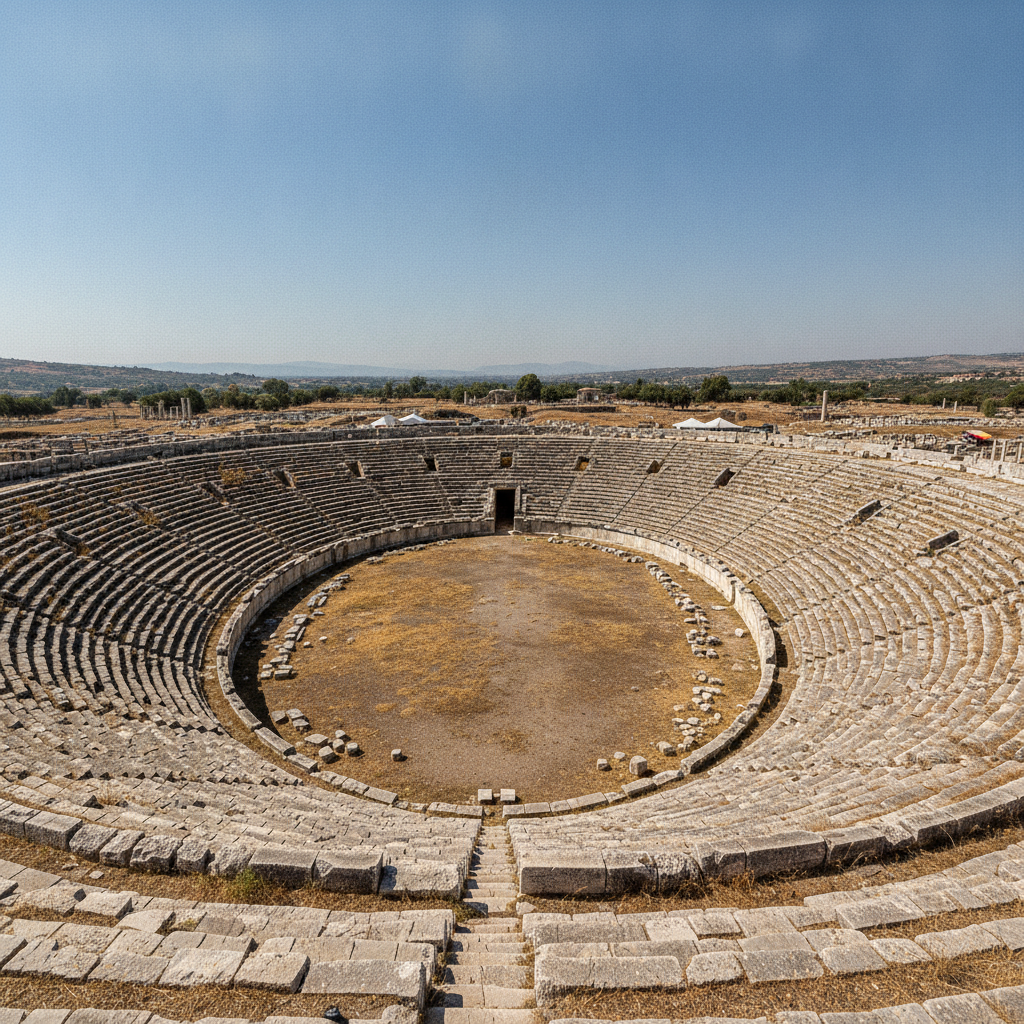
Aphrodisias Day Trip: The Roman Sculpture Capital, the World Record Stadium, the Sebasteion Imperial Frieze, the On-Site Museum, the Temple of Aphrodite Conversion, and the Marble Quarry Source
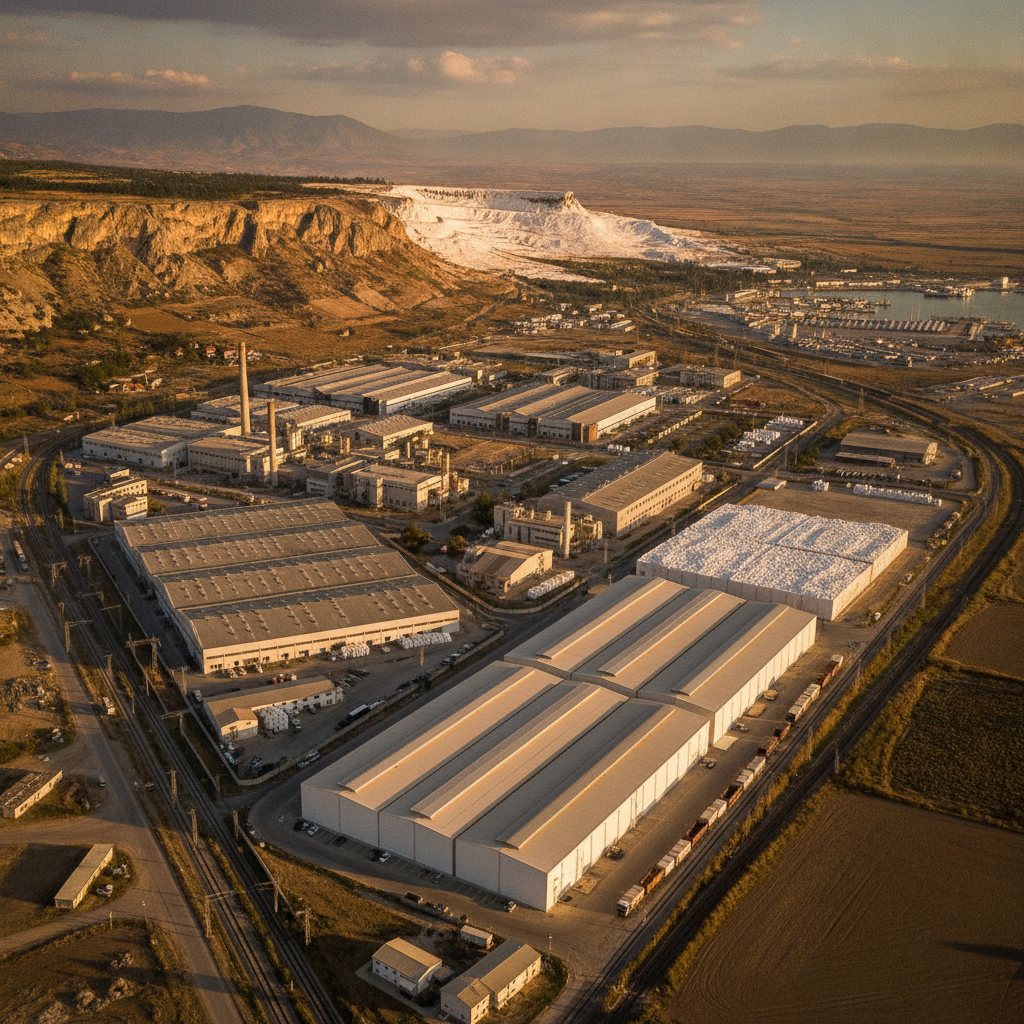
Denizli Province: The Ancient Colossae Site, the Global Textile Industry, the Kaklik Cave Underground Pamukkale, the Lycus Valley Cotton Heritage, and the Modern Denizli City

Laodicea: The Lukewarm Church of Revelation, the Colossians Letter, the Syrian Agora, the Stadium, the Two-Source Water System, and the Active Turkish Excavation