Pamukkale Photography: Sunrise Terrace Walk, Blue Pool Reflections, Hierapolis Theatre Compositions, Aerial Perspectives, Seasonal Changes, and the Ethics of UNESCO Site Photography
The Pamukkale photography route covers the sunrise terrace walk for empty calcium formations, the pool reflection technique with the clearest blue water, the Hierapolis theatre composition against the Denizli plain, the aerial perspective from the hillside road, the seasonal visual changes from winter white to summer crowds, and the ethics of photographing UNESCO sites.
- 1
Sunrise Terrace Walk: The Empty White Canvas
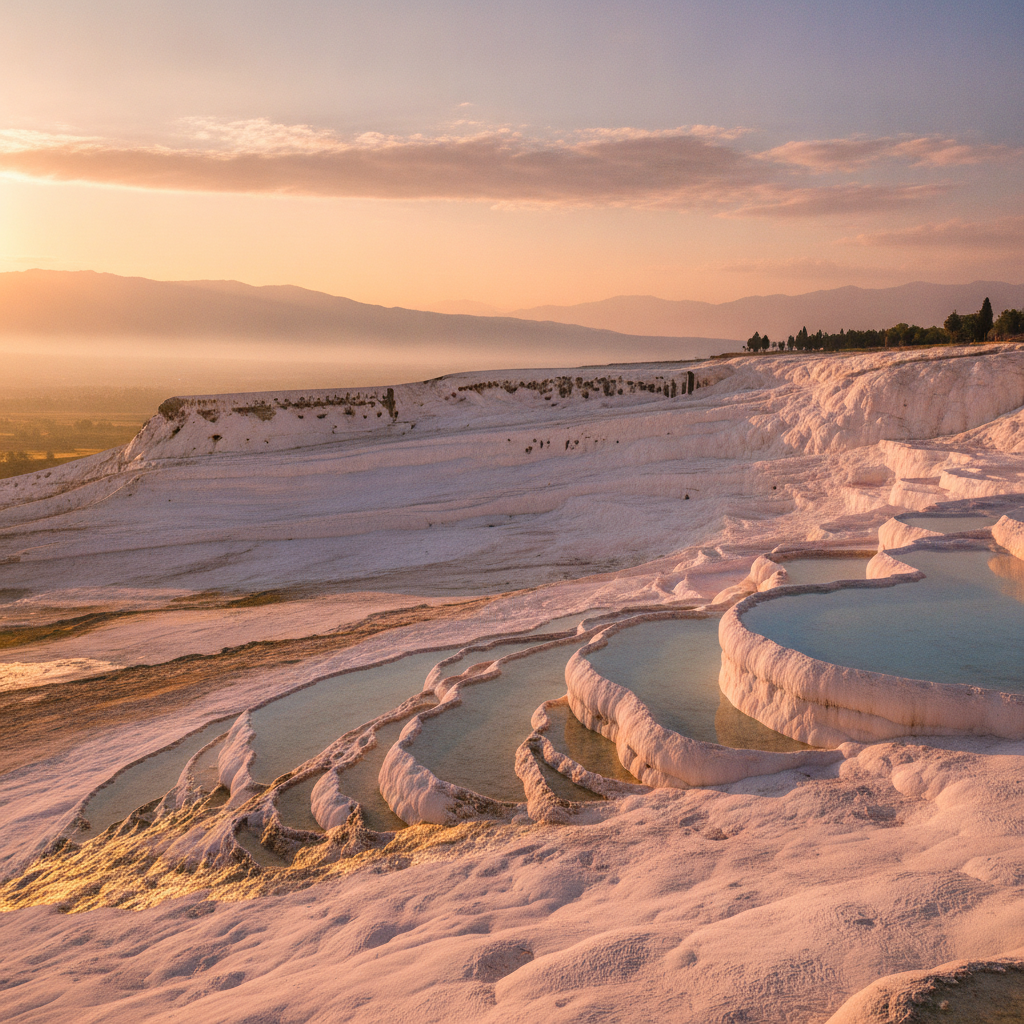
The Pamukkale sunrise photography window from 7am to 9am is the most productive photography opportunity in Turkey for the combination of the empty white terrace surface, the low horizontal light that reveals the calcium texture of the stepped pools, and the warm golden tone that sunrise gives to the white calcium. The north entrance opens at 7am and the 2-kilometer barefoot walk down the white terrace in the morning cool is the most experientially engaging photography walk in Turkey. The largest natural pools at the 800-meter point fill with 30 centimeters of thermal water and provide the clearest reflection surfaces for the architectural composition combining the pool water and the calcium rim.
- 2
Pool Reflection Photography: The Blue Water Technique
The most effective Pamukkale pool reflection photographs use the largest water-filled pools, the deepest blue sky overhead, and a low composition angle that captures the sky color reflected in the thermal water against the white calcium surround. Late afternoon from 4pm to 6pm creates the deepest blue sky reflection against the white calcium and the longest shadows from the pool rims. The thermal water is slightly milky from the calcium in suspension which softens the reflection slightly compared to clear water, creating the most distinctive single reflection texture in Turkish landscape photography that no other site in the country can replicate.
- 3
Hierapolis Theatre: The Composition and the Plain
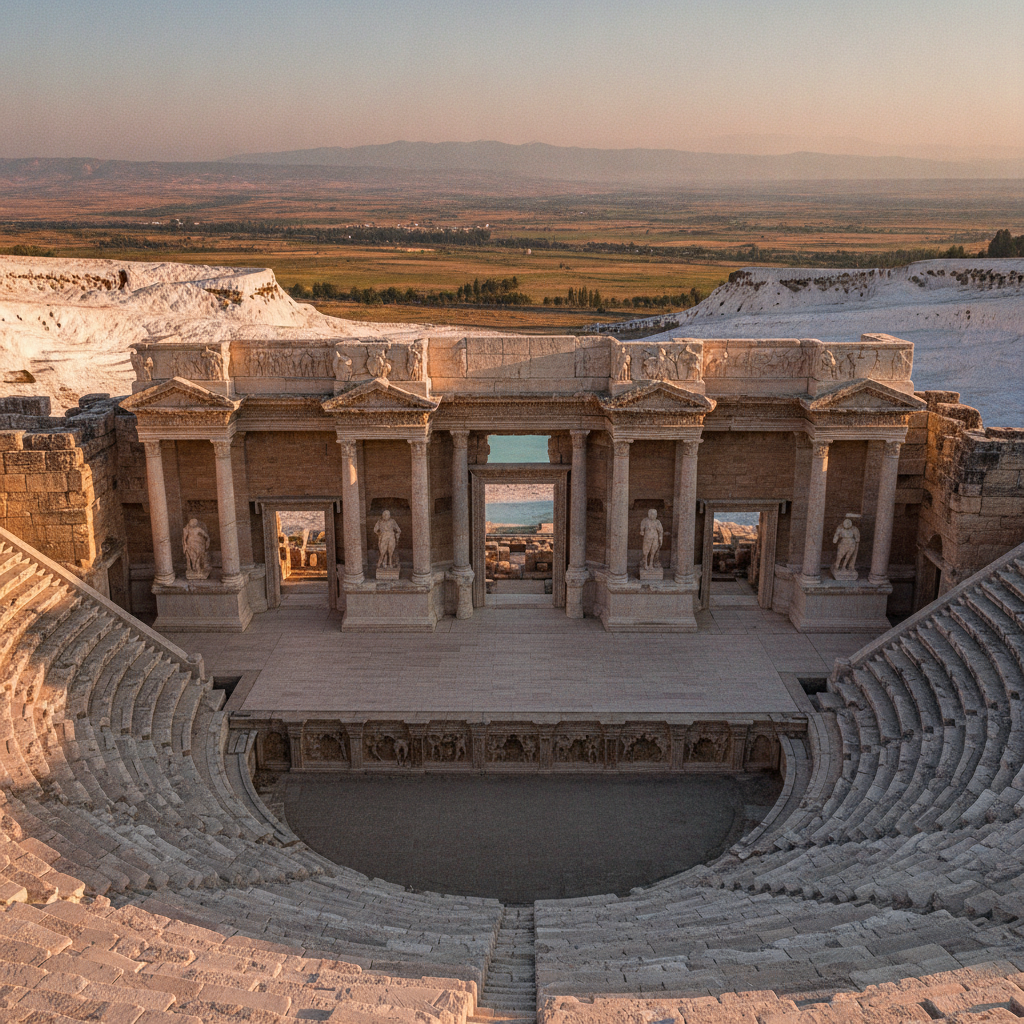
The Hierapolis theatre photography challenge is framing the stage building decoration against the Denizli plain visible through the theatre opening. The most effective composition uses the theatre cavea as the frame, the carved stage building as the mid-ground, and the Denizli plain with the Pamukkale white terrace visible on the left as the background. The late afternoon from 3pm to 5pm is the most productive time when the west-facing stage building receives direct light and the carved mythological panels of Artemis and Apollo are most clearly readable. The theatre is one of the few ancient sites in Turkey where both the architectural and the natural landscape elements combine in a single photographic frame.
- 4
Aerial Perspective: The Hillside Road View
The most complete Pamukkale aerial view is from the hillside road above the south entrance to the site where the full extent of the 2,700-meter white cliff face descending from the Hierapolis plateau to the Denizli plain is visible as a single composition. Drone flight is prohibited within the UNESCO perimeter but permitted from the hillside road above. The east-facing hillside road provides the classic Pamukkale postcard perspective that appears on every Turkish tourism poster and the most comprehensive single viewpoint of the complete travertine formation from the Hierapolis ruins at the top to the thermal pools at the base of the cliff.
- 5
Seasonal Pamukkale: Winter White to Summer Crowds
The Pamukkale travertines are at their whitest in winter when the reduced visitor traffic since October has allowed new calcium deposit to build without the barefoot abrasion that gradually wears the surface in summer. The winter visit also provides the most dramatically empty terrace photographs with the mist from the thermal water rising in the cold air and the calcium surface reflecting the pale winter sky. The spring wildflower bloom on the Hierapolis plateau in April and May adds colorful foreground elements unavailable in other seasons. The December to February winter window is the most photographically professional season for the empty terrace documentation.
- 6
Photography Ethics: The UNESCO Terrace Rules
The Pamukkale photography ethics involve the barefoot rule enforced to protect the calcium surface, the prohibition of tripods on the terrace to prevent the legs from breaking the calcium crust, and the drone prohibition within the UNESCO perimeter. The most ethical photography approach uses the designated wet channels as walking paths, the natural pool rim as a camera-resting surface for long exposure photography, and the early morning timing to minimize the visitor traffic impact. The UNESCO conservation context requires the photographer to recognize that the white surface visible in the photograph is being gradually degraded by the very barefoot visitor traffic that accessing the photography opportunity requires.
Walk this route with audio
Stories play automatically as you reach each stop — no tapping needed.
More in Pamukkale

Pamukkale Practical: Transport from Istanbul and Izmir, the Ephesus Circuit, Accommodation Strategy, Optimal Visit Timing, the Day Trip Options, and the Departure Summary
Pamukkale Essential: Cotton Castle Travertine Terraces, Hierapolis Roman Spa City, Cleopatra Sacred Pool, Geological Wonder, Thermal Spring Culture, and the Denizli Gateway
Aphrodisias Day Trip: The Roman Sculpture Capital, the World Record Stadium, the Sebasteion Imperial Frieze, the On-Site Museum, the Temple of Aphrodite Conversion, and the Marble Quarry Source
Denizli Province: The Ancient Colossae Site, the Global Textile Industry, the Kaklik Cave Underground Pamukkale, the Lycus Valley Cotton Heritage, and the Modern Denizli City

Laodicea: The Lukewarm Church of Revelation, the Colossians Letter, the Syrian Agora, the Stadium, the Two-Source Water System, and the Active Turkish Excavation