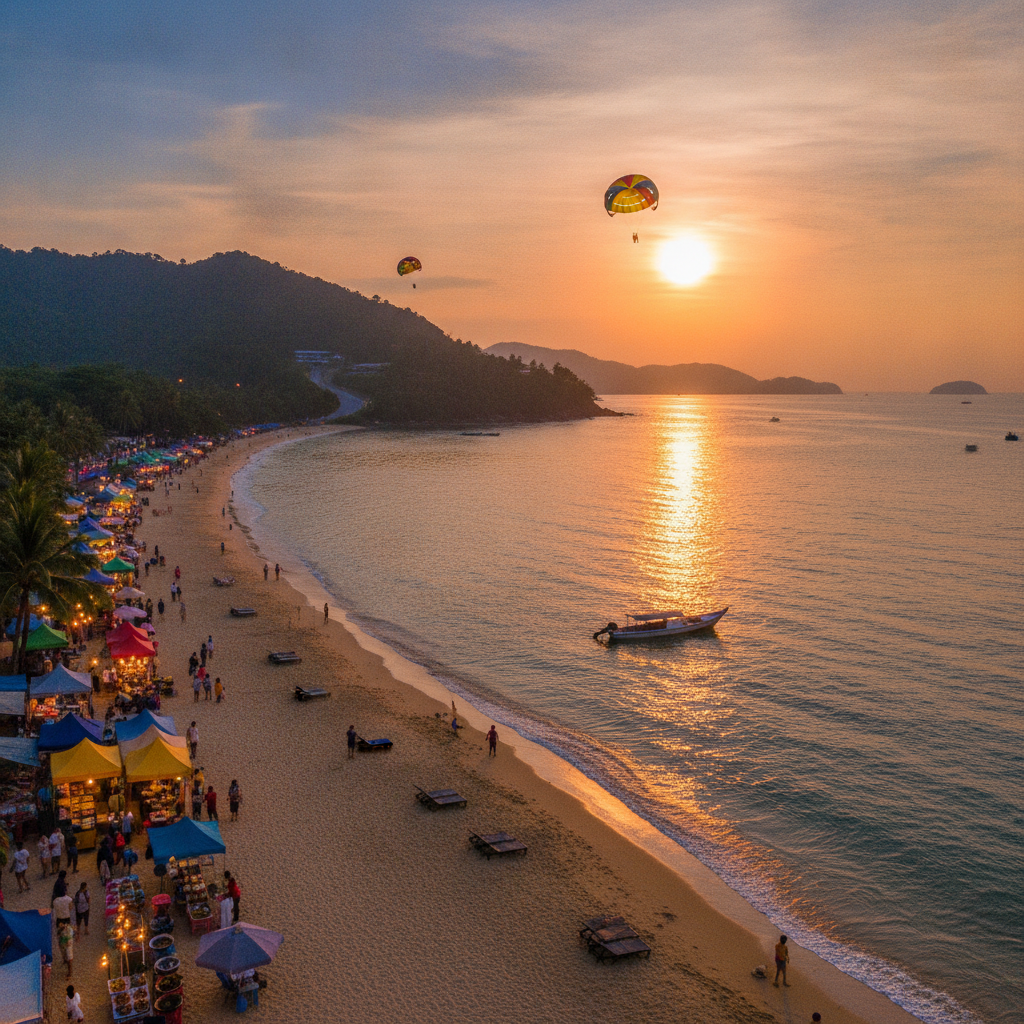
Penang Batu Ferringhi Beach & North Coast Walk
Explore Penang's north coast — the Batu Ferringhi beach resort area on the island's northern shore has been the primary sun-and-beach destination for visitors since the 1970s, with the beach, water sports, and the night market providing a resort experience alongside the island's cultural attractions.
- 1
Batu Ferringhi Beach
Batu Ferringhi is Penang's longest beach — the 3km sandy beach backed by the beachfront hotels that have defined north Penang's resort character since the 1970s faces the Andaman Sea and receives the afternoon sea breeze that makes the beach pleasant despite the tropical heat. The beach water is warmest and calmest during the dry season (November-March) and is used for water sports (parasailing, jet skiing, banana boat) during the daytime and the beach promenade walk in the evenings when the night market sets up along the road.
- 2
Batu Ferringhi Night Market
The Batu Ferringhi night market sets up along the main road from early evening — the long row of stalls selling batik fabrics, T-shirts, souvenirs, counterfeit goods, and the handicrafts from throughout Southeast Asia serves both the beachfront hotel guests and the day-trippers from George Town who come specifically for the market. The night market format typical of Malaysian resort areas creates a commercial environment that has little to do with Penang's cultural heritage but much to do with the beach tourism economy that supplements the heritage tourism of George Town.
- 3
Tropical Spice Garden
The Tropical Spice Garden between Batu Ferringhi and Teluk Bahang is a private botanical garden focusing on the spice plants of the Malay archipelago — the garden's collection of pepper, nutmeg, clove, cardamom, and the various chilli varieties that shaped global trade history provides educational context for understanding why the islands of Southeast Asia were so coveted by European powers in the 15th-17th centuries. The garden also includes a restaurant serving Nyonya cuisine and a cooking class programme using the garden's own herbs and spices.
- 4
Teluk Bahang Fishing Village
Teluk Bahang at the western end of the north coast beach stretch is a fishing village that has maintained its traditional character alongside the resort development — the fishing boats in the bay, the fish-drying racks, and the morning market where the catch is sold provide a glimpse of the traditional Malay fishing community that occupied Penang's coast before the island was ceded to the British. The village is also the departure point for boat trips to Penang National Park and the beaches accessible only by water on the island's western coast.
- 5
Penang Butterfly Farm
The Penang Butterfly Farm at Teluk Bahang was the world's first public butterfly farm when it opened in 1986 — the enclosed garden with hundreds of free-flying tropical butterfly species from Malaysia and throughout the tropics, along with the insect collection and reptile exhibits, has remained one of Penang's most popular family attractions for four decades. The farm's original purpose of demonstrating the commercial potential of butterfly farming for rural communities has been supplemented by its role as a tourism attraction and an educational facility for school groups.
- 6
North Penang Coastal Drive
The coastal road connecting George Town with Batu Ferringhi passes through the coastal communities of Tanjung Bungah and Tanjung Tokong — the drive reveals the transition from the dense urban environment of the historic city through the suburban hillside developments of the middle-class residential areas to the resort strip of the north coast. The road provides views of the Penang Strait and the mainland coast on the way, and the food stops at the seafood restaurants in Tanjung Bungah are among the most popular with Penang residents who combine a north coast drive with a seafood dinner facing the strait.
Walk this route with audio
Stories play automatically as you reach each stop — no tapping needed.