Penang Peranakan & Chinese Heritage Walk
Explore Penang's Chinese heritage — the Hokkien and Cantonese communities who made George Town's commercial economy for two centuries left behind an extraordinary cultural landscape of temples, clan houses, merchant mansions, and the Nyonya Peranakan (Straits Chinese) fusion culture that is unique to the Straits Settlements.
- 1
Cheong Fatt Tze Mansion Blue Mansion
The Cheong Fatt Tze Mansion, known as the Blue Mansion for its distinctive indigo-dyed walls, is the finest surviving example of Chinese merchant architecture in Southeast Asia — the mansion built in the 1880s for Cheong Fatt Tze, the Hakka tycoon known as the 'Rockefeller of the East' who built business empires across Southeast Asia, combines southern Chinese courtyard house design with European cast-iron decorative elements and Art Nouveau floor tiles in a 38-room complex that represents the peak of Straits Chinese wealth and cosmopolitan taste.
- 2
Pinang Peranakan Mansion
The Pinang Peranakan Mansion is the most lavishly decorated Peranakan house museum in George Town — the mansion of Chung Keng Kwee, the 19th-century Kapitan China of Penang, has been restored and fitted with the full range of Peranakan decorative arts: the mother-of-pearl inlaid furniture, the gold and silver embroidered textiles, the Nyonya porcelain, and the elaborate ceremonial objects that furnished the home of the highest-status Straits Chinese family in Penang. The house documents a moment of extraordinary material culture achievement by a community that synthesised Chinese, Malay, and European influences into a distinctive hybrid aesthetic.
- 3
Khoo Kongsi Clan Temple
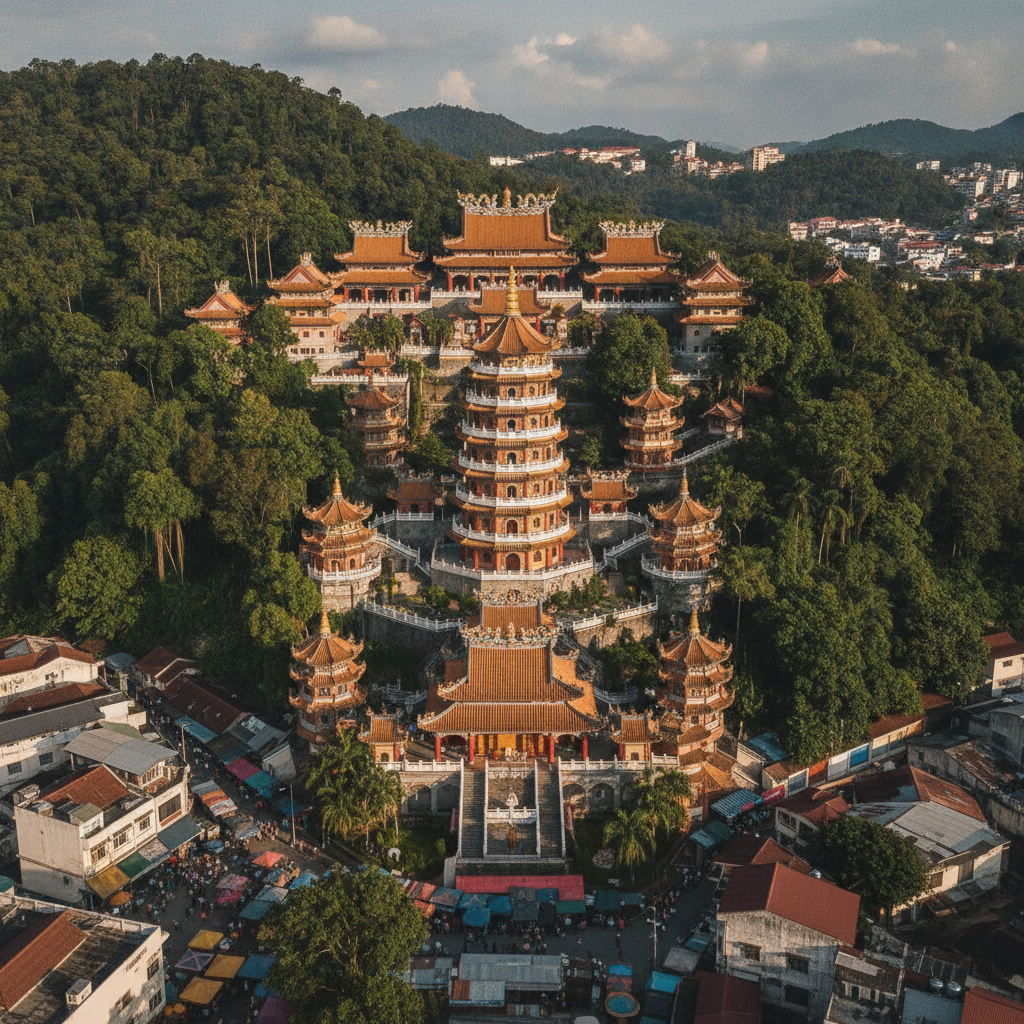
The Khoo Kongsi in Cannon Square is the most elaborately decorated Chinese clan temple in Southeast Asia — the temple and clan association complex built by the Khoo clan (a Hokkien clan of Leong San Tong descent) features the most extravagant decorative program of any overseas Chinese temple, with its carved stone pillars, gilded wooden panels, painted rafters, and the ceramic figurines on the roof ridges creating a visual density that was specifically designed to express the wealth and status of the Khoo clan in colonial Penang. The kongsi (clan house) system that organised Chinese community life in Penang is represented here in its most complete physical form.
- 4
Goddess of Mercy Temple Kuan Yin Teng
The Goddess of Mercy Temple (Kuan Yin Teng) on Pitt Street is the oldest Chinese temple in Penang — built around 1800 by early Hokkien and Cantonese settlers, the temple dedicated to Kuan Yin (the Buddhist bodhisattva of compassion) has been continuously used for over two centuries and remains one of the most active places of worship in George Town. The temple's position on 'Harmony Street' (Jalan Masjid Kapitan Keling) alongside the Kapitan Keling Mosque, St George's Church, and the Sri Mahamariamman Temple in the same block represents the remarkable religious coexistence that characterises the historic centre of Penang.
- 5
Nyonya Peranakan Culture
Peranakan (Straits Chinese) culture developed when the earliest Chinese settlers in the Straits Settlements intermarried with local Malay women, creating a hybrid culture combining Chinese and Malay elements — the Nyonya women (as the female Peranakans are known) developed distinctive embroidery, beadwork, cooking, and dress traditions, while the Baba men adopted Malay dress elements while maintaining Chinese religious practice. The Peranakan culture of Penang, Malacca, and Singapore represents one of the most creative cultural fusions in Southeast Asian history and is most richly preserved in the built heritage, food culture, and museum collections of George Town.
- 6
Penang Street Art Chinese Quarter
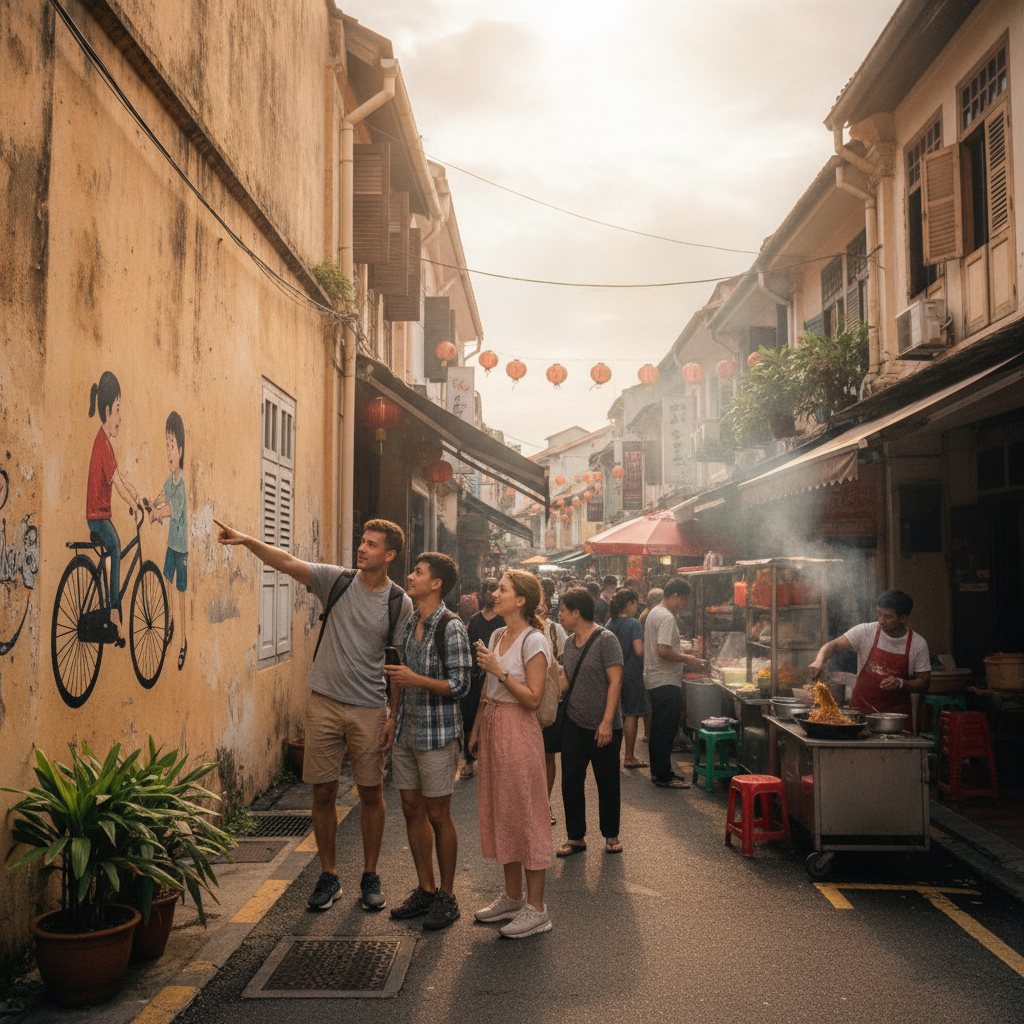
The Chinese quarter's street art extends Ernest Zacharevic's 2012 commissions to include dozens of subsequent murals and interactive steel rod sculptures that illustrate scenes from George Town's Chinese community history — the murals showing Hokkien wedding traditions, children playing traditional games, and the daily life of the clan jetty communities create a visual guide to a social history that is not always visible in the surviving built heritage. The combination of the painted walls and the actual heritage buildings they are positioned beside creates a layered heritage experience unique to George Town among Southeast Asian historic cities.
Walk this route with audio
Stories play automatically as you reach each stop — no tapping needed.