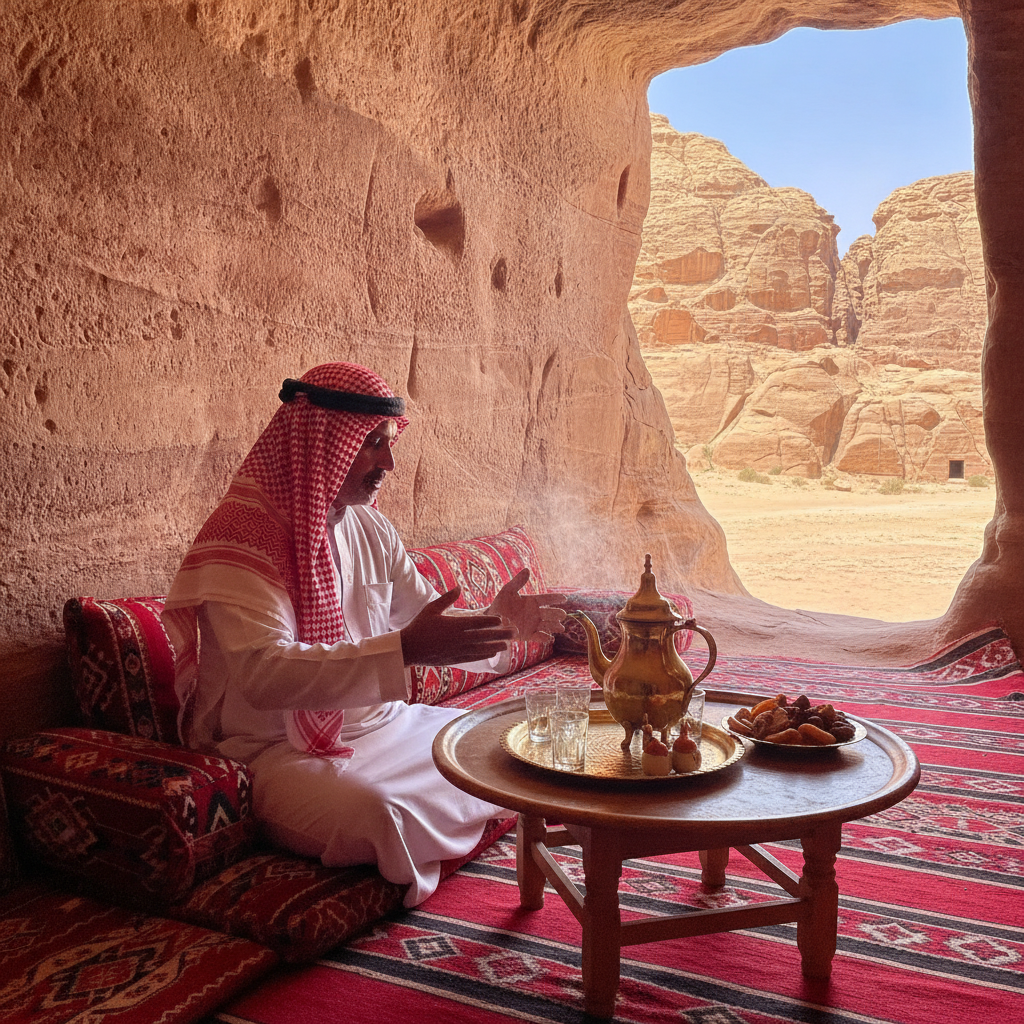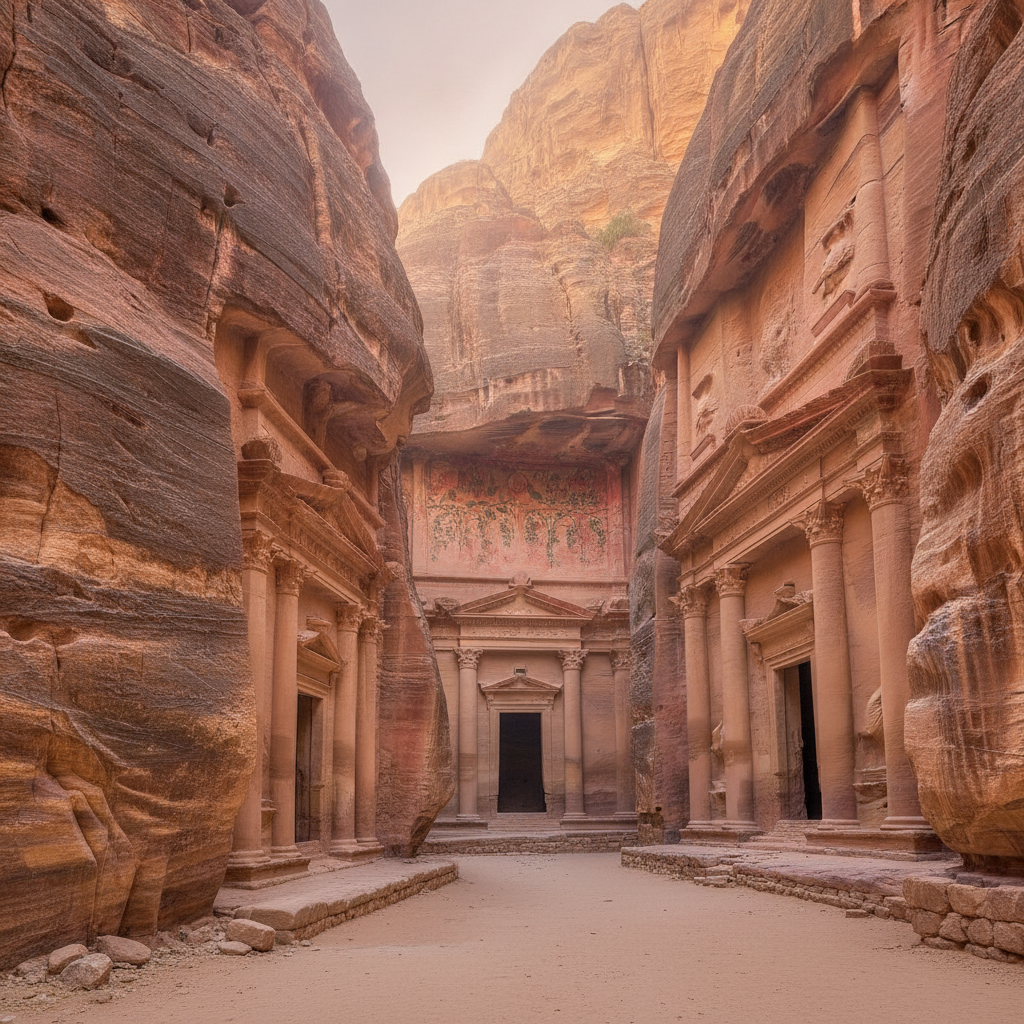
Petra Surroundings: Little Petra Siq Barid, Beidha Neolithic Village, the Coloured Canyon, the Snake Monument, and the Petra Archaeological Park
The Petra surroundings route covers Little Petra (Siq al-Barid) as the most completely Nabataean single small canyon site, the Beidha Neolithic village as one of the oldest settlements on earth, the Coloured Canyon, the Snake Monument, and the full Petra Archaeological Park.
- 1
Little Petra Siq al-Barid: The Caravan Rest Stop
Little Petra (Siq al-Barid, the Cold Canyon), the most completely preserved single small Nabataean canyon site 8 kilometers north of Petra, served as the most important single caravan reception area where the arriving spice traders stored their goods in the rock-cut triclinium dining rooms (the most elaborately painted single Nabataean interior, the Painted House with the Dionysiac fresco, the most extensively analyzed single Nabataean interior painting in the archaeological literature) before proceeding to the Petra main city.
- 2
Beidha Neolithic Village: The 9000-Year Settlement
Beidha, adjacent to Little Petra, is one of the oldest continuously excavated single Neolithic settlements in the world (9000 BC, the most ancient single permanent village in Jordan and one of the earliest in the world) with the round stone houses evolving into rectangular room structures in the most archaeologically documented single architectural transition from the circular to the rectangular domestic building form in the human settlement history.
- 3
Coloured Canyon: The Sandstone Geology Walk
The Coloured Canyon within the Petra Archaeological Park (accessible by the 2-hour hike from the Monastery via the back route) is the most geologically diverse single Petra rock formation with the most intensely varied single sandstone color spectrum in the park (the purple, the white, the yellow, and the red layers in the most dramatically compressed single geological cross-section visible in Jordan). The canyon is the most photogenically complete single Petra geological landscape.
- 4
Snake Monument: The Rock-Cut Obelisk
The Snake Monument (the Nabataean rock-cut rectangular obelisk with the serpent coiling around the base, the most enigmatic single Nabataean religious symbol in Petra), accessible on the route between the Siq entrance and the Street of Facades, is the most directly Nabataean-religious single carved monument visible to the visitor without additional hiking and the most archaeologically discussed single Nabataean sacred image in the scholarly literature.
- 5
Petra Archaeological Park: The UNESCO Heritage Area
The Petra Archaeological Park (UNESCO World Heritage Site since 1985, 264 square kilometers, the most extensive single Jordan UNESCO protected zone), protecting the most complete single Nabataean urban landscape in existence, contains more than 800 individual carved monuments (the most numerous single ancient rock-cut monument collection in the world) of which the most frequently visited single fraction is approximately 10% of the total archaeological heritage.
- 6
Petra Museum: The Archaeological Collection
The Petra Museum (opened 2019, the most recently constructed single Jordan national museum with the most completely modern single Nabataean archaeology display), located at the entrance to the Archaeological Park, presents the most comprehensively curated single Nabataean artifact collection (the pottery, the coins, the inscriptions, and the sculpture from the Petra excavations) in the most educationally complete single Petra pre-visit orientation.
Walk this route with audio
Stories play automatically as you reach each stop — no tapping needed.
More in Petra
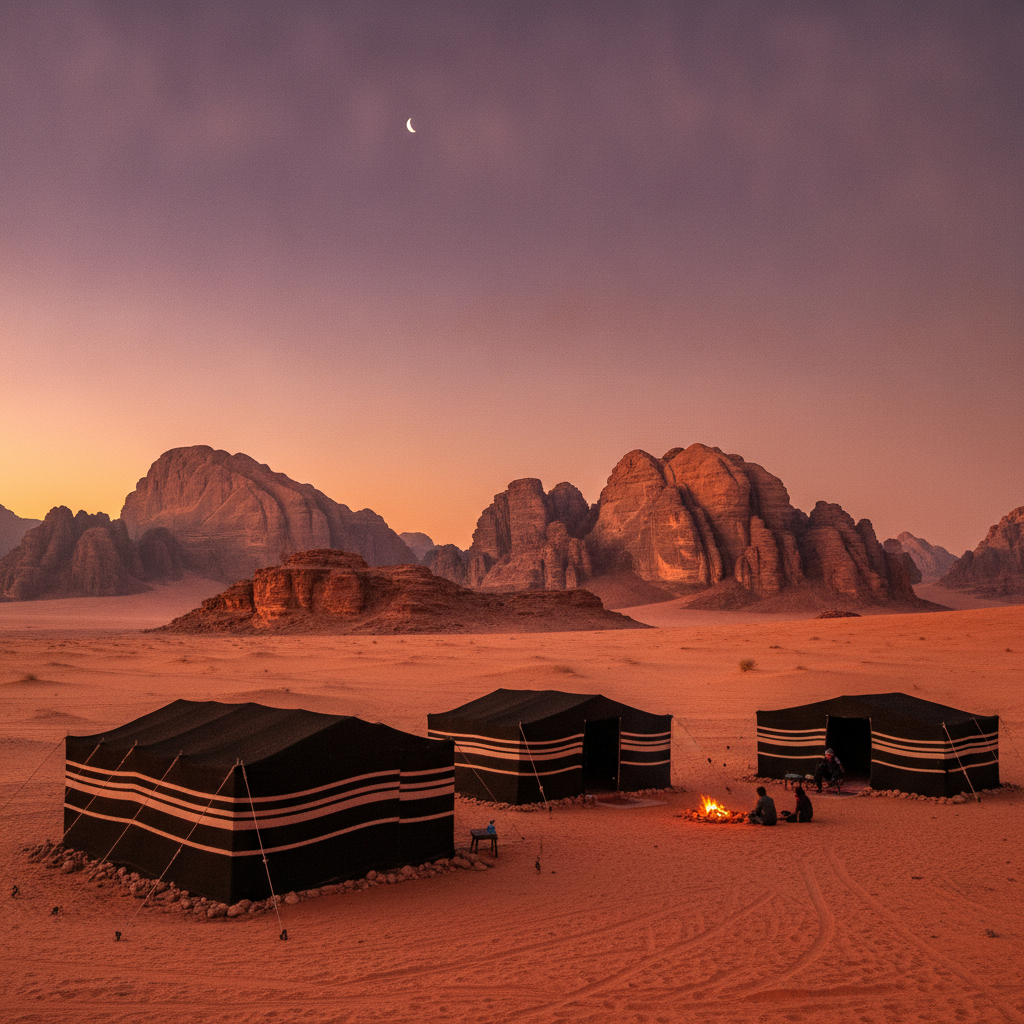
Petra Day Trips: Little Petra Free, Wadi Rum's Martian Landscape & Dana Canyon Trek
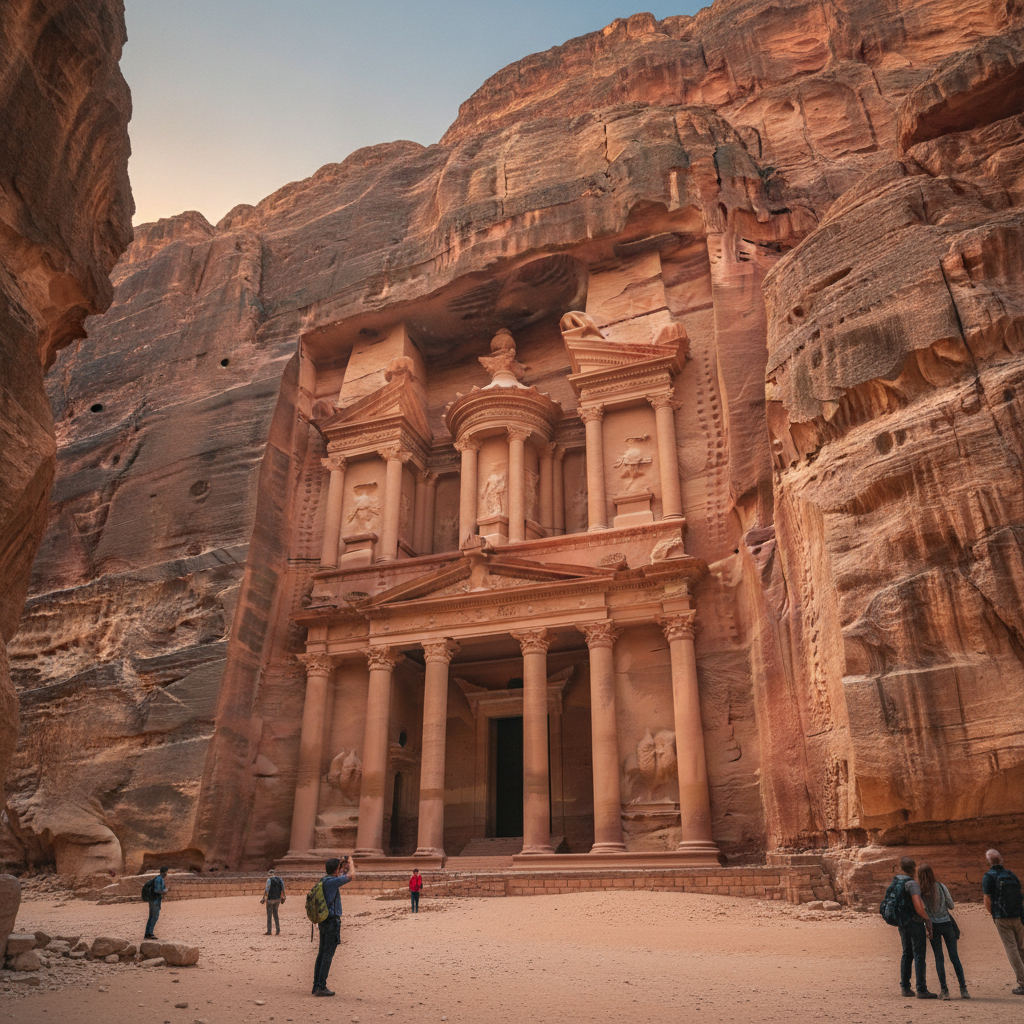
Petra Essential: The Siq Canyon, the Treasury Al-Khazneh, the Street of Facades, the High Place of Sacrifice, the Monastery Ad-Deir, and the Nabataean Capital
Petra's Jordan: The King's Highway, Byzantine Mosaics & the Grand Canyon of Wadi Mujib
Petra Deep Dive: Only 15% Excavated, the Nabataean Water System & Indiana Jones

Petra Geology: The Rose-Red Sandstone Colors, the Nabataean Water Engineering, the Desert Ecology, and the Natural Environment