Sete Cidades: Piauí's Natural Rock Architecture
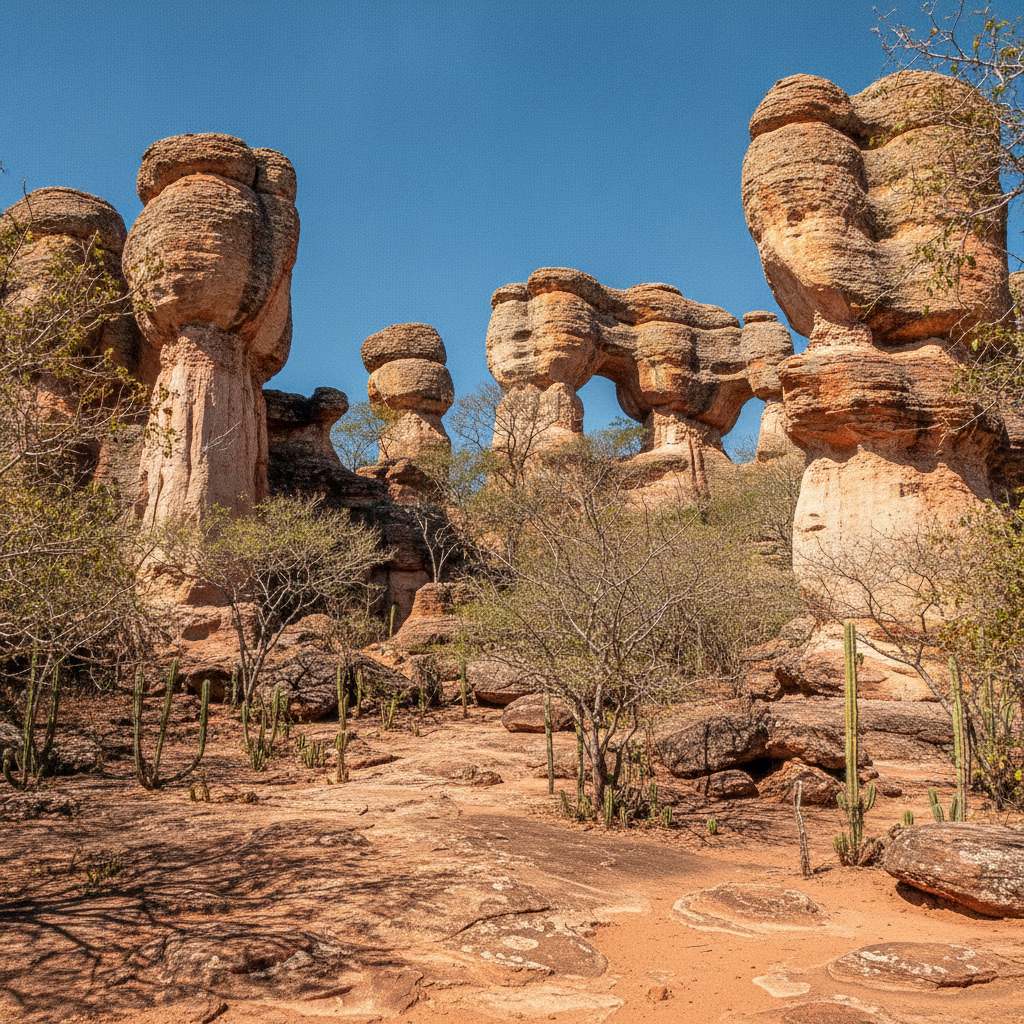
The Sete Cidades National Park — 180 km from Teresina — is a landscape of sandstone formations eroded into shapes that resemble ruined cities, complete with rock art; one of Brazil's most surreal natural landscapes
- 1
The Seven Cliff Cities
The seven groups of sandstone formations – eroded by millions of years of rain and wind into towers, arches and walls – resemble the ruins of ancient stone cities; the effect is eerie and magnificent in the caatinga landscape
- 2
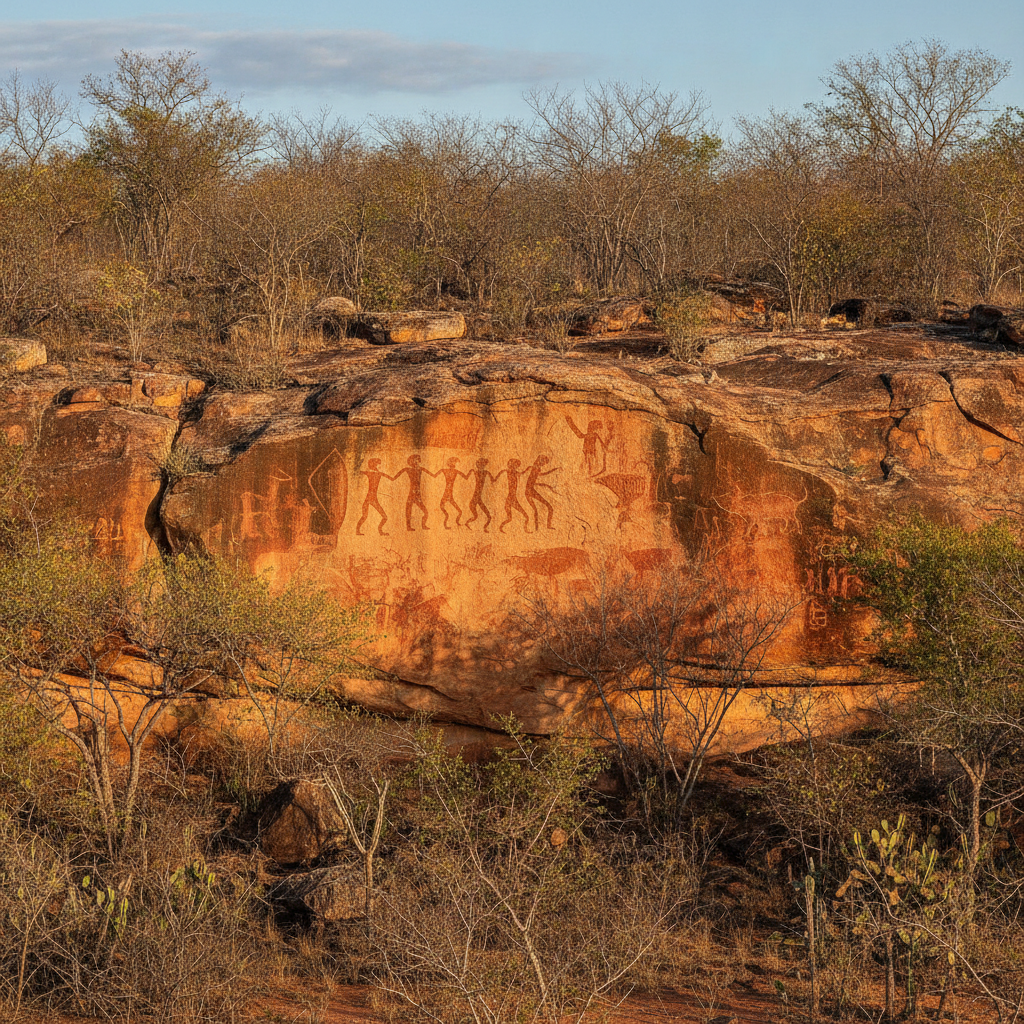
Rock Art at Sete Cidades
The rock art at Sete Cidades—which predates recorded history—includes geometric patterns and human figures; the proximity of the prehistoric paintings to the natural formations has fueled theories (unconfirmed) of Phoenician or Sumerian contact
- 3
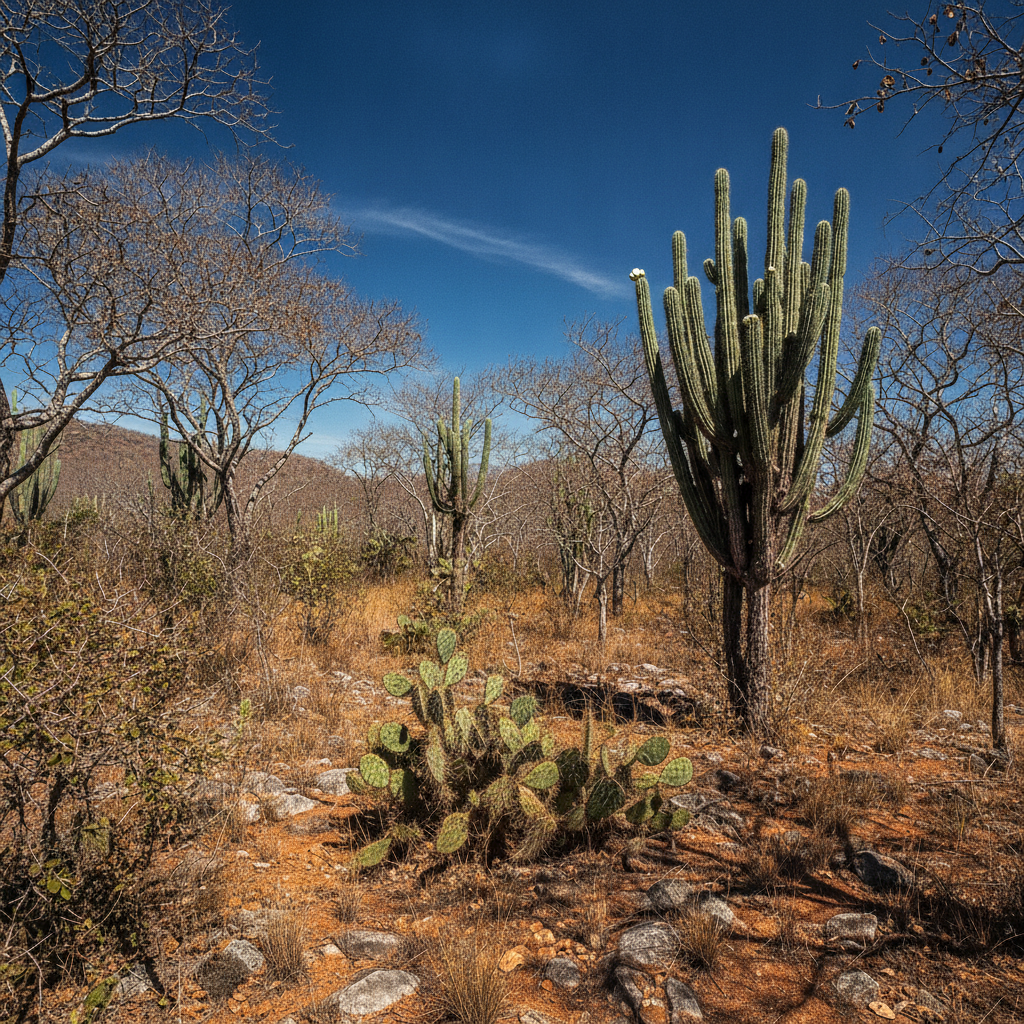
Caatinga Flora of the Park
The Caatinga vegetation at Sete Cidades includes rare species found nowhere else – the 78 species of orchids, the cacti growing on the sandstone peaks and the gallery forests in the canyon bottoms are botanically extraordinary
- 4
Sandstone Geology
The Sete Cidades Formation is part of the Parnaíba sedimentary basin — one of the world's largest intracontinental basins; The sandstone layers that record 300 million years of geologic history are exposed in the canyon walls
- 5
Wildlife in Sete Cidades
The park protects caatinga wildlife including tamandua anteaters, armadillos and an outstanding range of birds; toco toucan, araripe manakin (critically endangered) and over 200 other bird species have been recorded
- 6
Trail System
Sete Cidades has a well-maintained trail network connecting the seven formation groups - the combination of natural architecture, prehistoric art and caatinga ecosystem make it one of Brazil's most rewarding day-hiking destinations
Walk this route with audio
Stories play automatically as you reach each stop — no tapping needed.
More in Teresina
Piauí at the Table: Carne de Sol, Sarrabulho & River Fish
Parnaíba & Poti: Two Rivers at the Heart of Teresina
Serra da Capivara: The World's Oldest Human Art
Piauí Crafts: Babaçu, Carnuba & the Art of the Interior
Teresina and the Caatinga: Life in Brazil's Dryland