Tioman Island Jungle Trek & Waterfall Walk
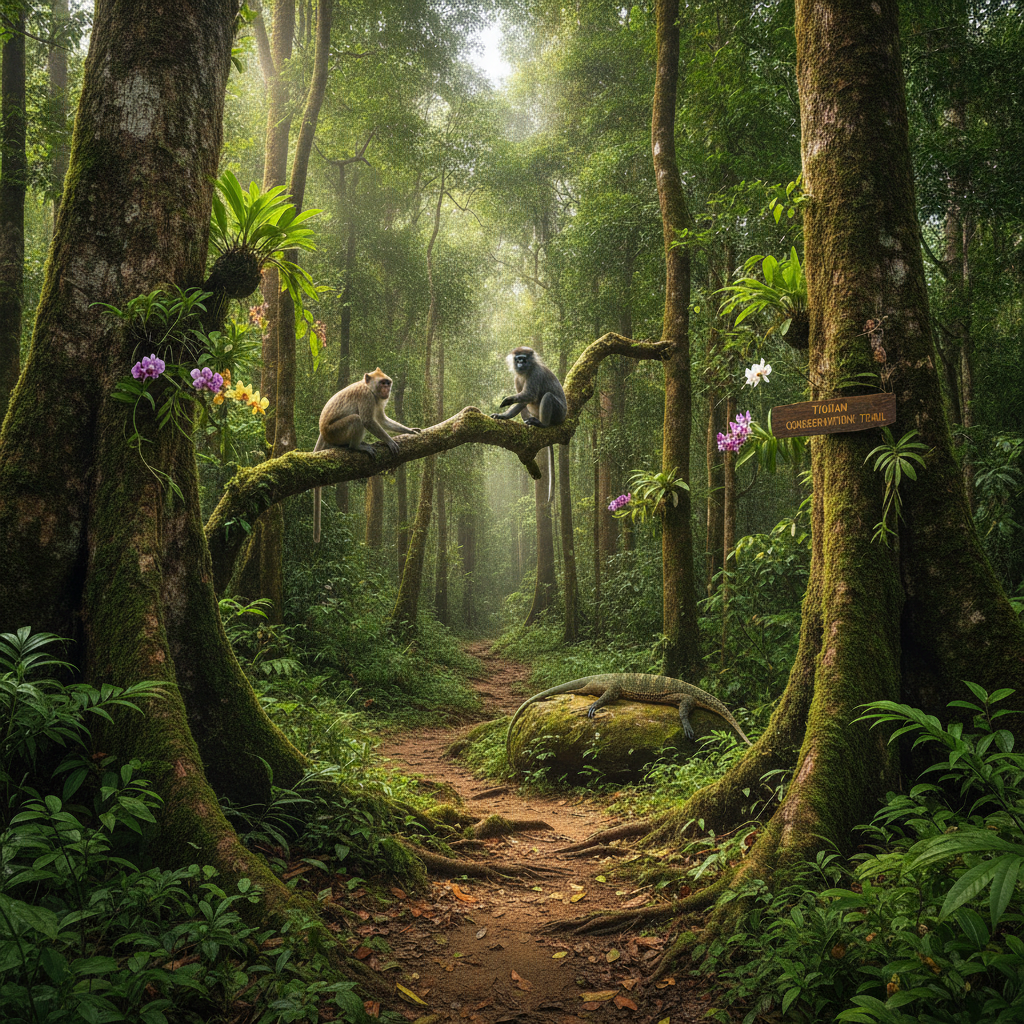
Trek through Tioman's primary rainforest — the mountainous interior of Tioman Island (rising to 1,049 metres at Gunung Kajang) is almost entirely primary rainforest, one of the few island ecosystems in Southeast Asia where the complete lowland-to-montane forest gradient has been preserved, accessible via trails from the coastal villages.
- 1
Tekek to Juara Jungle Trail
The jungle trail crossing Tioman's central ridge from Tekek on the west coast to Juara on the east coast is the island's most important inland walk — the 7km trail through primary forest climbing to approximately 400 metres passes through the full range of lowland dipterocarp forest, crossing streams with natural swimming pools, passing groves of the spectacular strangler fig trees that have enveloped their host trees, and offering occasional glimpses of the Tioman interior's birdlife through the forest canopy. The trail's completion at Juara, Tioman's most isolated beach village, rewards the 3-4 hour walk with a dramatically different landscape than the west coast.
- 2
Monkey Bay Coastal Walk
Monkey Bay (Teluk Kerma) is a small bay accessible by a 30-minute coastal walk from Air Batang — the trail through the coastal forest leads to an undeveloped beach where the long-tailed macaques (Macaca fascicularis) that gave the bay its name can be observed at the forest edge. The macaques of Tioman are habituated to human presence but have not been fed by visitors and maintain their natural foraging behaviour, making the Monkey Bay encounter a more authentic wildlife experience than the more heavily managed macaque populations at some mainland Malaysian sites.
- 3
Gunung Kajang Summit Hike
Gunung Kajang (1,049m) is the highest peak on Tioman Island, accessible via a challenging trail from Kampung Genting or Asah on the southern part of the island — the full summit hike requires a full day and appropriate preparation (guide, sufficient water, clear weather) but rewards the effort with views of the entire island, the surrounding South China Sea, and on clear days the distant mainland. The montane forest on the upper slopes of Gunung Kajang is the most pristine forest ecosystem accessible on Tioman, with the tree ferns, mossy forest vegetation, and the cloud forest bird community becoming apparent above 800 metres.
- 4
Asah Waterfall
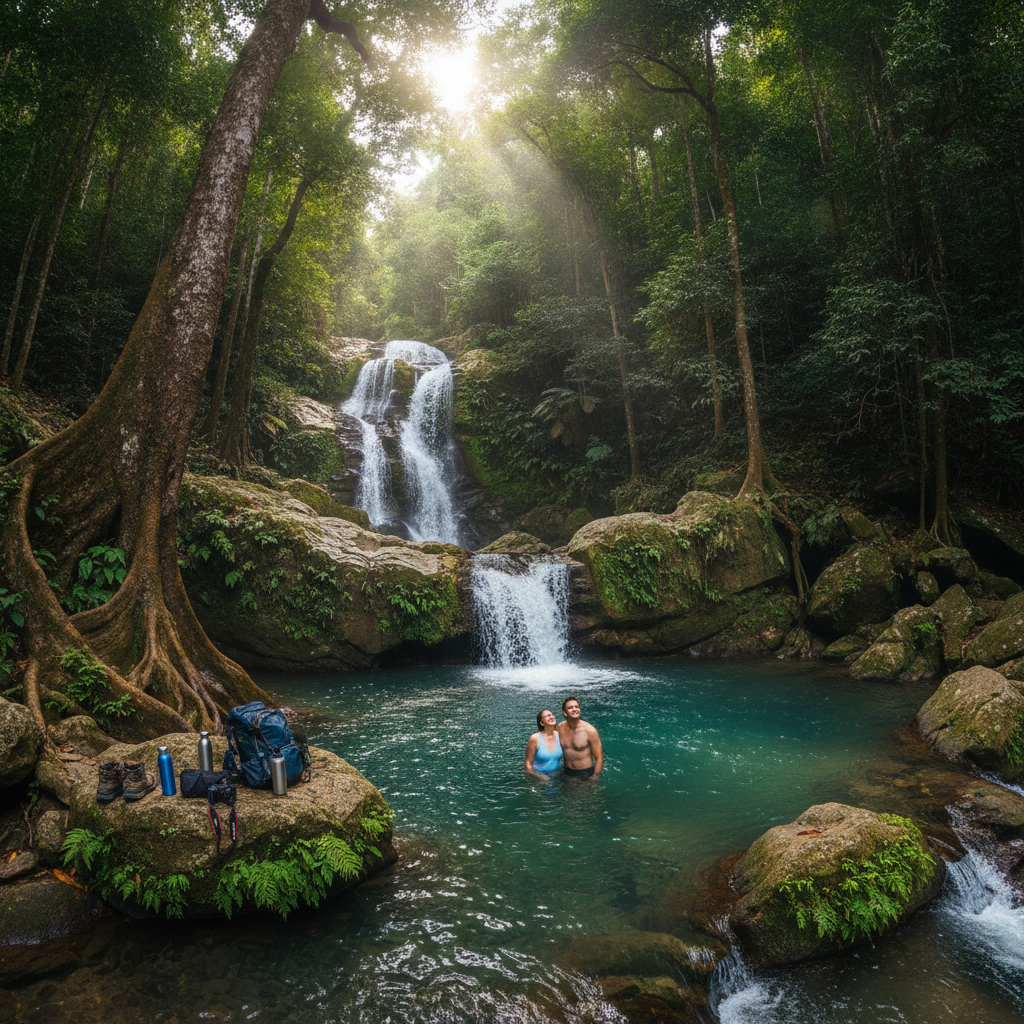
Asah Waterfall in the south of Tioman is the island's most impressive freshwater cascade — the three-tiered waterfall dropping approximately 40 metres through the primary forest to a pool at the base is accessible by a 30-minute walk from Kampung Asah. The pool at the base of the main falls is large enough for swimming, and the cool fresh water (maintained at 22-24°C by the forest shade and the altitude) provides a refreshing contrast to the saltwater snorkeling that dominates most Tioman activities.
- 5
Berjaya Tioman Forest Walk
The secondary forest adjacent to the Berjaya Tioman resort area provides the most accessible forest walk on the island — the managed trail through the recovering forest demonstrates the secondary succession process in a tropical coastal forest, with pioneer species (Macaranga trees, gingers, wild bananas) giving way to the larger shade-tolerant trees of the developing forest. The forest birds of Tioman — the Tioman island-specific subspecies of common regional species, alongside the Tioman-endemic subspecies that have developed in the island's isolation — are most easily observed in the second-growth forest where the lower canopy brings birds within binocular range.
- 6
Tioman Hornbill Watching
Tioman Island has a healthy population of the Rhinoceros Hornbill (Buceros rhinoceros), the most spectacular of Malaysia's eight hornbill species — the enormous black-and-white bird with its distinctive red and yellow casque (the hollow structure on top of the bill) is most visible in flight over the forest canopy and in the fruiting fig trees where hornbills gather to feed. The hornbill's distinctive whooshing wingbeat, audible from considerable distance, allows visitors to locate the birds by sound before they are visible, and the morning and late afternoon hours when hornbills are most active in the fruiting trees provide the best observation opportunities on Tioman.
Walk this route with audio
Stories play automatically as you reach each stop — no tapping needed.