Vientiane Temple & Stupa Walk
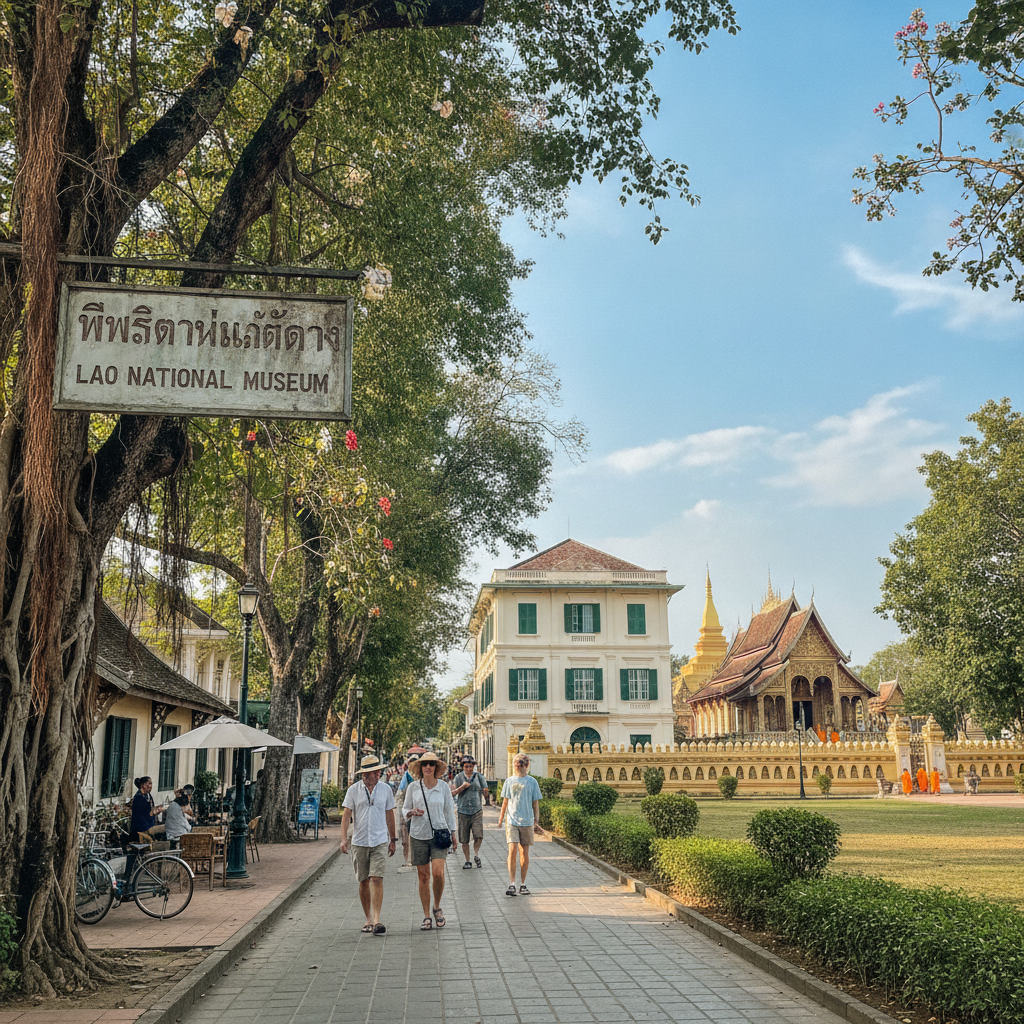
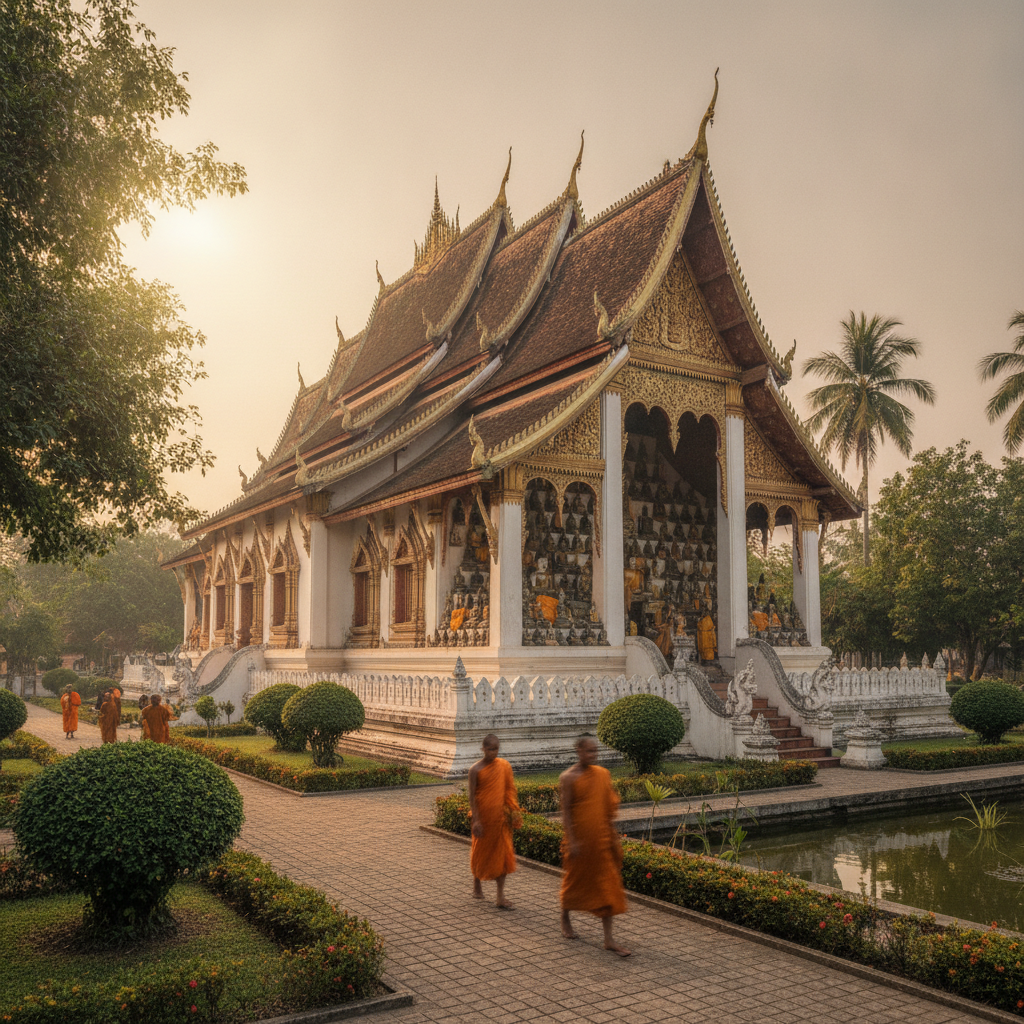
Walk Vientiane's temple circuit — the Lao capital has the highest concentration of Buddhist temples per capita of any Southeast Asian capital, with the That Luang National Stupa, Wat Sisaket, and dozens of active pagodas creating the most contemplative capital city in the region.
- 1
That Luang National Stupa
Pha That Luang (Great Sacred Stupa) is the most sacred Buddhist monument in Laos and the national symbol of the Lao PDR — the 45-metre golden stupa (the spire visible above the surrounding city from considerable distance, its gilded surface reflecting the light with particular intensity at sunrise and sunset) is the symbolic centre of Lao Buddhism and Lao nationhood. The stupa's origin is traced to the 3rd century BCE (the tradition holds that the original monument was built by Indian missionaries sent by Ashoka to enshrine a breastbone of the Buddha), with the current form built by King Setthathirath in 1566 after the abandonment of the former Lao capital at Luang Prabang. The surrounding temple compound (the cloistered walkway with its Buddha niches, the two flanking temples, and the expansive processional approach that makes That Luang the most formally planned religious monument in Laos) is most dramatically experienced during the That Luang Festival (the full moon of the twelfth Lao month, typically November) when tens of thousands of pilgrims and monks gather for the most significant Buddhist festival in the Lao calendar.
- 2
Wat Sisaket Museum
Wat Sisaket (built 1818) is the oldest temple in Vientiane and the only temple to survive the 1828 Siamese sacking and burning of the city — the temple's survival (attributed to its similarity in architectural style to Bangkok's temples, causing the Siamese forces to leave it intact) makes it the most historically significant single religious structure in the capital. The temple's most extraordinary feature is the cloister wall: thousands of small Buddha niches set into the gallery walls and filled with an estimated 6,840 Buddha images in silver and ceramic, creating the most unusual and most visually overwhelming single surface of Buddhist art accessible in Laos. The wat's collection of Buddha images (the figures ranging from the Lao mandarin style of the 19th century to the older bronze images predating the temple) in the main sanctuary and in the cloister makes Wat Sisaket the most comprehensive single-site survey of Lao Buddhist sculpture accessible in the capital.
- 3
Haw Phra Kaew Museum
Haw Phra Kaew (Temple of the Emerald Buddha) opposite Wat Sisaket was built in 1565 by King Setthathirath to house the Emerald Buddha brought from Chiang Mai — the image was taken to Bangkok in 1779 when Thailand captured Vientiane, and has never been returned despite repeated Lao requests. The former temple (now a national museum housing the finest collection of Lao Buddhist art accessible in the capital, including the magnificent Lao-style Buddha heads, the carved wooden temple decorations, and the ancient bronze ceremonial objects) provides the most comprehensive museum encounter with the Lao Buddhist artistic tradition. The building itself (the Portuguese-influenced Lao temple architecture with its multi-tiered roof and the elegant proportions of the Lao royal religious building tradition) is among the most beautiful colonial-era religious buildings in mainland Southeast Asia.
- 4
Wat Ong Teu Mahawihan
Wat Ong Teu Mahawihan (Temple of the Heavy Buddha) in the centre of Vientiane is the most important active Buddhist temple in the city and the headquarters of the Sangha of the Lao PDR — the temple's name refers to the 16th-century bronze Buddha (one of the largest and finest in Laos, cast at the time of the founding of the Vientiane capital by King Setthathirath) housed in the main sanctuary. The temple's active monastic school (one of the most important centres of Buddhist study in Laos, where monks from throughout the country study Pali, the canonical Buddhist texts, and the Lao monastic tradition) is visible in the monks' quarters behind the main sanctuary, and the morning and evening prayer sessions at the main hall are the most accessible encounters with the active Lao monastic tradition in the capital.
- 5
Patuxai Victory Monument
Patuxai (Victory Gate or Gate of Triumph) is Vientiane's most recognisable urban monument — the Arc de Triomphe-inspired concrete gate (built in 1962 using cement donated by the United States for a planned airport runway, leading to its sardonic local nickname 'the vertical runway') blends the French colonial architectural influence with Lao Buddhist decorative elements (the Lao mythological figures in the relief carvings, the nagas on the upper surfaces, and the lotus petal ornamentation on the classical French triumphal arch form). The monument's interior (accessible by the stairs to the upper level) provides the most convenient elevated view over the Lan Xang Avenue (Vientiane's broad tree-lined ceremonial boulevard, modelled on the Champs-Élysées by the French colonial urban planners) and the fountain park that constitutes the capital's most formal urban space.
- 6
Wat Mixai Temple
Wat Mixai on Setthathirath Road in the centre of Vientiane is the most architecturally distinctive temple in the capital — the temple's entrance gate (guarded by two large European-style statues in the Lao posture, an unusual European influence on the Lao temple entrance guardian tradition) and the bright yellow temple walls create the most distinctive visual identity of any temple in the city. The temple's market (the stalls in the temple compound selling Buddhist supplies, flowers, and the incense and votive candles for temple offerings) is the most active commercial temple environment accessible in the Vientiane central area, and the daily temple activity (the monks moving through the compound, the devotees making merit, and the school children studying in the temple buildings) provides the most varied encounter with the Vientiane Buddhist community's daily practice.
Walk this route with audio
Stories play automatically as you reach each stop — no tapping needed.