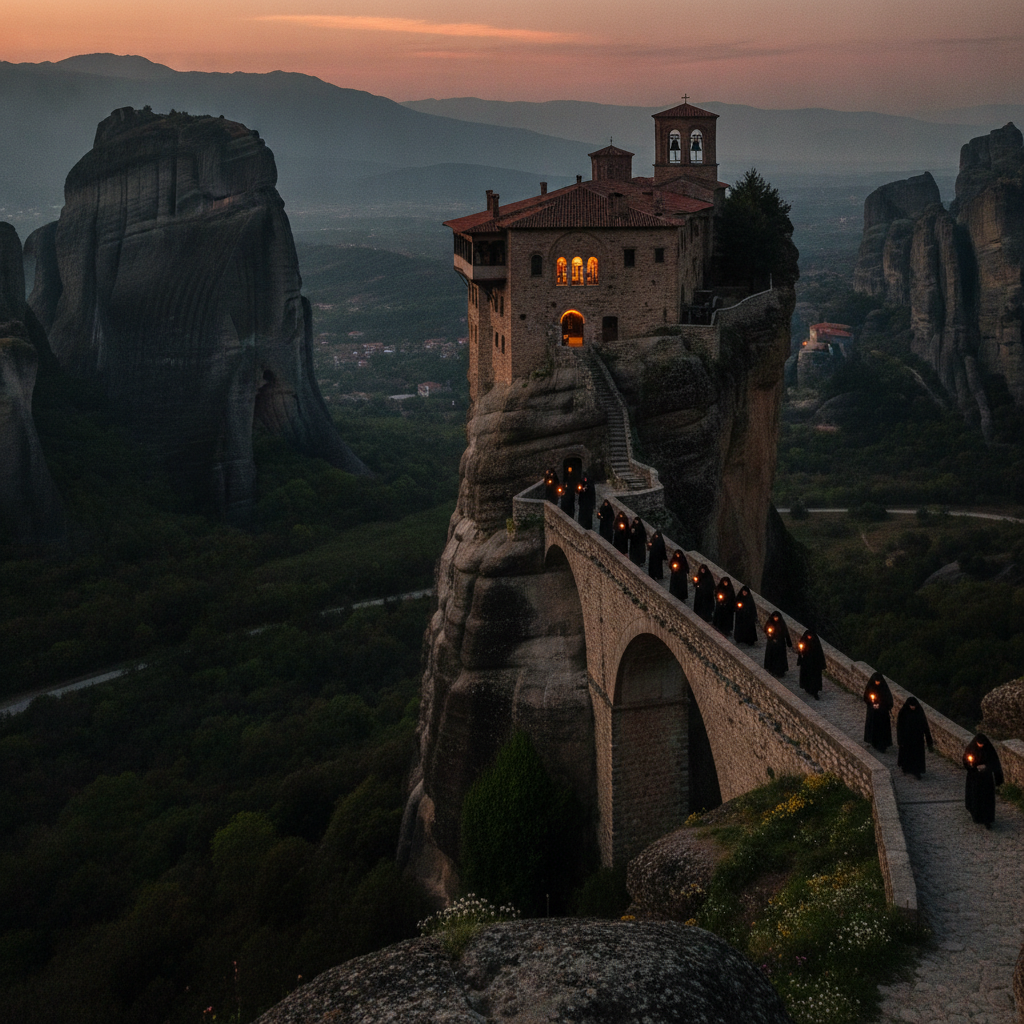

Meteora Orthodox Calendar: Holy Week Easter Vigil, Annunciation and Greek Independence Day, Panegyri Saint Festivals, Canonical Hour Bells, Dormition Pilgrimage, and the Living Tradition
The Meteora Orthodox calendar route covers the Holy Week Easter services at the six monasteries, the Annunciation and Greek Independence Day combined feast at the Great Meteoron, the patron saint panegyri festivals, the daily canonical hour bell ringing, the Dormition pilgrimage day, and the complete Orthodox year as experienced from the Meteora rocks.
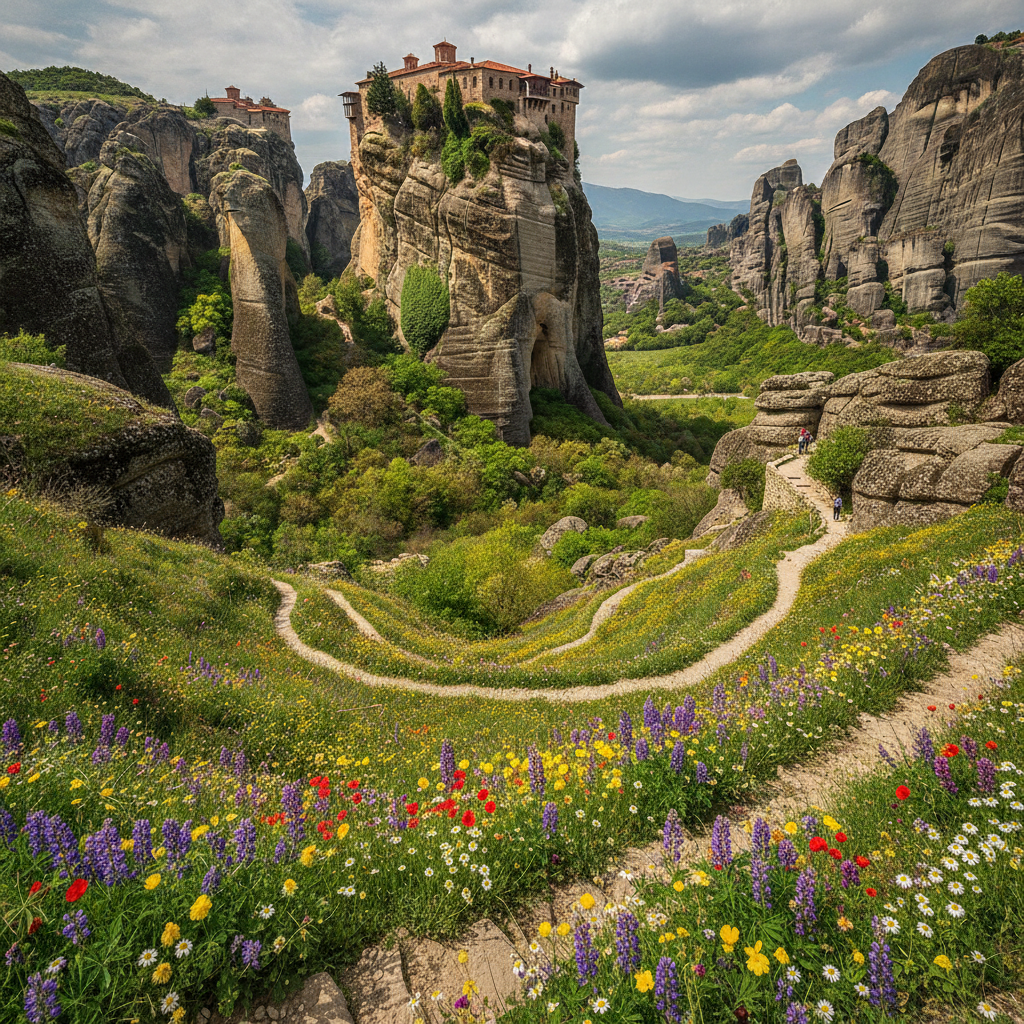
Meteora Active and Departure: Cycling the Valley Circuit, Hiking the Monastery Trail, Sunrise Photography, Four Seasons Guide, Delphi Day Trip, and the Farewell Silhouette
The Meteora active and farewell route covers the 15-kilometer bicycle valley circuit, the 4-hour monastery-to-monastery hiking trail, the five canonical sunrise photography positions, the four seasonal experiences, the Delphi 2-day circuit combination, and the departure reflection on why the Meteora silhouette is the most enduring image in the Greek travel experience.
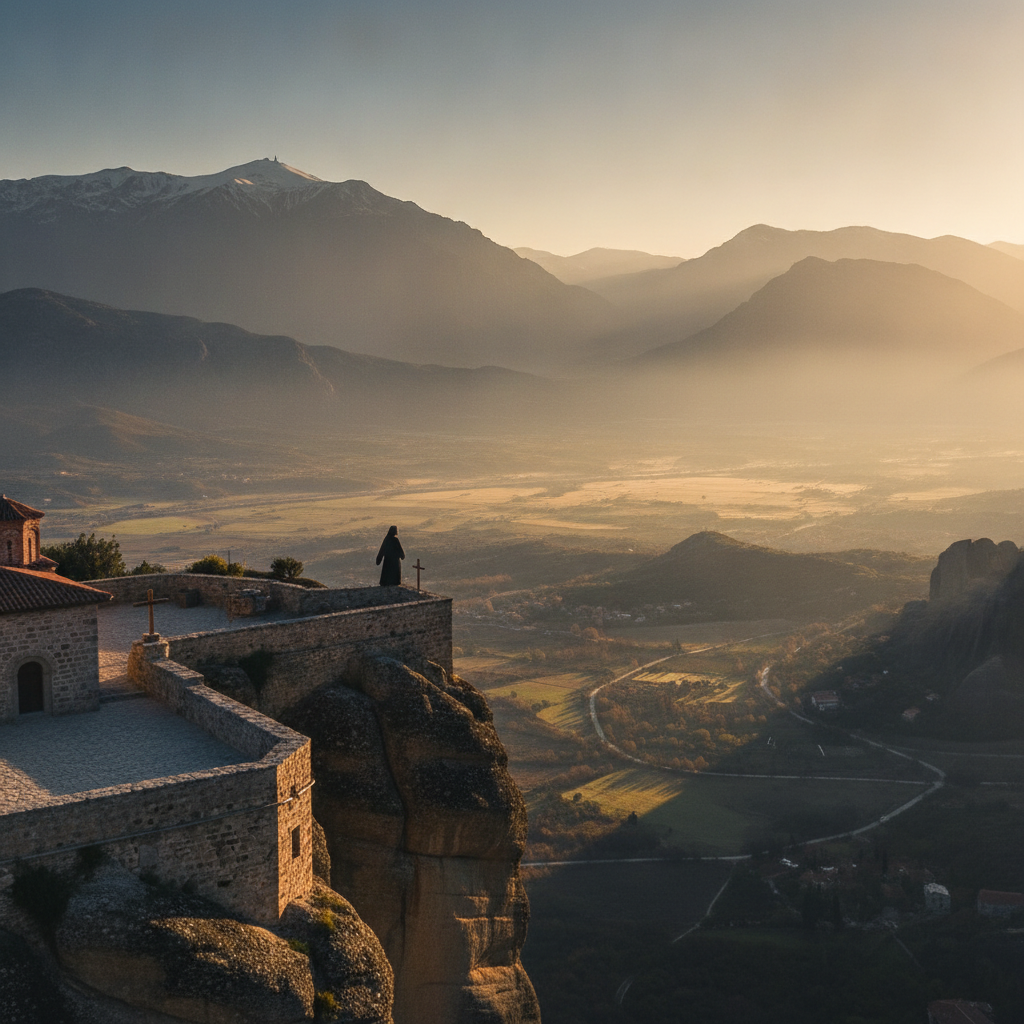
Meteora Food and Summary: Thessalian Cuisine, Trikala Wine, Agios Stefanos Accessible Nunnery, Diavolorachis Devil Ridge View, Night Soundscape of Bells and Owls, and the Sacred Vertical Summary
The Meteora complete route covers the Thessalian trachanas and lamb cuisine, the Trikala winemakers and monastery honey, the road-accessible Agios Stefanos nunnery museum, the Diavolorachis Devil Ridge aerial viewpoint, the night soundscape of the monastery bell and the owl, and the concluding reflection on the sacred vertical.
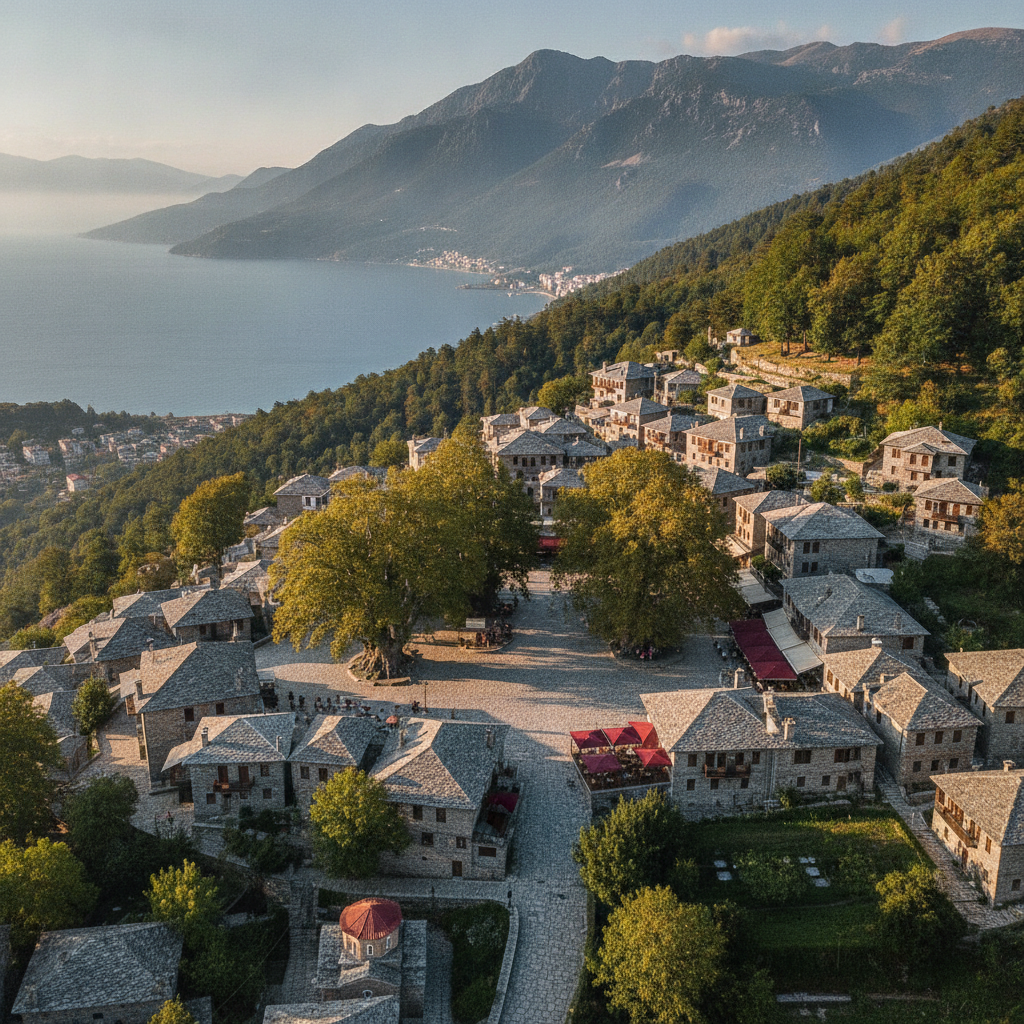
Meteora Region and Context: Mount Athos Hesychast Tradition, Kalabaka Byzantine Cathedral, Trikala Thessalian City, Pelion Mythological Mountains, Thessaly Region Overview, and the Wider Greece Connection
The Meteora wider context route covers the Mount Athos hesychast theological tradition that the Meteora founders brought from Athos, the 6th century Kalabaka cathedral with the oldest Thessaly mosaics, the Trikala city riverside revival, the Pelion peninsula mythological mountains, the Thessaly region overview, and the connection to the wider Greece travel circuit.
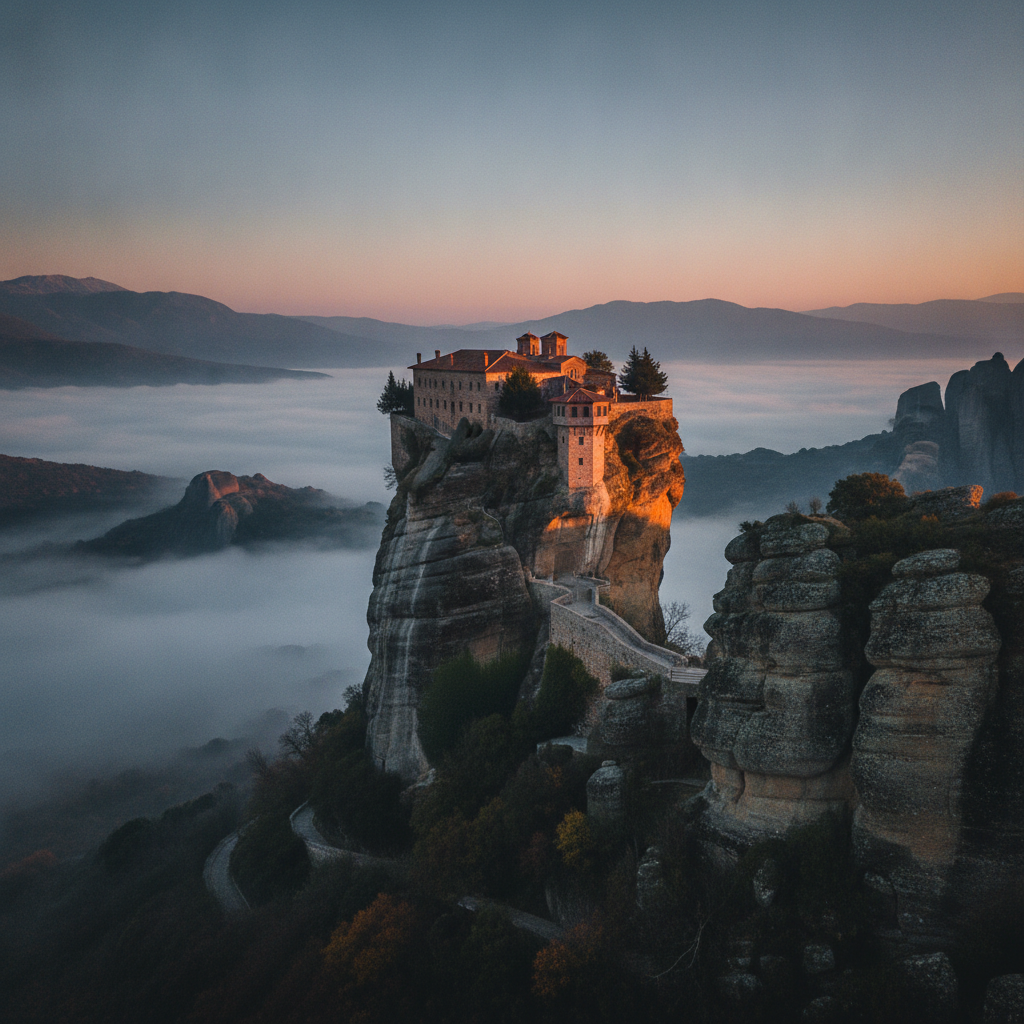
Meteora Film and Art: Agias Triadas Bond Film Location, Theophanes Cretan Frescoes, Roussanou Nunnery, Modern Rock Climbing, Thessaly Plain View, and Practical Information
The Meteora art and adventure route covers the James Bond film location monastery, the earliest Cretan school frescoes in mainland Greece, the only nunnery at Roussanou, the 700 rock climbing routes on the same pillars the monks scaled, the aerial Thessaly plain view, and practical transport information.
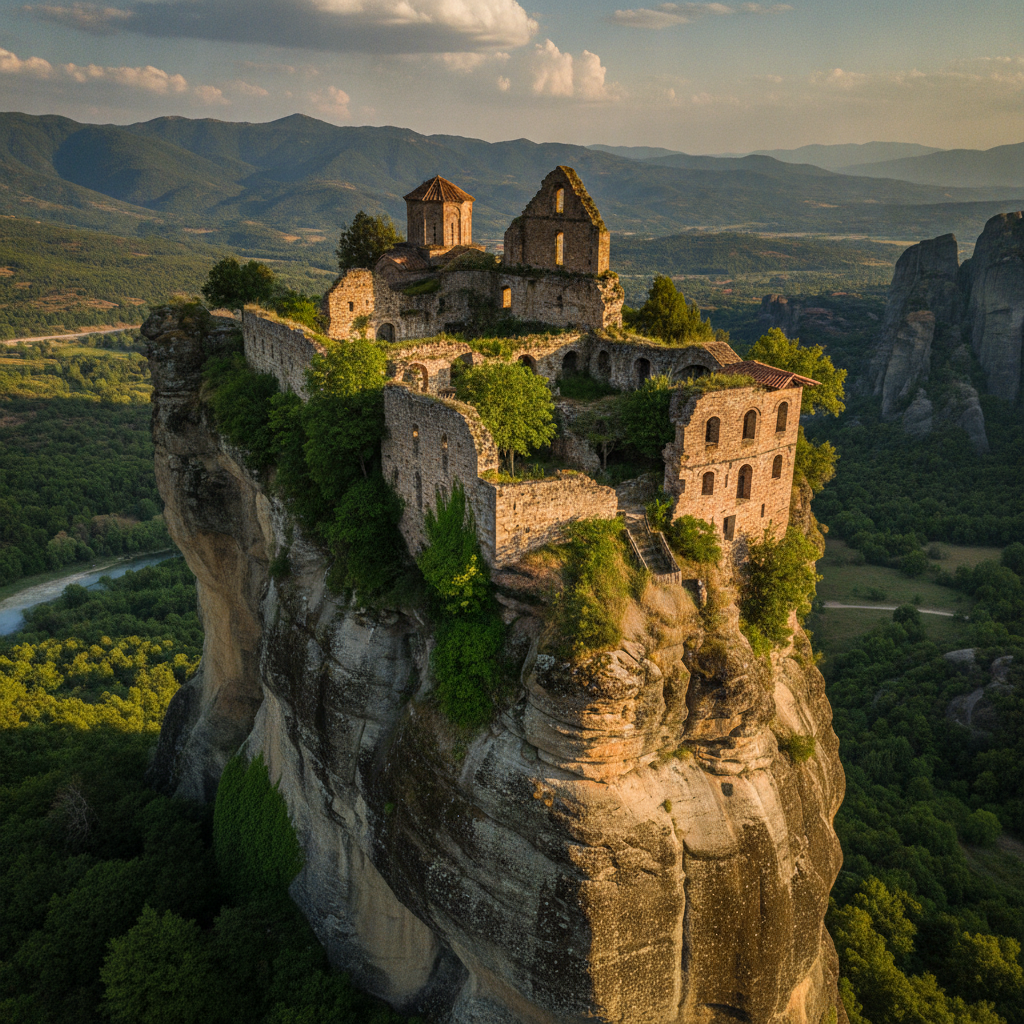
Meteora History: Theopetra Prehistoric Cave, 9th Century Hermit Settlement, 14th-16th Century Golden Age, Monastery Decline and Abandoned Ruins, UNESCO Status, and Kastraki Village
The Meteora historical circuit covers the 130,000-year Theopetra cave prehistory, the 9th century hermit period before organized monasticism, the 14th to 16th century golden age with 24 active communities, the 17th-19th century decline, the UNESCO 1988 designation, and the Kastraki village traditional accommodation.
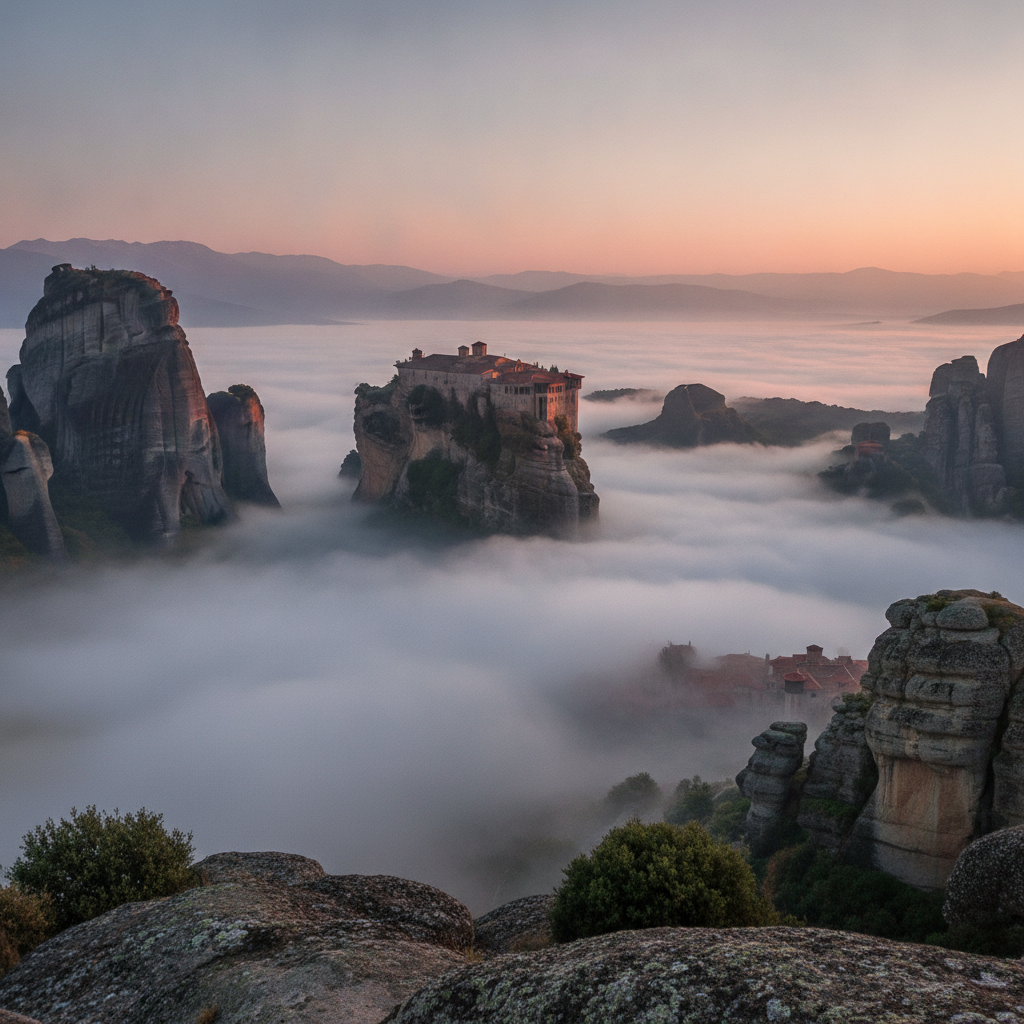
Meteora Monasteries and Floating Rocks: Great Meteoron and Varlaam at Sunrise, Byzantine Frescoes, Orthodox Monks, Kalabaka Town, and the 60-Million-Year Geology
The Meteora essential circuit covers the Great Meteoron at sunrise before the tour buses, the Varlaam Byzantine fresco collection, the resident monks and monastic life, the Kalabaka base with the Byzantine cathedral, and the UNESCO geological heritage of the rock pillars.
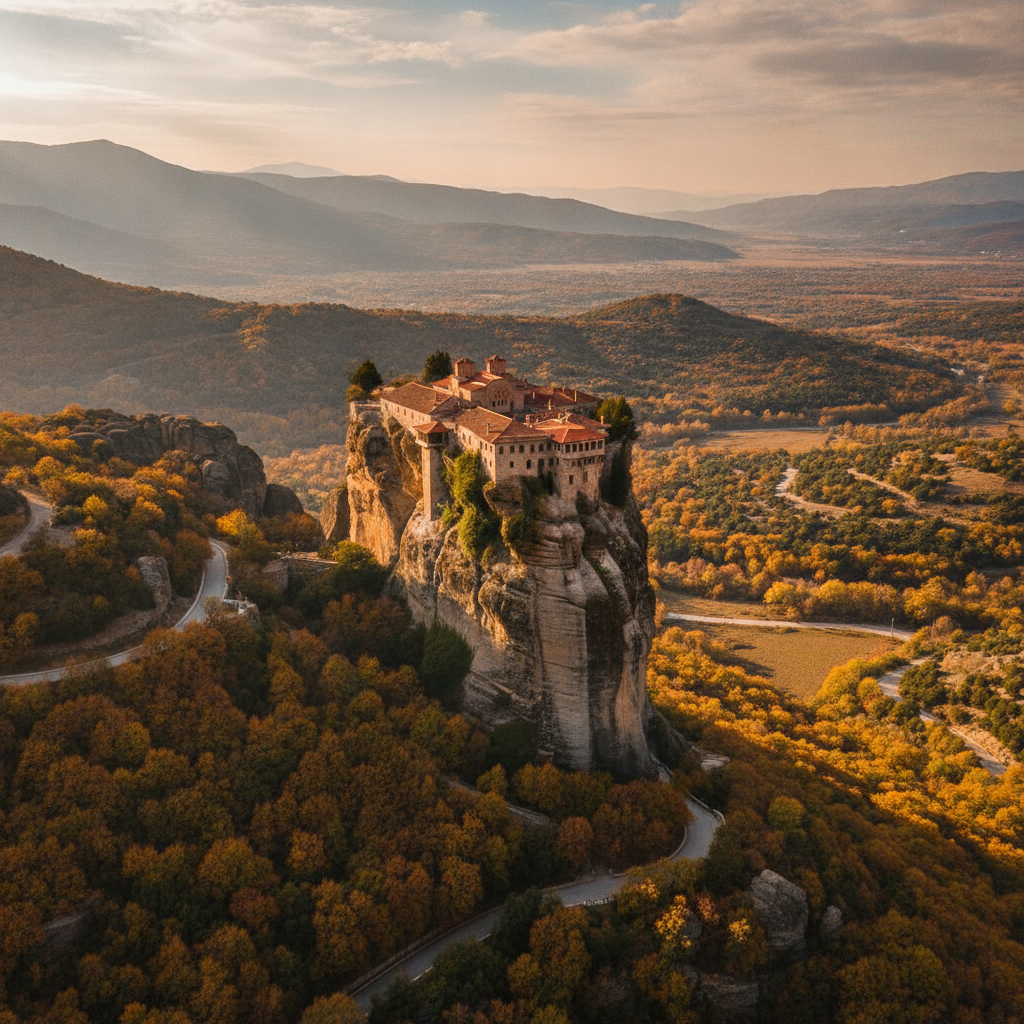
Meteora Seasonal Guide and Farewell: Winter Snow Monasteries, Spring Wildflower Bloom, Autumn Harvest, Pindus Mountain Backdrop, Photography Seasonal Calendar, and the Invitation to Return
The Meteora seasonal guide covers the winter snow monastery experience, the spring orchid bloom in the rock crevices, the autumn harvest season and monastery wine making, the Pindus mountain backdrop, the photography seasonal calendar for optimal conditions, and the farewell reflection on why Meteora generates the return visit more than any other Greek site.