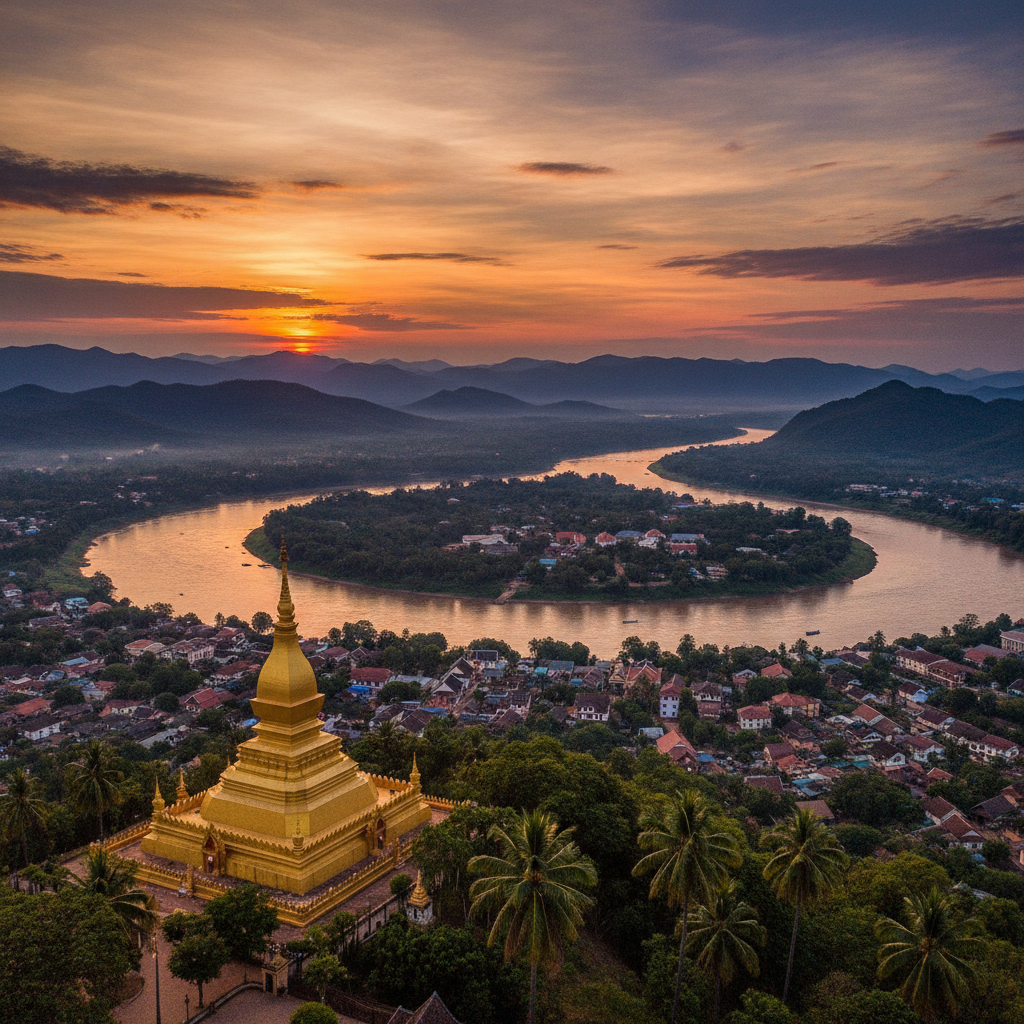

Luang Prabang's Foundation: Lan Xang's Million Elephants, Lao Laap with Sticky Rice & River Boats to Buddha Caves
The kingdom and culture behind the town—Fa Ngum's 1353 Lan Xang founding with a Khmer Buddhist mission and the Pra Bang Buddha image (the sacred statue that named the city), Setthathirath's Wat Xieng Thong and the Emerald Buddha he took to Laos before Bangkok claimed it, French colonial villas and the khao jee baguette-paté sandwich as the most visible colonial legacy in daily Lao life, laap's toasted ground rice and mint chopped meat as the national dish eaten with hand-rolled sticky rice, novice monks waking at 04:00 for prayers before the tak bat (and the Monk Chat English exchange at Wat Sene), the 329 frangipani-lined steps to Phousi's panoramic chedi, and the river boat upstream to thousand-Buddha Pak Ou Caves with a lao lao rice whisky tasting stop.
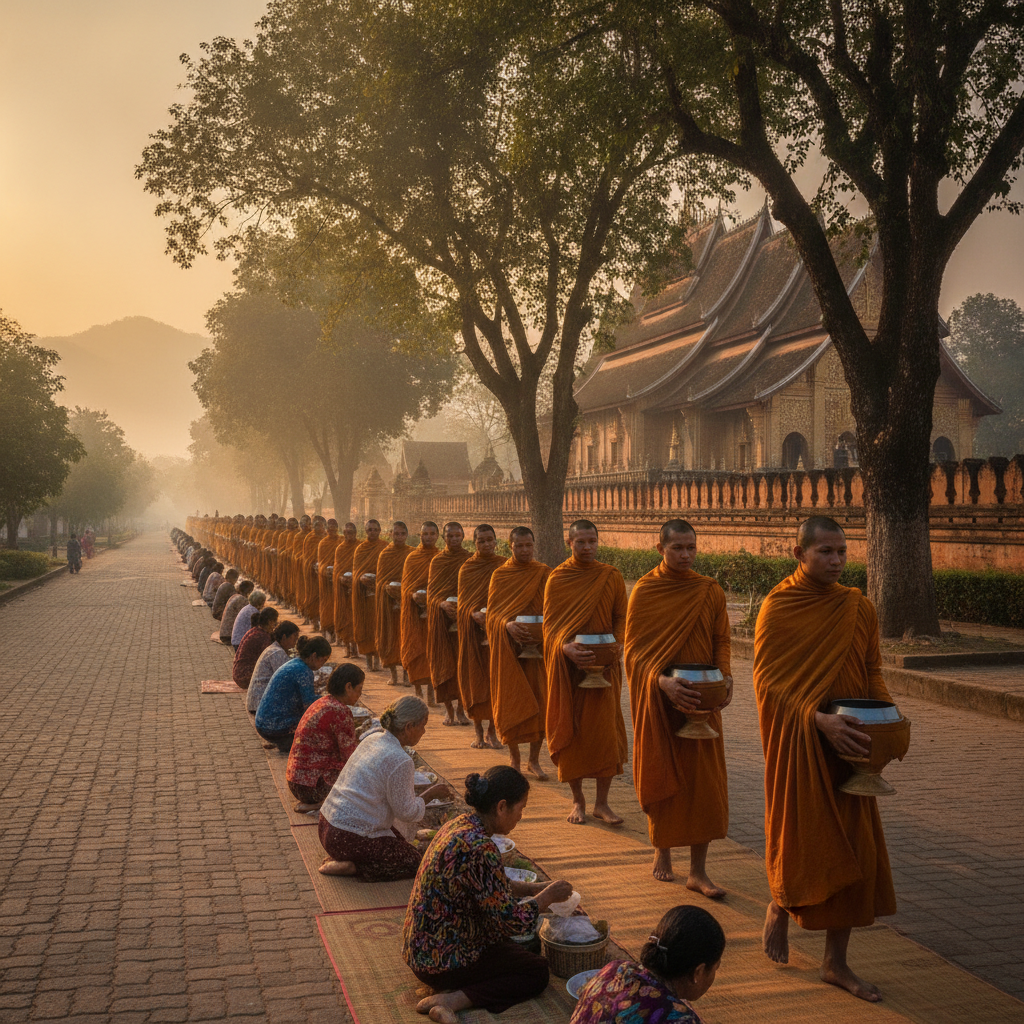
Luang Prabang Essentials: Monks at Dawn, Wat Xieng Thong's Sweeping Roof & Turquoise Kuang Si Falls
Fall for Southeast Asia's most beautifully preserved town—the tak bat almsgiving procession at 05:30 where 200 monks receive sticky rice in silence (and the tourist photography crisis threatening to destroy the ritual), the UNESCO-protected 4 km² peninsula of 33 temple complexes and French colonial villas at the Mekong-Nam Khan confluence, Wat Xieng Thong's 1560 roof sweeping to the ground in an unbroken curve (coronation temple of Lao kings until 1975), the 2-day slow boat from Thailand through Mekong river canyon to arrive at dusk, Kuang Si's calcium carbonate turquoise swimming pools in a 60-metre waterfall park, and the Hmong women's Night Market where 300 stalls of reverse-appliqué textiles are genuine maker-seller craft.
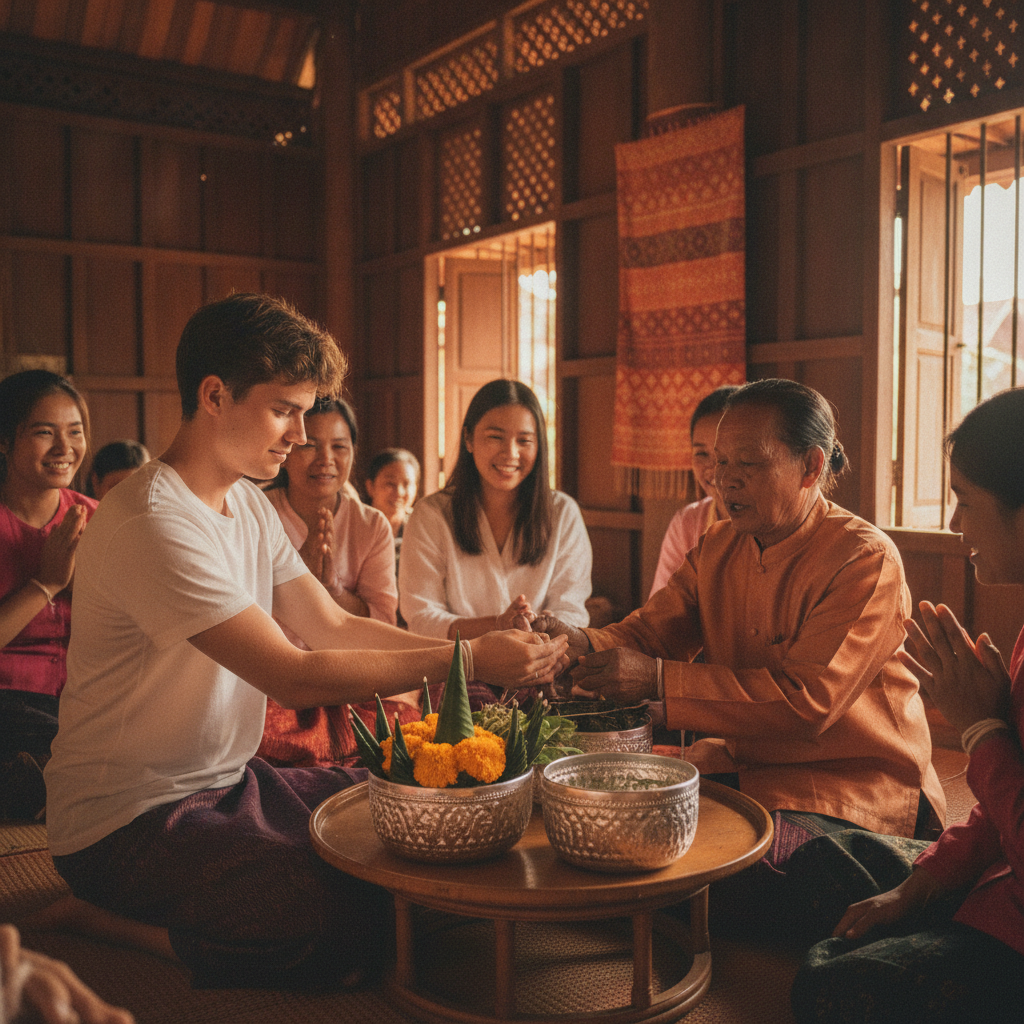
Luang Prabang's Present: China's $6B Railway, the Baci Wrist-Tying Ritual & the UNESCO Heritage Gentrification Trap
The forces shaping Luang Prabang now—the Laos-China Railway's $6B cost (50% of Laos' GDP, mostly Chinese debt) cutting Vientiane to 2 hours and bringing Chinese domestic tourists on rail passes, the Nam Khan kayak day to Tad Sae waterfall (only accessible September–December when water levels are high), the phi spirit world coexisting with Buddhist temples in every property (32 souls per body, white cotton baci threads tied at every departure), the UNESCO listing that made old town property valuable enough to displace the residents who were the living heritage into concrete suburbs, Lao New Year's Pra Bang Buddha procession from the Royal Palace to Wat Mai (the only time the sacred gold image is publicly accessible), and the 2-day slow boat from Thailand that travellers consistently describe as one of the finest 48 hours in Asia.
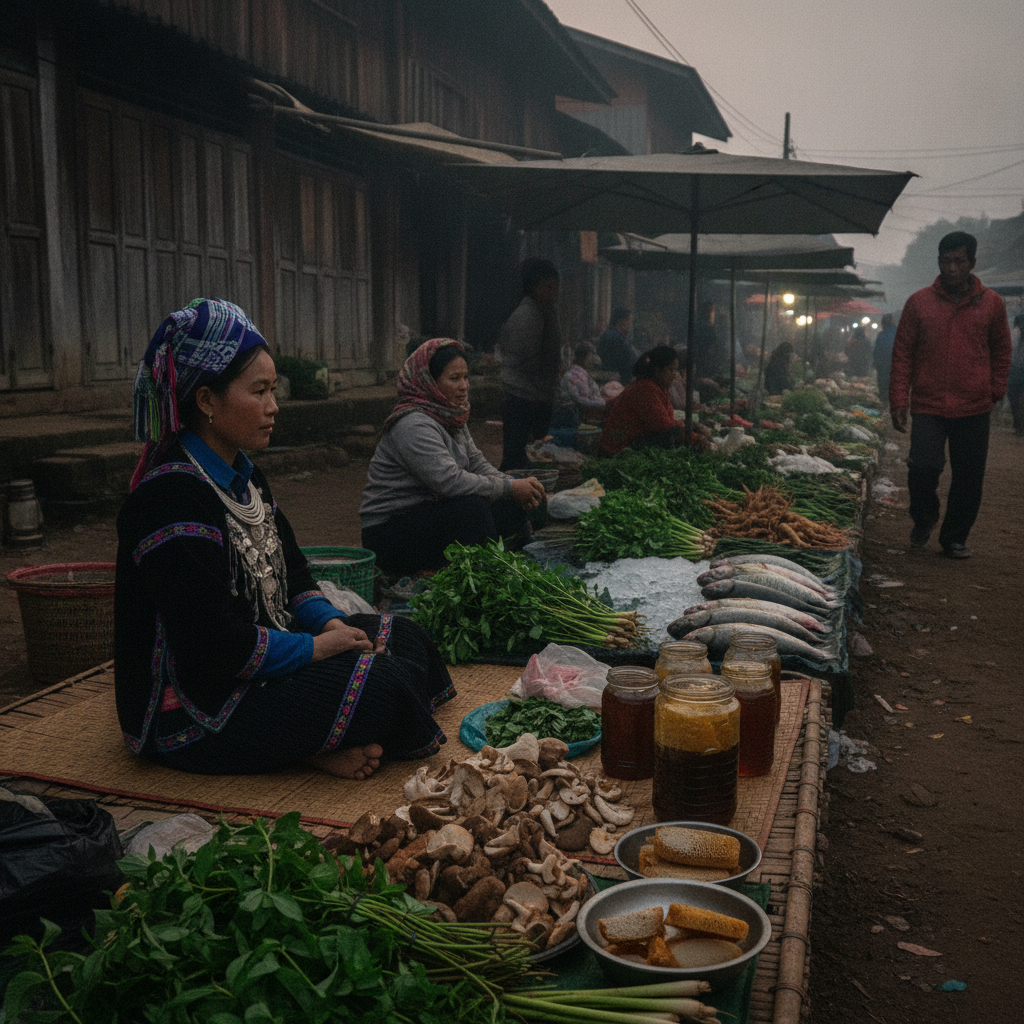
Luang Prabang's Living Layers: Hmong Morning Market, Ock Pop Tok Weavers & the Mekong's 11 Chinese Dams
The daily and the environmental Luang Prabang—Ock Pop Tok's 650 women from 14 ethnic groups weaving natural-dyed silk on the Nam Khan bank, the 05:30 morning market where Hmong women sell forest mushrooms and weaver ant eggs before the first tourist wakes, three seasons with completely different light (November's clear blue sky versus monsoon September's green rice fields versus April's burning haze), the 4-hour slow boat north to Nong Khiaw's karst cliffs and the village bombing cave above (100 steps lead to where families hid from US B-52s), the LPRP's public gratitude toward Chinese railway investment contrasted with private concern about commercial displacement, and the 11 Chinese upper-Mekong dams disrupting the flood cycle that sustained the giant catfish the morning market can no longer sell.
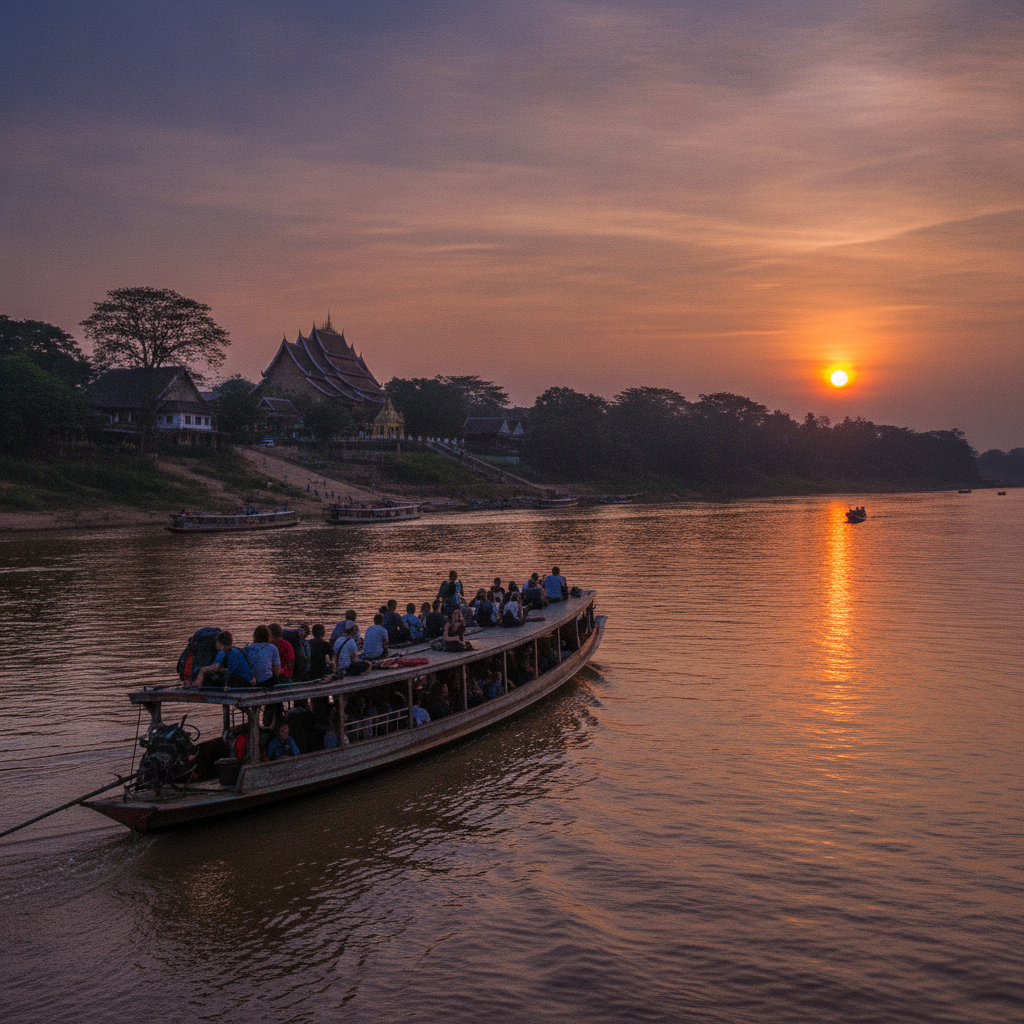
Leaving Luang Prabang: The Slow Boat Arrival That Changes You, Bolaven Plateau Coffee & the City After 21:00
The final Luang Prabang—Bolaven Plateau's Liberica coffee (a different species, woody and unusual, served with condensed milk in the Lao-French-Chinese café culture), the film festival in December screening contemporary Southeast Asian cinema in open-air old town venues in a country with fewer than 20 feature films in its entire history, why the French, Australian and US cultural missions all invest disproportionately in a city of 56,000 (soft power and a uniquely resonant platform), the city's tendency to change visitors in ways its component parts don't fully explain (the pace, the scale, the monks at 05:30, the fireflies after 21:00), the slow boat arrival's copper Mekong after two days on the river as the memory that defines Southeast Asia for those who made it, and what mindful tourism in Luang Prabang actually means in practice.
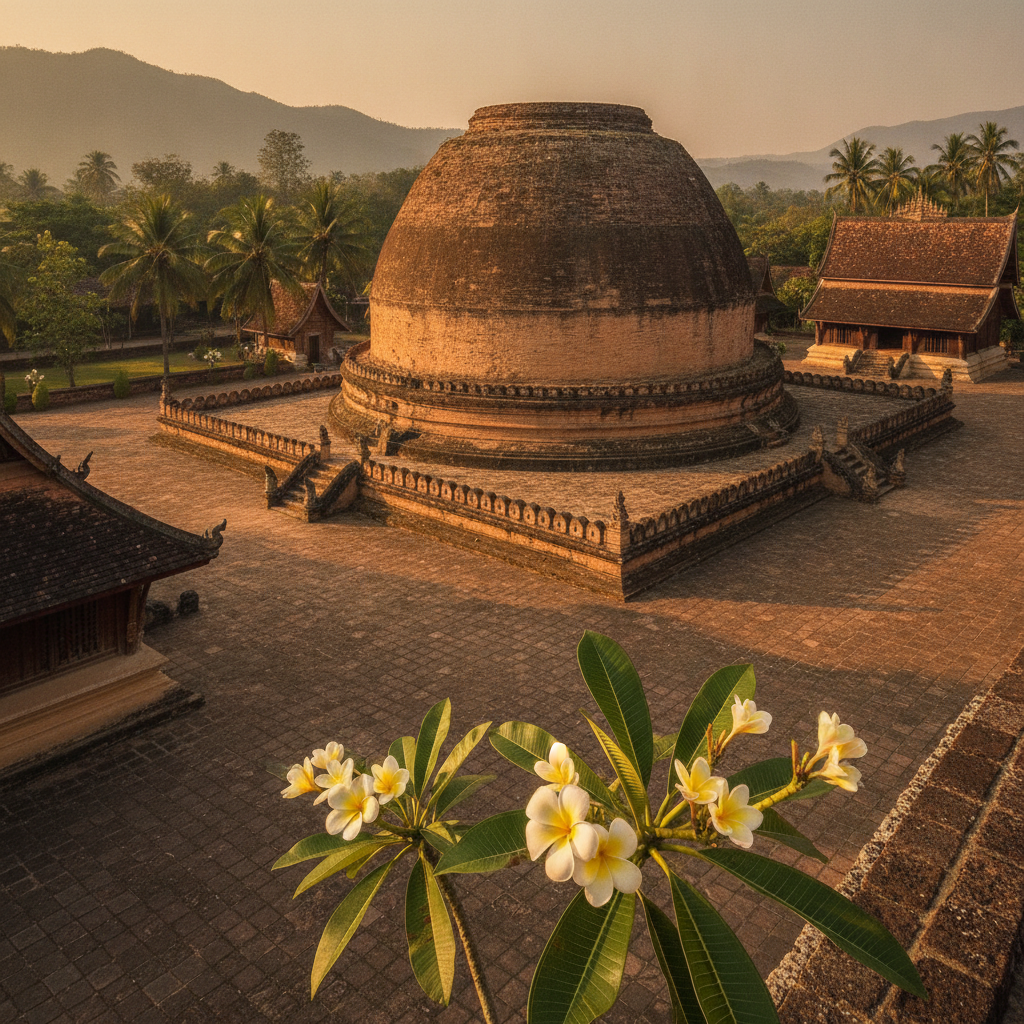
Luang Prabang's Depth: Lao King Who Died in a Re-education Camp, the Most Bombed Country on Earth & Ock Pop Tok Silk
Beyond the famous dawn procession—Wat Visoun's 1513 Watermelon Stupa and Wat Aham's animist spirit houses showing the Buddhist-animist coexistence that defines Lao religious life, the Royal Palace Museum's 53 kg gold Pra Bang Buddha and the absent acknowledgment that the last king died in a re-education camp in 1978, Vang Vieng's bar-on-river chaos that the government shut down in 2012 now reached in 30 minutes on a Chinese-built railway, Joma's Bolaven Plateau arabica and Tamarind's laap tasting menu, the Plain of Jars' Iron Age stone vessels on the most bombed per-capita landscape in human history (2 million tonnes, 30% unexploded), and Ock Pop Tok's silk-weaving social enterprise where the sinh skirt's geometric pattern encodes a family's ethnic identity.