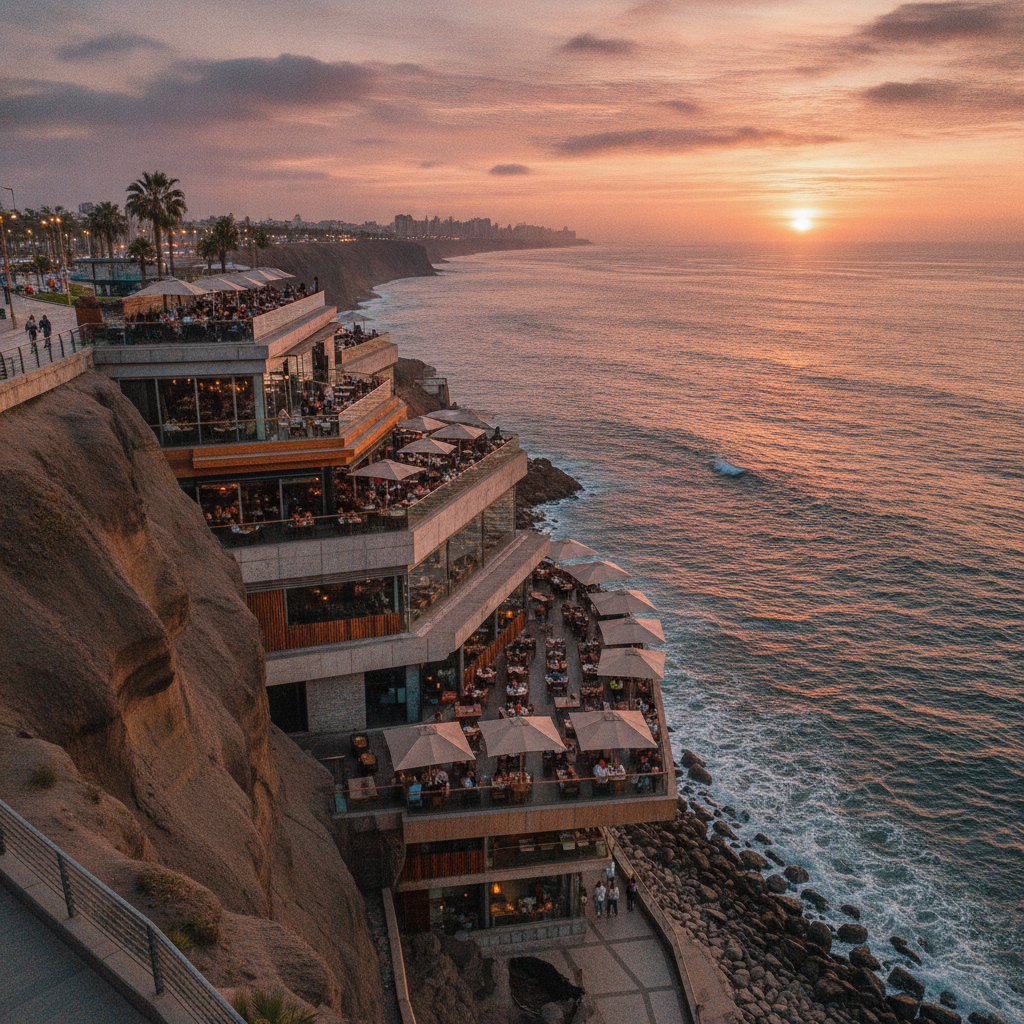


Lima's Coastal Walk: From Barranco to Miraflores
The 10 km coastal walkway connecting Lima's clifftop neighbourhoods — from Chorrillos through Barranco and Miraflores to San Isidro — is one of South America's finest urban walks, with Pacific views, parks, and the city's best neighbourhoods on each side

Barranco, Peñas & Lima's Bohemian Colonial District
Barranco (the district immediately south of Miraflores — the most bohemian, most artistically vibrant, and most beautiful neighbourhood in Lima, with its colonial and republican-era wooden architecture, the Puente de los Suspiros, the art galleries, the craft beer bars, and the peñas (the traditional Peruvian folk music venues)) is where Lima's creative class gathers and where the city's cultural life is most alive.

Lima's Pacific Coast: Surfing and Sea Lions
Lima's 72 km of Pacific coastline is a surfing paradise — the cold Humboldt Current generates powerful consistent waves; the coast also has sea lion colonies, pelicans, and the extraordinary biodiversity of the Humboldt ecosystem

Museo Larco: Peru's Greatest Pre-Columbian Collection
The Museo Larco in the Pueblo Libre district of Lima houses the largest private collection of pre-Columbian art in the world — 45,000 objects spanning 5,000 years of Andean civilisation, including the famous erotic pottery collection and the gold and silver vault

Machu Picchu, Cusco & Peru's Inca Heritage
Peru's Inca heritage (the archaeological legacy of the Inca Empire — the largest pre-Columbian empire in the Americas, which at its peak (1438-1533 CE) stretched 4,300 km (2,670 miles) from the southern border of modern Colombia to the central Chile coast, encompassing the territory of 6 modern nations): Machu Picchu (the Inca citadel on the mountain ridge above the Urubamba River — the most visited archaeological site in South America and one of the most iconic sites in the world) and Cusco (the 'navel of the world' — the capital of the Inca Empire) are accessible as a 1-2 day extension from Lima.

San Isidro, the Olive Grove & Lima's Financial District
San Isidro (the 'El Bosque' district — Lima's primary financial and residential district, home to the 'El Olivar' (the ancient olive grove planted by the Spanish colonists in the 16th century, now a UNESCO-recognized urban park surrounded by the modern towers of the Lima financial district)) is the elegant, tree-lined heart of modern Lima — the district of the embassies, the international hotels, the luxury restaurants, and the headquarters of Peru's most important companies.

Miraflores, the Malecón & Lima's Pacific Clifftop
Lima (the capital of Peru — population approximately 10.9 million in the city and 11.5 million in the Lima metropolitan area, the largest city in Peru and the 5th largest city in South America): Miraflores (the most affluent and most visited district of Lima — the district of the Malecón (the clifftop promenade running along the 70-metre (230-foot) cliffs above the Pacific Ocean), the Larcomar (the clifftop shopping centre cut into the cliffs), and the best restaurants in Lima) is the gateway to Lima's extraordinary culinary scene and Pacific coast setting.

Huaca Pucllana & Lima's Urban Archaeological Wonders
Lima's urban huacas (the pre-Columbian adobe pyramid temples that survive within the urban fabric of modern Lima — the most remarkable urban archaeology in the Americas): the Huaca Pucllana (the 22-metre (72-foot) tall adobe pyramid of the Lima culture in the middle of Miraflores, surrounded by apartment buildings and restaurants) is the most surreal and most memorable archaeological site that any major city in the world contains within its urban fabric.

Lima's Markets: The Ingredients Behind the Cuisine
Lima's produce markets — particularly the Surquillo and Magdalena markets — reveal the extraordinary diversity of Peruvian ingredients that underpin the city's gastronomic reputation; the peppers, potatoes, seafood, and tropical fruits on display are unlike anything found elsewhere in the world

Ceviche, Central & Lima's World-Class Gastronomy
Lima's gastronomy (the food scene of the city that has been ranked the 'Gastronomic Capital of the Americas' — the city that produces the world's greatest ceviche, the restaurant Central (consistently ranked #1 in Latin America's 50 Best Restaurants and in the top 5 of the World's 50 Best Restaurants), and the restaurant Astrid y Gastón (the restaurant of chef Gastón Acurio — the chef who put Peruvian cuisine on the world gastronomic map)): Lima is the food city that changed how the world understands Latin American cuisine.

Miraflores: Lima's Pacific-Side Neighbourhood
Miraflores — Lima's most visited district — sits on the clifftops above the Pacific; the Parque del Amor, the Larcomar shopping centre built into the clifface, the Huaca Pucllana pyramid in the middle of the suburb, and the world-class restaurant scene make it Lima's most complete neighbourhood

Barranco: Lima's Bohemian Seaside Quarter
Barranco — Lima's most romantic neighbourhood, on the clifftops south of Miraflores — has been the artists' quarter of the city since the 19th century; the wooden colonial architecture, the Puente de los Suspiros (Bridge of Sighs), the street art, and the contemporary arts scene make it Lima's most culturally alive neighbourhood

Museo Larco & Lima's Pre-Columbian Art Collections
The Museo Larco (the private museum of pre-Columbian art in the Pueblo Libre district of Lima — the finest pre-Columbian art museum in the world, with a collection of 45,000 objects spanning 4,000 years of Peruvian civilizations) is the essential museum for understanding the extraordinary artistic and cultural achievements of the ancient Andean civilizations that preceded the Incas — the Moche, the Chimú, the Wari, the Tiwanaku, and dozens of other cultures.

Lima Historic Centre: A UNESCO Colonial Capital
Lima — founded by Francisco Pizarro in 1535 as Ciudad de los Reyes — was the capital of the Spanish Viceroyalty of Peru for nearly 300 years; the UNESCO World Heritage historic centre preserves the most complete colonial architecture in South America

Lima Centro Histórico, the Cathedral & Colonial Heritage
Lima's Centro Histórico (the UNESCO World Heritage historic centre — one of the finest colonial urban ensembles in the Americas, the former capital of the Viceroyalty of Peru) with the Plaza Mayor, the Cathedral of Lima (which contains the tomb of Francisco Pizarro, founder of Lima), the Palacio de Gobierno, and the baroque churches and colonial palaces of the 16th-18th centuries is the most historically significant colonial district in South America.

Lima Surfing, Chorrillos & the Pacific Beach Culture
Lima's surfing culture (Peru is one of the top surfing destinations in the world — the Peruvian Pacific coast produces some of the longest and most powerful waves in the world, including the legendary 'El Pico' left-hand point break at Punta Hermosa (50 km south of Lima) and the world-record wave at Puerto Chicama (600 km north of Lima — the longest left-hand wave in the world at 4 km)): Lima's urban beach culture and the historic Chorrillos fishing district are the Pacific soul of the city.

Lima: Gastronomic Capital of the Americas
Lima has earned recognition as Latin America's culinary capital — Central, Maido, Astrid y Gastón, and Isolina consistently appear in the world's best restaurant lists; the city's cuisine blends Andean, Amazonian, Japanese (nikkei), Chinese (chifa), and Spanish influences into a gastronomic tradition of extraordinary complexity