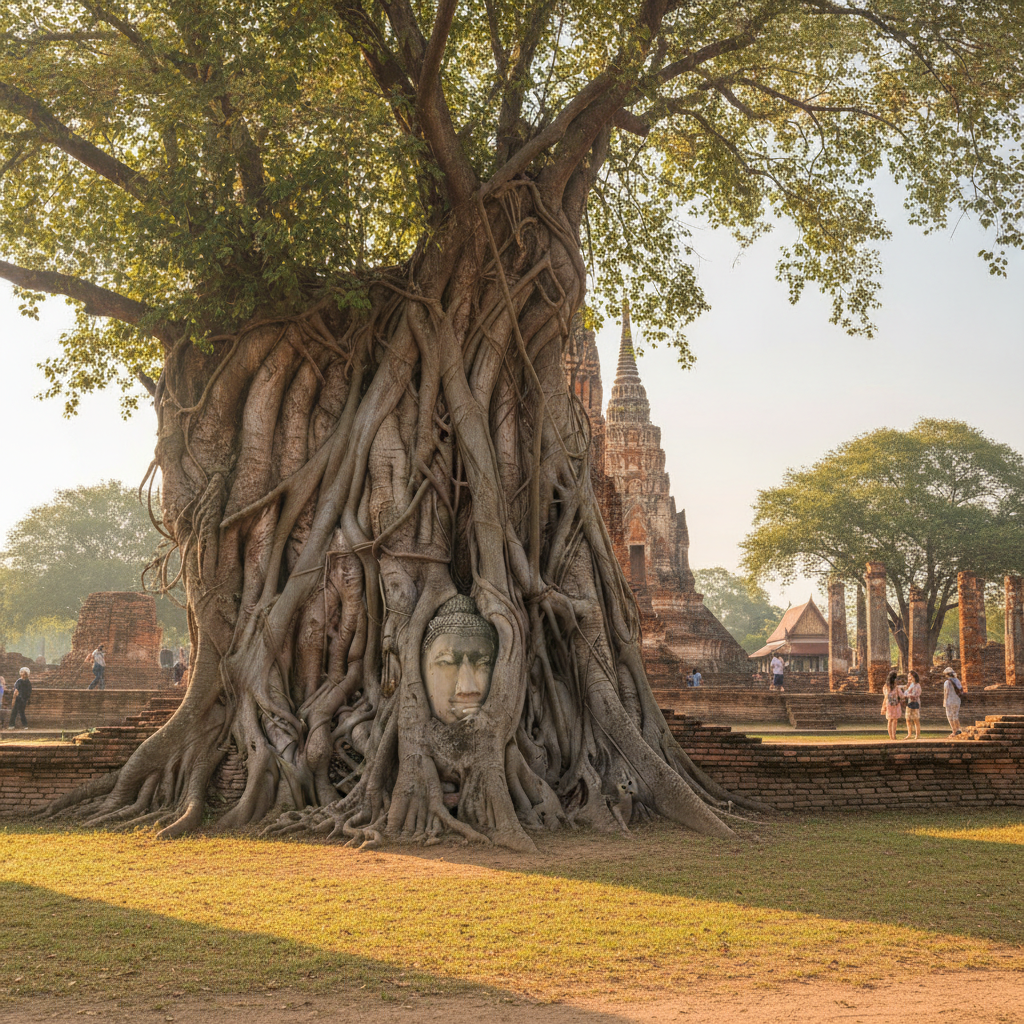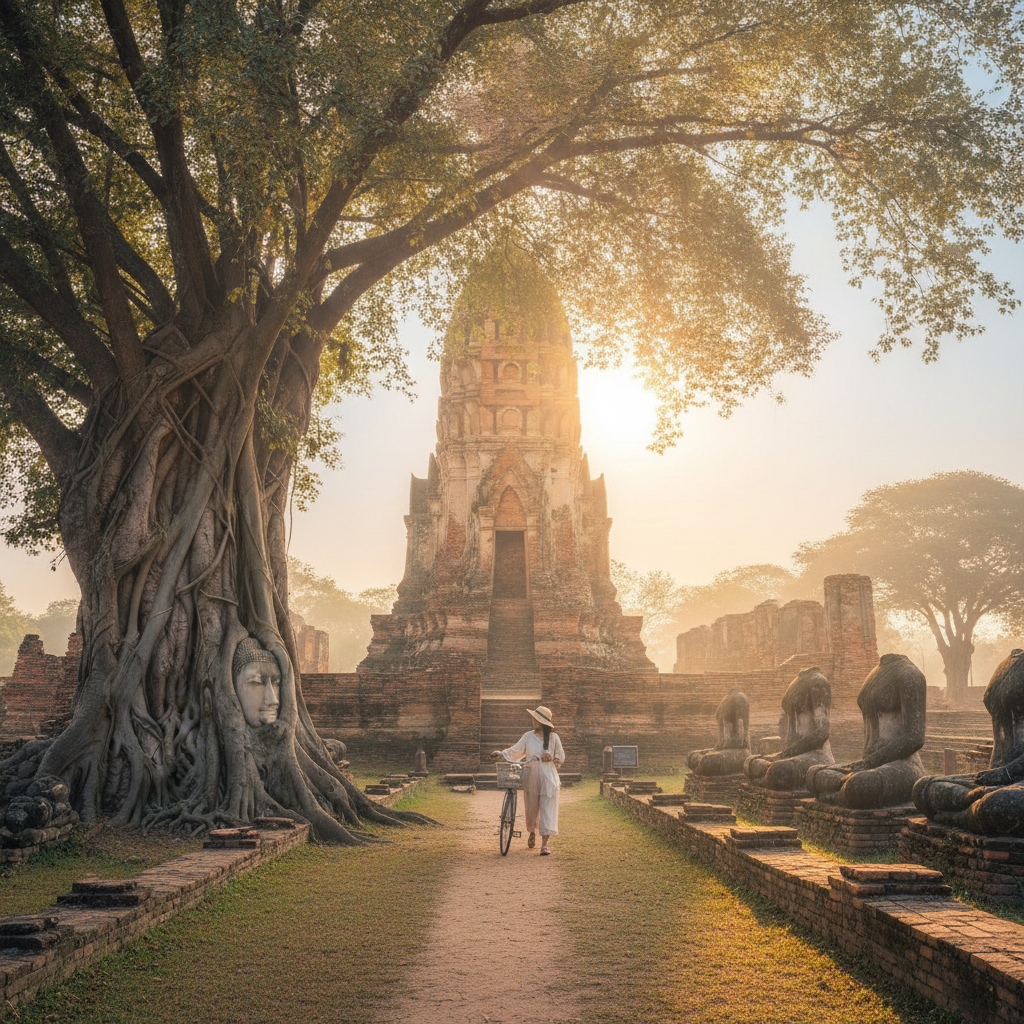
Ayutthaya Historical Park Cycling Walk
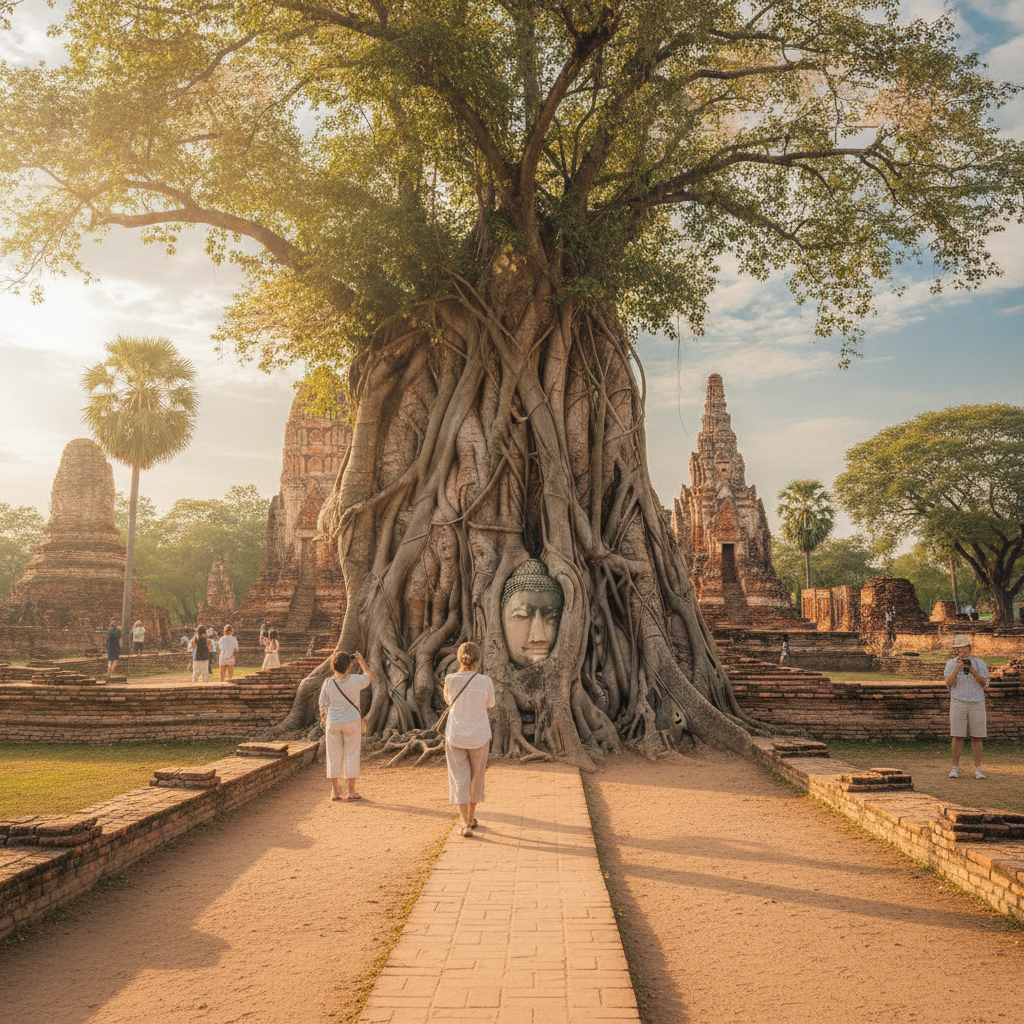
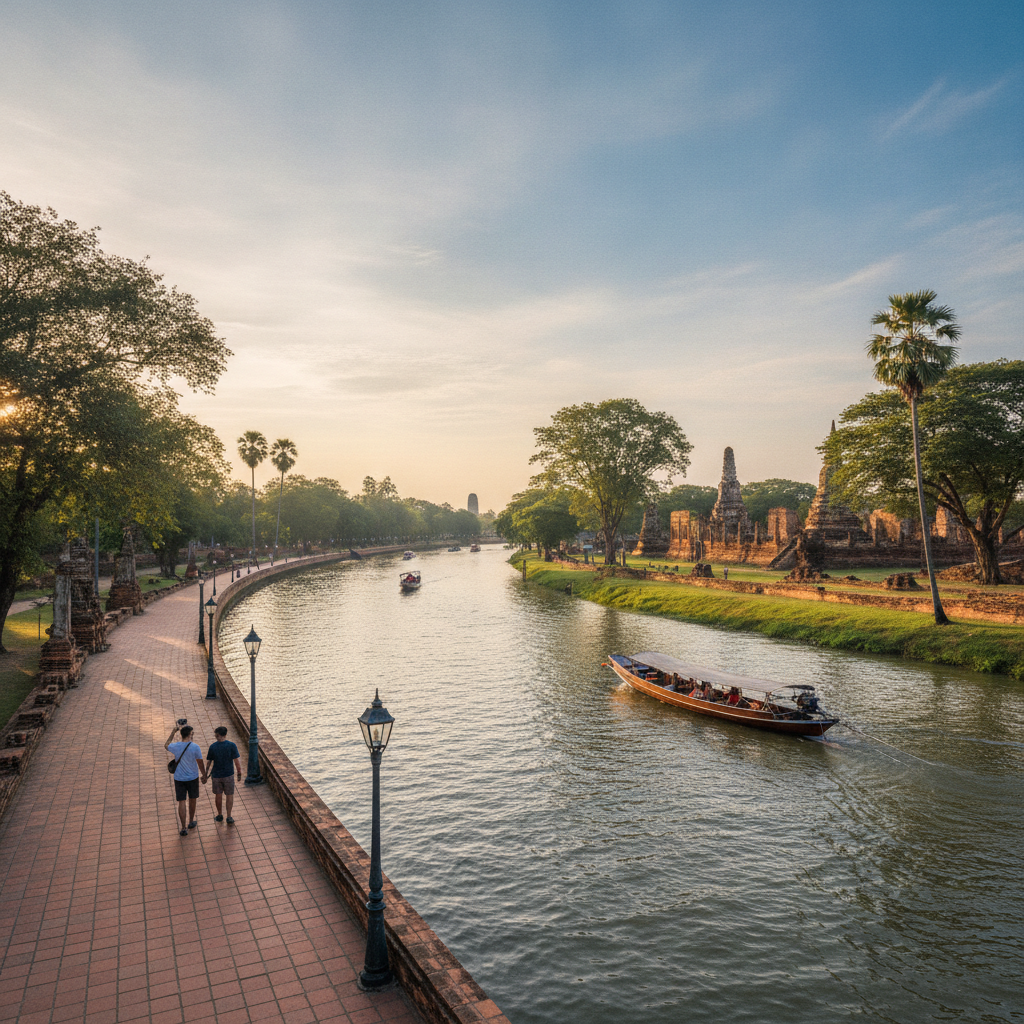
Cycle the island ruins — Ayutthaya's island site is compact enough to explore by bicycle in a full day, with the temple ruins scattered across the 4km-wide island accessible by the road network and the cycling paths through the rice field and orchard landscape between the major temple groups.
- 1
Bicycle Rental Chaophrakun Road
The bicycle rental operations concentrated near the main Chao Phraya river pier and in the Ayutthaya city centre are the starting point for the most popular independent exploration of the historical park — the flat terrain of the island (the Ayutthaya plain is among the flattest terrain in Thailand, the result of thousands of years of Chao Phraya flood deposition) makes cycling genuinely effortless even in the heat, and the distribution of temple ruins across the island (requiring 8-12km of cycling to visit the major sites in the different temple zones) makes the bicycle the most flexible and time-efficient transport option. The cycling map available from the rental operations marks the temple sites, the food stops, and the cycling routes that avoid the main roads.
- 2
Wat Yai Chai Mongkhon
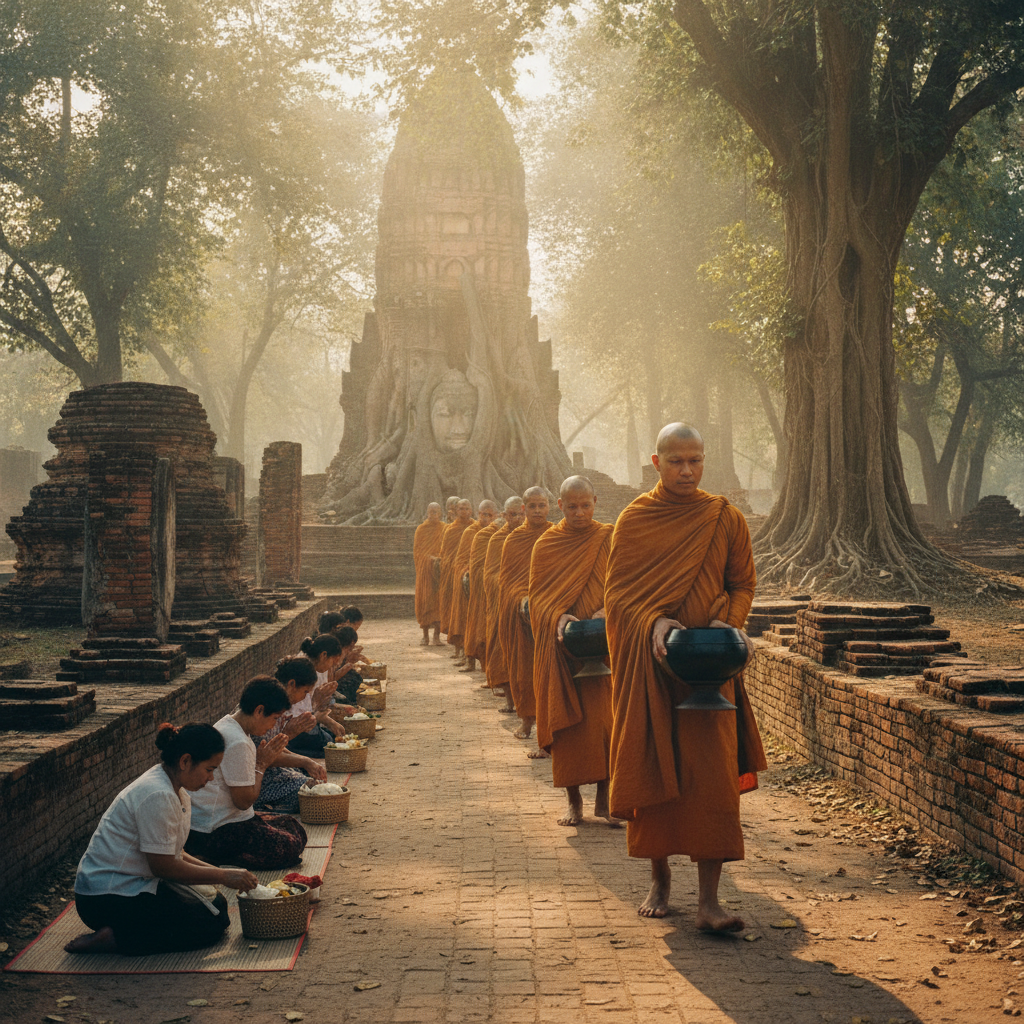
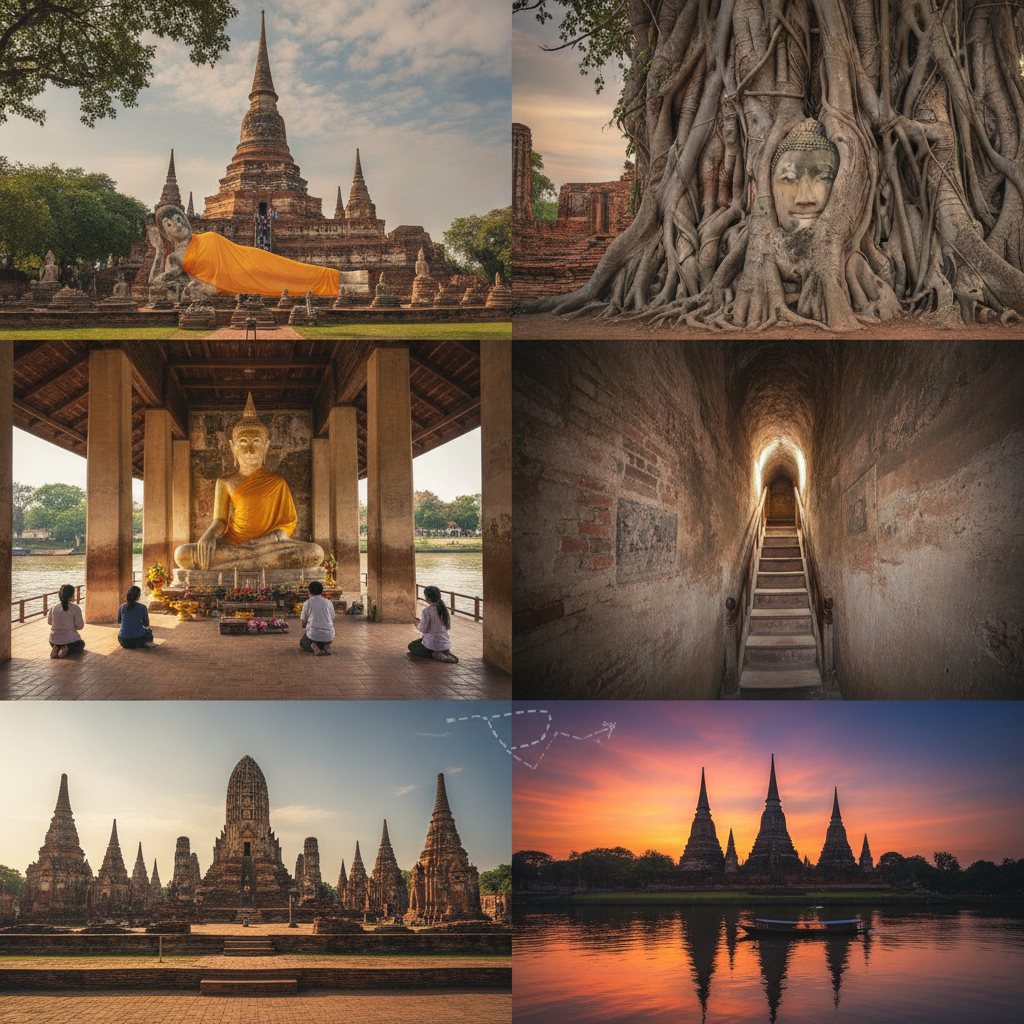
Wat Yai Chai Mongkhon southeast of the city island (accessible by the bridge crossing the Pa Sak River) is one of the most evocative temple complexes in the Ayutthaya area — the enormous chedi (built by King Naresuan in 1592 to commemorate his victory over the Burmese crown prince in the famous elephant duel), surrounded by the rows of seated Buddha images in orange robes, creates the most immersive devotional atmosphere accessible at any Ayutthaya temple site. The temple is still actively used for Buddhist worship (unlike the fully archaeological sites within the historical park), and the merit-making activities of the Thai devotees visiting the temple (the flower offerings, the gold leaf applied to the Buddha images, and the incense burning) provide the most direct encounter with the living religious tradition within the historical park context.
- 3
Wat Phu Khao Thong Golden Mount
Wat Phu Khao Thong (Golden Mount Temple) north of the city island (accessible by the cycling path through the agricultural landscape beyond the northern moat) is the most prominently visible single monument in the Ayutthaya area — the large white chedi (60 metres tall, visible from most of the flat surrounding plain) built on a Burmese-style base was originally constructed by the Burmese after their first sack of Ayutthaya in 1569 and then renovated by the Thai kings after the city's recovery. The hilltop viewpoint accessible by the exterior staircase provides the most comprehensive panoramic view of the Ayutthaya plain available from any point in the area, with the flat agricultural landscape extending to the horizon in all directions and the river systems defining the city island's position in the landscape.
- 4
Elephant Kraal Historical
The historical elephant kraal (Khok Kham) north of the city centre was the world's largest elephant enclosure during the Ayutthaya period — the massive log stockade (partially reconstructed) that occupied 2,400 square metres was where the wild elephant roundups (the khon chang ceremonies) took place, producing the war elephants that were the Ayutthaya kingdom's most important military asset. The kraal could hold up to 5,000 wild elephants at once, and the elaborate ceremony of the royal elephant roundup (involving hundreds of mahouts, trained decoy elephants, and the participation of the king himself in the final selection of the best animals) was one of the most spectacular events of the Ayutthaya court calendar. The partially reconstructed kraal and the informational displays at the site provide the most direct encounter with the elephant military history of the Ayutthaya kingdom.
- 5
Organic Farm Rice Fields
The rice fields and fruit orchards occupying the agricultural land between the temple ruins on the Ayutthaya island provide the most distinctive feature of the historical park's landscape — the ruin fields interspersed with the still-active paddy cultivation create a landscape where the archaeological past and the agricultural present coexist at the same level, with the brick fragments of temple foundations occasionally visible in the rice field boundaries and the mango and pomelo orchards growing between the temple complexes. The cycling routes through the agricultural landscape (avoiding the main tourist roads and passing through the working farmland) provide the most atmospheric encounter with the island's dual identity as both a living agricultural community and an archaeological site.
- 6
Ayutthaya Night Market
The Ayutthaya night market (Naresuan Road night market, operating daily from 5pm) provides the most accessible evening food experience for historical park visitors — the market's boat noodle stalls (the kuay tiew ruea is the most specifically Ayutthaya-associated dish, the small portions of noodle in dark broth that were historically sold from boats on the canals that crisscrossed the city), the fresh fruit stands, and the Thai dessert vendors create the most authentic provincial food market atmosphere accessible in the central Thailand historical tourism circuit. The night market is the best single location to observe the Thai domestic tourist's evening activity at Ayutthaya alongside the international historical park visitors.
Walk this route with audio
Stories play automatically as you reach each stop — no tapping needed.