Ayutthaya River & Boat Tour Walk
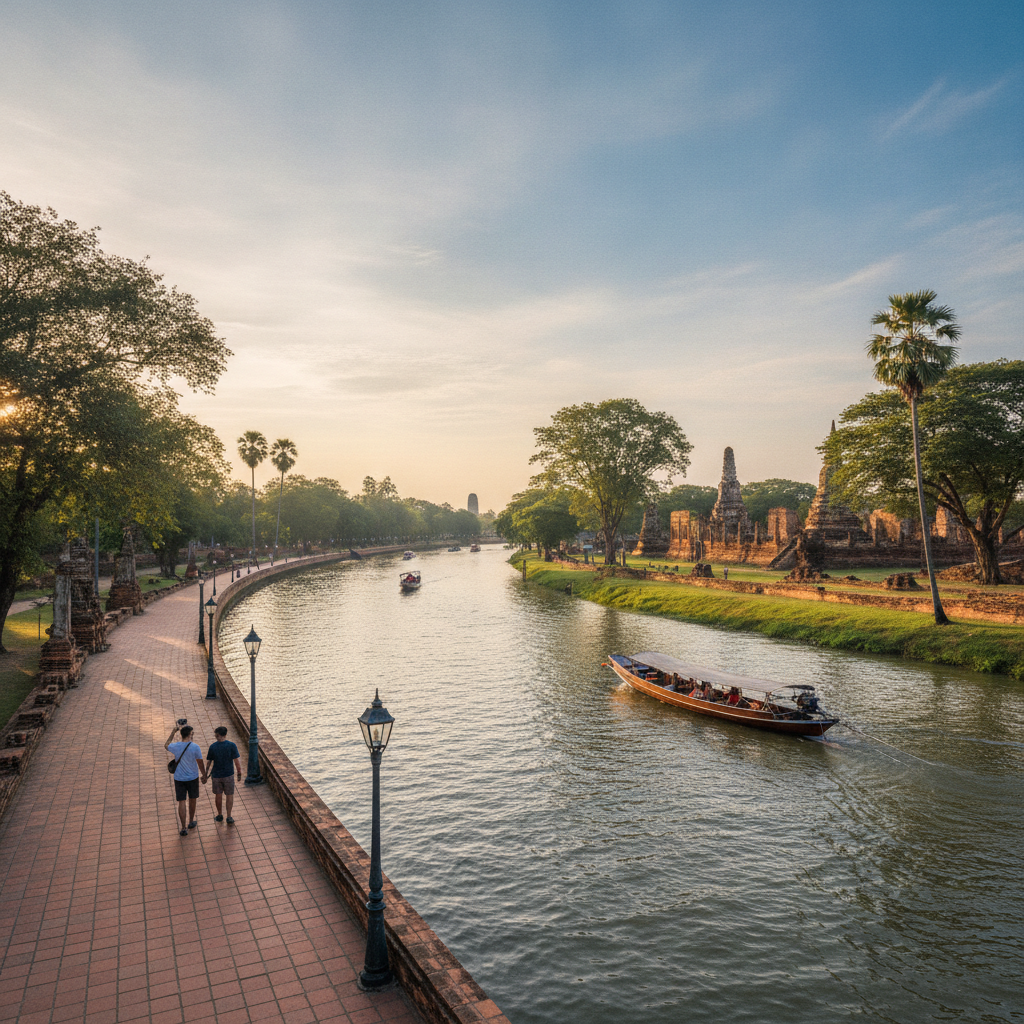
Explore Ayutthaya by water — the island city is surrounded by three rivers (the Chao Phraya, the Pa Sak, and the Lopburi), and the boat tour perspective reveals the temple ruins from the waterways that defined the city's geography, trade connections, and military defences.
- 1
Ayutthaya Boat Pier
The main boat pier in Ayutthaya on the Chao Phraya River is the departure point for the river boat tours that provide the most distinctive approach to the temple ruins — the long-tail boat tours circling the island (crossing the Pa Sak River at the city's eastern front, following the Chao Phraya along the western shore past Wat Chaiwatthanaram, and returning through the Lopburi River at the northern channel) provide the only perspective on the city that approximates the historical approach of the traders, diplomats, and pilgrims who arrived at Ayutthaya by the river route from the Gulf of Thailand. The river's width at Ayutthaya (the Chao Phraya here is 200+ metres across) and the view of the temple ruins above the river bank create a sense of the city's former scale that is difficult to achieve from the land-based tour.
- 2
Wat Phutthaisawan Riverside
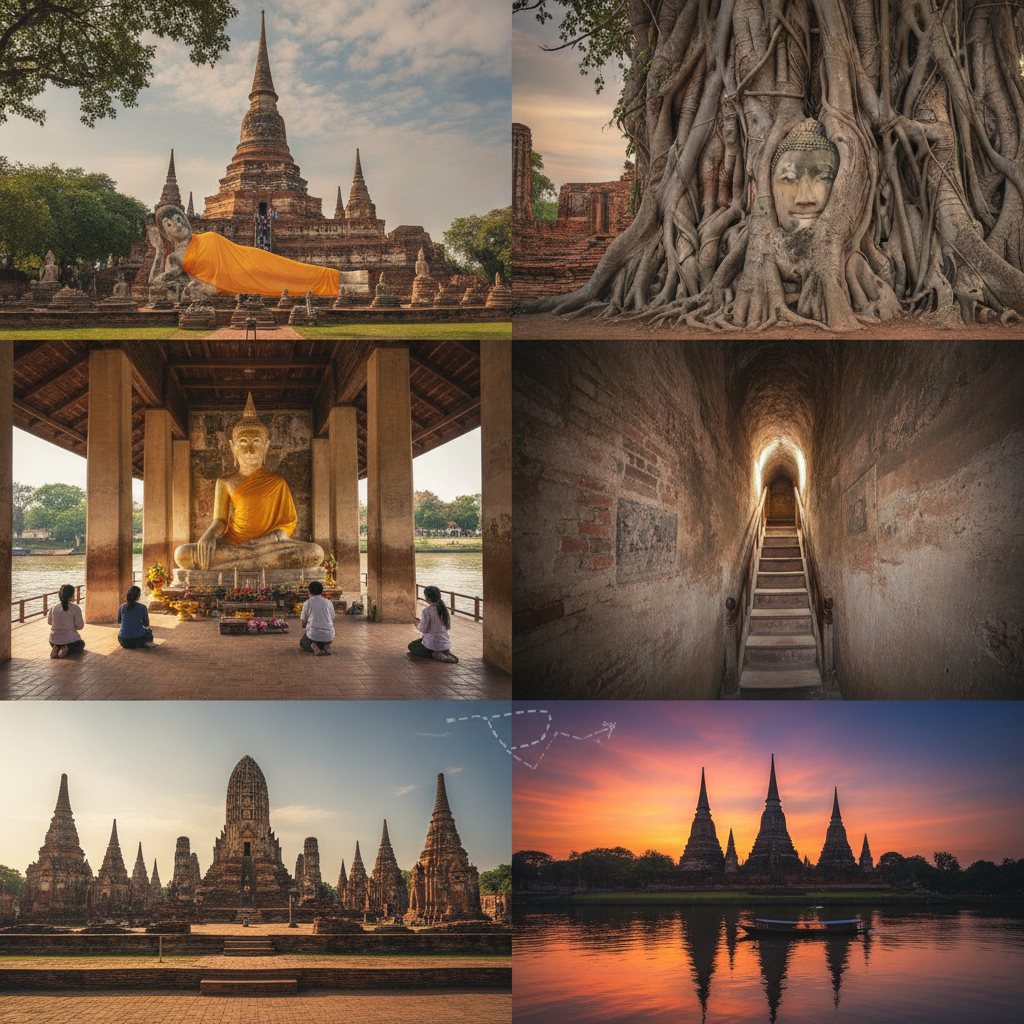
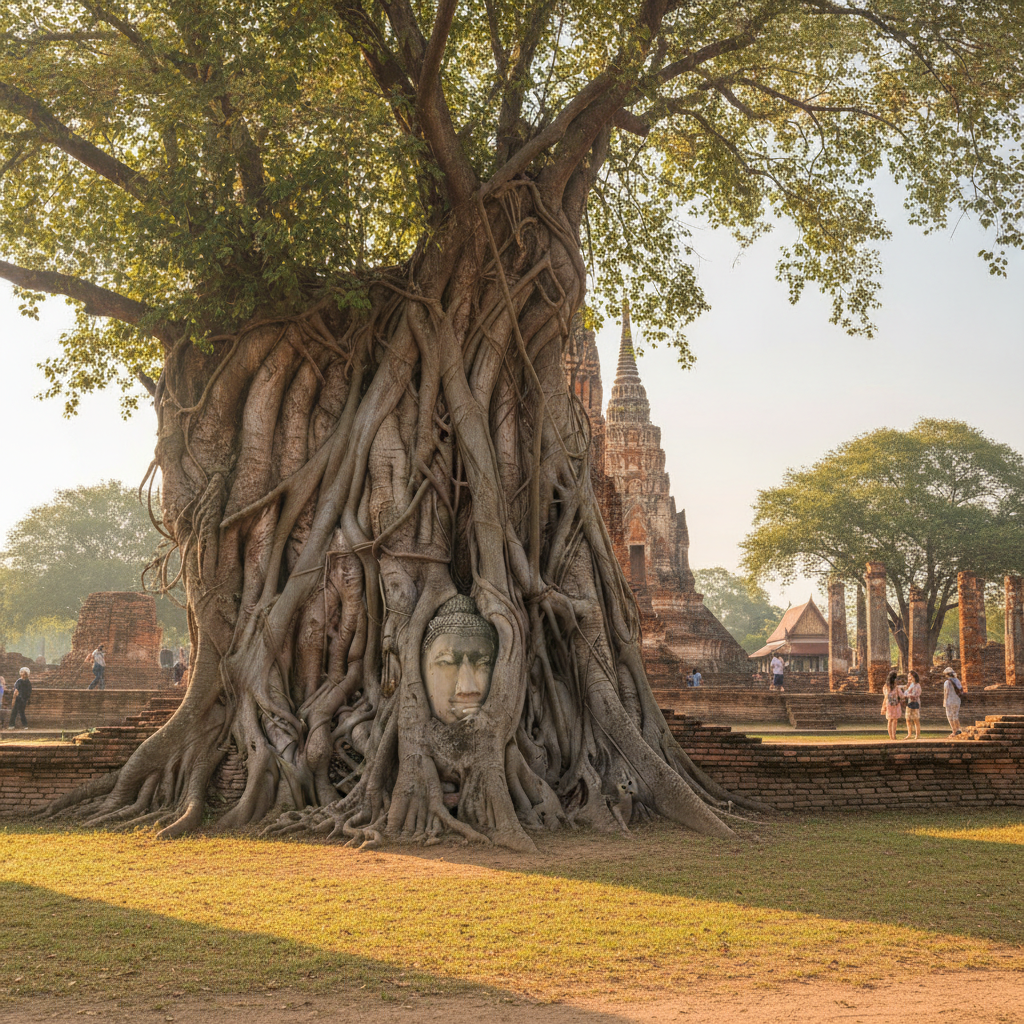
Wat Phutthaisawan on the southern shore of the island (visible from the river boat tour) is one of the most atmospherically situated temple ruins in the Ayutthaya area — the prang and chedis standing above the river bank with the Chao Phraya visible in the foreground create the characteristic image of the ruined city seen from the water that has been the defining landscape of Ayutthaya since the city's destruction in 1767. The temple's riverside position (directly accessible by boat, as the original arrival and departure point for royal ceremonies involving the river) and its relative inaccessibility by land (requiring a river crossing or a long road journey) means it receives far fewer land-based visitors than the central historical park temples.
- 3
Bang Pa-In Palace
Bang Pa-In Summer Palace (Phra Nakhon Khiri) 20km south of Ayutthaya on the Chao Phraya is accessible by the Ayutthaya river tour or by the historical train service from Bangkok — the eclectic palace buildings (combining the Thai classical, Chinese, and European neoclassical architectural styles that characterised the Chakri dynasty's construction in the 19th century) provide a complete counterpoint to the ruined grandeur of the Ayutthaya historical park, showing the living tradition of Thai royal architecture as it continued after the move of the capital to Bangkok. The Chinese-style palace pavilion (Aisawan Thiphya-art) standing in the middle of the ornamental lake, and the European neoclassical audience hall visible on the western bank, represent the Siamese monarchy's engagement with global architectural traditions in the reign of Rama IV and Rama V.
- 4
River Sunset Cruise
The sunset river cruise on the Chao Phraya from Ayutthaya provides the most atmospheric visual encounter with the ruined city available at the end of the day — the low angle of the evening sun illuminates the prangs and chedis of the river bank temples with the warm golden light that defines the most celebrated Ayutthaya photography, and the reflections of the lit temple structures in the still river water at dusk create the most complete visual synthesis of the ruined city's grandeur and its natural setting. The cruise boats operating the sunset routes typically make a circuit of the island in the hour before sunset, returning to the pier as the lights on the major temple ruins are illuminated for the evening, creating the transition from natural to artificial illumination that is the most cinematically dramatic moment of the Ayutthaya daily cycle.
- 5
Chao Phraya Riverside Market
The riverside market at the Ayutthaya boat pier area serves both the tourist boat traffic and the local community that uses the river crossing service — the fresh fruit vendors, the boat noodle stalls (serving the kuay tiew ruea, the small-portion noodle in dark broth that is associated with the floating boat vendors of the central Thai river system), and the souvenir operations catering to the day-trip visitors from Bangkok create a market atmosphere that is a compressed version of the much larger historical river market that made Ayutthaya the most commercially active port in Southeast Asia during its 17th-century peak. The Portuguese, Dutch, English, French, Japanese, Chinese, and Malay merchant quarters that surrounded the historical city were all river-front establishments, and the market at the modern pier is the last remnant of the trading culture that once defined the city's identity.
- 6
Portuguese Village Ruins
The Portuguese settlement (Ban Phaen Phom) in the southwestern corner of the island outside the city walls is the most accessible reminder of Ayutthaya's extraordinary cosmopolitan character at its 17th-century peak — the Portuguese, who established the first European diplomatic mission to the Ayutthaya court in 1511, were given permission to build a trading settlement, a church, and the associated residential buildings that constitute one of the earliest European architectural presences in mainland Southeast Asia. The ruins of the Portuguese church (Sao Paulo Church), excavated and partially preserved at the site, are the only physical remnant of the European merchant quarter that contributed to Ayutthaya's character as the most internationally connected city in 17th-century Southeast Asia.
Walk this route with audio
Stories play automatically as you reach each stop — no tapping needed.