Ayutthaya Historical Park Temple Ruins Walk
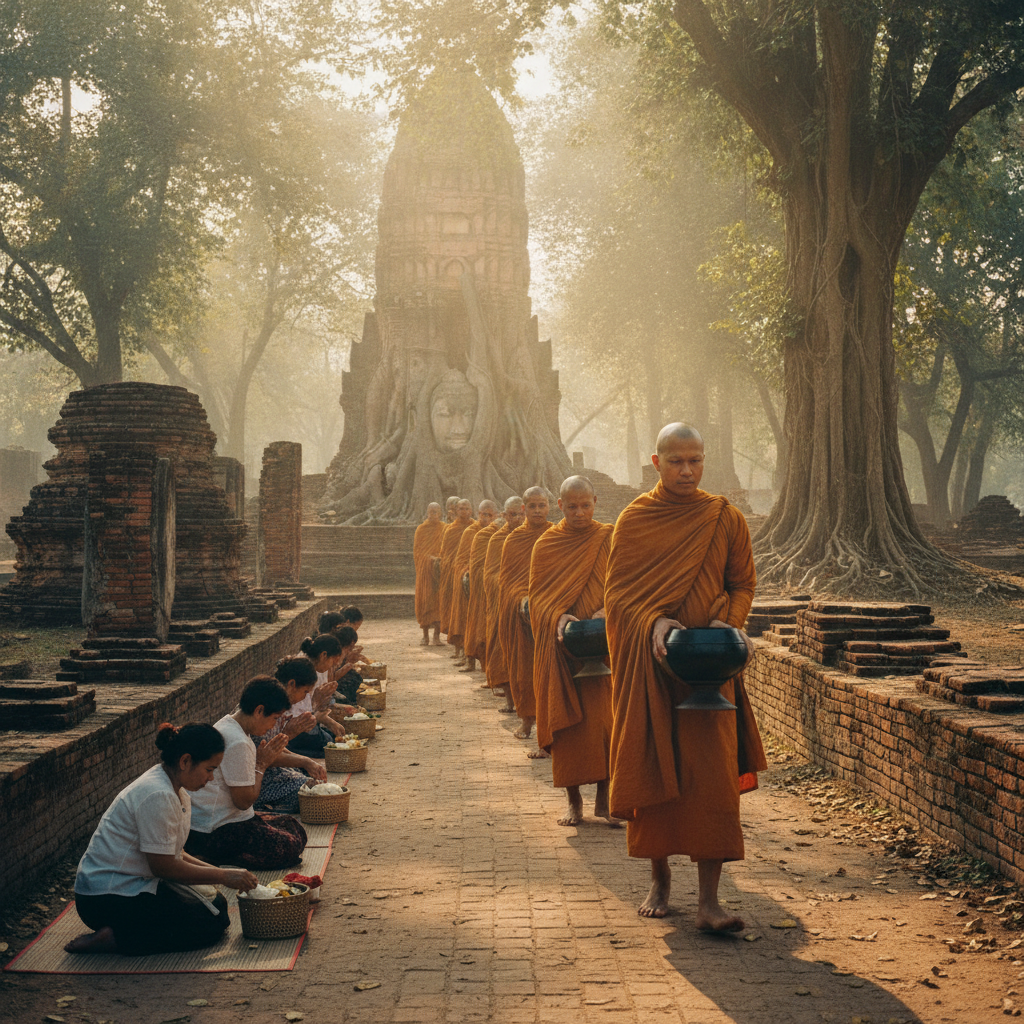
Walk the UNESCO World Heritage ruins of Ayutthaya — the former capital of the Kingdom of Siam (1351-1767 CE) was one of the largest cities in the world at its peak, with a population of one million and hundreds of temples whose ruins remain scattered across the island site surrounded by three rivers.
- 1
Wat Phra Sri Sanphet Royal Temple
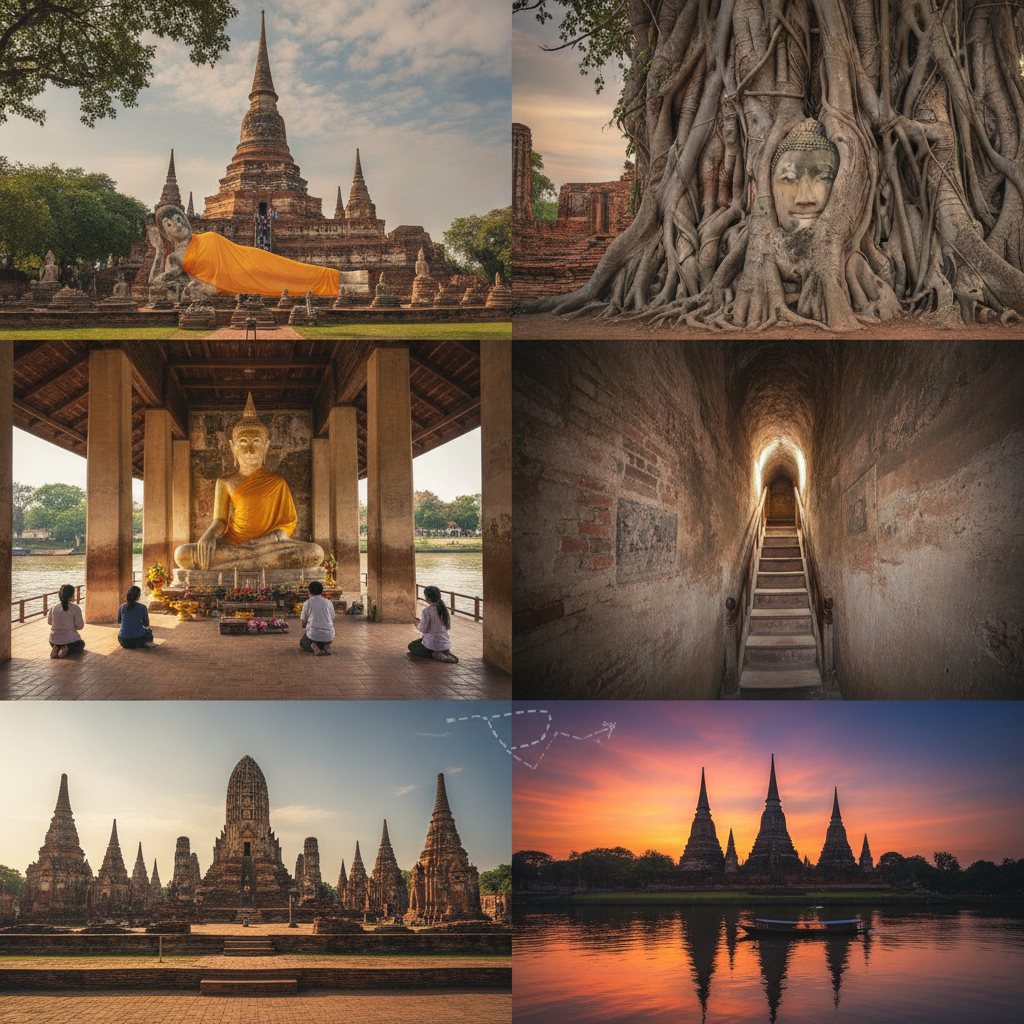
Wat Phra Sri Sanphet was the most important temple within the Grand Palace compound of the Ayutthaya kingdom — the three large chedis (stupas) in a row that are the most iconic image of the Ayutthaya historical park represent the tombs of three kings of the 15th century, built on the site where the Royal Palace stood. The chedis (each approximately 35 metres tall, in the bell-shaped form derived from the Sri Lankan tradition via Sukhothai) contain the ashes of kings Borom Trailokanat, Borom Rachathirat II, and Ramathibodi II, and the royal compound that surrounded them was the most sacred and most exclusive space in the Ayutthaya kingdom — entry was restricted to members of the royal family and the highest-ranking courtiers. The temple was plundered and burned by the Burmese army in 1767 when they sacked Ayutthaya at the end of the 15th Siamese-Burmese war.
- 2
Wat Mahathat Buddha Head Tree
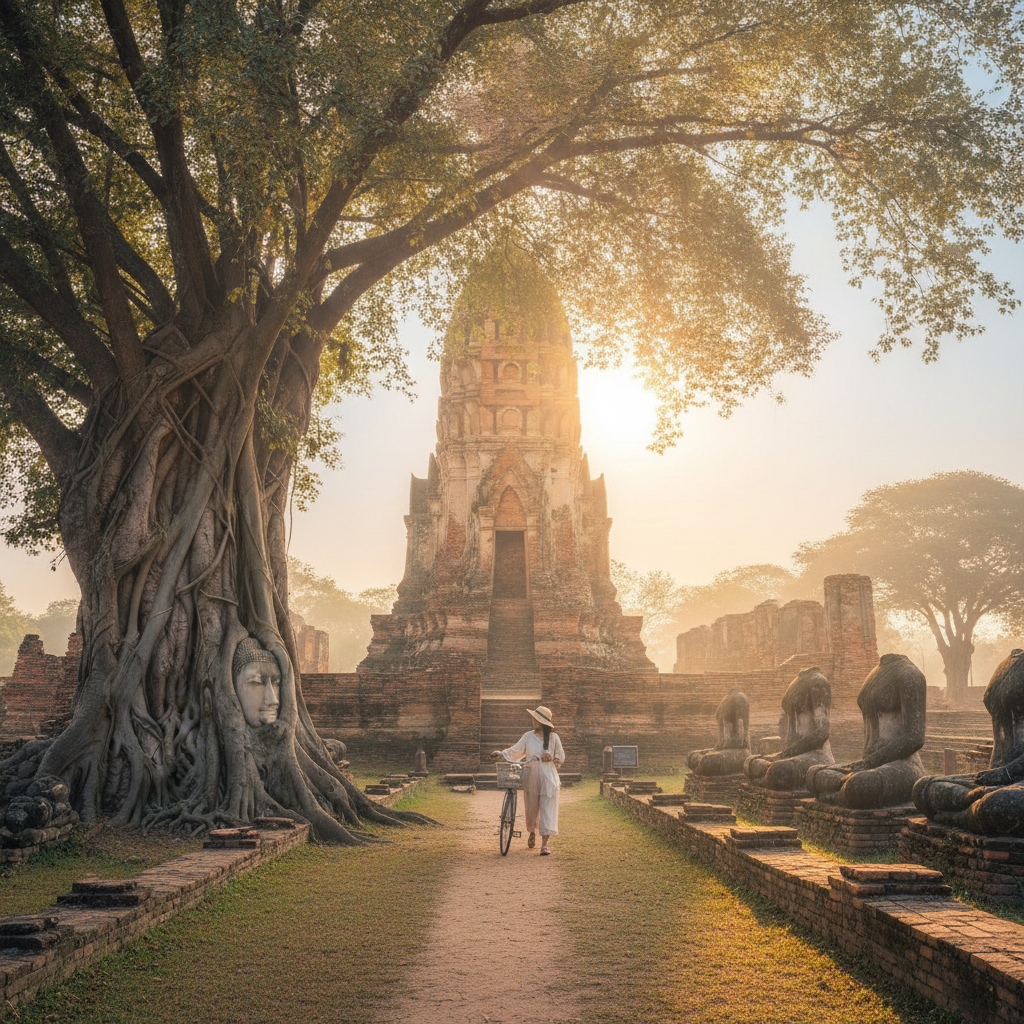
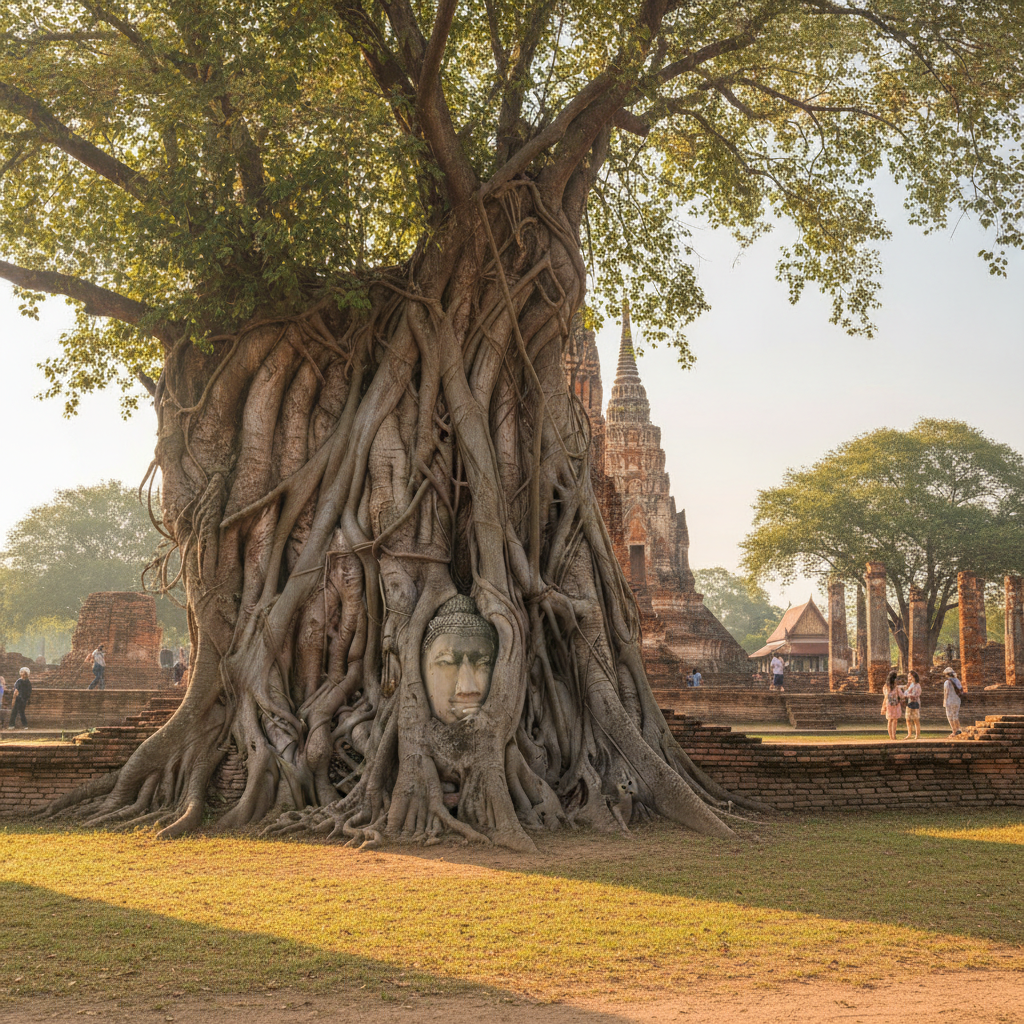
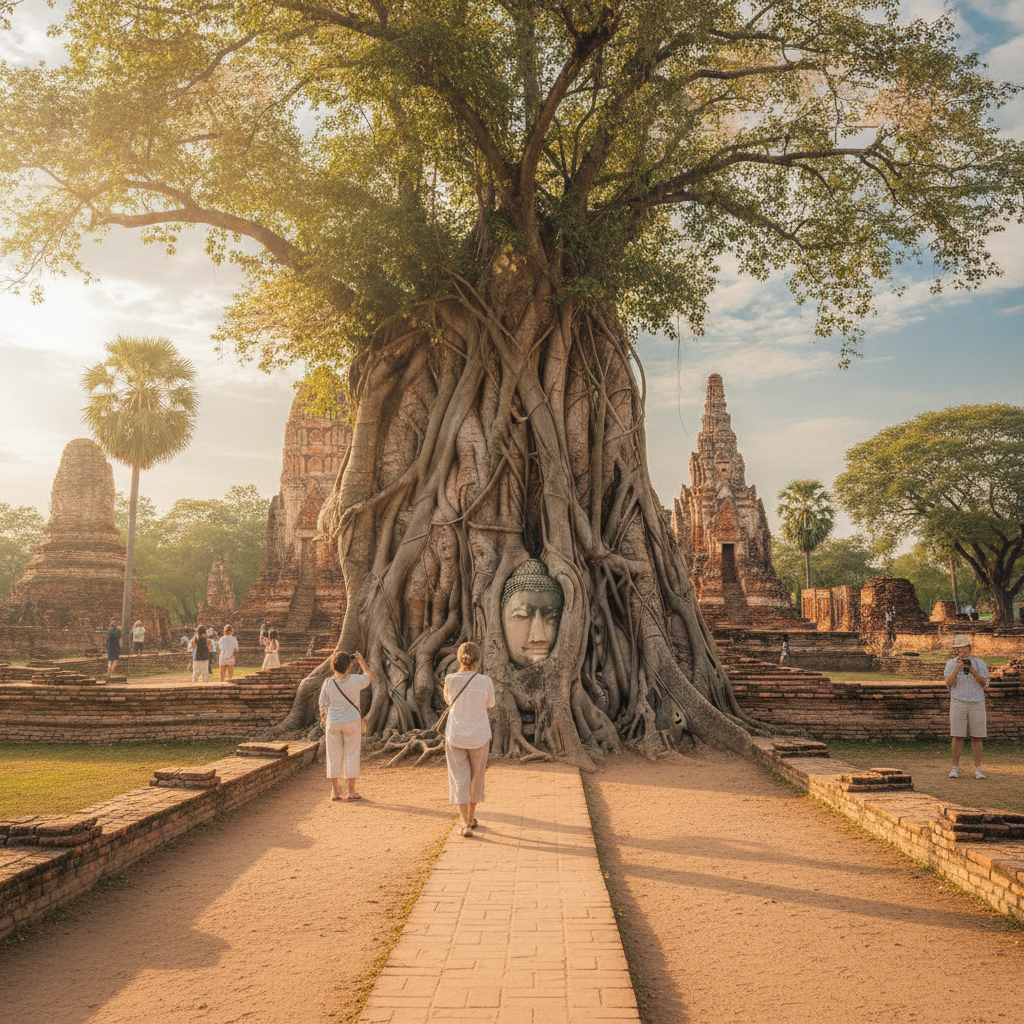
Wat Mahathat's most famous feature is the stone Buddha head entwined in the roots of a banyan tree — the head (from a statue toppled during the 1767 Burmese sack) has been absorbed into the root system of the growing tree over centuries, with the roots growing around and beneath the stone head to create the most photographed image in Ayutthaya. The temple itself (one of the oldest in the city, built in the late 14th century as the central royal temple of the new capital) was an enormous complex with its central prang (Khmer-style tower) flanked by the chedis, vihara halls, and monk residences that constituted the full temple city of an Ayutthaya period royal foundation.
- 3
Wat Ratchaburana Prang
Wat Ratchaburana north of Wat Mahathat is one of the most dramatically preserved of the Ayutthaya prangs (Khmer-style towers) — the tall laterite prang rising above the ruins of the surrounding temple buildings provides the most complete impression of the vertical scale of Ayutthaya's religious architecture, and the interior passage of the prang (accessible to visitors through the base of the tower) reveals the small shrine chamber at the base with its remaining mural fragment. The prang was built in 1424 by King Borommarachathirat II on the site where two of his brothers died in an elephant duel — the royal brothers' conflict over the succession being resolved in a ritual single combat that left both contestants dead and the throne available to the third claimant.
- 4
Wat Chaiwatthanaram River Temple
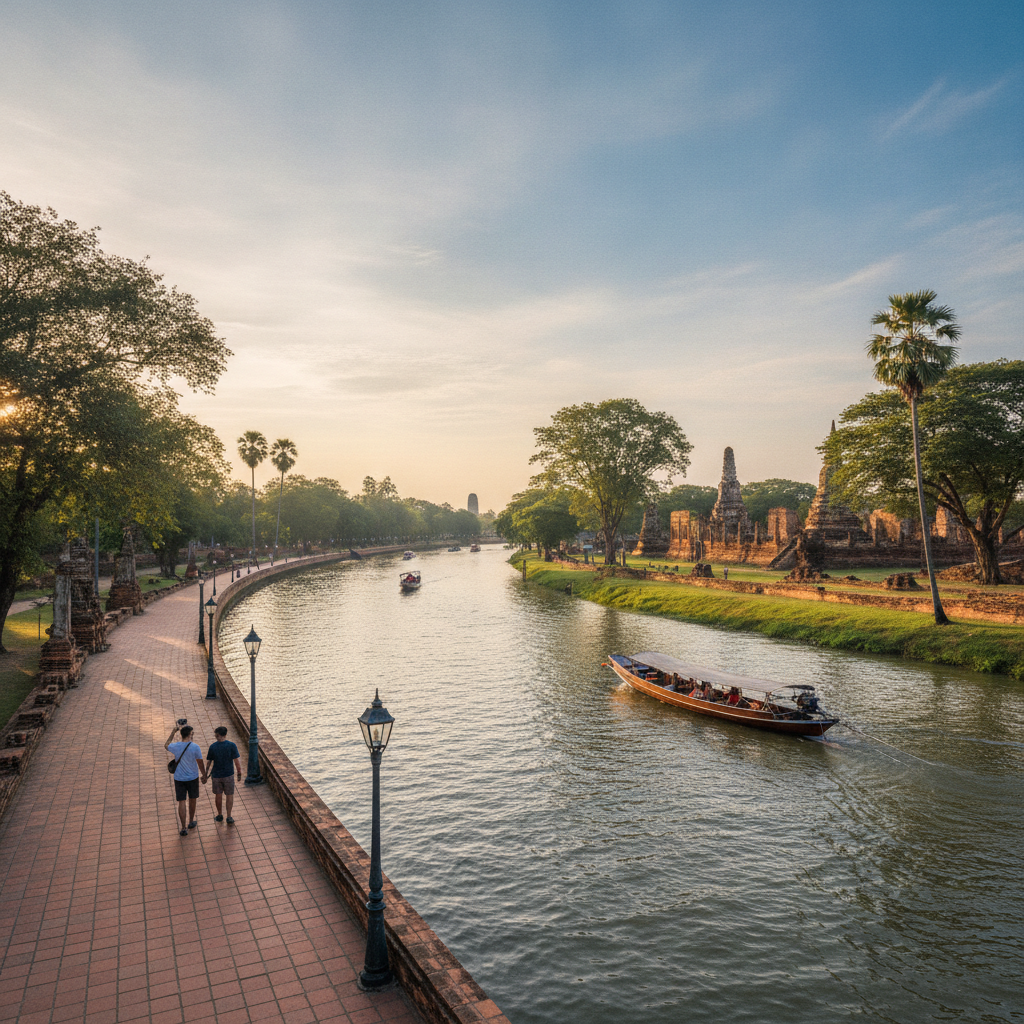
Wat Chaiwatthanaram on the western bank of the Chao Phraya River is the most architecturally complete and most dramatically situated temple in the Ayutthaya historical park — the large central Khmer-style prang (35 metres tall) surrounded by the four smaller corner prangs and the ring of chedis, all reflected in the river and in the restored ornamental pond that was part of the original compound, creates the most comprehensive Ayutthaya period architectural composition accessible at any single site. The temple was built in 1630 by King Prasat Thong to commemorate a military victory over the Cambodian kingdom and to provide a funerary temple for his mother, and its Khmer architectural programme (the central prang of Angkor cosmology surrounded by satellite towers representing Mount Meru and its attendant mountains) represents the Ayutthaya dynasty's claim to the cultural and political legitimacy of the Khmer empire.
- 5
Wihan Phra Mongkhon Bophit
Wihan Phra Mongkhon Bophit houses one of the largest bronze Buddha images in Thailand — the seated Buddha (approximately 12.5 metres high, the bronze casting requiring the metal of hundreds of smaller images) was moved to its current location from its original position inside the Grand Palace compound, and the vihara building (reconstructed in the 1950s after the original was destroyed) provides the most accessible large-scale bronze Buddha experience in the Ayutthaya area. The image's calm face, the elongated oval of the Sukhothai-influenced features, and the quality of the bronze casting (despite the repairs visible at several points of damage from the Burmese attack) make it the most impressive single Buddha image accessible within walking distance of the historical park centre.
- 6
Ayutthaya Historical Park Elephant Ride
The elephant ride operations in the Ayutthaya historical park (available from the elephant paddock north of the Grand Palace ruins) provide tours of the central historical zone from the elevated perspective of the elephant's back — while the ethical concerns about elephant riding in tourist contexts are significant and the welfare standards of individual operations vary, the elephant's historical significance in the Ayutthaya kingdom (as the primary military asset, the symbol of royal power, and the most important single indicator of a kingdom's wealth and strength) makes the elephant presence in the historical park a genuine historical connection rather than merely a novelty attraction. The Ayutthaya kingdom's military power was measured by the number of war elephants it could field, and the elephant compound at the Grand Palace was a central institution of the royal administration.
Walk this route with audio
Stories play automatically as you reach each stop — no tapping needed.