Battambang Ancient Temples & Pagodas Walk
Visit Battambang's temple landscape — the Battambang province has the most significant concentration of Angkorian and post-Angkorian temple remains outside the Siem Reap region, with the 11th-century Prasat Banan and several active Buddhist pagodas creating a layered religious heritage.
- 1
Prasat Banan Temple
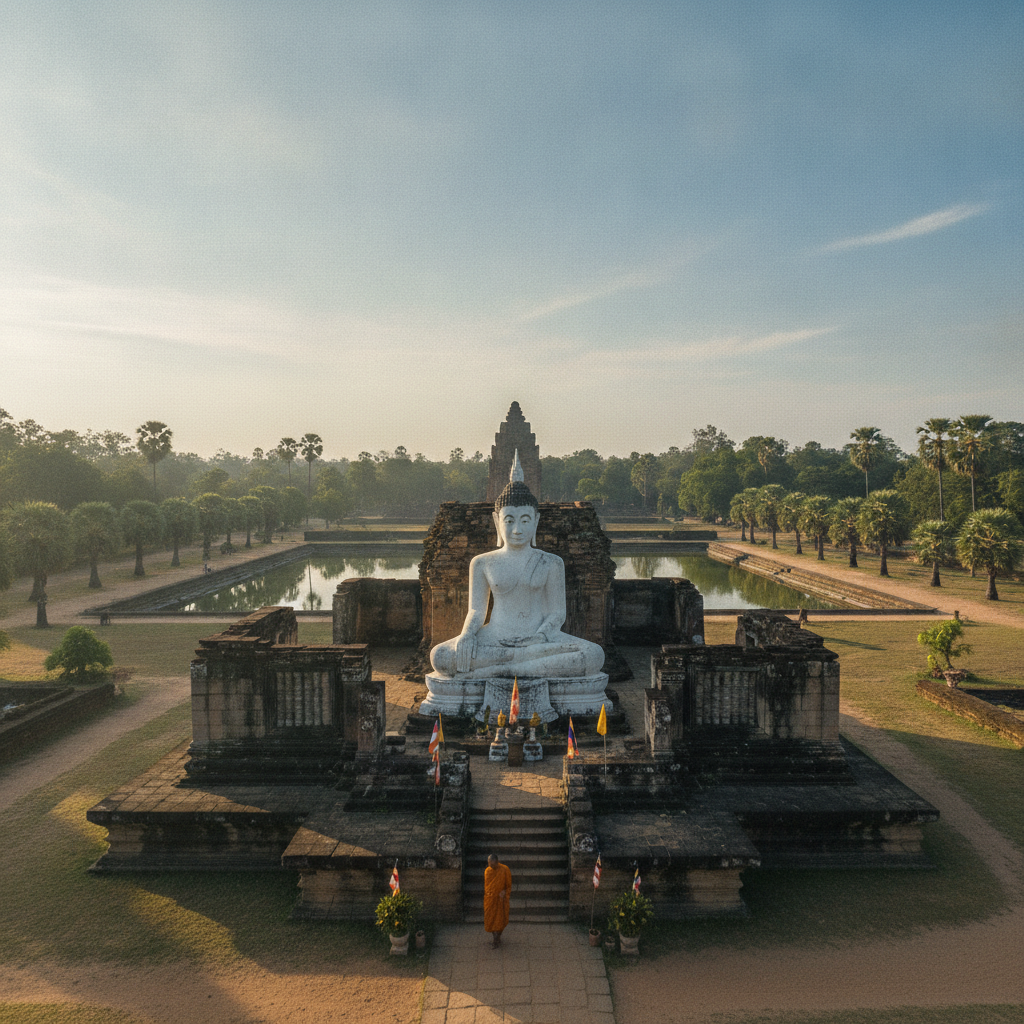
Prasat Banan (or Wat Banan) 25km south of Battambang is the most significant Angkorian temple ruin accessible from the city — the five towers of the 11th-century Khmer temple (dating to the reign of Suryavarman I, the same king who built the earlier sections of Angkor Wat) stand on the summit of the Phnom Banan hill, reached by climbing the 358 steps from the base of the hill. The temple's hilltop position (providing panoramic views of the surrounding rice plains and the Cardamom Mountain foothills) and the relative preservation of its carved sandstone decoration (the devata figures in the tower niches, the lintel carvings, and the narrative bas-reliefs) make it the most rewarding single temple site accessible as a day trip from Battambang. The miniature Angkor Wat legend attached to Banan (the tradition that Suryavarman I built Banan before building Angkor Wat, with the larger complex modelled on this hilltop original) is the most evocative mythological connection between Battambang's temple heritage and the most famous Khmer monument.
- 2
Wat Ek Phnom Ruins
Wat Ek Phnom 11km north of Battambang is the most accessible Angkorian temple ruin from the city centre — the partially collapsed 11th-century sandstone temple (contemporary with Prasat Banan and built during the Suryavarman I period) stands beside the active Buddhist pagoda that has grown up around the ancient structure, creating the layered religious landscape of Angkorian ruin within the functioning modern Buddhist temple complex that is characteristic of Cambodia's surviving ancient religious sites. The temple's incomplete preservation (the collapsed sanctuary towers, the scattered sandstone blocks still in the positions where they fell, and the carved decoration visible on the blocks lying in the grass) creates a more romantically ruinous atmosphere than the more complete Prasat Banan.
- 3
Phnom Sampeu Temple Complex
The Buddhist temple complex on Phnom Sampeu hill (the limestone hill accessible from the bamboo train terminus) is the most dramatically sited active Buddhist temple accessible from Battambang — the series of temple buildings ascending the limestone cliff face (connected by the steep stone staircase and the pathway carved through the cave systems in the rock) creates the most physically engaging temple approach in the province. The temple's combination of the pre-war Buddhist art (the older murals and the traditional Khmer Buddhist iconography in the older shrine halls) with the post-Khmer Rouge reconstruction (the newer shrine buildings and the memorial elements added after 1979) documents the regeneration of the Cambodian Buddhist community after the genocide's systematic destruction of the monastic tradition.
- 4
Battambang Provincial Temple
Wat Dhum Rey Sar (White Elephant Temple) in the centre of Battambang is the most significant active Buddhist temple in the provincial capital — the temple complex (the ordination hall, the monks' quarters, the library containing the palm-leaf Buddhist manuscripts, and the stupa housing the temple's most sacred Buddha relics) is the centre of the Battambang Buddhist community's daily religious life. The temple's morning alms giving (the monks leaving the temple in the pre-dawn to collect the food offerings from the lay devotees along the surrounding streets) is the most directly observable Buddhist practice accessible in Battambang's urban environment, and the temple school (where the monks teach Khmer literacy and Buddhist ethics to the children of the surrounding community) is the most direct visible expression of the temple's social function.
- 5
Sneng Village Pagoda
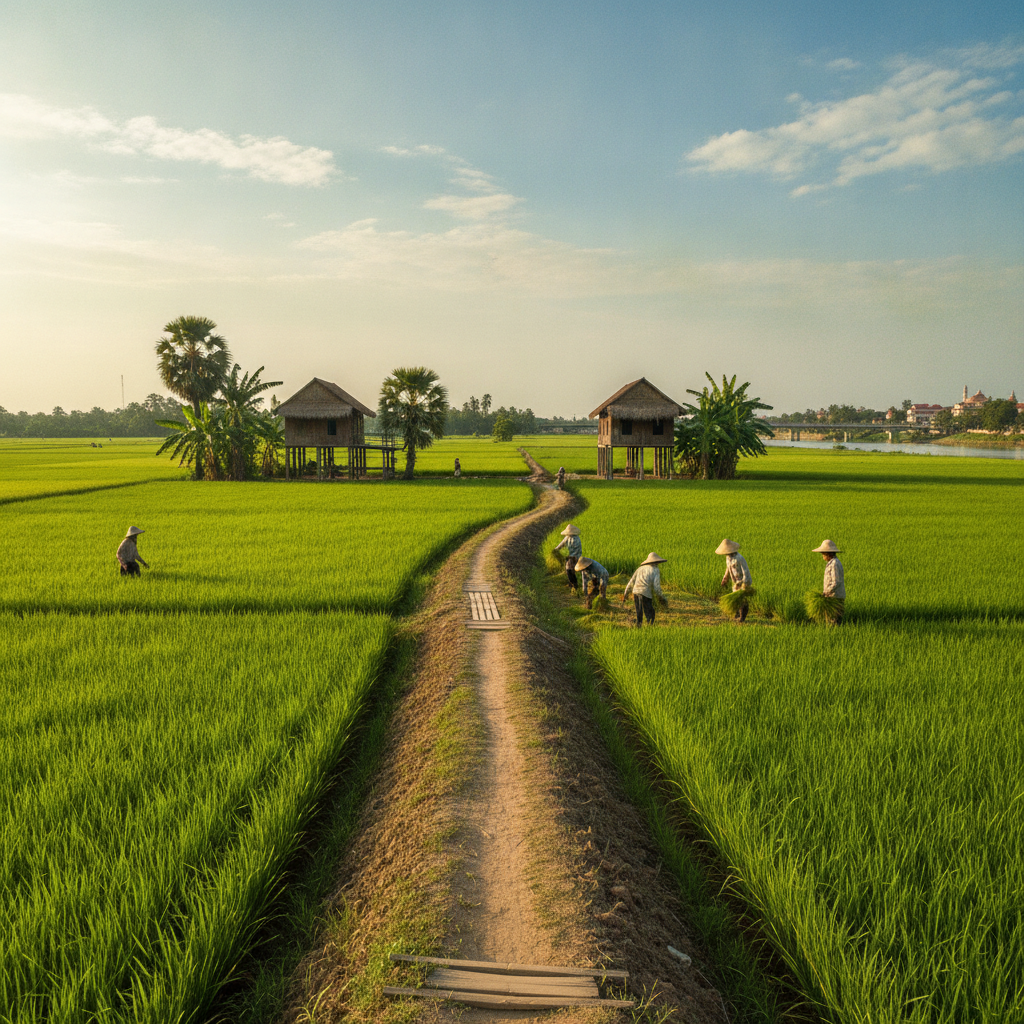
The pagodas in the rural villages southwest of Battambang (the active Buddhist temples that serve as the cultural and spiritual centres of each village community in the Battambang plain) represent the most authentic expression of Cambodian village religious life accessible from the provincial capital — the village pagoda (with its surrounding compound walls, the sala (open hall) for community gatherings, the monk quarters, and the stupa of the temple's founder) in the rice-growing communities of the Battambang plain provides the most undisturbed encounter with the rural Buddhist tradition available in northwestern Cambodia. The village pagoda festivals (the monthly observances tied to the Buddhist lunar calendar, the annual Kathen robe-giving ceremony, and the village protective rituals) are the most important social events in the rural Cambodian community calendar.
- 6
Cardamom Mountain View
The Cardamom Mountains (Chuor Phnom Kravanh) visible to the southwest of Battambang are the largest remaining intact tropical forest in mainland Southeast Asia — the mountain range's protected status (as part of the Central Cardamom Protected Forest) preserves the watershed that supports the agricultural productivity of the Battambang plain and provides habitat for the endangered wildlife (sun bears, clouded leopards, Indochinese tigers, and the Siamese crocodile). The Cardamom Mountains' forested ridgelines visible at sunset from the Phnom Sampeu hilltop viewpoint create the most dramatic natural horizon accessible from the Battambang tourist base.
Walk this route with audio
Stories play automatically as you reach each stop — no tapping needed.