The Battle of Talas 751 CE Where Captured Chinese Papermakers Transferred Paper-Making Technology to the Islamic World, the Tash-Rabat Caravanserai Built at 3,200m Without Mortar & Kyrgyzstan's 700,000 Migrant Workers Sending 35% of GDP Home from Russia
The Battle of Talas (751 CE) halting Tang Dynasty expansion and capturing Chinese papermakers who transferred paper technology to the Islamic world and then to Europe; the Tash-Rabat caravanserai (15th century) at 3,200m built from uncut granite without mortar with its 31 cell rooms still intact; Kyrgyzstan rated the most democratic state in Central Asia but with 30–40% of external debt held by China's Exim Bank; 700,000 Kyrgyz migrant workers in Russia sending remittances equal to 30–35% of GDP; the Kyrgyz Cyrillic alphabet maintaining three unique letters (Ң, Ү, Ө) for sounds absent from Russian; and Bishkek receiving a wave of Russian and Belarusian migrants post-February 2022.
- 1
Bishkek vs Dushanbe – Two Mountain Capitals
The Bishkek vs Dushanbe comparison (the comparative guide to the two least-visited capital cities in Central Asia — Bishkek (Kyrgyzstan) and Dushanbe (Tajikistan) — the two most dramatic mountain capitals in the former Soviet Union): the comparative city guide. The geography (both Bishkek (760m altitude) and Dushanbe (750–800m altitude) are situated in mountain-framed valley positions with dramatically elevated mountain backdrops: Bishkek faces the Ala-Too Tian Shan range (4,895m, 25 km south) across the flat Chuy Valley floor: Dushanbe faces the Hissar Range (4,000m+, 30 km north) while immediately south of the city the Varzob Canyon provides dramatic mountain scenery within 20 km of the center): the language divide (the Bishkek-Dushanbe contrast is primarily a Turkic-vs-Iranian language divide — Bishkek is the capital of a Turkic-speaking nation (Kyrgyz is a Turkic language related to Kazakh and Uzbek): Dushanbe is the capital of an Iranian-speaking nation (Tajik is a Persian language — the closest modern relative of Dari and of classical Persian): the access comparison (Bishkek is better connected internationally with more frequent flights through Manas Airport than Dushanbe's Somoni International Airport: the overland connection (the two cities are not directly connected by road — the most direct route passes through Uzbekistan's Fergana Valley and requires crossing 3 international borders over approximately 1,200 km).
- 2
The Kyrgyz Alphabet & Language – Three Scripts in 100 Years
The Kyrgyz language heritage (the Kyrgyz (Кыргыз тили) — the Turkic language of the Kyrgyz people — and its remarkable history of three script changes in 100 years): the language guide. The Kyrgyz language (Kyrgyz (Кыргызча — the self-designation of the language) belongs to the Kipchak branch of the Turkic language family — the Kipchak branch includes Kazakh, Nogai, and Karakalpak (as opposed to the Oghuz branch containing Turkish, Azerbaijani, and Turkmen: the mutual intelligibility between Kyrgyz and Kazakh is approximately 80% — between Kyrgyz and Turkish approximately 60%: the script history (the Kyrgyz script sequence: (1) the Arabic-based Chagatai script (used until 1928 — the traditional writing system of all Turkic Central Asian peoples using the Persian-Arabic alphabet adapted for Turkic vowel sounds): (2) the Latin alphabet (adopted 1928 — a standardized Latin alphabet designed specifically for Kyrgyz by Soviet linguists as part of the same Latinization program applied to Azerbaijani and other Soviet Turkic languages): (3) the Cyrillic alphabet (adopted 1940 — the Kyrgyz Cyrillic alphabet has 36 letters (the 33 Russian Cyrillic letters plus three Kyrgyz-specific letters: Ң (ng sound), Ү (front u vowel), and Ө (front o vowel)): the Kyrgyz Cyrillic alphabet has been maintained since independence in 1991 (unlike Uzbekistan and Turkmenistan which readopted Latin script after independence, and Azerbaijan which returned to Latin script in 1991): the Southern Kyrgyz dialects (the southern Kyrgyz dialect spoken in Osh and the Fergana Valley has significantly more Uzbek and Persian loanwords than the northern dialect of Bishkek).
- 3
Bishkek Food Markets – Where Locals Eat
The Bishkek food market guide (the complete guide to finding authentic Kyrgyz food at local prices in Bishkek — the food market culture as the primary lens for understanding Bishkek's culinary diversity): the food market guide. The Osh Bazaar food section (the fresh food section of the Osh Bazaar is the primary food market of Bishkek: the morning hours (06:00–10:00) are the optimal time for fresh produce shopping — the vegetable vendors arrive with fresh produce from the Chuy Valley farms and the mountain foothills: the dried food section (the kurut (dried sour milk) vendors at the Osh Bazaar sell 15–20 varieties of kurut including plain, spiced, and flavored: the price is KGS 150–300 (USD 1.70–3.40) per kg): the hot food section (the Osh Bazaar has a hot food court with approximately 30 vendors selling: samsa (baked lamb pastry), lagman (hand-pulled noodle soup), shorpo (lamb bone broth), manti (steamed dumplings), and grechka (buckwheat porridge — the Russian Soviet cafeteria staple still popular in Bishkek): the Alamedin market (the Alamedin Bazaar (3 km north of the city center) — the largest food wholesale market in Bishkek: the market opens at 05:00 and closes by 13:00 — the early morning hours are when the wholesale vegetable and fruit trading takes place before the retail vendors arrive): the Bishkek food price index (the approximate food prices in Bishkek: fresh bread (boorsok or nan): KGS 30–50 (USD 0.35–0.60) per loaf: fresh lamb: KGS 700–900 (USD 8–10) per kg: tomatoes (peak season July–September): KGS 30–50 (USD 0.35–0.60) per kg).
- 4
The Manas Ordo Complex & Talas Valley
The Manas Ordo heritage complex (the primary shrine and museum complex dedicated to the hero Manas — the most important pilgrimage destination in Kyrgyz national culture): the Manas Ordo guide. The Talas Valley (the Talas Valley (Талас өрөөнү) — the valley in northwestern Kyrgyzstan 220 km northwest of Bishkek where the Manas epic is set and where the legendary Battle of Talas (751 CE) took place): the Battle of Talas (the Battle of Talas (751 CE) — one of the most consequential battles in world history: the Arab Abbasid Caliphate forces and their Karluk Turkic allies defeated the Chinese Tang Dynasty army at the Talas River — the battle halted the westward expansion of Chinese Tang power into Central Asia and marked the beginning of the Islamization of the Turkic peoples of Central Asia: the most important long-term consequence of the battle was the capture of Chinese papermakers by the Arab forces — the technology of paper-making spread from China to the Islamic world and then to Europe as a direct result of the Battle of Talas): the Manas Ordo complex (the Manas Ordo (Манас Ордо) — the museum and shrine complex at Talas (220 km from Bishkek): the complex includes: the Gumbez Manas (the traditional shrine marking the legendary tomb of Manas — the stone mausoleum built in 1334 CE and still standing): the open-air museum of yurt life: the manaschi performance theater): the Talas trekking (the Talas Valley offers excellent trekking into the Talas Ala-Too range to the south — the range forms the border between Kyrgyzstan and Kazakhstan).
- 5
Kyrgyzstan's Remote Valleys – Naryn & Toktogul
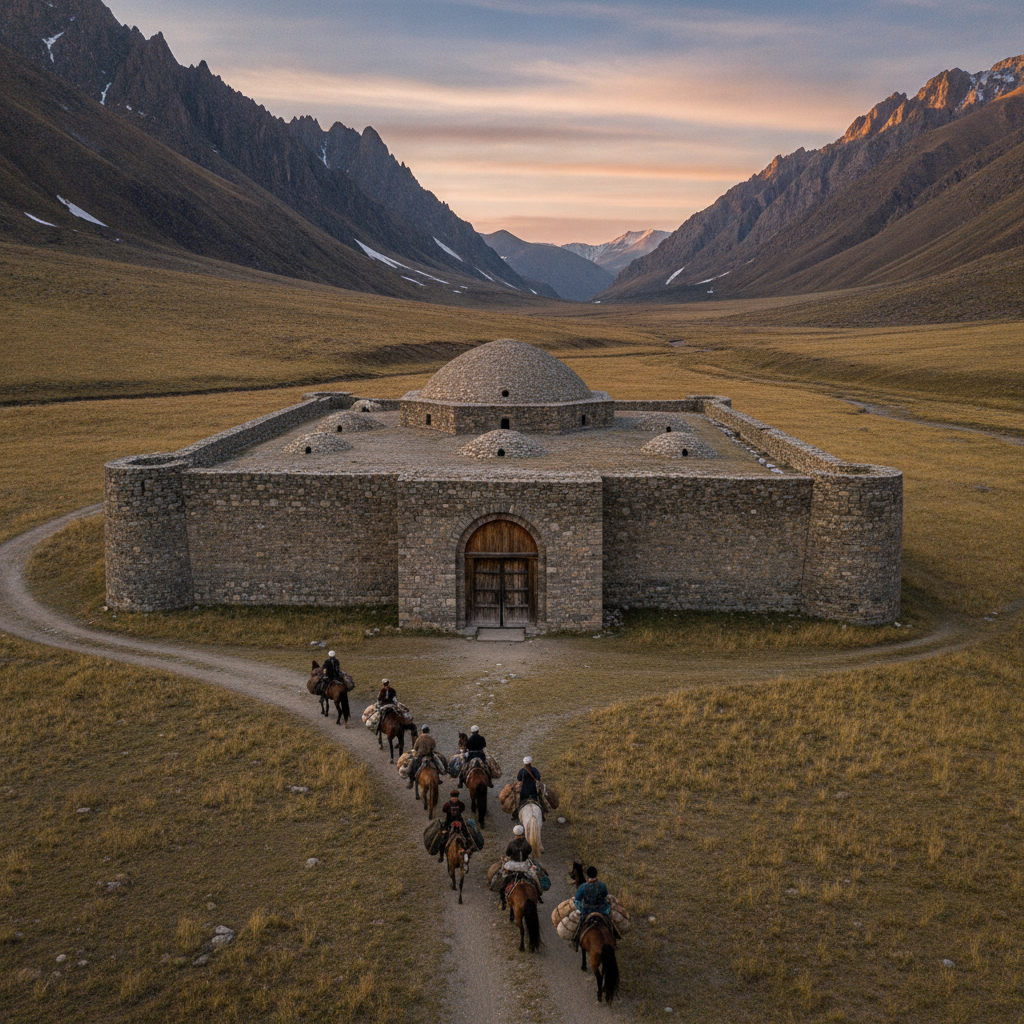
The Kyrgyzstan remote valleys heritage (the most spectacular and least-visited valleys in Kyrgyzstan — the Naryn River basin and the western Toktogul region): the remote valleys guide. The Naryn (the Naryn River (Нарын) — the primary river of Kyrgyzstan: the Naryn rises in the central Tian Shan glaciers near Khan Tengri and flows west 535 km through the Tian Shan to Uzbekistan where it becomes the Syr Darya: the Naryn Canyon (the Naryn River cuts through the Tian Shan in a series of spectacular canyons — the most dramatic is the At-Bashy Canyon east of Naryn city where the river has cut 300m into the red sandstone plateau: the Naryn city (the administrative center of the Naryn Oblast — the most remote provincial capital in Kyrgyzstan: the city at 2,044m altitude is surrounded by high-altitude steppe and has a harsh continental climate (the January average temperature is -20°C): the Tash-Rabat caravanserai (the Tash-Rabat (Таш-Рабат — Stone Fort): the best preserved medieval caravanserai in Kyrgyzstan: the stone caravanserai at 3,200m altitude in the At-Bashy Valley (130 km east of Naryn city) was built in the 15th century as a Silk Road waypoint on the route from Kashgar to the Fergana Valley — the caravanserai is entirely constructed of uncut local granite without mortar: the building retains its original interior layout with a central domed hall surrounded by 31 small cell rooms for traders and their animals).
- 6
Kyrgyzstan Future – Democracy, Debt & Mountain Economy
The Kyrgyzstan contemporary challenges (the primary development challenges facing Kyrgyzstan as the most democratic but also one of the most economically fragile states in Central Asia): the contemporary analysis. The democracy (Kyrgyzstan is consistently rated as the most democratic state in Central Asia by international democracy indices: the Freedom House score (Kyrgyzstan scored 28/100 (Partly Free) in the 2024 Freedom House index — the highest score of any Central Asian state): the press freedom (Kyrgyzstan has the most free press in Central Asia — multiple independent newspapers and online media operate without government shutdown): the challenges to democracy (the series of coups and constitutional revisions: the 2021 constitutional referendum that changed Kyrgyzstan from a parliamentary to a presidential system under Sadyr Japarov (who was in prison on kidnapping charges before being released by protesters in October 2020): the Chinese debt (Kyrgyzstan's debt to China: the Exim Bank of China holds approximately 30–40% of Kyrgyzstan's total external debt (estimated at USD 4–5 billion in 2024) — the debt is primarily related to the construction of the Bishkek thermal power plant modernization (2013–2017) and road infrastructure: the remittances (Kyrgyzstan's primary economic pillar is remittances from Kyrgyz labor migrants in Russia — estimated at 30–35% of GDP in 2023: approximately 700,000 Kyrgyz nationals work in Russia as migrant workers): the tourism economy (tourism has grown to approximately 9% of GDP before the COVID-19 pandemic — the sector has recovered significantly since 2022 with Bishkek receiving an influx of Russian and Belarusian migrants following the February 2022 Russian invasion of Ukraine).
Walk this route with audio
Stories play automatically as you reach each stop — no tapping needed.
More in Bishkek
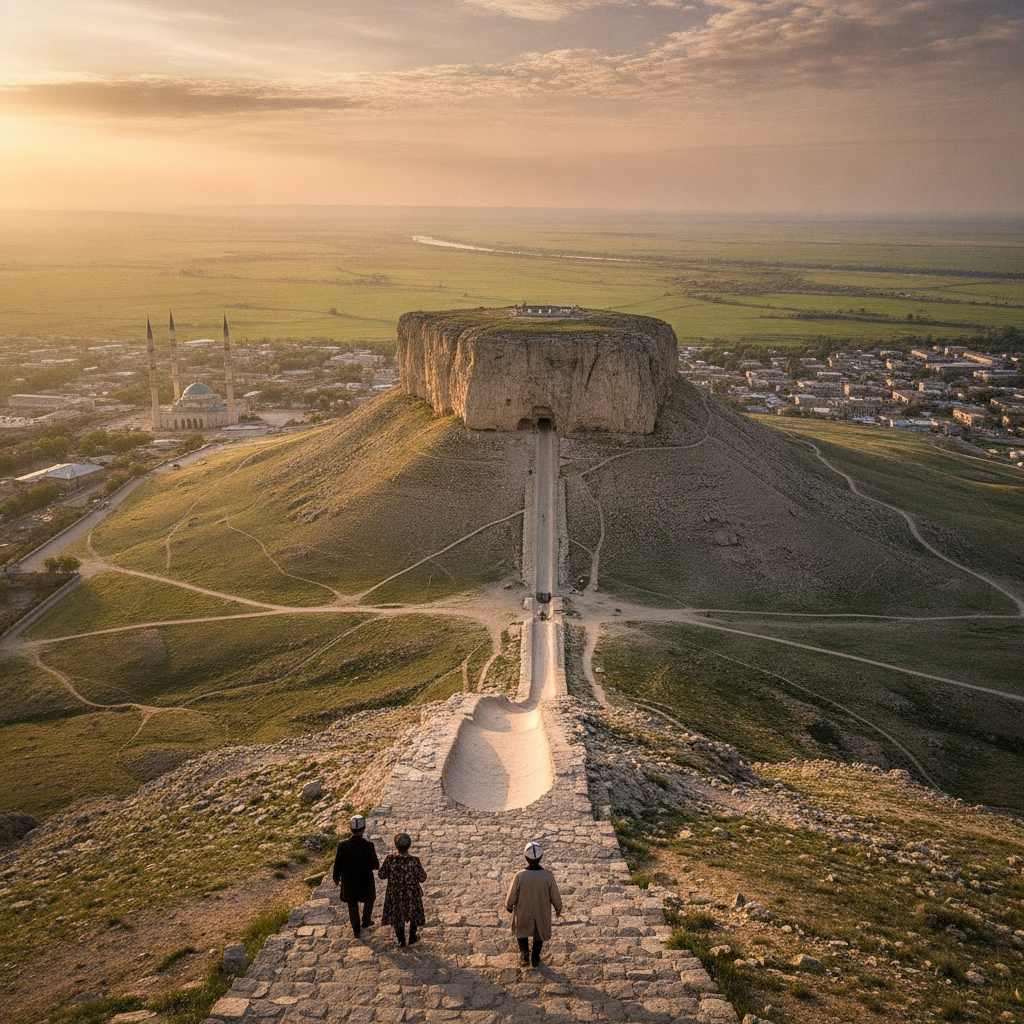
Babur Founded the Mughal Empire After Ruling Osh and Leaving His Mark on the Suleiman-Too Cave Mosque, the Kyrgyz Horse Surviving -40°C by Digging Through Snow (Tebineu) for Frozen Grass & the Burana Tower Oldest Monument in Kyrgyzstan
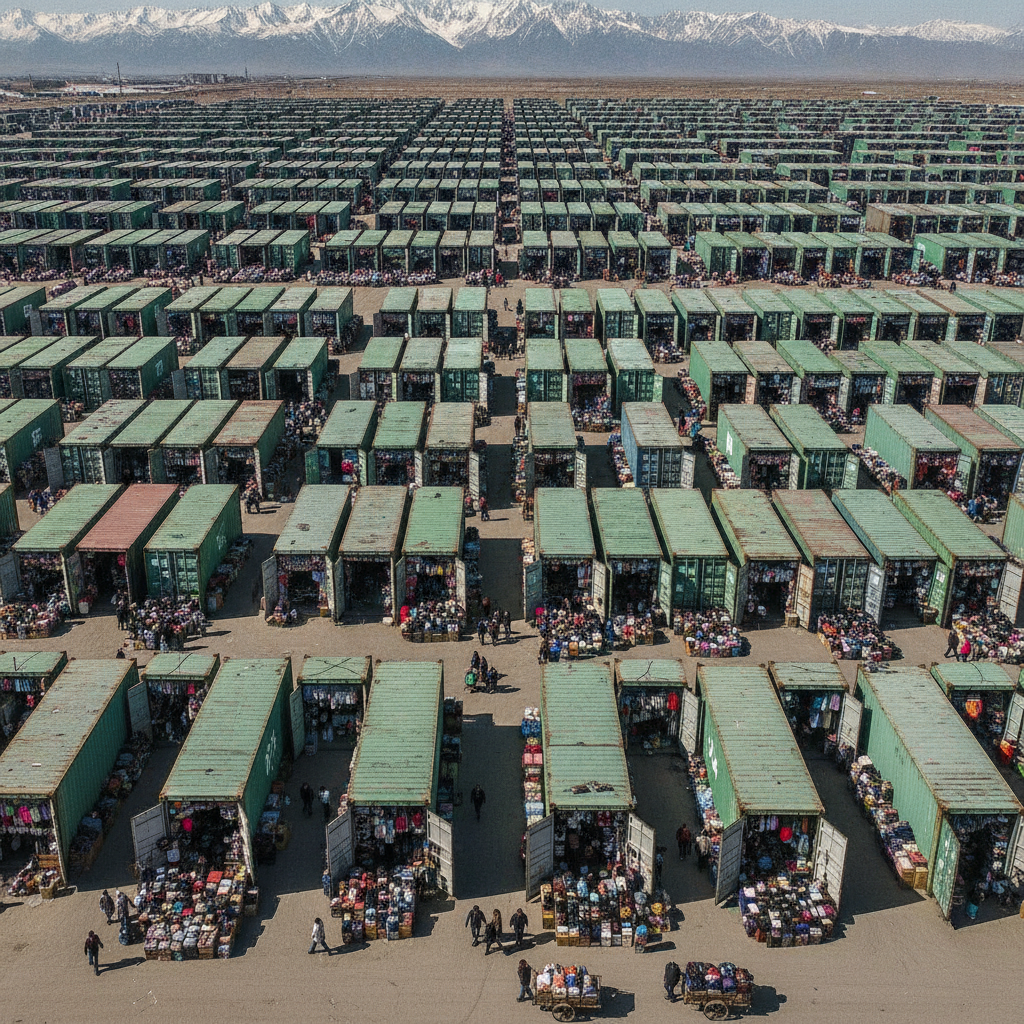
The Dordoi Bazaar 30,000 Container Stalls Handling USD 3-5 Billion Annually, Kyrgyz Yenisei Khaganate Briefly the Largest Turkic State in 840 CE & the CKU Railway Planned Since the 1990s Still Unbuilt
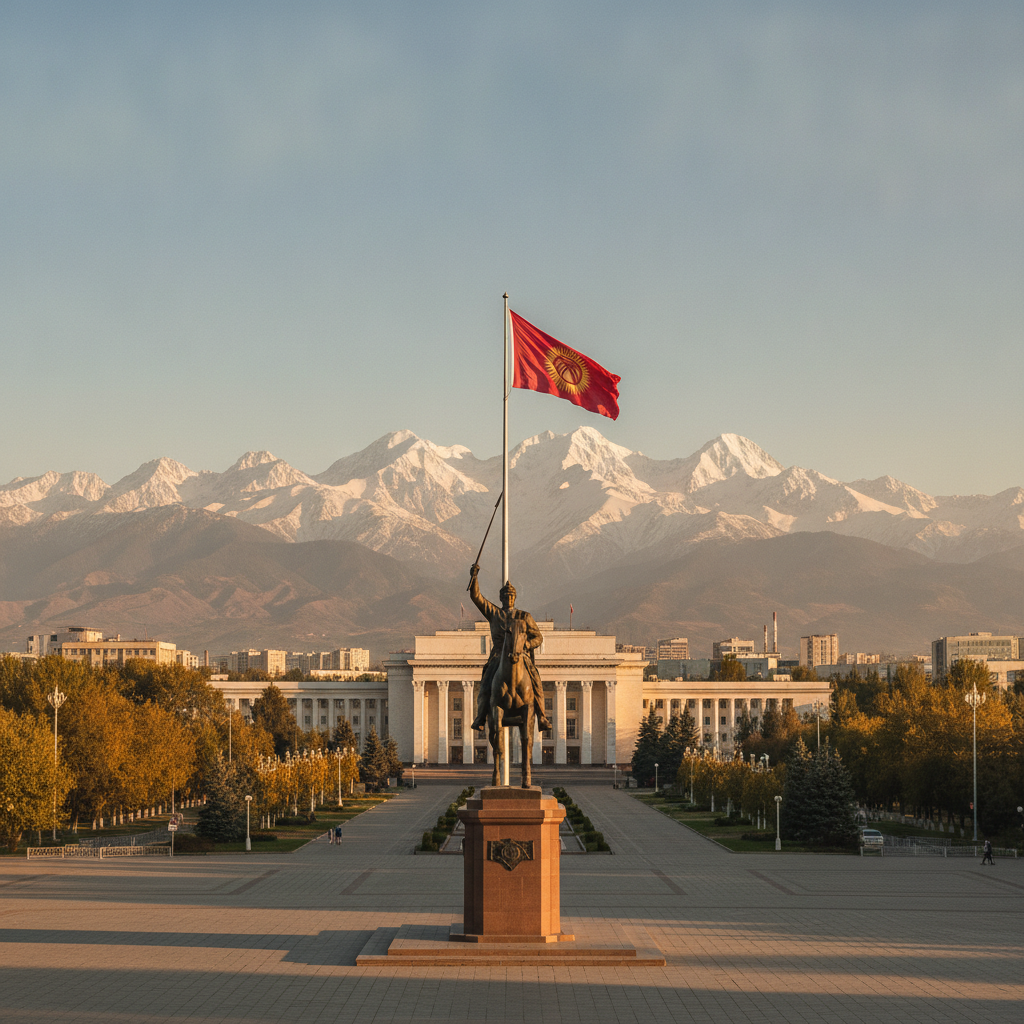
The Kyrgyz Tunduk Roof Ring on the National Flag, the Osh Bazaar Kumys Fermented Mare's Milk & Ala-Archa Glacier 45 km from Central Bishkek
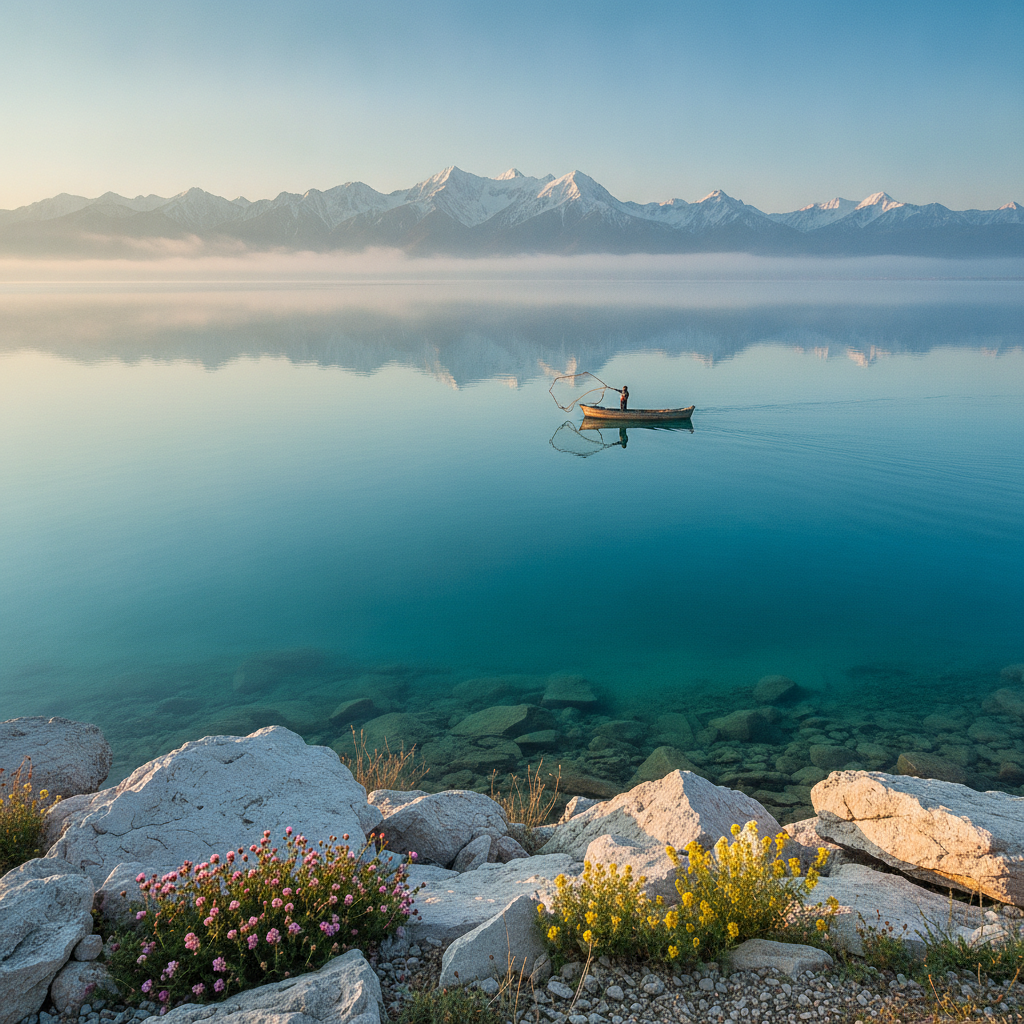
The Manas Epic at 500,000+ Lines Longer Than the Iliad and Mahabharata Combined, Issyk-Kul Never Freezes at 1,608m Due to Its 668m Depth & Son-Kul Summer Yurt Camps at 3,016m