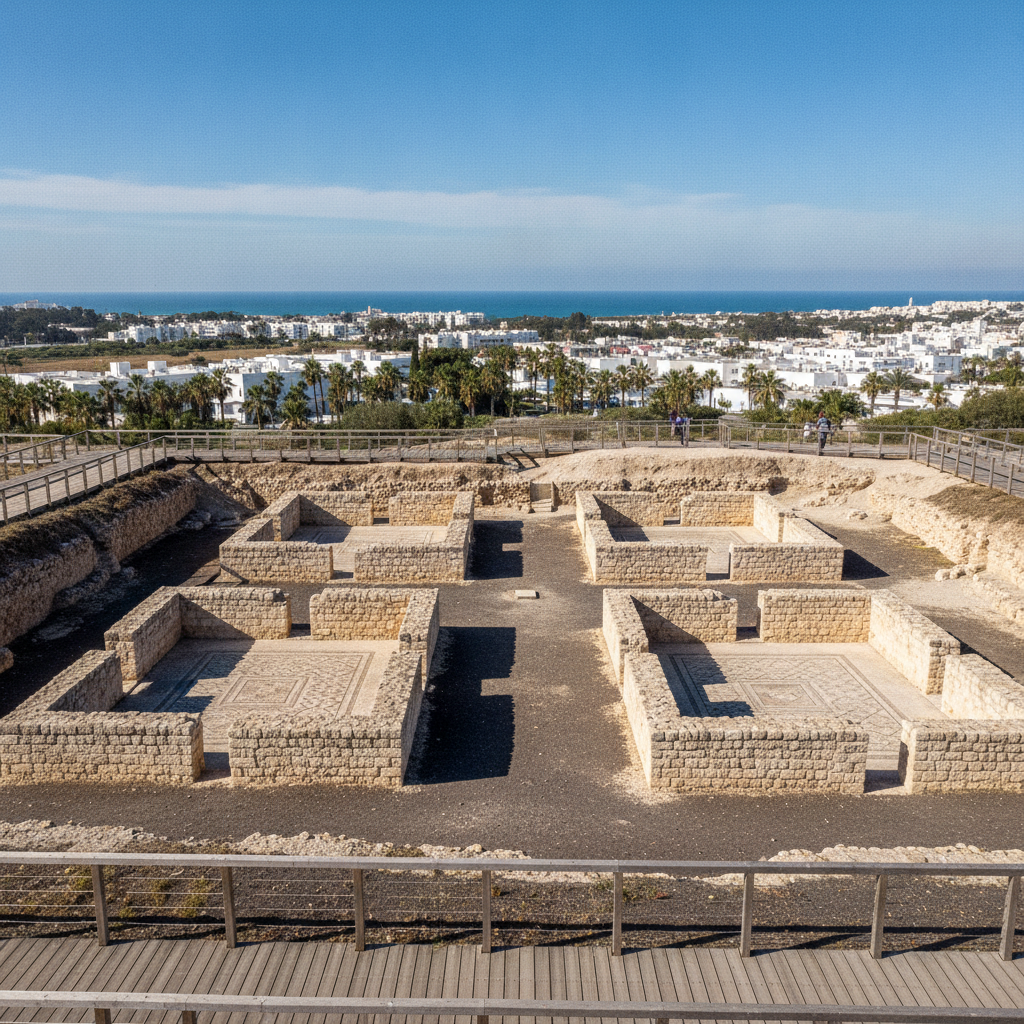
Hanno the Navigator Led a Fleet of 60 Galleys with 30,000 Colonists Along West Africa Around 500 BCE and His Word Gorillai Became the Scientific Name Gorilla Gorilla in 1847; Tertullian of Carthage Invented the Latin Theological Words Trinity, Person (in the theological sense), and Sacrament; Dido's Curse in Virgil's Aeneid (Let There Arise From My Bones Some Avenger) Is Read as Predicting Hannibal
Hanno's gorillai word becoming Gorilla gorilla in 1847 when Thomas Savage named the great ape; Tertullian of Carthage coining the Latin theological terms Trinity (Trinitas), Person (Persona), and Sacrament (Sacramentum); the three Punic Wars' total Roman death toll approaching 100,000-150,000 killed mostly at Trebia, Lake Trasimene, and Cannae; Dido's curse in Virgil (Let there arise from my bones some avenger) predicting Hannibal; the Phoenician tin route to Cornwall as the world's first trans-continental commodity supply chain; and the Carthage International Festival in the Roman Theatre.
- 1
Hanno the Navigator – Carthage's Exploration of West Africa
Hanno the Navigator (approximately 500 BCE) — the Carthaginian explorer who led the most ambitious voyage of exploration in the ancient world: a circumnavigation of the west coast of Africa: the exploration guide. The voyage (the Periplus of Hanno (the Greek translation of Hanno's account of his voyage — the only surviving Carthaginian literary text not transmitted through other sources): Hanno led a fleet of 60 penteconters (50-oared galleys) with approximately 30,000 colonists along the west coast of Africa: the destination (the scholarly debate on how far south Hanno reached: the minimum estimate: Morocco or Senegal: the maximum estimate: Cameroon or Sierra Leone: the gorillas (Hanno describes a group of hairy wild people (gorillai in the Greek translation) at the furthest point of his voyage whom his interpreters called gorillas: in 1847 the American physician Thomas Savage used Hanno's word to name the great ape Gorilla gorilla — the first use of the word gorilla in a scientific context: the colonies (Hanno established 7 Phoenician colonies along the Moroccan coast during the voyage: the primary surviving colony: Lixus (near modern Larache in Morocco): the Mauritanian trade (the primary commodity sought by Hanno: the oreichalkon (gold): the ivory: the elephant hides: the geographical significance (Hanno's voyage was the first documented navigation of the sub-Saharan African coast: the next documented European exploration of the same coast was by the Portuguese captain Nuno Tristao in 1443-1444 CE — nearly 2,000 years after Hanno: the map (no Carthaginian maps have survived — the geography of Hanno's voyage is reconstructed from the text of his Periplus: the text describes the landscape, wildlife, peoples, and phenomena encountered at each stage of the journey).
- 2
The Punic Wars – Three Conflicts That Made Rome Into an Empire
The Punic Wars (264-146 BCE) — the three conflicts between Rome and Carthage that transformed Rome from a regional Italian power into the dominant force in the Mediterranean world: the comprehensive guide. The First Punic War (264-241 BCE): the cause (the Mamertines — a group of Campanian mercenaries who had seized the Sicilian city of Messana — appealed simultaneously to Rome and Carthage for help against the Syracusans: Rome sent forces across to Sicily triggering confrontation with Carthage: the primary theater: Sicily (the Sicilian cities and coastline were the main battleground): the outcome: Rome won — Carthage ceded Sicily and paid 3,200 talents of silver in war reparations: the Second Punic War (218-201 BCE): the cause: Hannibal's siege of Saguntum (a Roman ally in Spain): the scale: Hannibal invaded Italy with 50,000 men across the Alps: the battles: Trebia, Lake Trasimene, Cannae (total Roman dead approximately 100,000-150,000): the outcome: Rome won — Carthage surrendered Spain, surrendered its navy, and agreed not to make war without Roman permission: the Third Punic War (149-146 BCE): the cause: Carthage fought the Numidian king Masinissa without Roman permission: Rome declared war: the siege (3 years): the final assault under Scipio Aemilianus: the outcome: Carthage destroyed: 50,000 survivors enslaved: the site cursed: the Roman transformation (the three Punic Wars transformed Rome: the First Punic War created Roman naval power: the Second Punic War hardened Roman military institutions and revealed the limits of Italian political consensus: the Third Punic War raised the first serious Roman debate about imperial ethics — was the destruction of Carthage just?: Scipio Aemilianus himself reportedly wept as Carthage burned and quoted Homer's description of the fall of Troy).
- 3
Phoenician Trade Networks – Purple Dye, Glass, and the Tin Route
The Phoenician commercial network (the trade system that connected Carthage and the Phoenician cities to the entire Mediterranean world and beyond — the most extensive commercial network of the ancient world from approximately 1000-400 BCE): the trade history guide. The primary commodities (the Phoenician trade commodities: the Tyrian purple (the most valuable commodity: purple-dyed textiles: produced from Murex sea snails: exclusive to the Phoenician production centers of Tyre and Sidon: the price (pure Tyrian purple: more expensive than gold by weight): the glass (the Phoenician invention (or significant development) of core-formed and later blown glass: the Phoenician glass-making cities of Sidon and Tyre produced the finest glass in the ancient world: the cedar wood (the Lebanese cedar — the primary luxury timber of the ancient Mediterranean: used for royal barques in Egypt: Solomon's Temple in Jerusalem: Phoenician merchant ships: the tin (the most strategically important Phoenician trade route: the tin route to Cornwall (Britain): tin was the critical component of bronze (bronze = copper + tin): the primary copper source was Cyprus: the primary tin source was Britain: the Phoenician navigators are believed to have been the primary traders reaching Britain for tin from approximately 600-300 BCE: the British tin was traded from Cornwall (the Cassiterides — Tin Islands of the ancient Greeks) through France to the Mediterranean: Carthage maintained the monopoly on the western tin trade throughout its empire period: the Spanish silver (the silver mines of Carthaginian Spain (the Rio Tinto mines in modern Andalusia) were among the largest silver deposits in the ancient world: the Spanish silver mines had 40,000 slaves working them according to the historian Diodorus Siculus: after Rome's conquest of Spain (218-206 BCE) the silver mines became a primary source of Roman wealth).
- 4
The Paleo-Christian Heritage of Carthage – Perpetua, Tertullian, and the Early Church
The paleo-Christian heritage of Carthage (Carthage was the primary center of Latin Christianity in the 2nd-5th centuries CE and produced several of the most significant figures in the history of the Western Church): the heritage guide. The context (in the 2nd-3rd centuries CE Carthage was the fourth largest city in the Roman Empire after Rome, Alexandria, and Antioch: Carthage had a large and active Christian community from at least the late 2nd century CE: Latin rather than Greek was the primary language of the Carthage Christian community — making the Carthage church the center of the development of Latin Christian theology: Tertullian (approximately 155-240 CE): the Father of Latin Christianity: Tertullian (Quintus Septimius Florens Tertullianus) was a lawyer from Carthage who converted to Christianity approximately 195 CE and became the most prolific early Christian writer in Latin: Tertullian coined many of the theological Latin terms that are still used in Christian theology: the word Trinitas (Trinity): the word Persona (Person — in the theological sense of the Three Persons of the Trinity): the word Sacramentum (Sacrament): Cyprian of Carthage (approximately 200-258 CE): Bishop of Carthage: martyred 258 CE by the Roman Emperor Valerian: Cyprian's primary theological contribution: the doctrine of the Church as the essential community for salvation (Outside the Church there is no salvation — extra ecclesiam nulla salus): the Donatist controversy (the Donatist controversy (311-411 CE) began in Carthage: the Donatists were a rigorist Christian sect that refused to accept bishops who had handed over sacred texts to Roman authorities during persecutions (traditores — the origin of the word traitor): the controversy required Augustine's theological response: the paleo-Christian museum at Carthage (the Musee Paleo-Chretien de Carthage — on the Odeon Hill: exhibits the early Christian mosaics, baptisteries, and funerary art from the Carthage excavations).
- 5
Dido and Aeneas – The Myth That Linked Carthage to Rome's Origin
Dido and Aeneas (the legendary love affair between the Trojan prince Aeneas (the ancestor of the Romans) and Dido (the founder of Carthage) — the myth that explained the enmity between Rome and Carthage through a doomed love story): the mythology guide. The Aeneid (the Aeneid of Virgil (29-19 BCE) — the Roman national epic commissioned by Augustus: the Aeneid follows Aeneas from the fall of Troy to his arrival in Italy where he establishes the line that will eventually found Rome: the Dido episode (Books 1-4 of the Aeneid): Aeneas and his Trojan fleet are blown off course and land at Carthage: Dido has recently fled from Tyre and is in the process of founding Carthage: the love affair (through the intervention of Venus and Juno Aeneas and Dido fall in love: Aeneas spends the winter in Carthage: Jupiter sends Mercury to remind Aeneas of his divine mission to found Rome: Aeneas prepares to leave Carthage secretly: Dido confronts Aeneas: the speech (Dido's speech accusing Aeneas of treachery (Aeneid IV, 305-330) is one of the most celebrated passages in Latin literature: Aeneas gives the response that he loves Dido but duty (pietas) requires him to follow his destiny: the suicide (Dido mounts a funeral pyre she has prepared, falls on the sword of Aeneas, and dies as the Trojan fleet sails away): Dido's curse (Dido curses Aeneas and his descendants: Let there arise from my bones some avenger — the avenger being Hannibal in the standard Roman interpretation: the political meaning (Virgil's audience in 29-19 BCE understood that the myth explained the Roman-Carthaginian enmity as divinely predetermined and justified by the initial Carthaginian wrong (Dido causing Aeneas to delay his mission): the myth also presents the destruction of Carthage as tragic (Dido is a noble and sympathetic figure) rather than triumphant).
- 6
Carthage International Festival – Ancient Ruins as Modern Stage
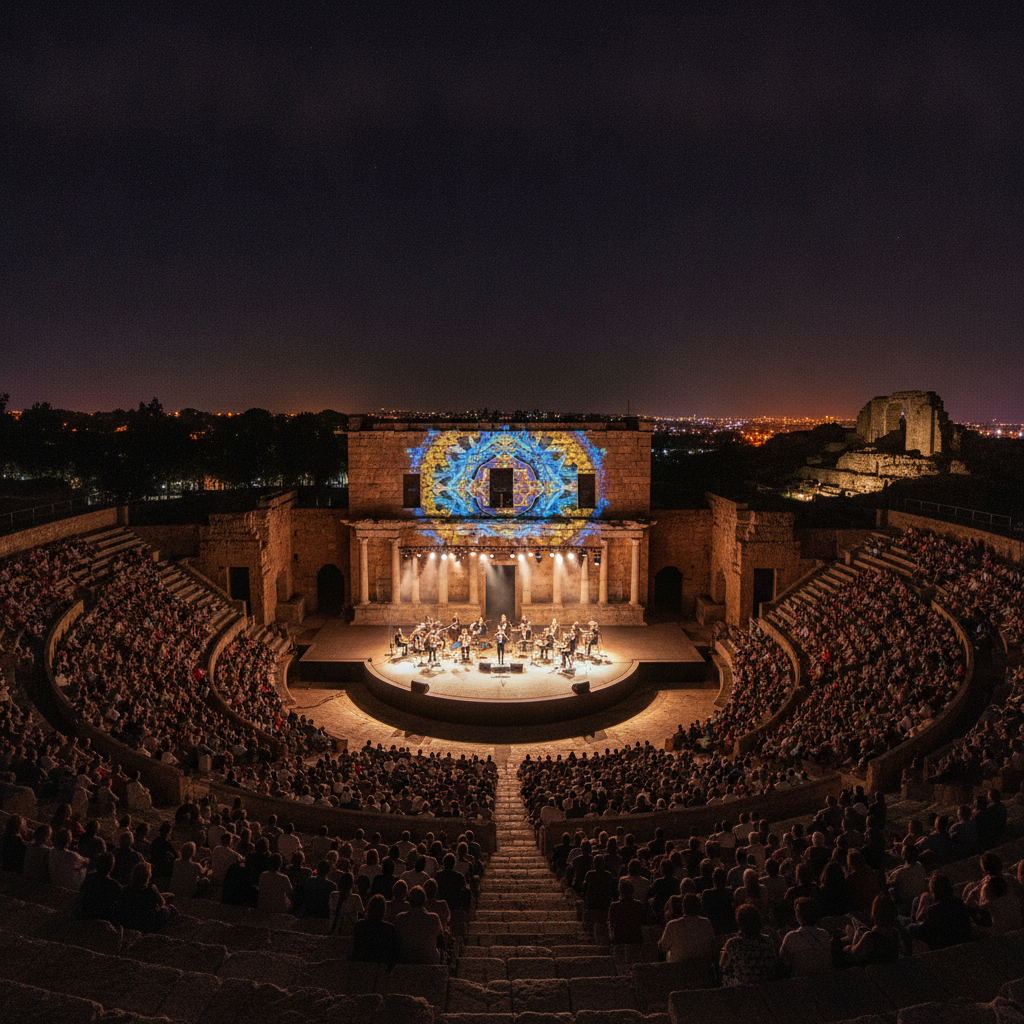
The Carthage International Festival (Festival International de Carthage) — the annual international performing arts festival that transforms the Roman theatre of Carthage into one of the most dramatically sited concert venues in the world: the festival guide. The festival (the Carthage International Festival has been held annually since 1964 in the Roman theatre of Carthage (or occasionally in the amphitheatre): the festival takes place in July and August: the venue (the Roman Theatre of Carthage (Odeum of Carthage) — the primary festival venue: the theatre was originally built in the 2nd century CE and has been extensively reconstructed: capacity approximately 8,000-10,000 spectators: the reconstructed stage building (scaenae frons) provides the backdrop: the performing arts program (the festival presents: classical music: opera: jazz: Arabic music (the Maluf tradition): international pop and rock: theatre: dance: the Arab music program (the Carthage festival has been the primary international platform for the great Arab classical musicians: Umm Kulthum (the Egyptian diva who was arguably the most famous Arab singer of the 20th century) performed at Carthage: Fairuz (the Lebanese diva) performed at Carthage: Oum Kalthoum's Carthage performance (1967) was one of the events of the 1960s Arab cultural world: the international program (the festival has hosted: Julio Iglesias: Sting: Youssou N'Dour: Cesaria Evora: Salif Keita: the logistics (tickets at the Roman Theatre: 30-100 TND depending on the seat category: the theatre can be reached by TGM to Carthage-Dermech station (a 10-minute walk): the atmosphere (sitting in a Roman theatre built in the 2nd century CE watching international performers against the backdrop of the ancient stage building — one of the most atmospheric concert experiences in the Mediterranean world).
Walk this route with audio
Stories play automatically as you reach each stop — no tapping needed.
More in Carthage
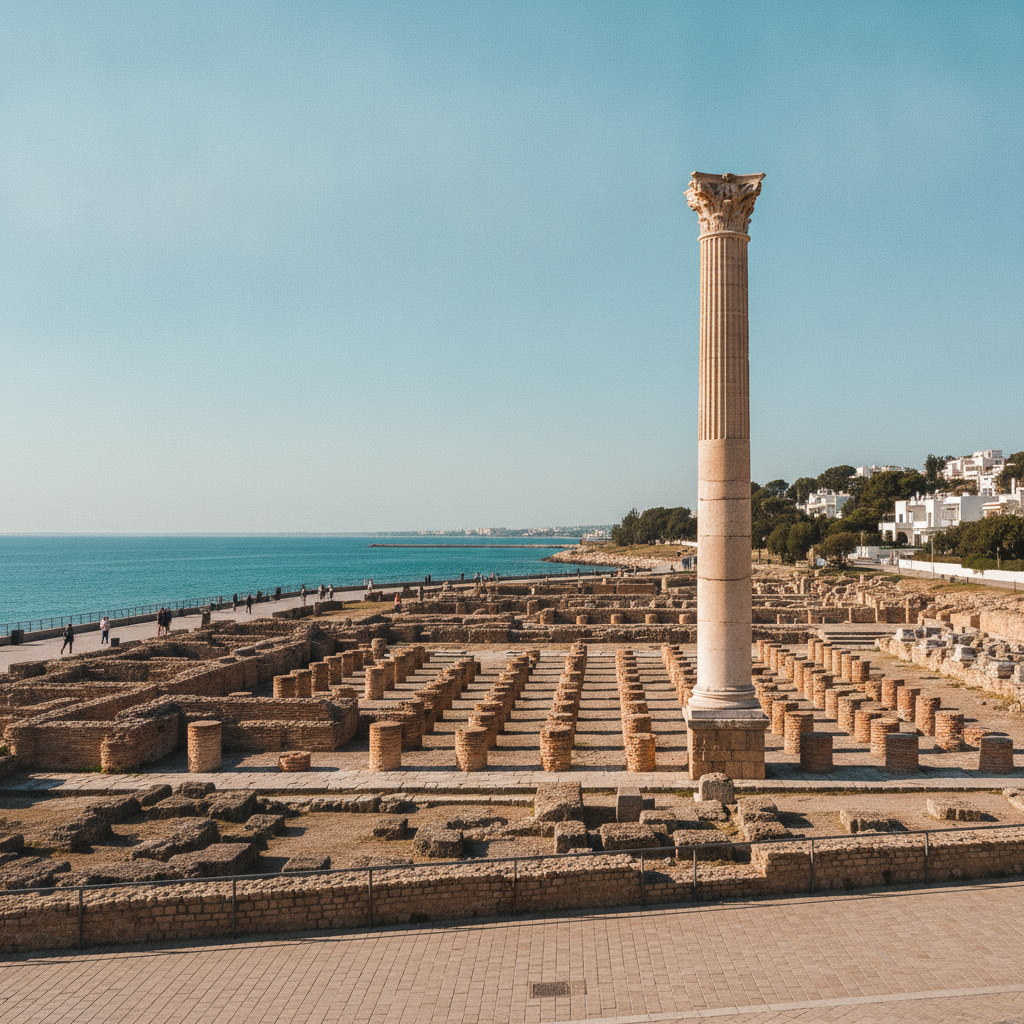
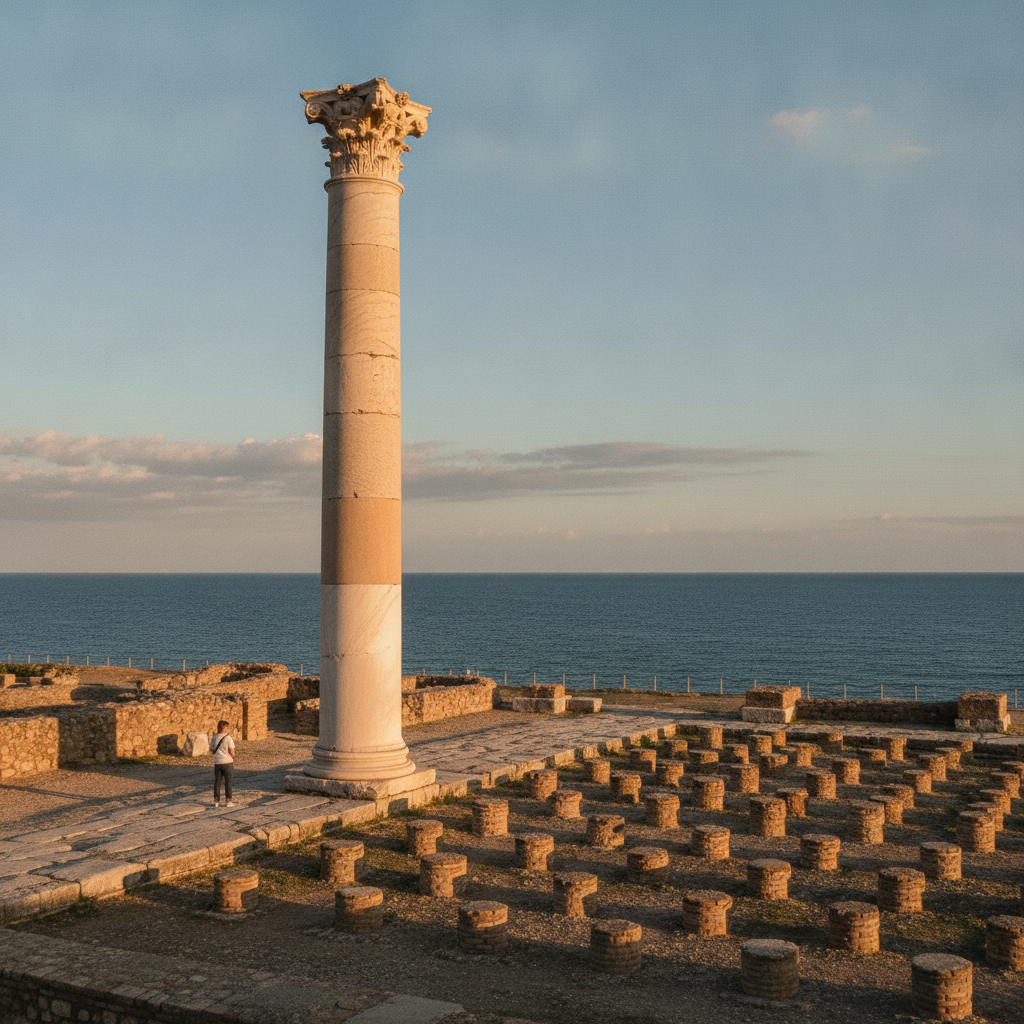
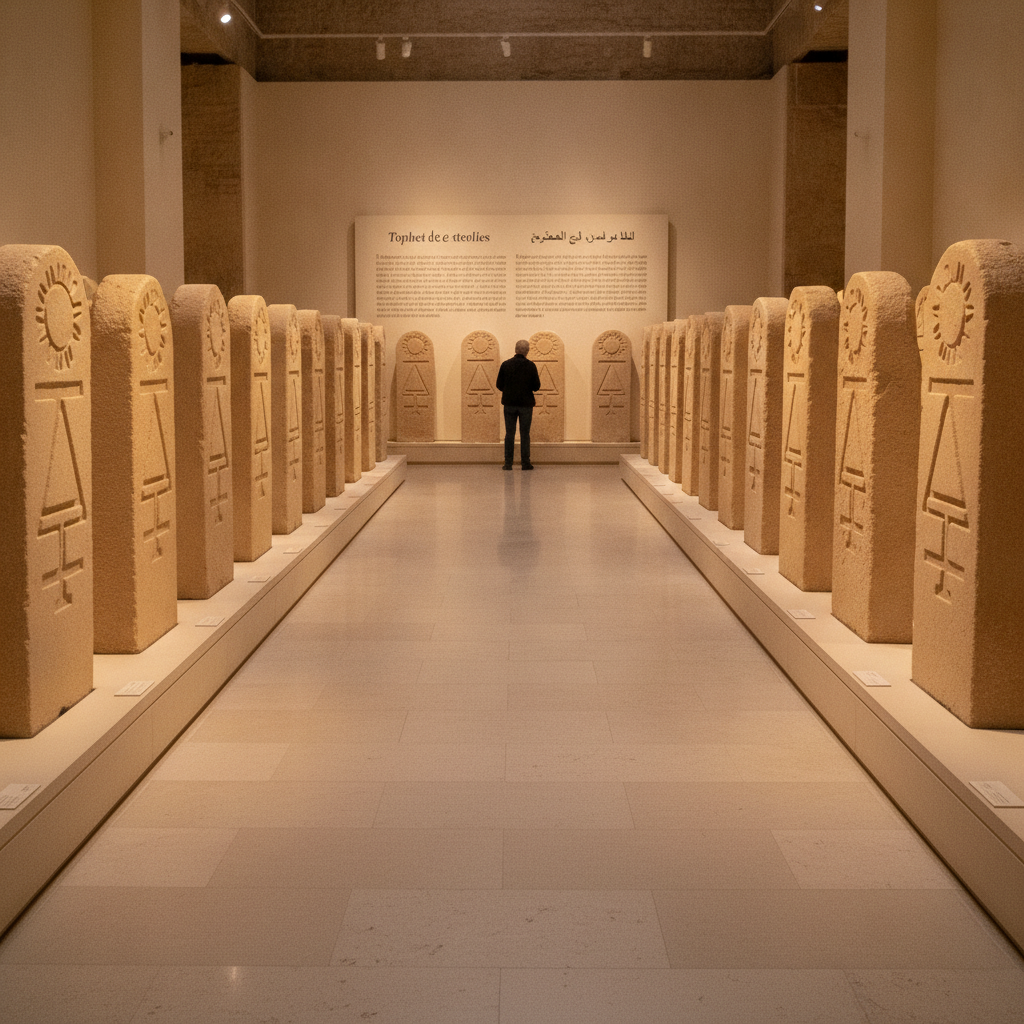
Dido Cut an Ox-Hide Into the Thinnest Possible Strips to Encircle Carthage's Founding Hill (Byrsa) and the Tophet Contains the Most Controversial Archaeological Debate in Mediterranean History; The Antonine Baths Were the Third Largest Roman Baths in the Empire and Their Single Re-Erected Column Represents a Frigidarium Once 52m x 42m; Perpetua's Prison Diary (203 CE) Written Before Her Execution in the Carthage Amphitheatre Is the Earliest Known Text Written by a Christian Woman
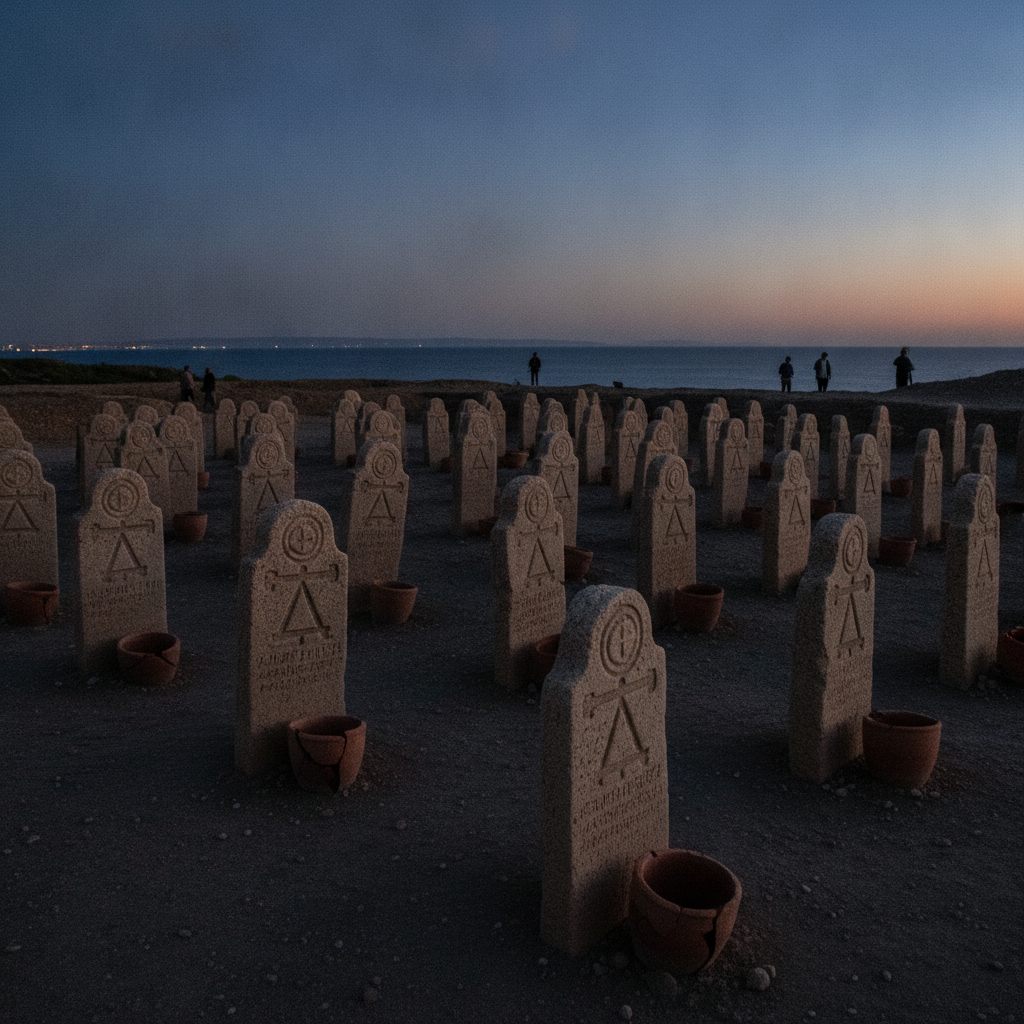
The Romans Captured a Beached Carthaginian Quinquereme and Built 120 Copies in 60 Days to Create the Navy That Won the First Punic War; Augustine of Hippo Wrote the First Autobiography in Western Literary Tradition (Confessions, 397 CE) Having Studied Rhetoric in Carthage; Cato the Elder Reportedly Ended Every Senate Speech With Carthage Must Be Destroyed After Returning With Fresh Carthaginian Figs to Show the Senate How Close Carthage Was to Rome
The Roman Senate Ordered the Mago Agricultural Treatise Translated Into Latin After Destroying Carthage Because It Was Too Valuable to Lose; Gaiseric's Vandals May Have Brought the Jerusalem Temple Menorah to Carthage in 455 CE Before Belisarius Captured It for Constantinople in 533 CE; Cato the Younger at Utica Re-Read Plato's Phaedo on the Immortality of the Soul Then Stabbed Himself Rather Than Submit to Julius Caesar
The Word Africa Derives From Afri the Berber-Punic People Near Carthage Making the Entire African Continent Named for a Carthaginian-Adjacent People; Purcell's Dido and Aeneas (1689) Aria When I Am Laid in Earth Is One of the Most Celebrated Baroque Arias; Tertullian of Carthage Coined Trinity, Person, and Sacrament and Cyprian's Extra Ecclesiam Nulla Salus (Outside the Church No Salvation) Shaped Catholic Theology for 1,600 Years