Chefchaouen Photography: The Golden Hour Strategy, the Most Photogenic Blue Lanes, the Chefchaouen Cats, the Rooftop Terrace Viewpoints, and the Instagram Culture vs the Authentic City
The Chefchaouen photography route covers the optimal golden hour and blue hour visit timing, the most photogenic specific lane locations in the medina, the cat photography tradition, the rooftop terrace panorama viewpoints, and the tension between the Instagram-driven tourism and the authentic medina life that the residents maintain.
- 1
Golden Hour Photography: The 6am to 8am Window
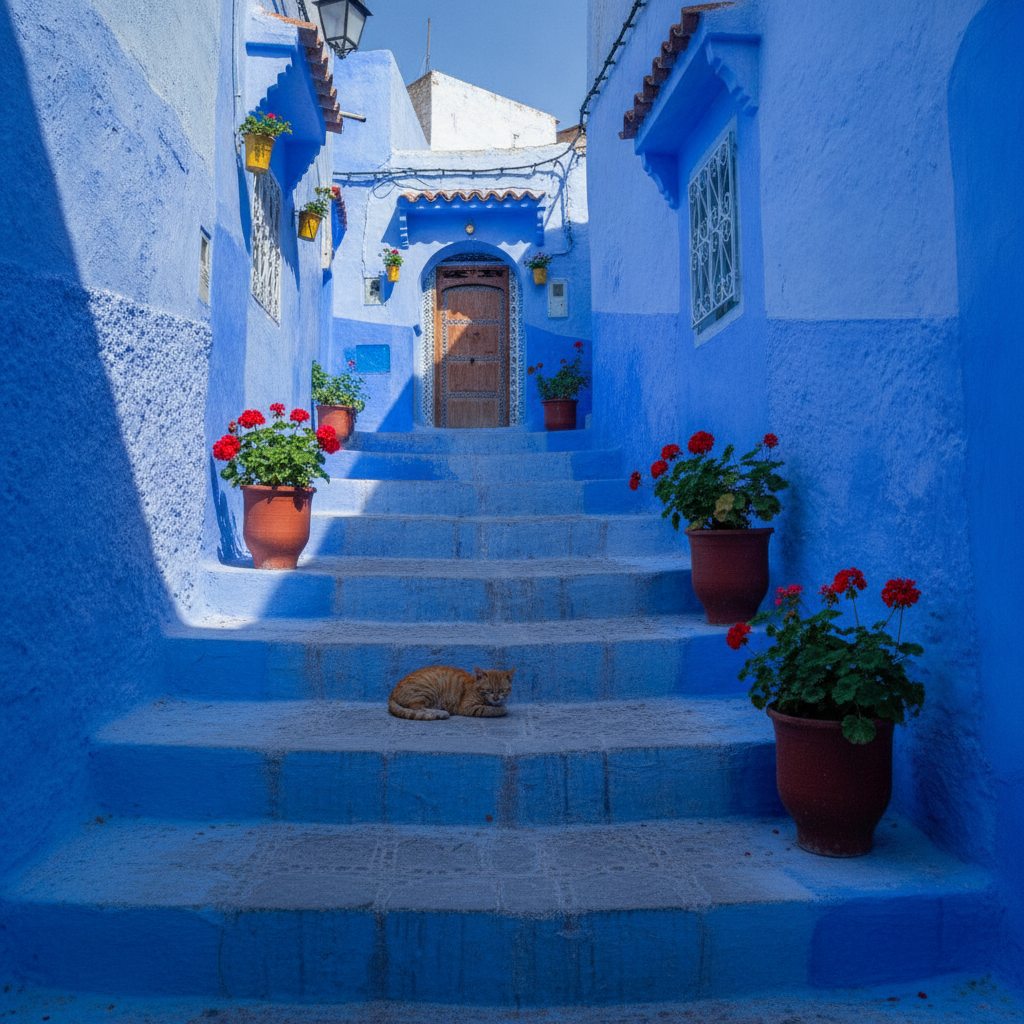
The Chefchaouen photography golden hour window from 6am to 8am provides the most productive single street photography in Morocco with the empty blue lanes, the warm horizontal light that reveals the texture of the painted pise walls and the variations in the blue pigment from wall to wall, and the local residents beginning their day before the tourist buses arrive at 9am. The medina lanes are most accessible at this hour without the photography crowd that by 10am fills the most famous staircases with the competing tripods. The Chefchaouen Photography Festival held annually since 2015 has codified the golden hour visit as the professional standard for the city documentation.
- 2
Most Photogenic Lanes: The Blue Staircase Circuit
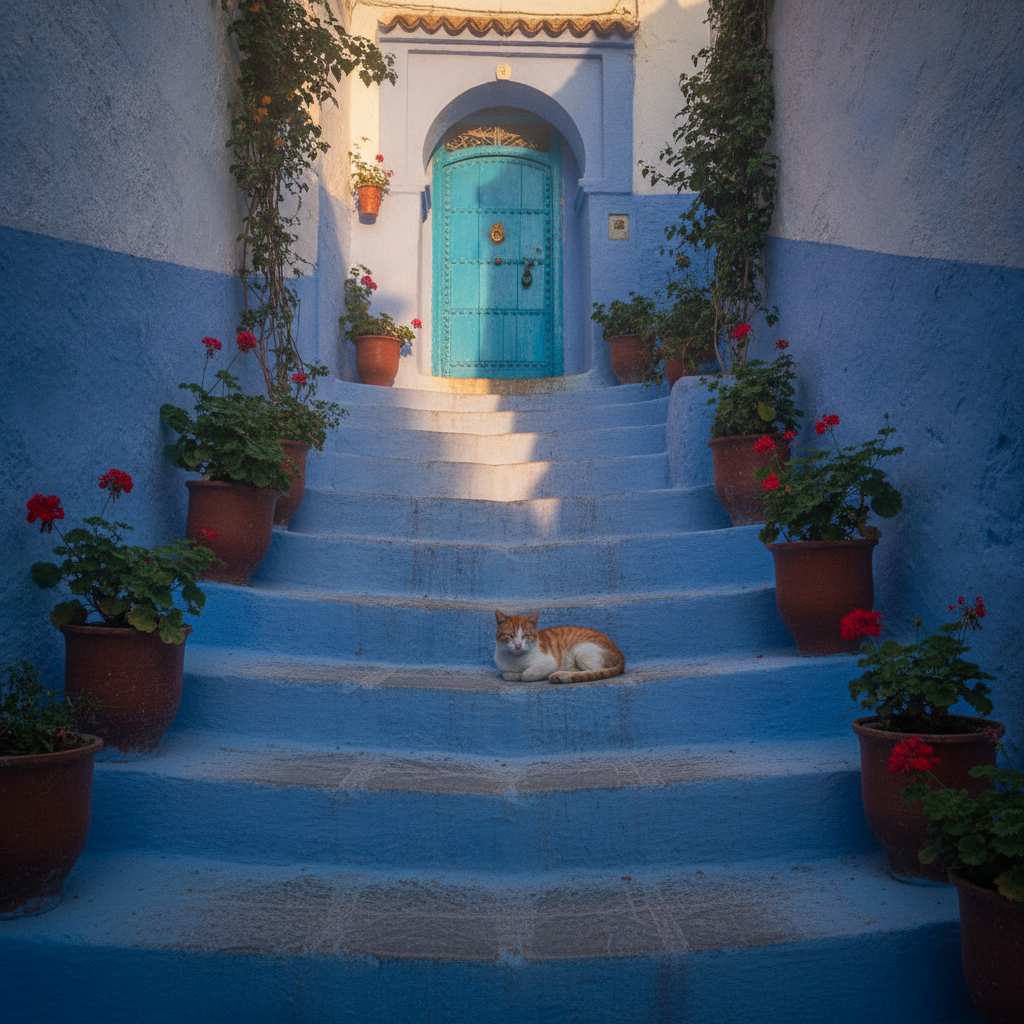
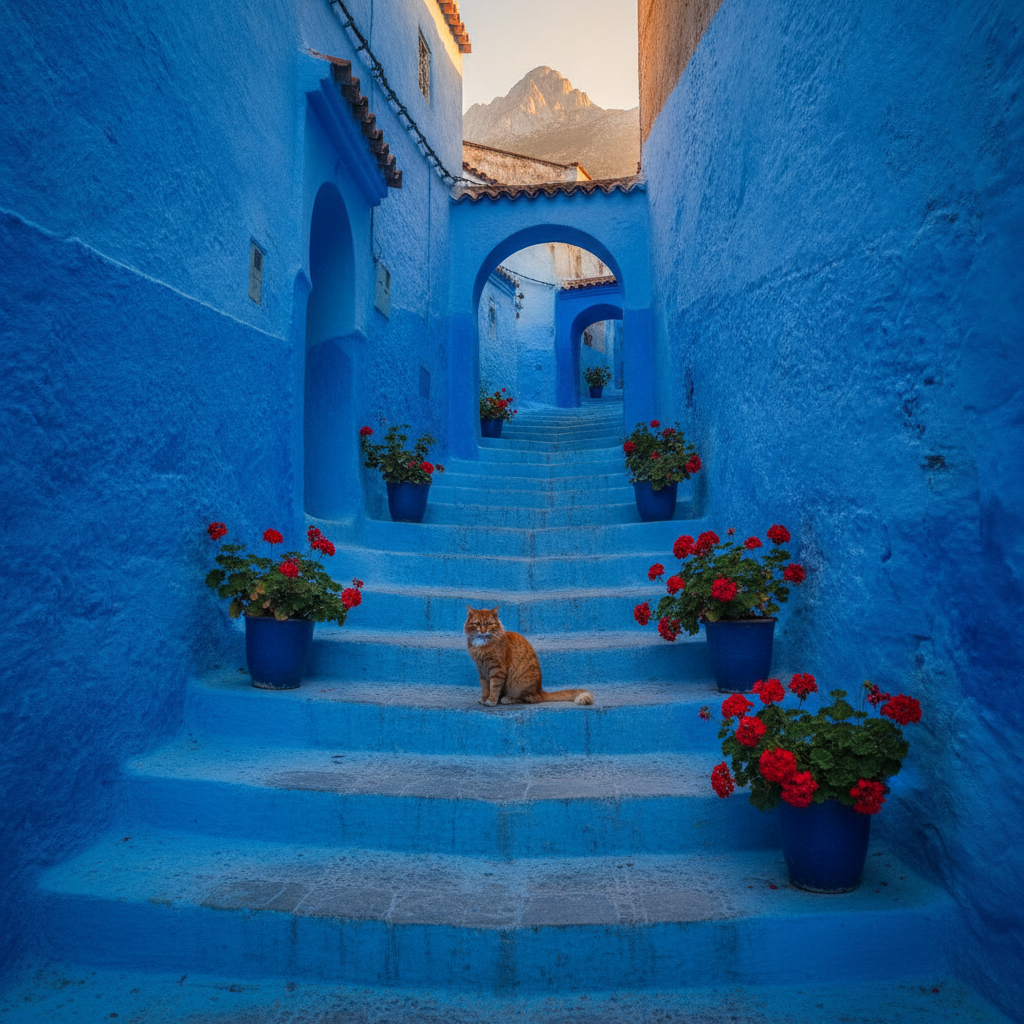
The most photographed single locations in the Chefchaouen medina are the Barrio Andaluz blue staircases above the Uta el-Hammam square (the vertical composition of the blue steps ascending between the blue walls), the Rue Targhi Derb outside the old medina wall gate (the curving lane with the multicolored door series and the overhead bougainvillea), and the plaza at the Ras el-Maa spring (the horizontal composition of the stream with the laundry women and the children). The GPS coordinates of the 10 most reproduced single lane views in Chefchaouen are available in every photography guide to the city.
- 3
Chefchaouen Cats: The Blue City Inhabitants
The Chefchaouen medina cats, the most photographically documented single feral cat colony in Morocco with an estimated 1,200 cats living in the medina lanes, have become the second most consistently photographed subject in Chefchaouen after the blue walls themselves. The cats are fed by the medina residents under the Islamic tradition of the charitable care for the animal and by the tourist photographing community as the most conveniently available single animate subject for the blue wall background composition. The specific Chefchaouen cat photographs that appear most frequently on social media show the orange tabby on the blue step and the white cat in the blue doorway.
- 4
Rooftop Terrace Viewpoints: The Panoramic Perspectives
The Chefchaouen rooftop terrace panoramic viewpoints include the restaurant terraces on the Uta el-Hammam square (the horizontal composition of the blue roofscape with the Grand Mosque minaret and the Rif mountains), the guesthouse terraces in the upper medina (the complete medina bowl view with the Kasbah and the Spanish Mosque above), and the Jebel el-Kelaa trail viewpoint (the aerial composition of the complete blue medina against the green Rif mountain). The sunset from the restaurant terraces above the Uta el-Hammam square is the most consistently crowded single evening photography event in Morocco.
- 5
Instagram Culture vs Authentic Chefchaouen
The Chefchaouen Instagram culture tension is the most openly discussed single topic in the Moroccan tourism media: the city that was an authentic Rif mountain medina of 40,000 residents until the 2015 Instagram explosion now receives 1.2 million annual visitors, 70 percent of whom identify social media as their primary motivation for visiting. The medina residents who spend the annual repainting budget to maintain the blue walls for the Instagram visitor market while negotiating the tripod-carrying photographers on the family staircase represent the most acutely Instagram-affected single community in North Africa. The result is simultaneously the most beautiful and the most contested single medina in Morocco.
- 6
Chefchaouen Without the Crowds: The Timing Strategy
The most effective single strategy for the authentic Chefchaouen experience without the Instagram crowd is the Sunday to Tuesday midweek visit in the April-May or the October-November period when the weekend Spanish day-tripper market from Ceuta and Melilla has returned and the summer peak has not arrived. The 7am to 9am morning window on any day in any season provides the most complete empty medina photography opportunity. The overnight visitor who is in the medina before 7am and after 9pm experiences the city that the 1.2 million annual visitors cannot: the quiet mountain medina of 40,000 residents going about their daily lives in the most beautiful painted single urban space in North Africa.
Walk this route with audio
Stories play automatically as you reach each stop — no tapping needed.
More in Chefchaouen
The Chefchaouen Jewish Community Spoke Haketia (15th Century Castilian Spanish) for 430 Years After the 1492 Expulsion and Spanish Military Officers Who Entered the City in 1920 Could Understand the Jewish Residents; The Rif Mountain Wild Thyme Honey Is the Primary Product of Chefchaouen's Traditional Agricultural Economy; Chefchaouen Receives 300,000-400,000 Visitors Per Year in a 0.4 km2 Medina
The Jebala Berbers of Chefchaouen's Western Rif Mountains Have Largely Lost Their Tamazight Language to Arabic Over the 17th-18th Centuries But Maintain a Distinct Cultural Identity in Dress, Music, and Agricultural Practices; Chefchaouen Spring (March-May) Offers the Best Combination of Wildflower Bloom, Mild Temperatures, Good Light, and Moderate Crowds; The Ouezzane Wazzaniyya Sufi Zawiya 44 km South of Chefchaouen Was Historically One of the Most Powerful Religious-Political Institutions in Morocco
Chefchaouen History: The Spanish Protectorate Era, the Rif War and Abd el-Krim, the Closed City Period, the Independence and Reopening, and the Bilingual Spanish-Arabic Culture
The Talassemtane National Park Protects the Only Significant Moroccan Population of the Abies Pinsapo Spanish Fir Tree Whose Primary Habitat Is the Sierra de las Nieves in Southern Spain; Chefchaouen Medina Was Described by Spanish Military Officers Entering in 1920 as the Most Perfectly Preserved Medieval Andalusian City Outside Andalusia Itself; The Beat Generation Writers Paul Bowles William S. Burroughs and Allen Ginsberg Were All Connected to Tangier During Its International Zone Period (1923-1956)
Chefchaouen's Blue Medina May Have Been Painted Blue By Jewish Refugees From the 1492 Spanish Expulsion Who Painted Doorways the Color of Heaven; The Rif Mountains Produce Approximately 40-60% of the Hashish Consumed in Europe With 90,000 Farming Families Dependent on Cannabis Cultivation; Morocco Legalized Cannabis Cultivation Under License in 2021 After Decades of the Largest Illegal Cannabis Production Zone in the World