Essaouira History: The Mogador Portuguese Trading Post, the Phoenician Foundation, the Jewish Merchant Community, the Gnawa Slave Trade Origins, the 18th Century Sultan Rebuilding, and the UNESCO Recognition
The Essaouira history route covers the Mogador Phoenician and Portuguese foundation, the Jewish merchant community that dominated the foreign trade, the Gnawa slave trade origins and the Atlantic trading post economy, the 18th century Sultan Mohammed Ben Abdallah rebuilding, and the 2001 UNESCO World Heritage inscription.
- 1
Mogador: The Phoenician and Portuguese Foundation
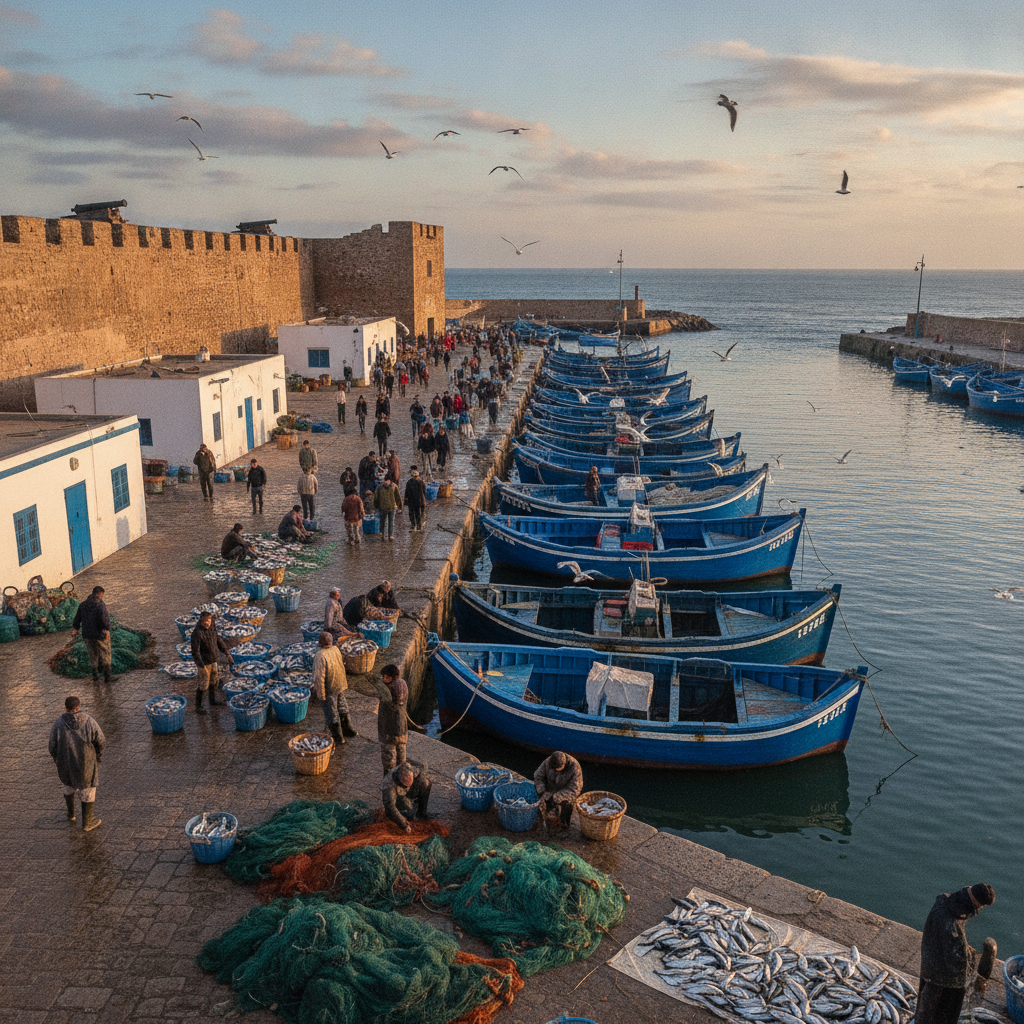
The Essaouira promontory, known as Mogador in the Phoenician and the Portuguese trading tradition, was occupied by the Phoenician traders as a purple dye (Tyrian purple from the Murex sea snail) production center in the 7th century BC, making it the westernmost single Phoenician trading post in Africa and one of the oldest continuously inhabited sites on the Atlantic Morocco coast. The Portuguese established a trading factory on the Mogador island (Ile de Mogador, 2 kilometers offshore) in 1506 and the name Mogador (from the Berber Amogdul, meaning walled place) remained the European name for Essaouira until independence.
- 2
Jewish Merchant Community: The Tujjar as-Sultan
The Jewish merchant community (tujjar as-sultan, merchants of the sultan) who were appointed by Sultan Sidi Mohammed Ben Abdallah to manage the foreign trade through Essaouira after the 1765 rebuilding became the most commercially important single minority community in the Moroccan trade economy with the European powers from 1765 to the late 19th century. The Jewish merchants of Mogador who spoke the European languages, maintained the commercial networks in Gibraltar, Cadiz, and Livorno, and served as the sultan's diplomatic intermediaries are the most commercially significant single Jewish community in pre-Protectorate Morocco.
- 3
Gnawa Origins: The Sub-Saharan Atlantic Connection
The Gnawa community of Essaouira, the descendants of the sub-Saharan West African slaves (from the Mali, the Senegal, and the Guinea coastal regions) who arrived in Essaouira via the trans-Saharan caravan trade route and the Atlantic slaving trade, maintained the most complete single living West African spiritual tradition in North Africa by integrating their pre-Islamic spiritual practices (the ancestor spirits, the healing ceremonies, the trance music) within the Islamic framework. The Essaouira Gnawa community is the largest single Gnawa community in Morocco and the most internationally recognized single Gnawa cultural institution.
- 4
Sultan Mohammed Ben Abdallah: The 1765 Rebuilding
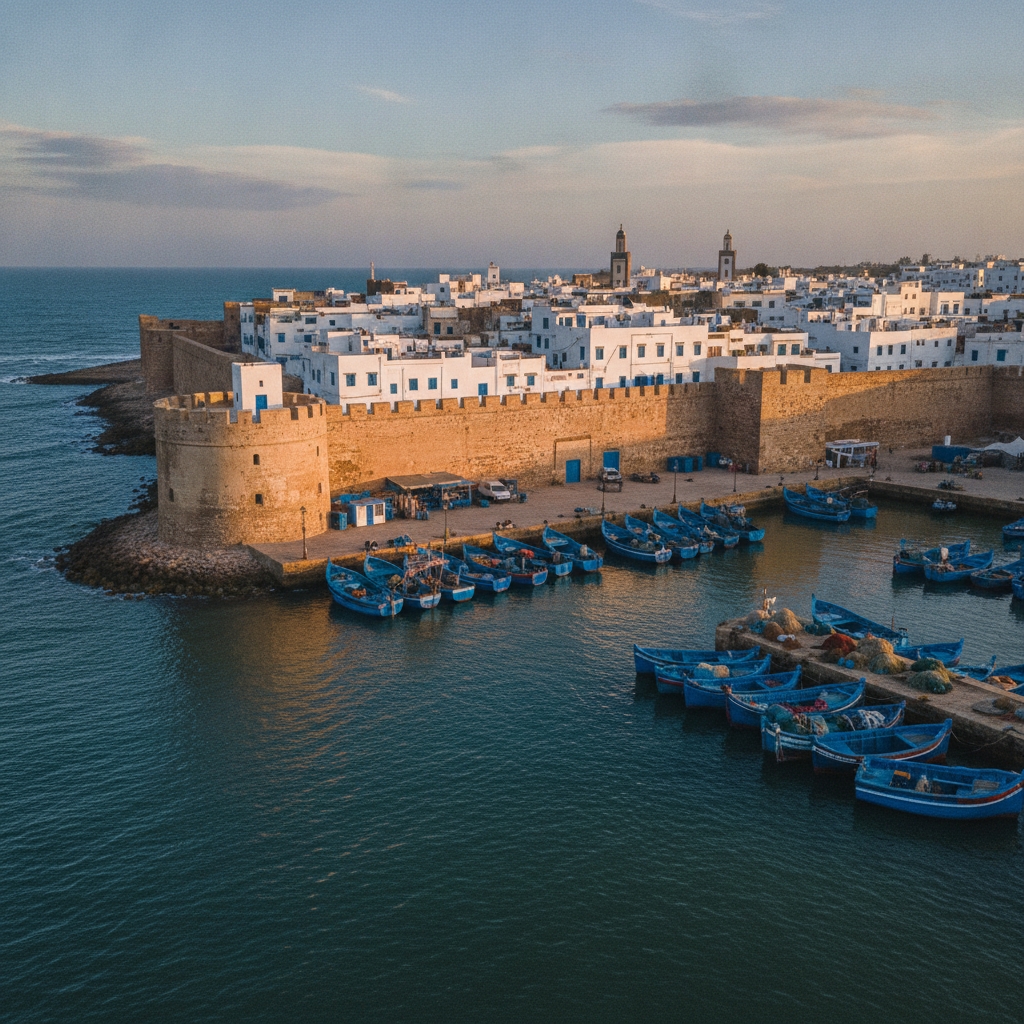
Sultan Sidi Mohammed Ben Abdallah rebuilt Essaouira as a planned Atlantic port city in 1765 for the dual purpose of channeling all Moroccan foreign trade through a single controlled port (replacing the Agadir monopoly of the Soussi merchants) and creating the strategic deep-water harbor for the Moroccan Atlantic naval presence. The Sultan hired Theodore Cornut, the French military engineer, to design the bastioned sea fortification in the Vauban military engineering tradition that created the most European-influenced single Moroccan coastal defensive architecture. The Sultan also established the Mellah, the rue des Consuls, and the separate residential quarters for the European and the Jewish merchant communities.
- 5
UNESCO 2001: The Recognition of Atlantic Heritage
The UNESCO World Heritage inscription of Essaouira in 2001 recognized the unique combination of the Moroccan medina urban tradition with the European military fortification architecture and the intercultural trading post character as the most outstanding single example of the late 18th century Atlantic Morocco port city. The UNESCO inscription specifically cited the Essaouira planned urban layout, the bastioned sea walls, and the medina as the most complete single surviving example of the 18th century fortified trading city on the Moroccan Atlantic coast.
- 6
Essaouira Portuguese Island: The Offshore Mogador
The Ile de Mogador (Iles Purpuraires), the island group 2 kilometers offshore from Essaouira where the Phoenicians collected the Murex snails for the Tyrian purple dye and the Portuguese built their 1506 trading factory, is now a protected marine reserve and the most important single Eleonora's falcon breeding colony in Morocco with 300 nesting pairs. The island is accessible by the fishing boat from the Essaouira harbor and the combination of the Phoenician dye factory ruins, the Portuguese chapel remains, and the Eleonora's falcon colony make it the most historically layered single offshore island visit in the Moroccan Atlantic.
Walk this route with audio
Stories play automatically as you reach each stop — no tapping needed.
More in Essaouira
The Guanche Indigenous Population of the Canary Islands Were Amazigh (Berber) Speakers Linguistically Related to the Tamazight Populations of the Moroccan Atlantic Coast Who Were Progressively Conquered by Spanish Settlers in the 15th Century; The Battle of Alcacer Quibir in 1578 Where the Moroccan Saadians Killed Portuguese King Sebastian I Triggered the Portuguese Succession Crisis Leading to the 60-Year Iberian Union of Portugal and Spain Under Philip II; The Essaouira Pastilla au Fruits de Mer (Shrimp, Crab, and White Fish in Warqa Pastry With Saffron Cream) Was Invented in Essaouira as a Seafood Adaptation of the Classic Fassi Bastilla
Essaouira Practical: Transport from Marrakech and Agadir, the Best Riad Accommodation, the Optimal Visit Timing, the Wind Season Implications, and the Departure Summary
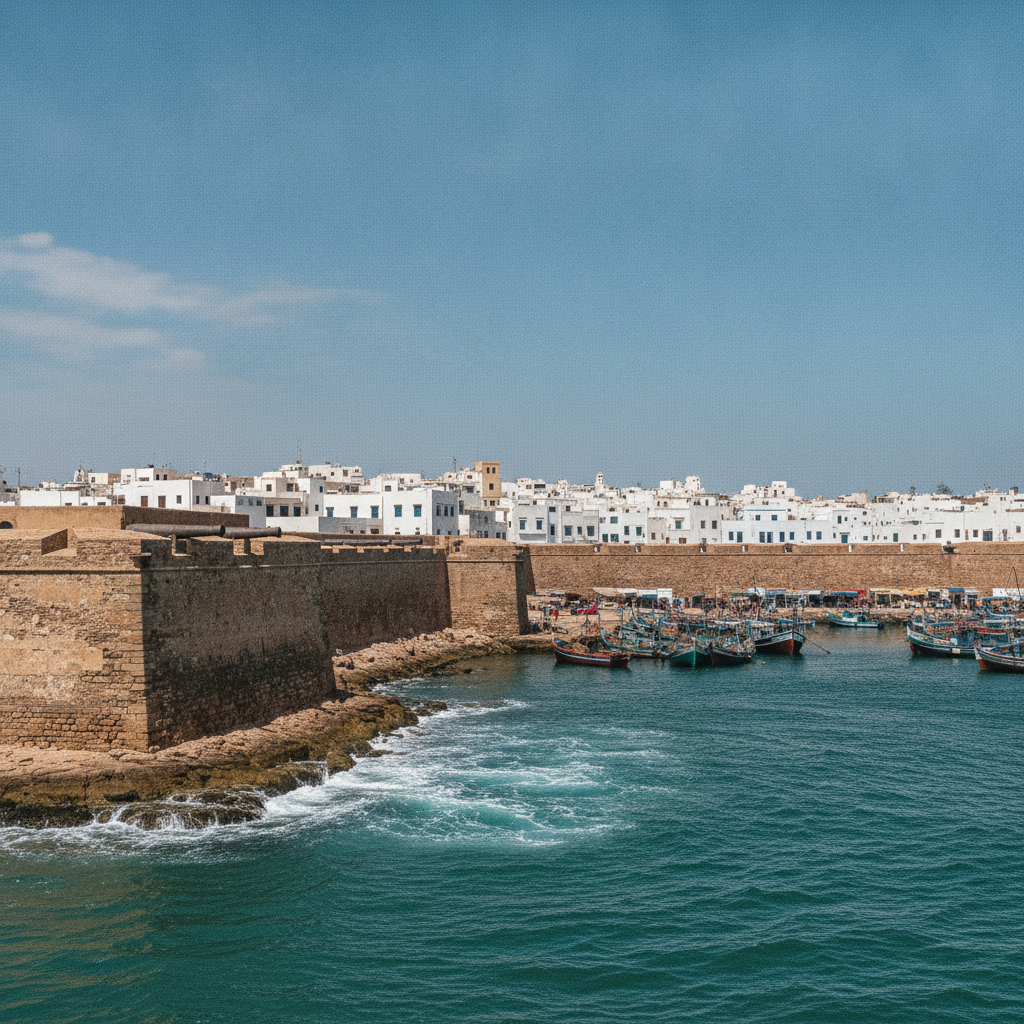
Essaouira Essential: The Atlantic Ramparts, the UNESCO Medina, Gnawa Music, the Mogador Portuguese Heritage, the Orson Welles and Jimi Hendrix Connections, and the Wind City Character
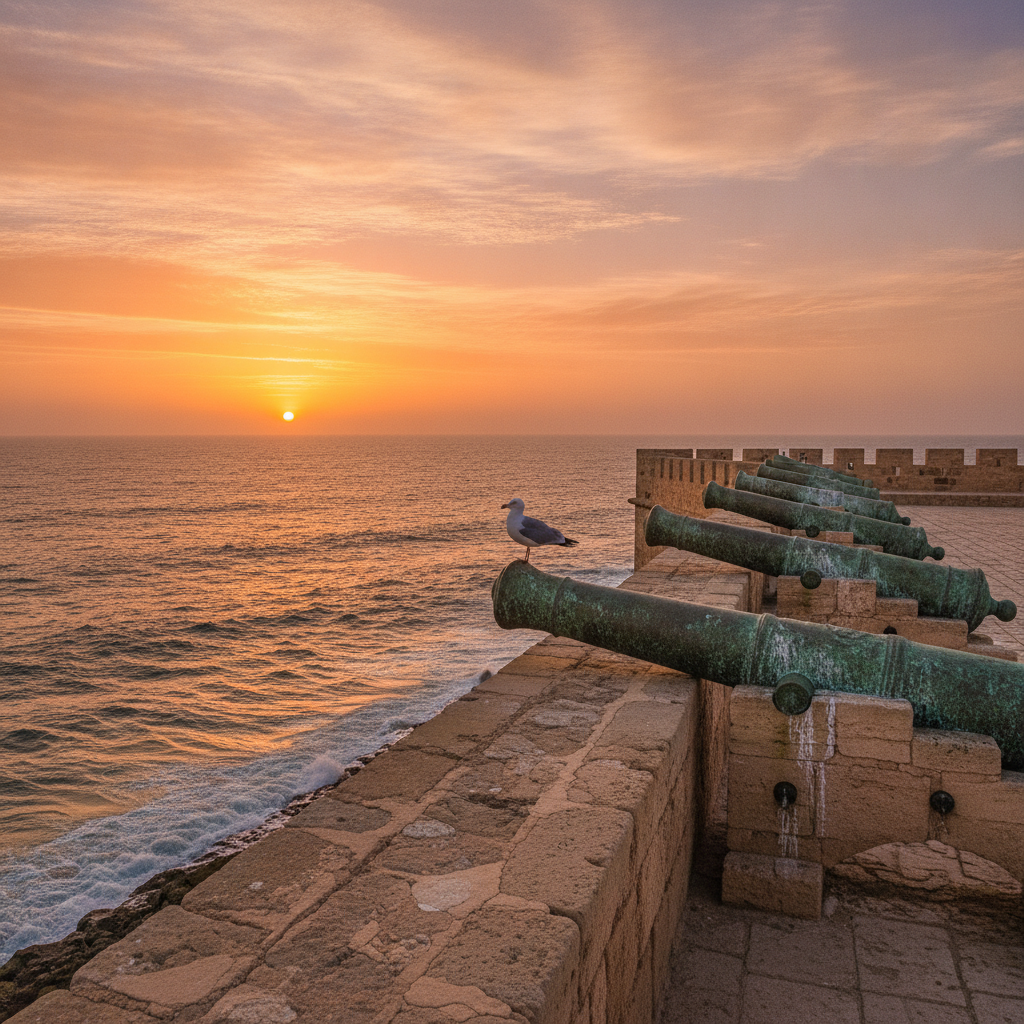
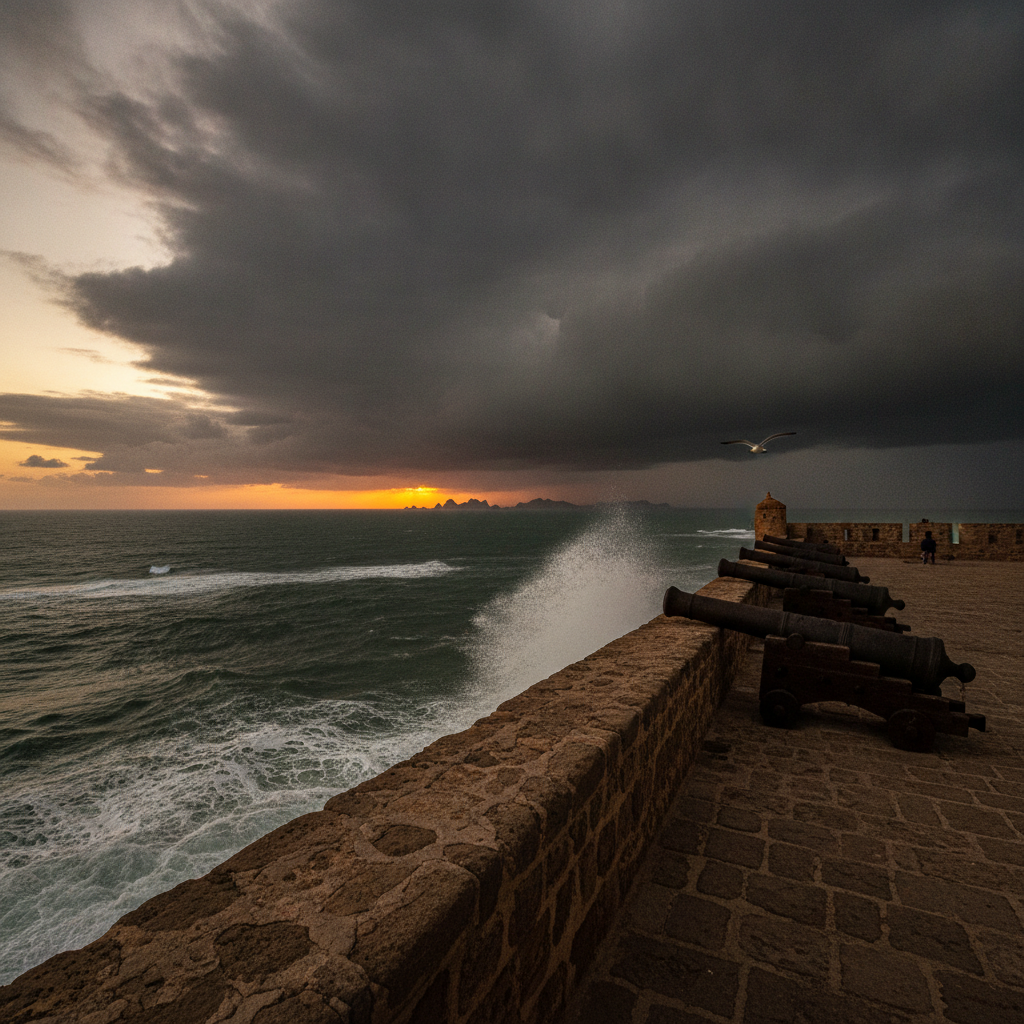
Essaouira's UNESCO-Listed Ramparts Were Designed by French Engineer Theodore Cornut in 1764-1765 Under Sultan Mohammed III and Line the Atlantic With 17th-18th Century Bronze Cannons Seized From European Ships; The Gnawa and World Music Festival of Essaouira Attracts 450,000-500,000 Visitors Over 4 Days in June and Is the World's Largest Gnawa Festival; The Thuya Arborvitae Root Burl Exploitation for the Essaouira Marquetry Craft Is Not Sustainable as Burl Harvesting Kills the Root System Preventing Tree Regeneration
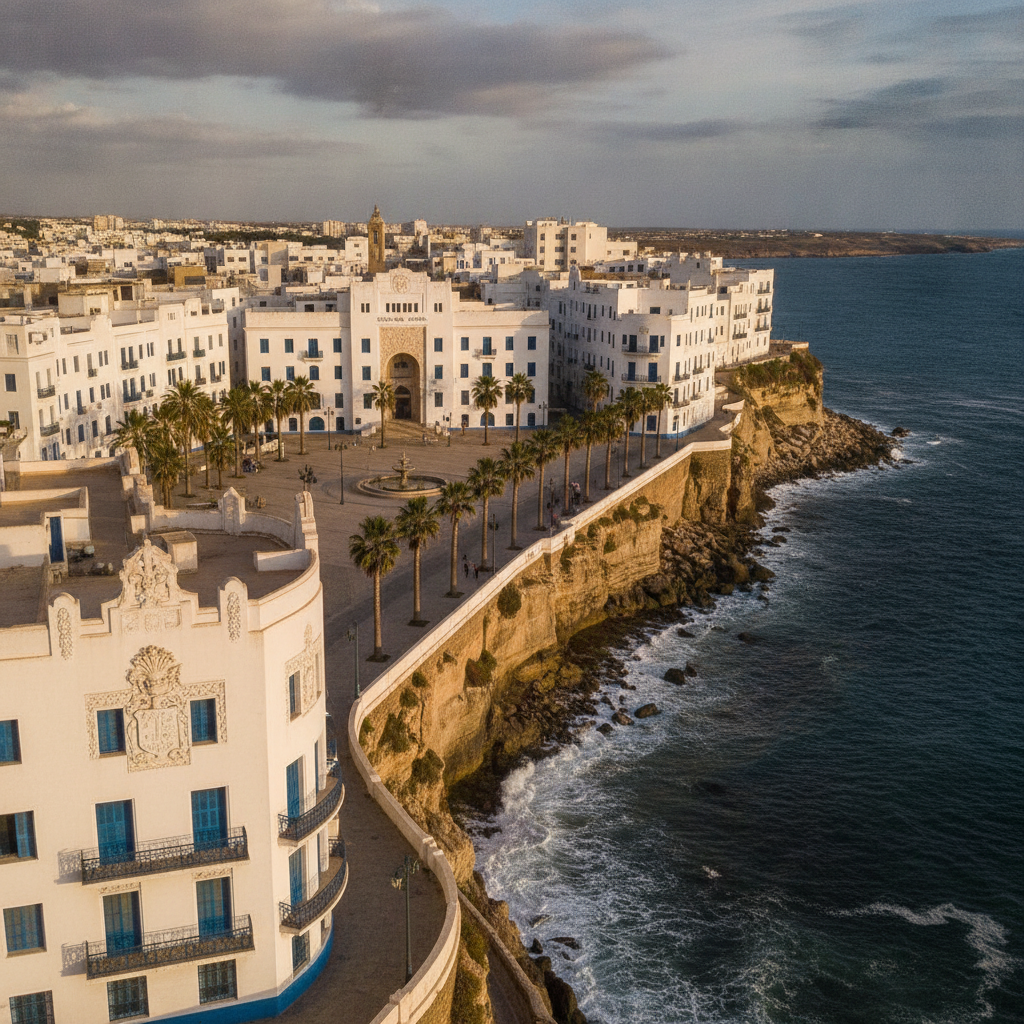
Essaouira South: Sidi Ifni the Art Deco Spanish Enclave, Tiznit the Silver Jewelry Capital, the Souss Valley Connection, and the Route to Agadir