Fes Essential: Fes el-Bali the World Oldest Living Medina, the Bou Inania Madrasa, al-Qarawiyyin University, the Chouara Tanneries, the Blue Gate, and the Medieval City Character
The Fes essential circuit covers Fes el-Bali as the largest car-free urban area in the world and the most completely intact medieval Islamic city, the Bou Inania Madrasa with its water clock, al-Qarawiyyin as the oldest continuously operating university in the world, the Chouara Tanneries from the leather shop viewing terraces, and the Bab Bou Jeloud Blue Gate.
- 1
Fes el-Bali: The World Most Intact Medieval City
Fes el-Bali (Old Fes), the medina founded in 789 AD by Idris I, is the largest car-free urban area in the world at 300 hectares and the most completely intact single medieval Islamic city anywhere with its 9,500 lanes, 140 mosques, 100 public bathhouses (hammams), 150 funduqs (merchant inns), and a resident population of 200,000 living in essentially the same physical urban fabric that the Marinid dynasty completed in the 14th century. UNESCO inscribed it as a World Heritage Site in 1981 as the most outstanding example of a living medieval Islamic city and the site that most completely preserves the spatial organization of the historic North African medina.
- 2
Al-Qarawiyyin: The World Oldest University
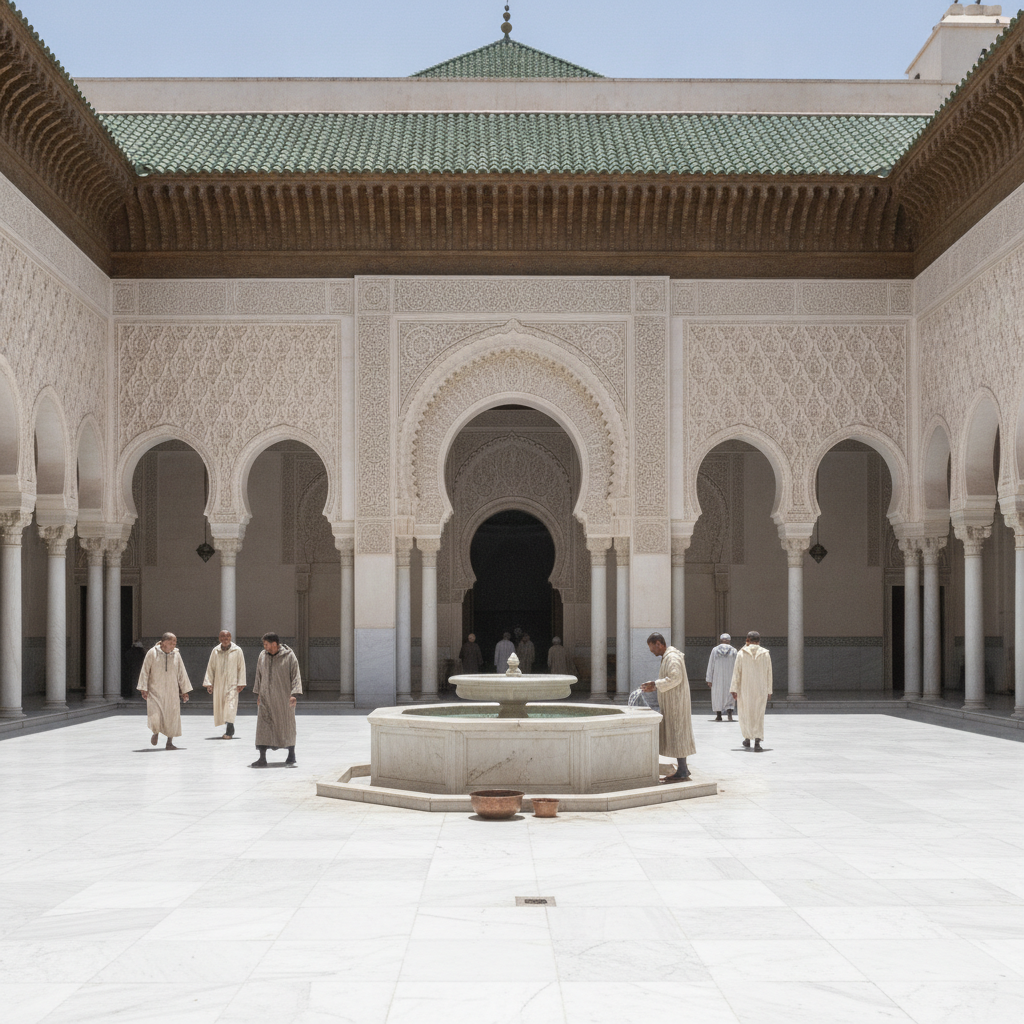
Al-Qarawiyyin University in Fes, founded in 859 AD by Fatima al-Fihri, the daughter of a wealthy Tunisian merchant, is recognized by the Guinness World Records and UNESCO as the oldest continuously operating educational institution in the world, having awarded degrees in theology, Islamic law, rhetoric, and grammar for 1,165 years. The al-Qarawiyyin mosque and university complex, the largest single religious building in Africa and the third largest in the world, is closed to non-Muslim visitors but the courtyard and the fountain through the open doorways during prayer times provides the most direct single encounter with the living religious university tradition in North Africa.
- 3
Bou Inania Madrasa: The Marinid Masterpiece
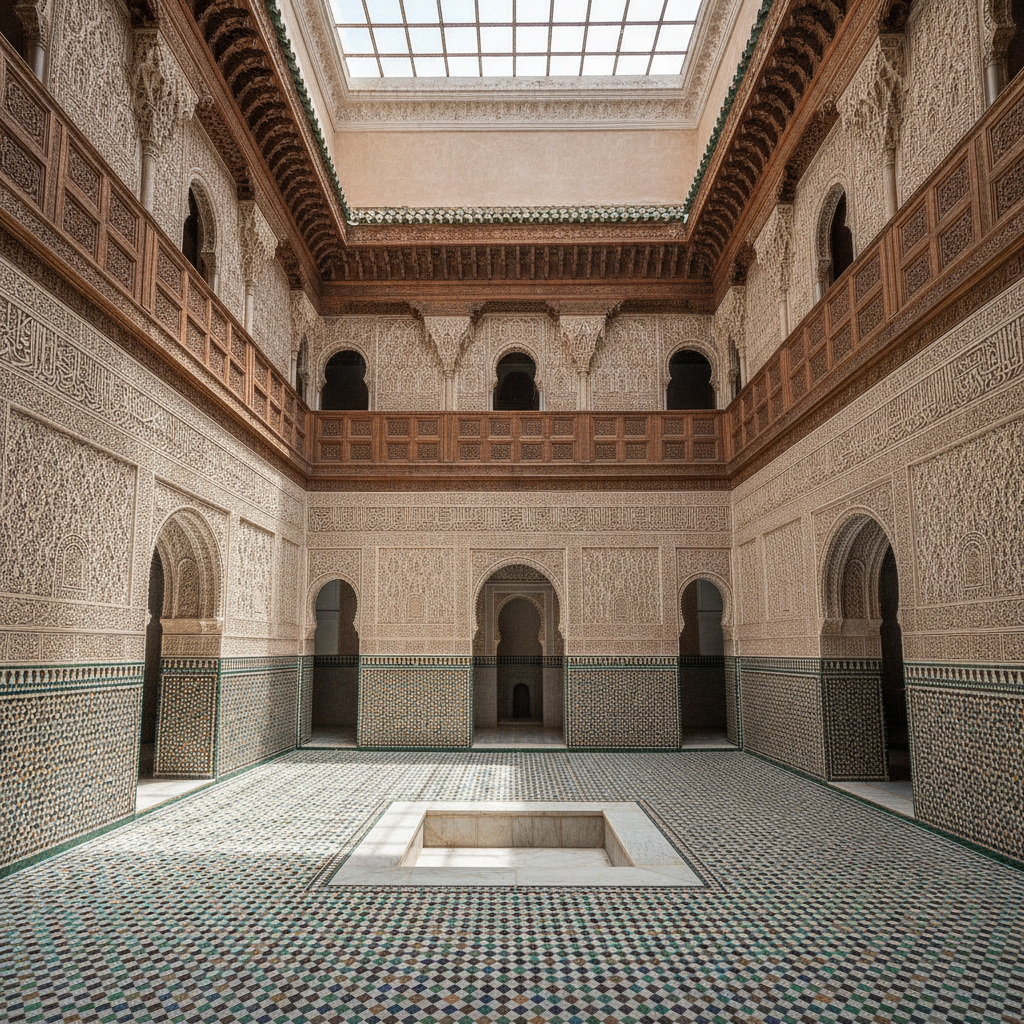
The Bou Inania Madrasa, built between 1350 and 1357 by Sultan Abu Inan Faris of the Marinid dynasty opposite the al-Qarawiyyin University, is the most elaborately decorated single madrasa in Morocco with the zellige tile courtyard, the carved stucco walls, and the cedar wood muqarnas ceiling in the most perfect single expression of the Moroccan Marinid decorative synthesis. The adjacent water clock (ablaq clock), the carved cedar wood projection that once dropped bronze balls into brass bowls to strike the hours, is the most mechanically sophisticated single medieval Islamic timekeeping device and the mechanism most completely analyzed by the Moroccan scholar Ibn Marzuq in the 14th century.
- 4
Chouara Tanneries: The Medieval Dyeing Vats
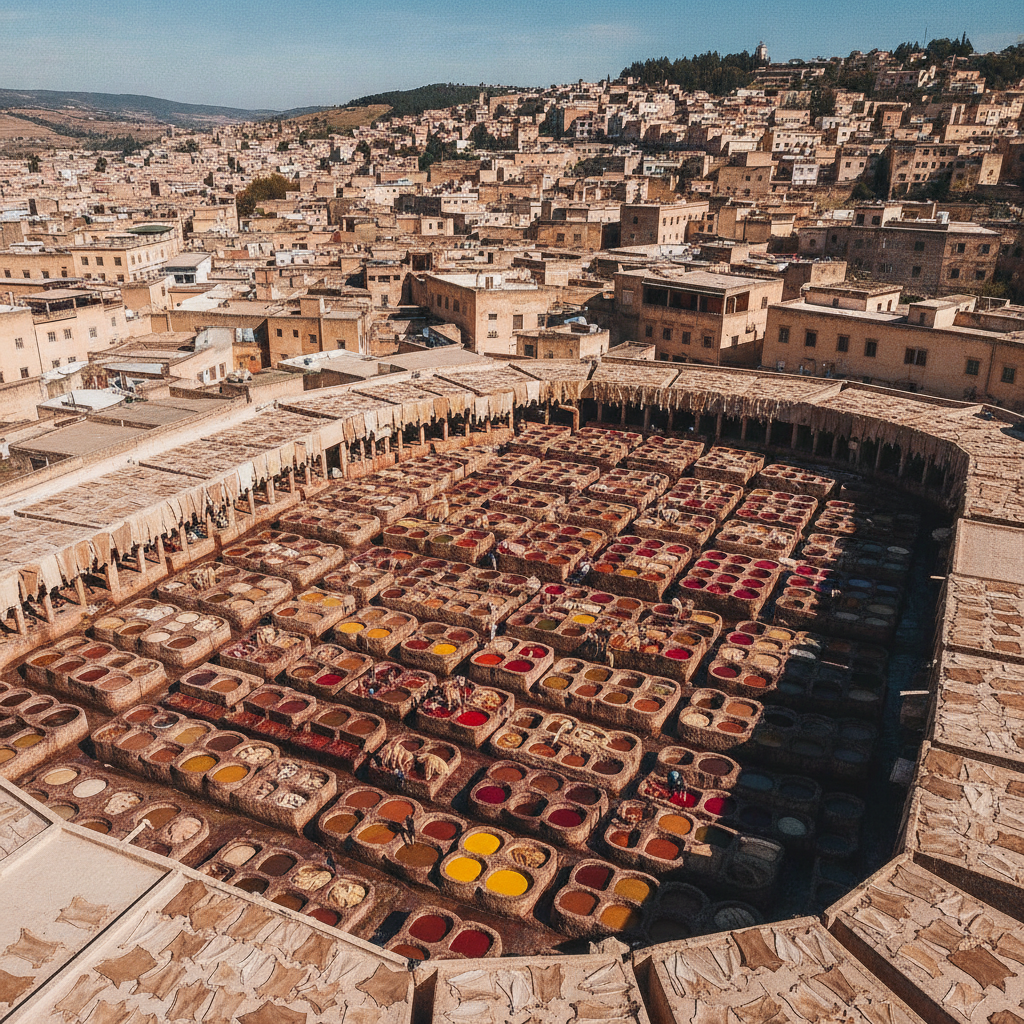
The Chouara Tanneries in the northeastern Fes el-Bali, the oldest continuously operating tannery in the world, present the most viscerally powerful single working craft experience in Morocco with the circular stone vats filled with the natural dyes of the poppy red, the saffron yellow, the indigo blue, the cedar brown, and the pigeon guano white where the barefoot workers tread the hides in the most physically demanding single craft labor in Morocco. The tannery view from the surrounding leather goods shop terraces (mint sprigs offered to offset the smell) is the most iconic single industrial heritage panorama in North Africa and the image most reproduced in Morocco travel photography.
- 5
Bab Bou Jeloud: The Blue Gate of Fes
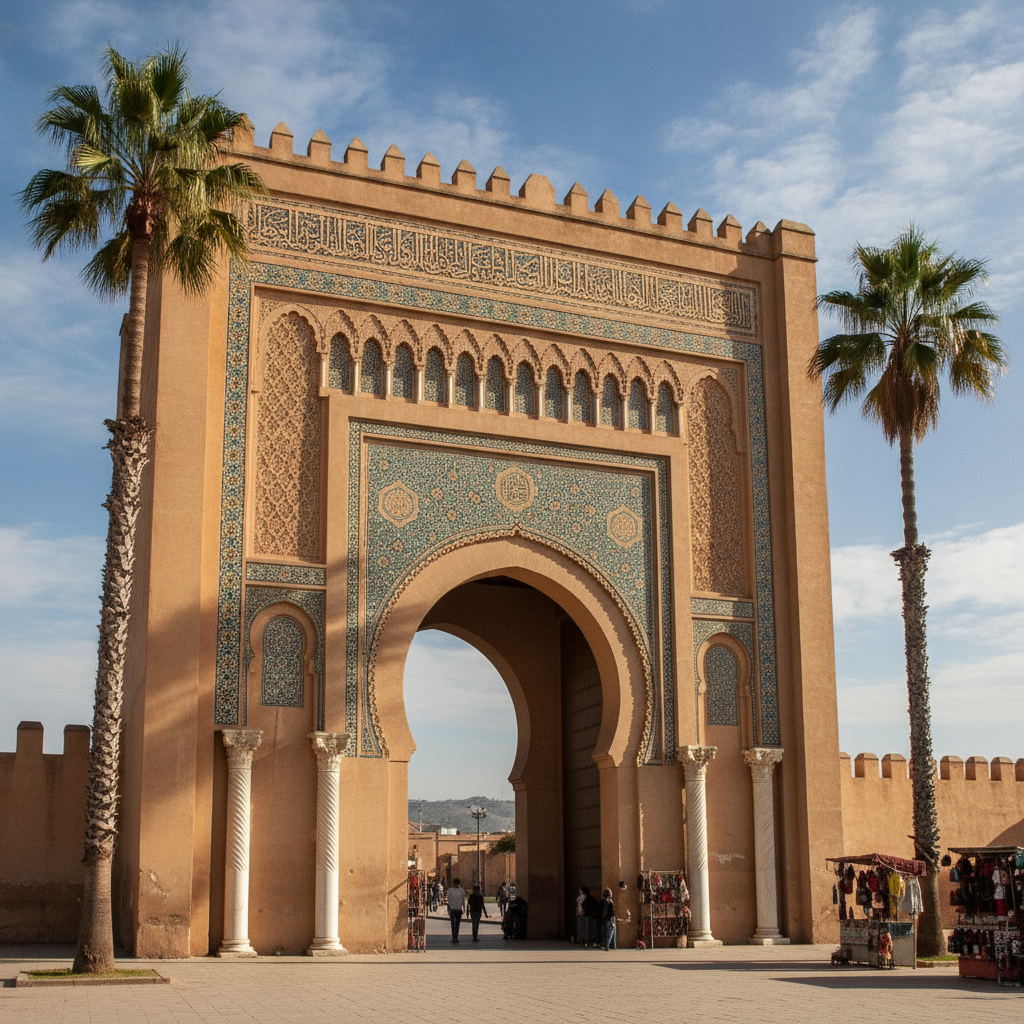
The Bab Bou Jeloud gate (Blue Gate), the ceremonial entrance to Fes el-Bali built in 1913 in the Moorish Revival style by the French Protectorate as the most visually impactful single entrance to any North African medina, is covered in the blue zellige tiles facing the French Protectorate Ville Nouvelle (blue is the color of Fes) and the green zellige tiles on the medina-facing side (green is the color of Islam). The gate is now the most photographically reproduced single architectural element in Fes and the orientation landmark for the most photogenic single approach to any Moroccan medina. The evening mint tea at the Bab Bou Jeloud cafe terraces is the most atmospheric single people-watching position in Fes.
- 6
Fes el-Jedid: The Marinid New City
Fes el-Jedid (New Fes), built by the Marinid dynasty adjacent to Fes el-Bali in 1276, contains the Dar al-Makhzen royal palace, the largest Mellah (Jewish quarter) in Morocco, the Moulay Abdallah quarter, and the connecting Bou Jeloud Gardens between the two medinas. The royal palace of Fes with the most ornately decorated bronze doors in Morocco - the 7 golden-bossed carved cedar doors facing the Royal Palace Square - is the most photographically composed single gateway in the country and the most frequently photographed official building in Morocco after the Chefchaouen blue streets.
Walk this route with audio
Stories play automatically as you reach each stop — no tapping needed.
More in Fes
Morocco's King Bears the Title Amir al-Muminin (Commander of the Faithful) Giving the Moroccan Monarchy a Unique Theocratic Religious Legitimacy Distinct From All Other Arab Monarchies; The Andalusian Music Tradition al-Ala Was Brought to Fes by Refugees From the 1492 Expulsion of Muslims and Jews From Spain and Is Still Performed in Three Regional Schools; Fes Is Arguably the Most Important Single City in the Spiritual Life of West African Islam Through the Tijaniyya Sufi Order With 100-150 Million Adherents
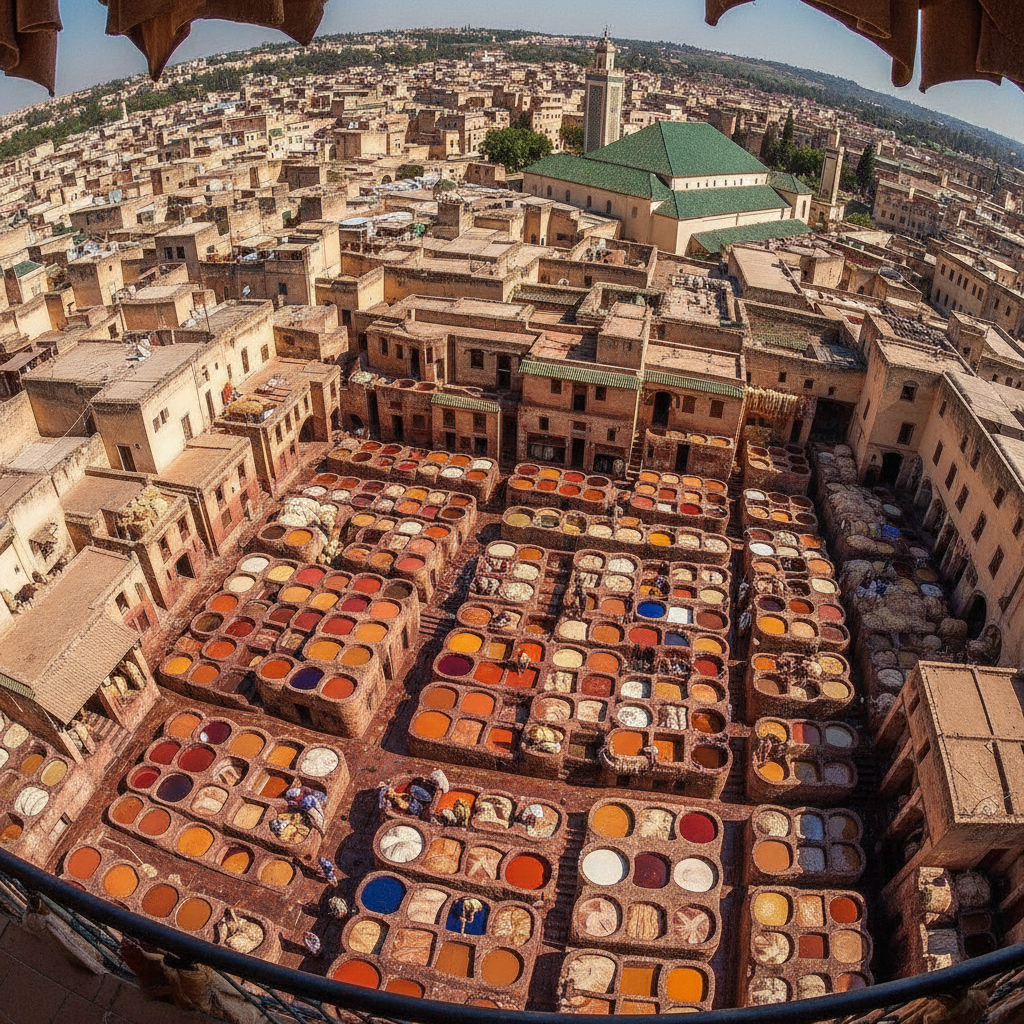
The Fes el-Bali Medina Is the Largest Car-Free Urban Area in the World With 9,000 Streets and 150,000 Inhabitants; The University of al-Qarawiyyin Founded in 859 CE by Fatima al-Fihri Is the Oldest Continuously Operating University in the World; The Chouara Tannery Uses Pigeon Dung as an Ammonia Source to Soften Hides in a Process Unchanged Since the Medieval Period
The Fes Festival of World Sacred Music Founded in 1994 Presents Sufi, Gnawa, Gregorian, Jewish, Hindu, and Buddhist Sacred Music in Venues Within the 1,200-Year-Old Medina; The Almohad Dynasty (1147-1244) Was the Most Hostile to Jews in Moroccan History Forcing Conversion or Emigration and Driving Fassi Jews to Flee to Christian Spain; The Fes Medina Has No Single Tourist Focal Square Like Marrakech's Djemaa el-Fna Making It More Authentically Urban and Less Tourist-Organized
Fes History: The Idrisid Foundation, the Marinid Golden Age, the Wattasid and Saadian Decline, the Alaouite Revival, the French Protectorate, and the Contemporary Fes Identity
Fes Craft Heritage: The Al-Attarine Madrasa, the Nejjarine Fountain and Museum, the Funduq Carpenter Tradition, the Fes Pottery Blue Ceramic, and the Living Craft Guilds