Fes Region: Ifrane the Little Switzerland, the Cedar Forest and the Barbary Macaques, the Azrou Monday Market, the Michlifen Ski Resort, and the Middle Atlas Berber Landscape
The Fes region day trip covers Ifrane as the most European-looking single town in Morocco, the ancient cedar forest of Azrou with its free-ranging Barbary macaque colony, the Azrou Monday market as an authentic Berber rural market, the Michlifen volcanic lake ski resort, and the Middle Atlas mountain landscape.
- 1
Ifrane: The Swiss Alps Town in Morocco
Ifrane, 68 kilometers from Fes at 1,665 meters altitude in the Middle Atlas mountains, is the most architecturally anomalous single town in Morocco - the European alpine-style stone chalets with the steeply pitched red-tile roofs built by the French Protectorate in the 1930s as a mountain retreat that most closely resembles a Swiss alpine village transplanted to the North African mountain plateau. The Ifrane University, the most technically advanced single Moroccan university campus (modeled on the American university), and the royal palace winter residence make Ifrane the most prestigious single mountain town in Morocco and the cleanest single urban environment in the country.
- 2
Cedar Forest: The Barbary Macaque Habitat
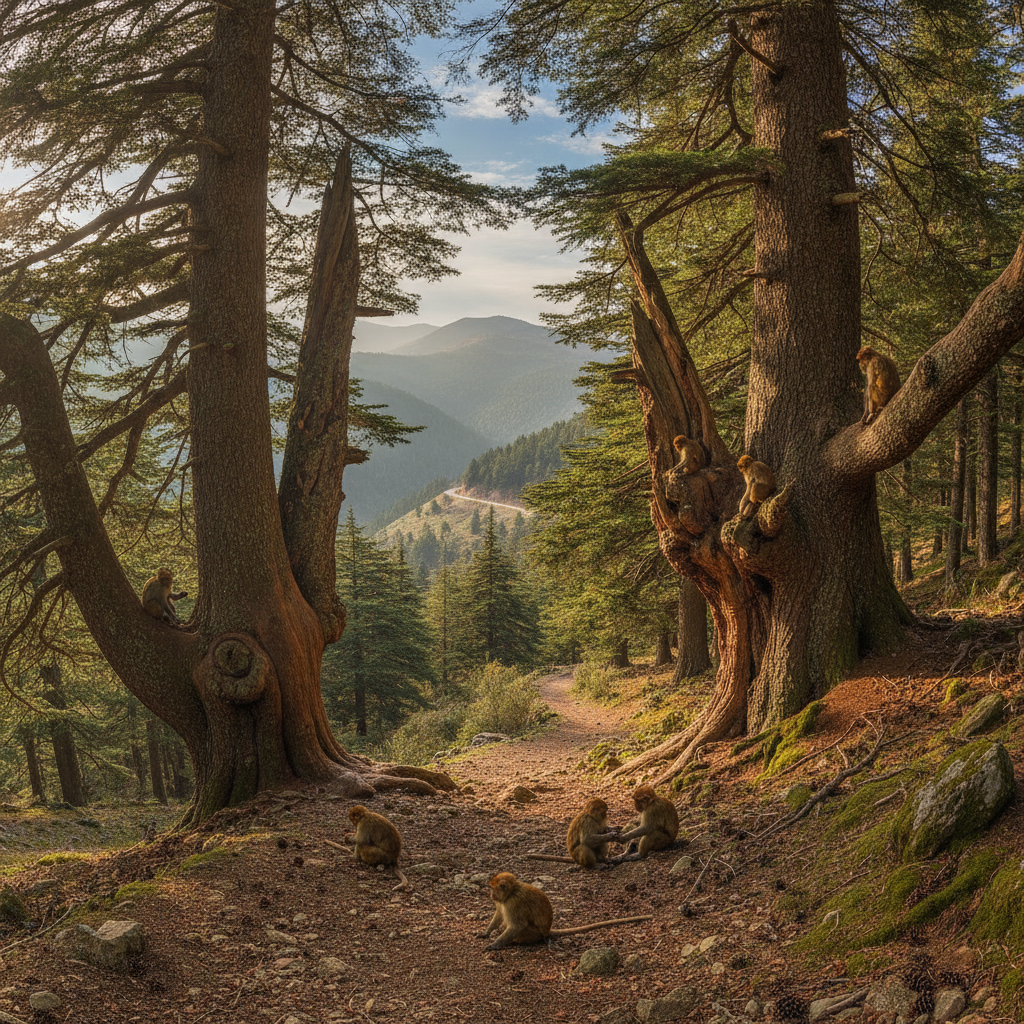
The Cèdre Gouraud (ancient cedar tree) at the Azrou cedar forest, the most celebrated single tree in Morocco with an estimated age of 800 years, stands in the most extensive single cedar (Cedrus atlantica) forest in North Africa, covering 200,000 hectares of the Middle Atlas. The forest is the primary habitat of the Barbary macaque (Macaca sylvanus), the only wild primate on the African continent north of the Sahara, and the Azrou cedar forest macaque colony of approximately 5,000 individuals represents the most accessible single wild macaque viewing opportunity in the world outside the Gibraltar colony. The macaques approach visitors directly for the food contact.
- 3
Azrou Monday Market: The Berber Rural Market
The Azrou Monday market, held in the open-air market ground below the Azrou village on the Fes-Marrakech road, is the most authentically rural single Berber weekly market accessible from Fes with the Middle Atlas Berber farmers selling the live sheep, the walnuts, the honey, the potatoes, the hand-woven Berber rugs, and the traditional Berber clothing in the most completely non-tourist single rural market environment in the Fes region. The Azrou market draws the Berber community from 20 surrounding villages and the livestock section is the most complete single rural livestock trading event in the Middle Atlas.
- 4
Michlifen: The Morocco Ski Crater
Michlifen, the volcanic lake crater at 2,000 meters altitude 17 kilometers from Ifrane, is the most scenically dramatic single ski area in Morocco with the crater bowl containing the snow-covered ski runs and the Michlifen Hotel on the crater rim providing the most panoramically positioned single ski resort accommodation in Africa. The Michlifen ski season runs from January to March with the most reliable single snow cover in Morocco (the Middle Atlas receives the most precipitation of any Moroccan mountain range) and the Michlifen ski lift serves the most genuinely vertical single ski terrain accessible from Fes.
- 5
Middle Atlas Wildlife: The Mountain Ecosystem
The Middle Atlas mountain ecosystem, the most biodiverse single mountain range in Morocco, supports the Barbary macaque, the Barbary red deer (Cervus elaphus barbarus, the only surviving wild red deer population in Africa), the wild boar, the Barbary leopard (critically endangered, less than 100 individuals surviving), the golden eagle, and the Moussier redstart (endemic to North Africa) in the most completely North African mountain wildlife community accessible from any Moroccan city. The Michlifen area and the Boulmane du Dades region are the most productive single wildlife observation sites in the Middle Atlas.
- 6
Moulay Idriss and Volubilis: The Sacred and the Roman
The Moulay Idriss Zerhoun pilgrimage town 50 kilometers from Fes, the most sacred single non-royal site in Morocco containing the tomb of Idris I, the founder of the Moroccan state and the great-great-grandson of the Prophet Muhammad, and the adjacent Volubilis Roman city, the most completely excavated single Roman site in Morocco with the triumphal arch, the mosaics, and the Capitoline temple, are the most historically layered combined sites in Morocco and the single day circuit from Fes or Meknes that most compresses the Roman and the Islamic Moroccan history into the most dramatic single landscape.
Walk this route with audio
Stories play automatically as you reach each stop — no tapping needed.
More in Fes
Morocco's King Bears the Title Amir al-Muminin (Commander of the Faithful) Giving the Moroccan Monarchy a Unique Theocratic Religious Legitimacy Distinct From All Other Arab Monarchies; The Andalusian Music Tradition al-Ala Was Brought to Fes by Refugees From the 1492 Expulsion of Muslims and Jews From Spain and Is Still Performed in Three Regional Schools; Fes Is Arguably the Most Important Single City in the Spiritual Life of West African Islam Through the Tijaniyya Sufi Order With 100-150 Million Adherents
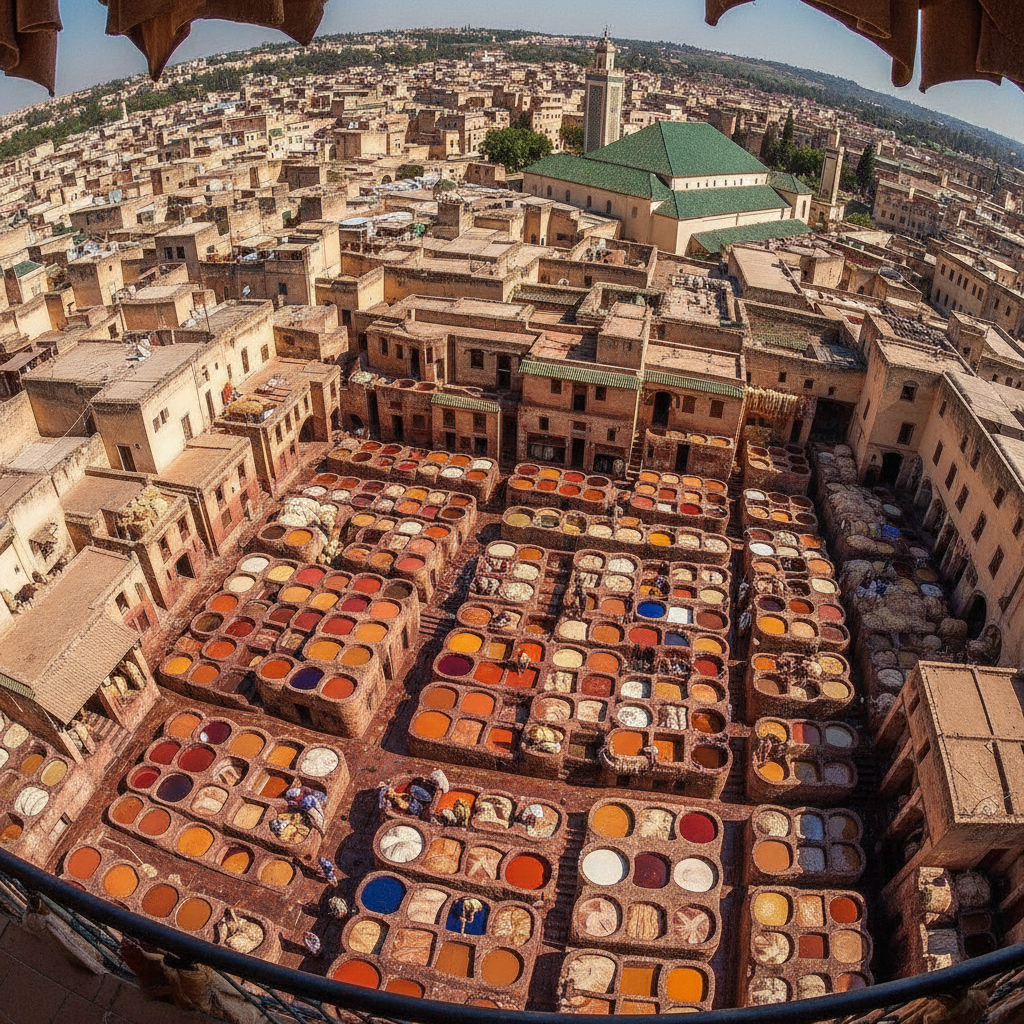
The Fes el-Bali Medina Is the Largest Car-Free Urban Area in the World With 9,000 Streets and 150,000 Inhabitants; The University of al-Qarawiyyin Founded in 859 CE by Fatima al-Fihri Is the Oldest Continuously Operating University in the World; The Chouara Tannery Uses Pigeon Dung as an Ammonia Source to Soften Hides in a Process Unchanged Since the Medieval Period
The Fes Festival of World Sacred Music Founded in 1994 Presents Sufi, Gnawa, Gregorian, Jewish, Hindu, and Buddhist Sacred Music in Venues Within the 1,200-Year-Old Medina; The Almohad Dynasty (1147-1244) Was the Most Hostile to Jews in Moroccan History Forcing Conversion or Emigration and Driving Fassi Jews to Flee to Christian Spain; The Fes Medina Has No Single Tourist Focal Square Like Marrakech's Djemaa el-Fna Making It More Authentically Urban and Less Tourist-Organized
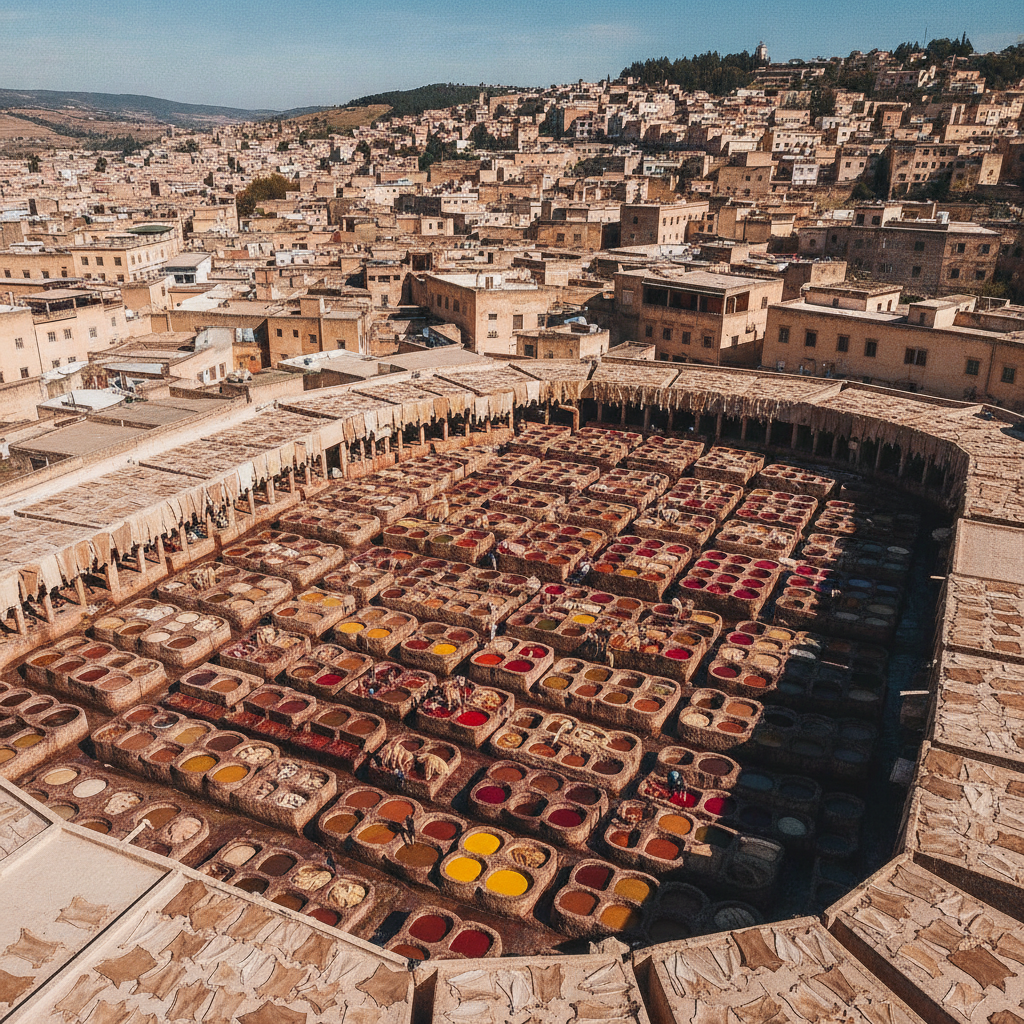
Fes Essential: Fes el-Bali the World Oldest Living Medina, the Bou Inania Madrasa, al-Qarawiyyin University, the Chouara Tanneries, the Blue Gate, and the Medieval City Character
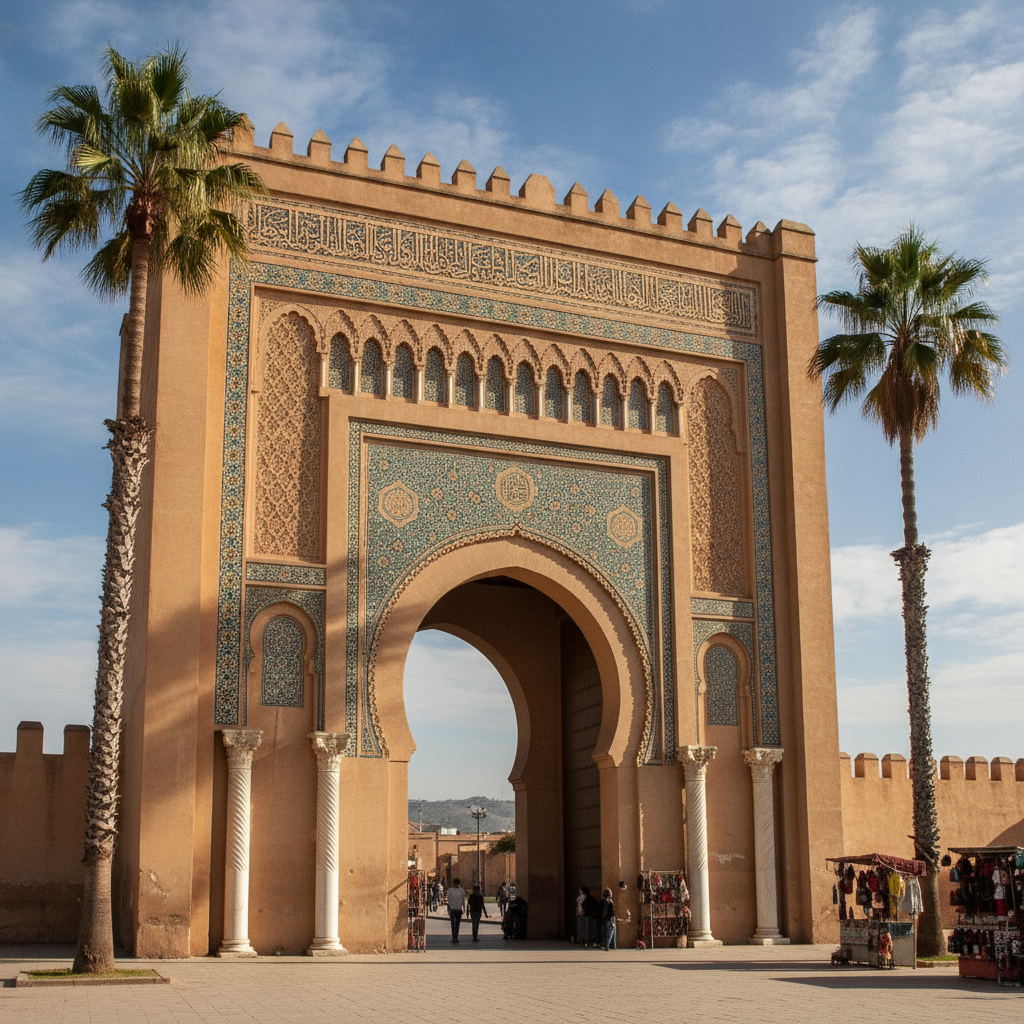
Fes History: The Idrisid Foundation, the Marinid Golden Age, the Wattasid and Saadian Decline, the Alaouite Revival, the French Protectorate, and the Contemporary Fes Identity