Fes Geography and Panorama: The Merenid Tombs Hilltop View, the Ville Nouvelle French Quarter, the Dar Batha Museum, the South Medina Districts, and the Complete Fes Geography
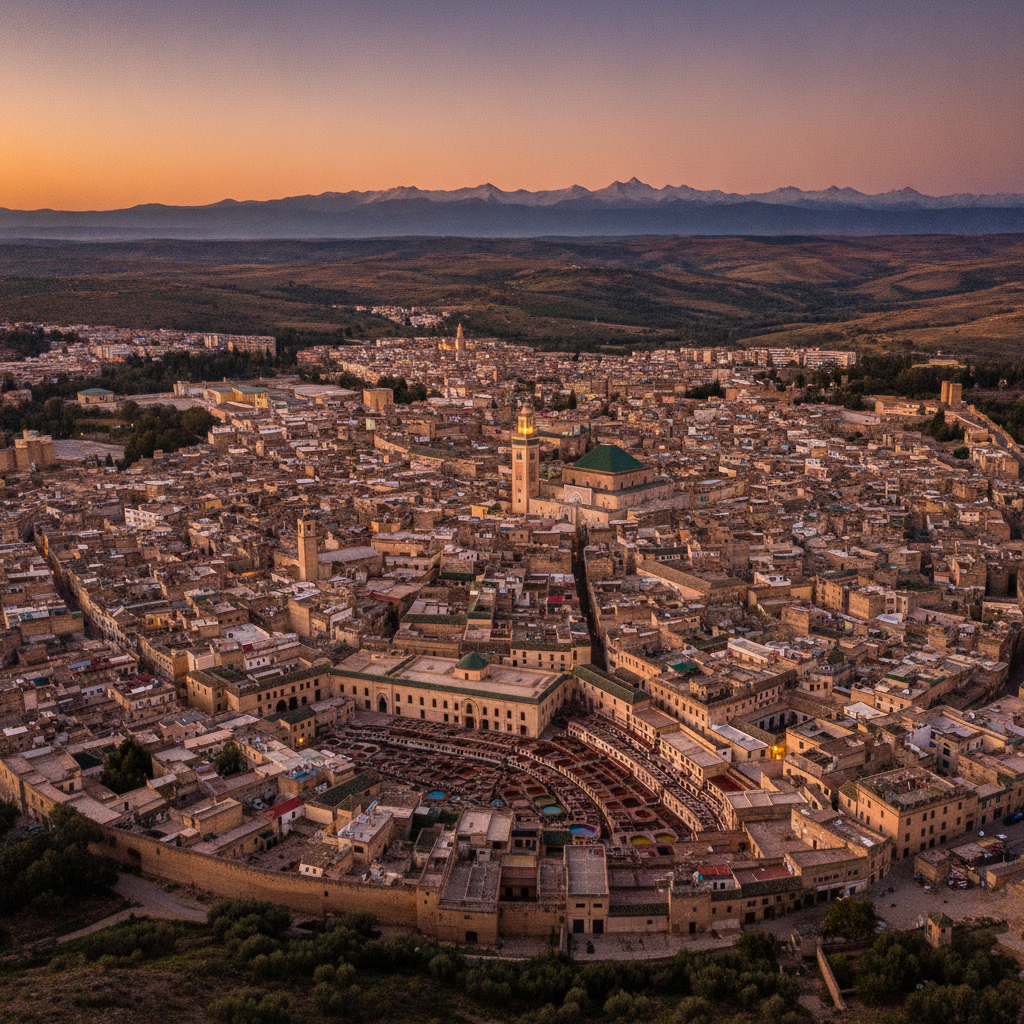
The Fes geography route covers the Merenid Tombs hilltop panorama as the best single overview of the Fes el-Bali bowl, the Ville Nouvelle French Protectorate quarter, the Dar Batha Museum with its Andalusian garden, the less-visited south medina districts, and the complete Fes geographic understanding.
- 1
Merenid Tombs: The Best Fes Panorama
The Merenid Tombs on the hilltop above the northern medina wall, the ruined 14th century royal mausoleums of the Marinid dynasty that were stripped of their marble by subsequent dynasties and left as the most completely robbed single royal burial site in Morocco, provide the most panoramic single viewpoint of the complete Fes el-Bali medina bowl. From the Merenid Tomb hilltop, the entire 300-hectare medieval city is visible as the single continuous urban landscape of rooftops, minarets, and the al-Qarawiyyin green-tiled roof in the densest single urban concentration in North Africa. The sunset from the Merenid Tombs is the most photographically complete single moment in Fes.
- 2
Ville Nouvelle: The French Protectorate Quarter
The Fes Ville Nouvelle (New City), the French Protectorate urban extension built from 1912 outside the medina walls on the Protectorate urban planning principle of the strict separation between the historic medina and the French administrative and commercial city, is the most completely planned single French colonial urban district in Morocco with the wide boulevards, the Art Deco municipal buildings, the colonial public garden, and the modern commercial center that serves the working Fes population outside the tourist medina circuit. The Mohammed V Avenue is the most vibrant single commercial street in the contemporary Fes economy.
- 3
Dar Batha Museum: The Andalusian Garden Collection
The Dar Batha Museum in Fes el-Jedid, the 19th century palace of the Alaouite sultan Moulay Hassan with the Andalusian-style garden converted to the Museum of Moroccan Arts in 1915, houses the most complete single collection of traditional Fes artistic production including the most important embroidery collection, the Fes pottery, the Moroccan metalwork, the Berber jewelry, and the historical photographs documenting the Fes medina in the early Protectorate period. The Andalusian garden of the Dar Batha, with the central fountain, the orange trees, the roses, and the high medina walls, is the most tranquil single outdoor space in the Fes el-Jedid quarter.
- 4
South Medina Districts: The Andalusian Quarter
The south Fes el-Bali bank of the Oued Fes river, the Andalusian quarter historically settled by the Muslim refugees from Cordoba who arrived in 814 AD after an uprising against the Umayyad Caliph, is the less-visited half of the Fes medina with the Bou Inania Madrasa south, the Andalusian Mosque (the sister mosque to the al-Qarawiyyin built simultaneously in 859 AD), and the quieter residential medina character without the tannery and the major souk tourist circuit. The Andalusian quarter is the most complete single introduction to the residential Fes medina life without the commercial overlay of the northern souk quarter.
- 5
Fes el-Bali Geography: The Bowl City
The Fes el-Bali geography - the medina built in a bowl valley at the confluence of the Oued Fes and the Oued Bou Khrareb rivers, surrounded by the hills of the Merenid Tombs to the north and the Borj Nord to the south - creates the most acoustically resonant single medina in Morocco where the call to prayer from 140 mosques ricochets off the surrounding hills and fills the bowl with the most immersive single soundscape in North Africa. The geographical position that the Idrisid founders chose for its water sources and its natural defense created the most completely enclosed single urban environment in the Moroccan plain.
- 6
Fes Practical: Medina Navigation and Accommodation
The Fes medina navigation challenge is greater than Marrakech because the Fes el-Bali is larger (300 hectares versus the Marrakech 300 hectares but more topographically complex), the lanes are narrower, and the orientation landmarks are fewer. The most effective Fes navigation strategy combines the Talaa Kebira (Main Upper Street) as the central north-south spine from the Bab Bou Jeloud to the al-Qarawiyyin, the mule traffic direction (mules carrying goods go towards the souk center, returning empty go towards the gate), and the local medina resident as the most reliable single direction source. The Fes riads in the medina are the most completely authentic single accommodation in Morocco.
Walk this route with audio
Stories play automatically as you reach each stop — no tapping needed.
More in Fes
Morocco's King Bears the Title Amir al-Muminin (Commander of the Faithful) Giving the Moroccan Monarchy a Unique Theocratic Religious Legitimacy Distinct From All Other Arab Monarchies; The Andalusian Music Tradition al-Ala Was Brought to Fes by Refugees From the 1492 Expulsion of Muslims and Jews From Spain and Is Still Performed in Three Regional Schools; Fes Is Arguably the Most Important Single City in the Spiritual Life of West African Islam Through the Tijaniyya Sufi Order With 100-150 Million Adherents
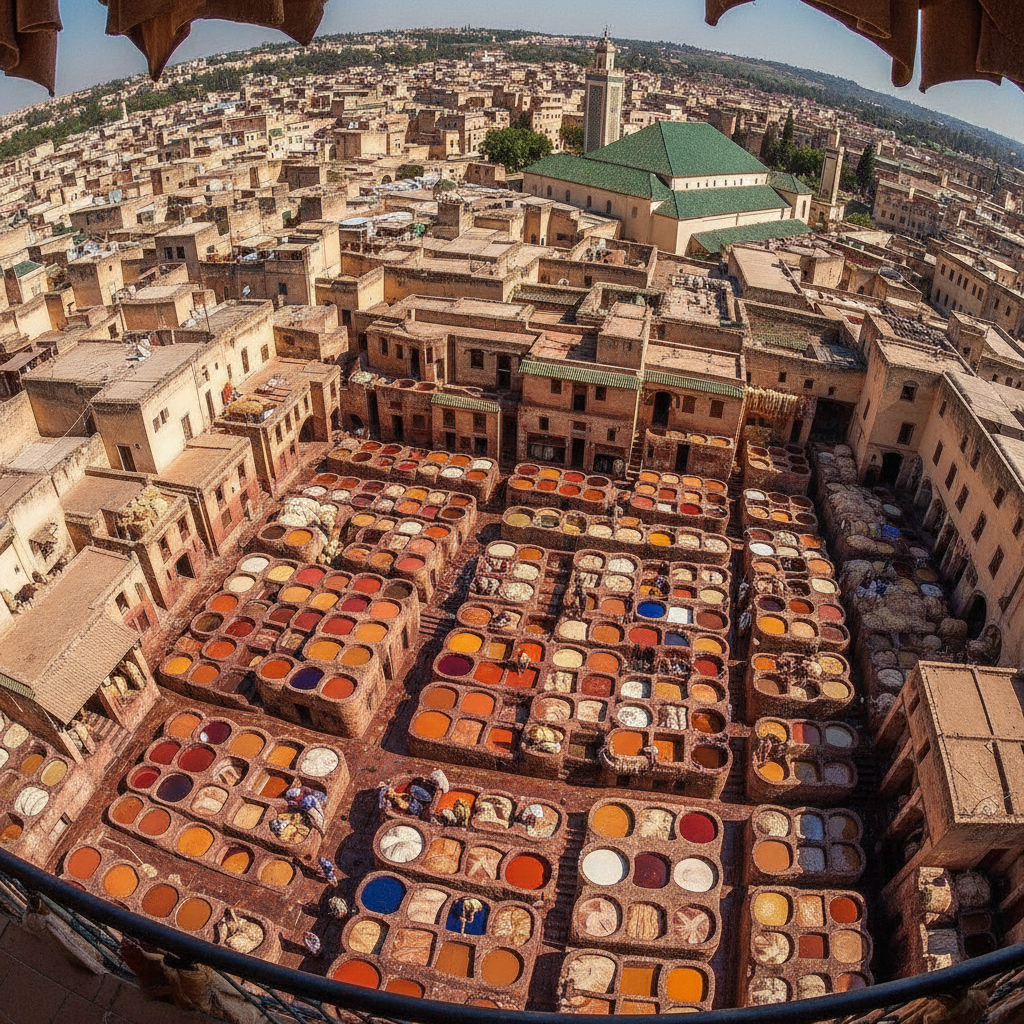
The Fes el-Bali Medina Is the Largest Car-Free Urban Area in the World With 9,000 Streets and 150,000 Inhabitants; The University of al-Qarawiyyin Founded in 859 CE by Fatima al-Fihri Is the Oldest Continuously Operating University in the World; The Chouara Tannery Uses Pigeon Dung as an Ammonia Source to Soften Hides in a Process Unchanged Since the Medieval Period
The Fes Festival of World Sacred Music Founded in 1994 Presents Sufi, Gnawa, Gregorian, Jewish, Hindu, and Buddhist Sacred Music in Venues Within the 1,200-Year-Old Medina; The Almohad Dynasty (1147-1244) Was the Most Hostile to Jews in Moroccan History Forcing Conversion or Emigration and Driving Fassi Jews to Flee to Christian Spain; The Fes Medina Has No Single Tourist Focal Square Like Marrakech's Djemaa el-Fna Making It More Authentically Urban and Less Tourist-Organized
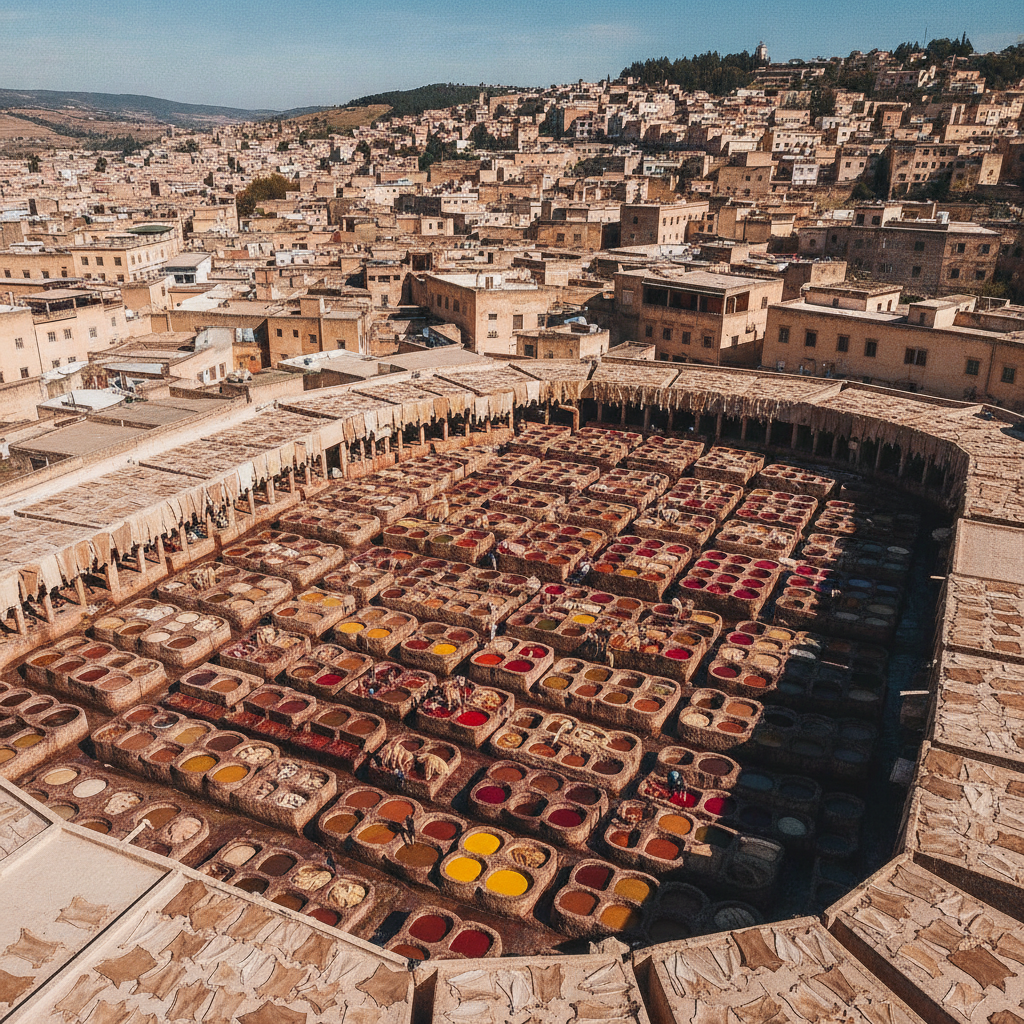
Fes Essential: Fes el-Bali the World Oldest Living Medina, the Bou Inania Madrasa, al-Qarawiyyin University, the Chouara Tanneries, the Blue Gate, and the Medieval City Character
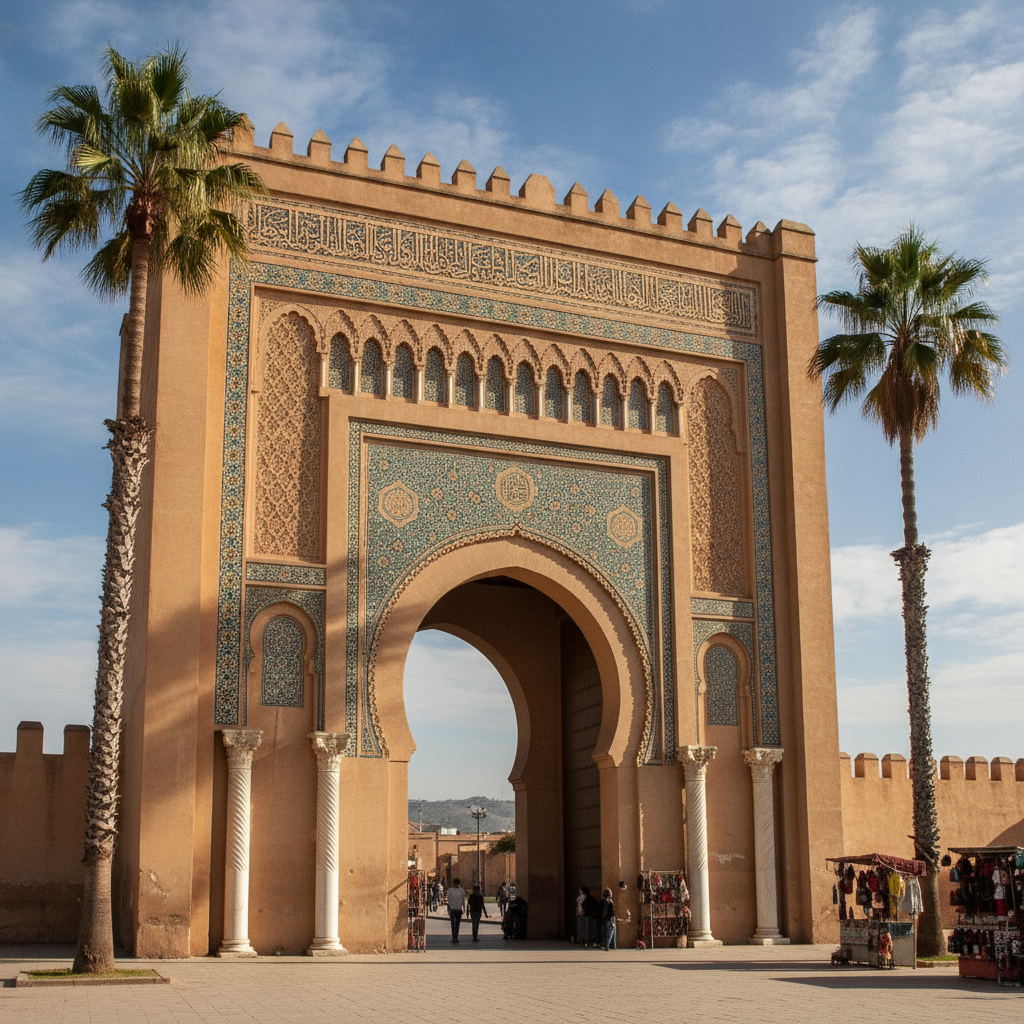
Fes History: The Idrisid Foundation, the Marinid Golden Age, the Wattasid and Saadian Decline, the Alaouite Revival, the French Protectorate, and the Contemporary Fes Identity