Fes Tanneries Deep Dive: The Complete Leather Process, the Natural Dye Chemistry, the Souk Cherratin, the Babouche Slipper Tradition, and the Fes Leather Market
The Fes tanneries deep dive covers the complete leather production process from the raw hide to the finished product, the natural dye chemistry of the plant-based colors, the Souk Cherratin leather goods market, the babouche yellow slipper as the defining Fes footwear, and the global export of the Fes leather tradition.
- 1
The Tanning Process: From Hide to Leather
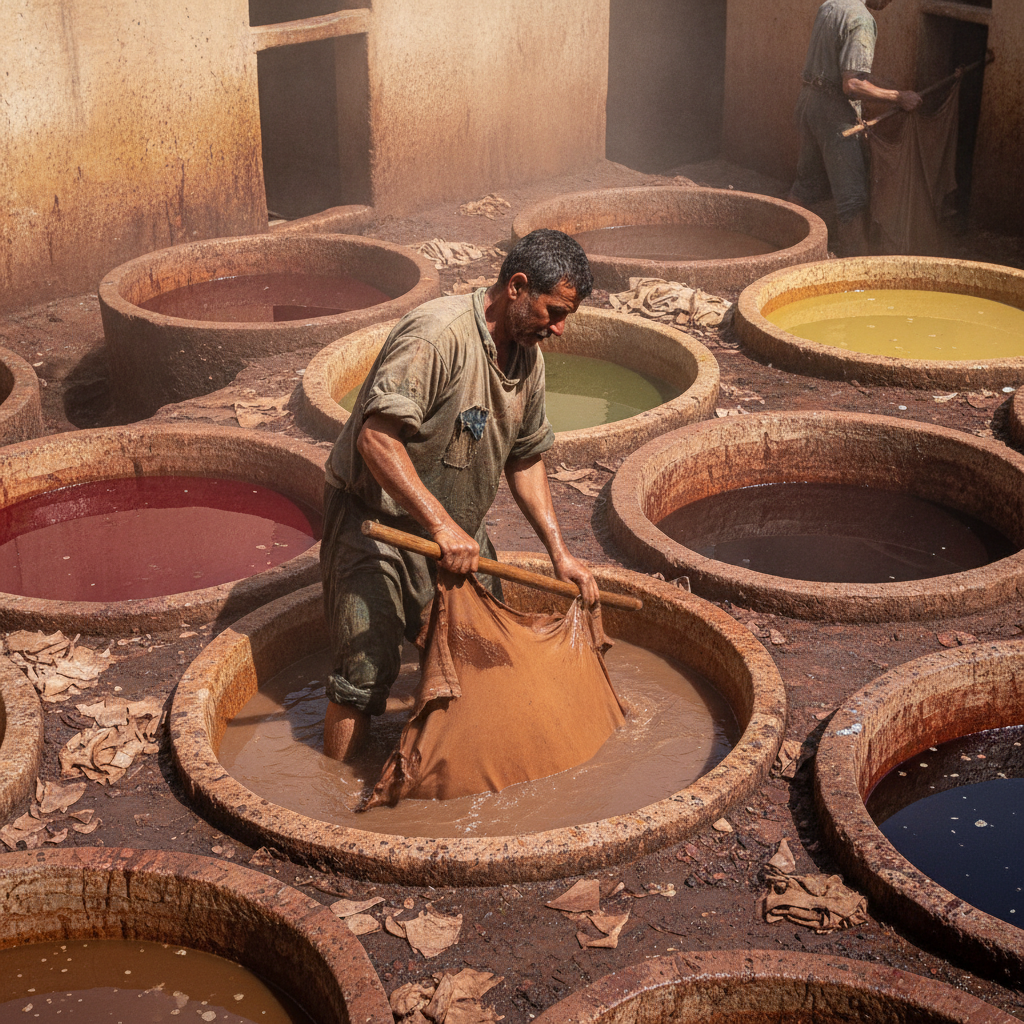
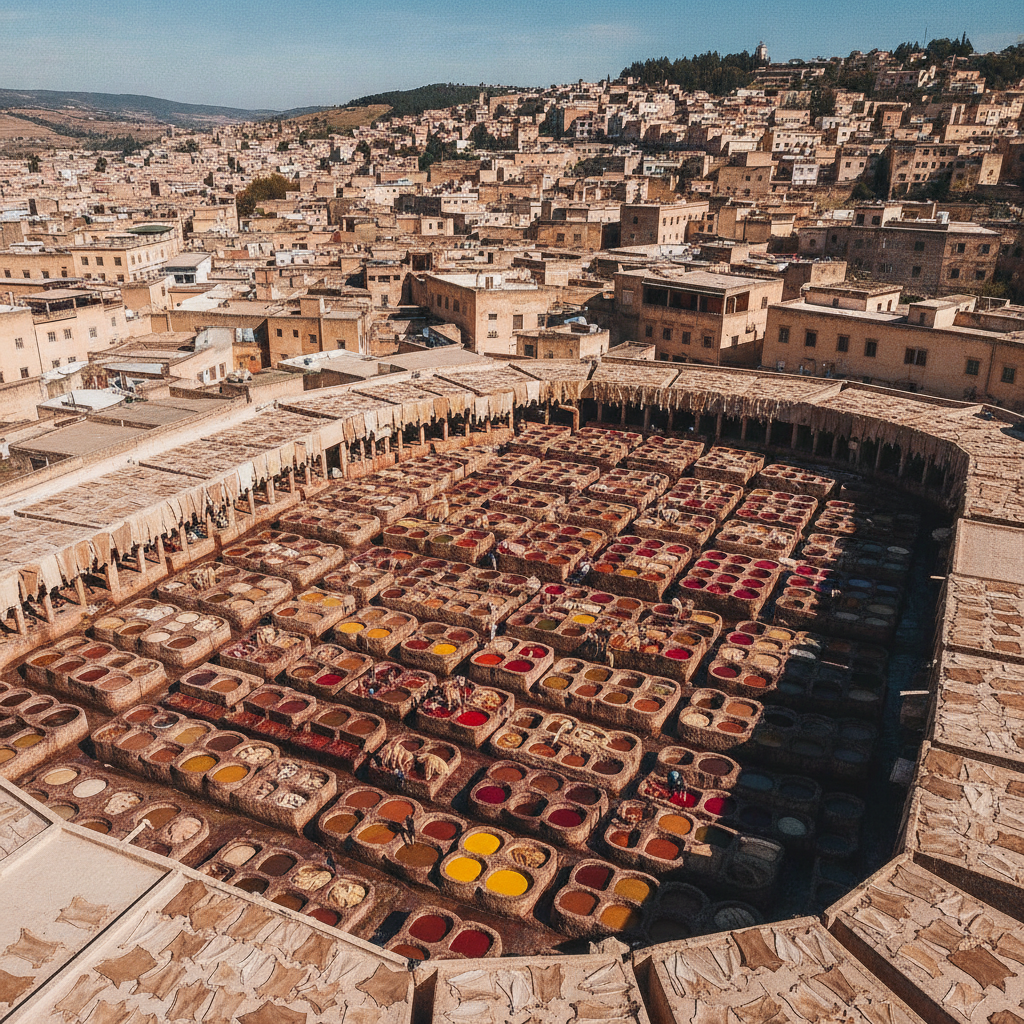
The complete leather production process at the Fes Chouara tanneries begins with the raw cattle, goat, and sheep hides arriving from the medina abattoir and undergoing the initial soaking in the calcium hydroxide (chaux) and the pigeon guano (hamam lahm) mixture for 3 days to remove the hair and the fat. The softened hides then enter the white vats for the tanning in the oak bark (dabbagh) solution for 4 weeks before the dyeing in the color vats. The entire process from raw hide to finished leather takes 6 to 8 weeks and represents the most time-intensive single craft production in the Fes medina economy.
- 2
Natural Dyes: The Plant Chemistry of Color
The Fes tannery natural dye palette uses the saffron (Crocus sativus) from the Taliouine valley for yellow, the henna plant (Lawsonia inermis) for orange, the indigo (Indigofera tinctoria) imported from the Senegal and the West Africa trade for blue, the poppy (Papaver rhoeas) for red, the cedar tree bark (Cedrus atlantica) for brown, and the pigeon guano itself for white in the most complete single plant-based dye chemistry system in continuous traditional use in the world. The chemical rationale for each dye requires a specific mordant (fixing agent) and the knowledge of the mordant-dye combinations is the most commercially protected single technical knowledge in the Fes tannery tradition.
- 3
Souk Cherratin: The Leather Goods Market
The Souk Cherratin (Leather Market) adjacent to the tanneries is the most completely specialized single craft retail market in the Fes medina with the full range of the Fes leather production from the babouche slippers to the satchel bags, the belts, the wallet pouches, the traditional leather book covers, and the upholstered leather poufs (ottomans). The Souk Cherratin leather goods represent the single most important craft retail sector in the Fes tourism economy and the products that are most associated with the authentic Fes craft production in the international luxury goods market.
- 4
Babouche: The Fes Yellow Slipper
The babouche (yellow leather slipper), the open-backed flat shoe produced from the tanned goat leather dyed in the saffron yellow that is the signature color of the Fes craft tradition, is the most recognizably Moroccan single footwear product and the item most purchased by the international visitor in the Fes medina. The men babouche (pointy toe, single sole) and the women babouche (embroidered upper, padded sole) are the two most distinct single gender variations of the same footwear type and together represent the most commercially important single leather product exported from Fes to the international luxury footwear market.
- 5
Fes Leather in the Global Market
The Fes leather goods production, the most commercially significant single craft export from Morocco, is sold through the medina shops directly, through the Casablanca wholesale export merchants, and through the online retail platforms that have made the Fes leather goods accessible to the global market. The annual leather export from Fes represents 300 million USD in the Moroccan export economy and the brand recognition of the authentic Fes leather - the hand-stitched, naturally-dyed, traditionally-constructed Moroccan leather versus the machine-produced imitation - is the most commercially contested single quality distinction in the North African craft export market.
- 6
Leather Workshop Visit: The Production Reality
The Fes leather workshop visit experience - the one most frequently offered by the medina carpet shops as the free cultural tour that ends in the leather shop buying pressure - is the most commercially structured single cultural visit in the Moroccan tourism economy. The genuinely educational visit to the tanneries requires the self-directed walk through the Souk Cherratin to the tannery terrace viewpoints of the surrounding leather shops (the mint sprig is freely provided by the shop to offset the tanning smell) rather than the organized group tour that packages the cultural experience within the retail obligation context.
Walk this route with audio
Stories play automatically as you reach each stop — no tapping needed.
More in Fes
Morocco's King Bears the Title Amir al-Muminin (Commander of the Faithful) Giving the Moroccan Monarchy a Unique Theocratic Religious Legitimacy Distinct From All Other Arab Monarchies; The Andalusian Music Tradition al-Ala Was Brought to Fes by Refugees From the 1492 Expulsion of Muslims and Jews From Spain and Is Still Performed in Three Regional Schools; Fes Is Arguably the Most Important Single City in the Spiritual Life of West African Islam Through the Tijaniyya Sufi Order With 100-150 Million Adherents
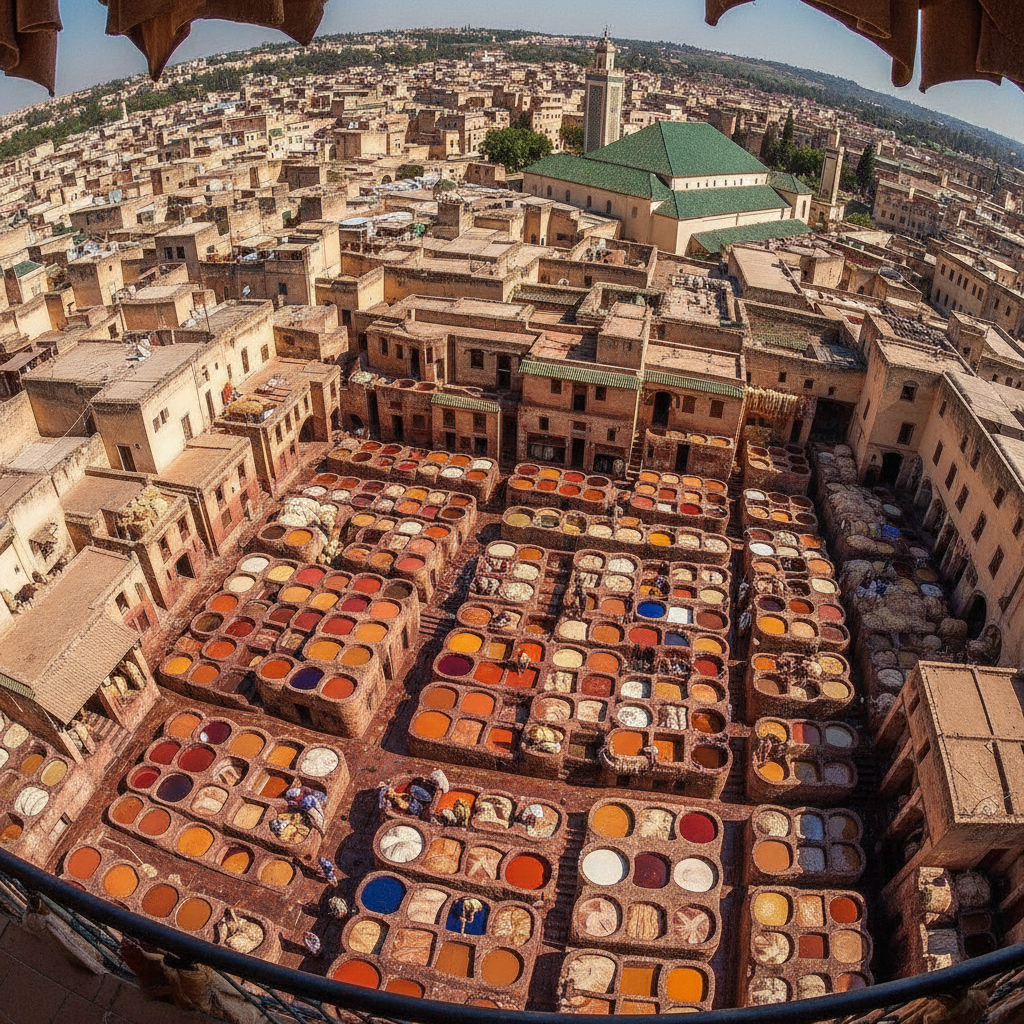
The Fes el-Bali Medina Is the Largest Car-Free Urban Area in the World With 9,000 Streets and 150,000 Inhabitants; The University of al-Qarawiyyin Founded in 859 CE by Fatima al-Fihri Is the Oldest Continuously Operating University in the World; The Chouara Tannery Uses Pigeon Dung as an Ammonia Source to Soften Hides in a Process Unchanged Since the Medieval Period
The Fes Festival of World Sacred Music Founded in 1994 Presents Sufi, Gnawa, Gregorian, Jewish, Hindu, and Buddhist Sacred Music in Venues Within the 1,200-Year-Old Medina; The Almohad Dynasty (1147-1244) Was the Most Hostile to Jews in Moroccan History Forcing Conversion or Emigration and Driving Fassi Jews to Flee to Christian Spain; The Fes Medina Has No Single Tourist Focal Square Like Marrakech's Djemaa el-Fna Making It More Authentically Urban and Less Tourist-Organized
Fes Essential: Fes el-Bali the World Oldest Living Medina, the Bou Inania Madrasa, al-Qarawiyyin University, the Chouara Tanneries, the Blue Gate, and the Medieval City Character
Fes History: The Idrisid Foundation, the Marinid Golden Age, the Wattasid and Saadian Decline, the Alaouite Revival, the French Protectorate, and the Contemporary Fes Identity