Lankaran Old Fortress and Russian Imperial History
Explore the Lankaran fortress where Russian imperial forces besieged and captured the city from the Talysh Khanate in 1813, and where the subsequent Russian colonial history left an architectural and cultural legacy that shaped the identity of this southern Azerbaijani city.
- 1
Fortress Tower
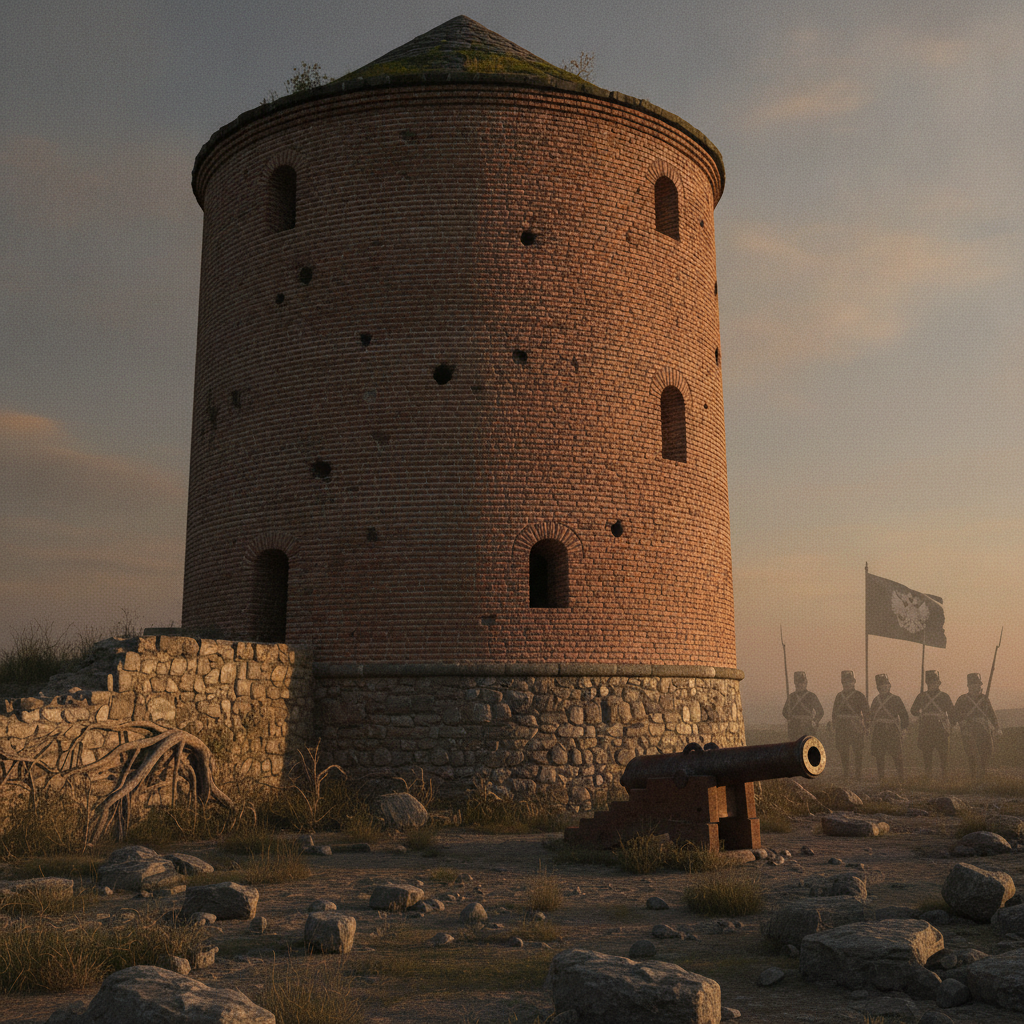
Stand before the surviving fortress tower of old Lankaran — the most prominent remnant of the Talysh Khanate's defensive works — the cylindrical brick structure that witnessed the 1813 Russian assault that ended the khanate's independence and incorporated this territory into the Russian Empire.
- 2
Khanate History Exhibition
Visit the local history exhibition explaining the Talysh Khanate (1747-1828), the semi-independent principality that controlled the Caspian coastal strip and the Talysh mountains before Russian conquest, the khanate's story representing the final phase of pre-Russian political autonomy in southern Azerbaijan.
- 3
Russian Colonial Architecture
Walk through the Russian-period architecture of Lankaran where 19th-century administrative buildings, Orthodox church remains, and the urban grid of the Russian colonial period created a city center quite different in character from pre-Russian Azerbaijani towns.
- 4
General Kotlyarevsky Memorial
Find the historical markers related to General Kotlyarevsky, the Russian commander who captured Lankaran in a famous night assault in January 1813, the battle that ended the Talysh Khanate's independence and made Lankaran a Russian imperial fortress town on the Persian frontier.
- 5
City Park
Stroll the Lankaran city park established in the Russian period where the urban green space represents the Russian imperial practice of creating public parks in provincial towns, the mature trees of the park now providing shade in what has become the social center of modern Lankaran.
- 6
Historical Cemetery
Visit the historical cemetery where the layered grave markers — Russian Orthodox crosses alongside Muslim headstones in Azerbaijani and Talysh script — reflect the complex ethnic and religious history of Lankaran as a garrison town on the Russian Empire's southernmost frontier.
Walk this route with audio
Stories play automatically as you reach each stop — no tapping needed.